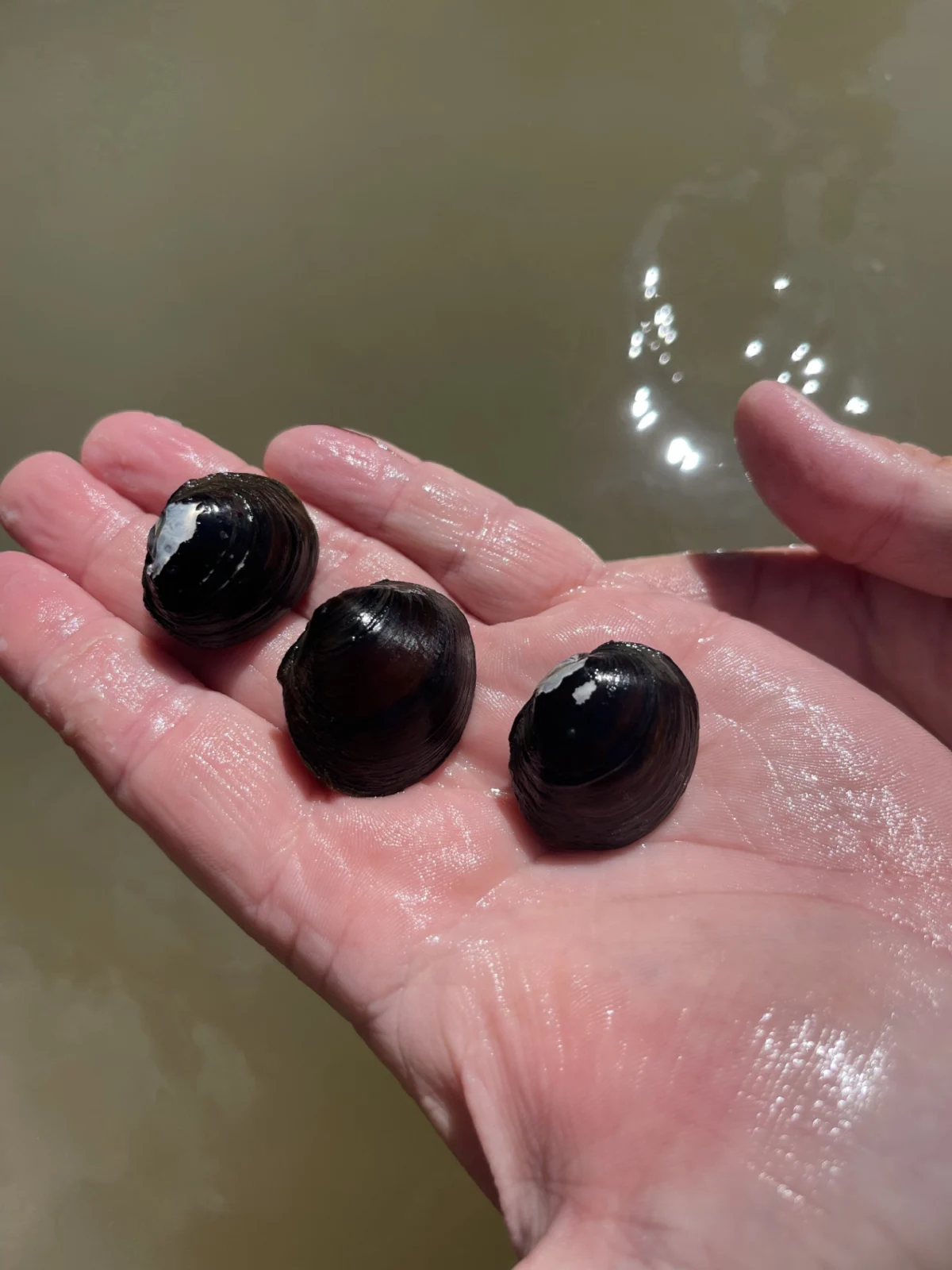
For two decades, freshwater researchers methodically waded through the muddy, silt-laden bottoms of rivers across the American South, reaching down to feel for the familiar, hard outlines of native mussels. To the touch, many of these bivalves appeared to match well-known, established species. However, when scientists brought samples back to the laboratory to analyze their underlying genetic blueprints, a vastly different reality emerged. What had long been categorized as common, widespread aquatic life forms were actually distinct evolutionary lineages hiding in plain sight.
In a comprehensive study published in the journal Zootaxa, a collaborative team of scientists from the Shedd Aquarium, Arkansas State University, and the U.S. Geological Survey (USGS) officially described five new species of freshwater mussels. Distributed across river basins in Missouri, Arkansas, Mississippi, Alabama, Louisiana, and Texas, these newly identified bivalves highlight a troubling paradox in American conservation: even as scientists discover rich, uncatalogued biodiversity within regional waterways, these very same organisms are disappearing at an alarming rate due to habitat degradation, pollution, and historical overexploitation.
The Unseen Diversity of North American Rivers
North America is historically a global hotspot for freshwater mussel diversity, hosting a greater variety of species than almost anywhere else on Earth. Yet, identifying these organisms has long presented a formidable challenge to malacologists. Unlike many animals whose physical characteristics remain consistent across a population, freshwater mussels exhibit high levels of phenotypic plasticity. Environmental factors heavily influence their shell morphology; for instance, mussels residing in swift headwater streams frequently develop flatter, more streamlined shells to resist strong currents, whereas members of the exact same species living downstream in slower, deeper waters grow rounder, more robust forms. Furthermore, sexual dimorphism often causes shell shapes to vary significantly between males and females of a single species.

Because traditional shell identification methods proved unreliable, the research team—led by Shedd Aquarium research biologist Kentaro Inoue alongside colleagues including USGS research biologist Nathan Johnson—turned to advanced genetic sequencing. Rather than destroying the animals, researchers frequently clipped minuscule tissue samples or performed gentle swabs, returning the living mussels safely to their native riverbeds.
By sequencing three specific genes and quantitatively comparing more than 440 distinct shell outlines, the scientists mapped the geographic boundaries of these organisms. Their findings revealed that major, isolated river basins across the South act as evolutionary cradles, each harboring its own distinct genetic lineage that had diverged over thousands of years.
A Catalog of New Lineages and Their Names
The researchers named the newly discovered species in tribute to the specific geographic regions, Indigenous histories, and ecological landscapes they inhabit:
- The Mobile hickorynut (Obovaria sipseyensis): Named after Alabama’s Sipsey River—derived from a Choctaw word meaning “swamp”—this species is now restricted to the upper tributaries of the Tombigbee River. Its historical range has shrunk dramatically, aligning its conservation trajectory with other imperiled regional mollusks.
- The White River Hickorynut (Obovaria neeskaensis): Taking its moniker from Nee Ska, the traditional Quapaw name for the White River, this bivalve displays striking physical variations. Rare individuals found in the Ozark highlands feature slimmer, tan or greenish shells marked with delicate dark rays. Conversely, specimens inhabiting the Mississippi floodplain develop thick, plump, nearly black shells.
- The Big Thicket hickorynut (Obovaria pinetorum): Clinging to isolated pockets within the Calcasieu, Sabine, and Neches rivers of Louisiana and Texas, this species draws its name from the Piney Woods region, commonly known as the Big Thicket. Roughly the size of a golf ball, its dark brown to black shell features fine rays that frequently merge into broad bands.
- The Tallahatta hickorynut (Obovaria tallahattae): Found exclusively within a narrow, 16-kilometer (10-mile) stretch of Mississippi’s Big Black River, this species is named after the Tallahatta Formation, a geological band of pale rock underlying its habitat. Its elongated, oval, and largely rayless shell made it the only new species that traditional shell-shape analysis could reliably distinguish, correctly sorting 88% of specimens.
- The Acolapissa hickorynut (Obovaria lumbo): Measuring up to 6.4 centimeters (2.5 inches), this is the largest of the five newly described species. Its specific epithet comes from a Choctaw word meaning "round," which accurately describes its chestnut-brown, satin-sheened shell and white, pink, or orange interior. Its common name honors the Acolapissa people, who historically inhabited the lands along the Pearl River and Lake Pontchartrain where these mussels reside.
Silent Sentinels of Water Quality

The cultural and ecological naming choices are deeply appropriate, as freshwater mussels function as vital sentinels of aquatic ecosystem health. These bivalves spend the majority of their lives half-buried in river sediments, anchoring themselves while continuously pumping massive volumes of water through their bodies to feed on algae, bacteria, and microscopic organic matter.
In the process, they act as living filtration systems, stripping excess nutrients, sediment, heavy metals, and harmful bacteria from the water column. Mussels are exceptionally long-lived, routinely surviving for a century or more under optimal conditions. Operating at a conservative filtration rate of 30 liters (8 gallons) per day, a single adult mussel can filter approximately 663,000 liters (175,500 gallons) of water over a 60-year lifespan—enough to fill roughly one-quarter of an Olympic-sized swimming pool.
Despite their foundational ecological role, freshwater mussels are widely recognized by the U.S. Geological Survey as the most imperiled group of animals in North America. Today, an estimated 66% of all native North American freshwater mussel species are considered at risk of extinction.
A Complex and Vulnerable Life Cycle
The severe decline of these populations is rooted in a combination of historical exploitation, modern environmental pressures, and a uniquely complex reproductive cycle. In the early 20th century, millions of freshwater mussels were harvested from American rivers to supply the booming mother-of-pearl button industry. While commercial shell harvesting has largely subsided, contemporary threats have proven far more pervasive.

Mussels face acute vulnerabilities due to their reliance on vertebrate hosts to complete their life cycle. Female mussels release microscopic larvae that must temporarily attach themselves to the gills or fins of passing fish, hitching a ride for weeks or months before dropping off as juvenile mussels ready to settle into the riverbed. While scientists have yet to identify the exact fish species required by each of the five newly described hickorynut mussels, related species depend heavily on small, bottom-dwelling fish such as darters and sculpins.
Human alterations to river ecosystems have severely disrupted this delicate biological partnership. The construction of dams and impoundments fragments river networks, blocking the migration paths of host fish and transforming fast-flowing, oxygen-rich rivers into stagnant, silt-filled reservoirs. Combined with agricultural runoff, industrial pollution, and the introduction of aggressive invasive species like the zebra mussel, these disruptions have created an environment where populations struggle to recover from acute mortality events.
"This combination of characteristics means mussel populations often cannot recover from large death events," noted Dr. Alan Lymbery, a professor of freshwater ecology at Murdoch University, emphasizing the cascading risks to broader river ecosystems where mussels act as critical keystone species.
Conservation Pathways and Protection Challenges
Efforts to reverse these declines require intensive, long-term intervention. Facilities such as the Alabama Aquatic Biodiversity Center (AABC) in Marion, Alabama, pioneer recovery programs by bringing rare mussels into controlled laboratory environments to identify their specific host fish. Biologists then culture the juvenile bivalves until they are robust enough to be reintroduced into the wild. Research indicates that supplementing wild populations with lab-raised juveniles or relocating adult specimens represents the most effective strategy for rebuilding self-sustaining colonies.

However, such restoration work is painstakingly slow. Culturing mussels through their complex life stages takes years, and establishing a self-sustaining wild population can require a decade or more of dedicated monitoring. For the five newly described hickorynut species, comprehensive captive-breeding programs cannot begin in earnest until researchers pinpoint the specific host fish required by their larvae.
Regulatory frameworks are also struggling to keep pace with taxonomic discoveries. Of the five newly described species, only the Acolapissa hickorynut has been proposed for federal protection, with the U.S. Fish and Wildlife Service advancing a proposal to list it as threatened. The remaining four species currently lack formal federal conservation status, though scientists argue they warrant immediate evaluation. The authors of the Zootaxa study emphasize that the Mobile hickorynut has experienced population declines comparable to those of the Alabama hickorynut, which has been proposed for endangered status, suggesting it requires equivalent legal safeguards.
As aquatic researchers continue to comb through museum collections and river sediments alike, the discovery of these five cryptic species serves as both a testament to the hidden richness of North American watersheds and a stark warning about the fragility of aquatic life.
"Conservation efforts can only protect what we recognize," said lead author Kentaro Inoue. "And without this work, we risk certain species going extinct before they’re even known to science."