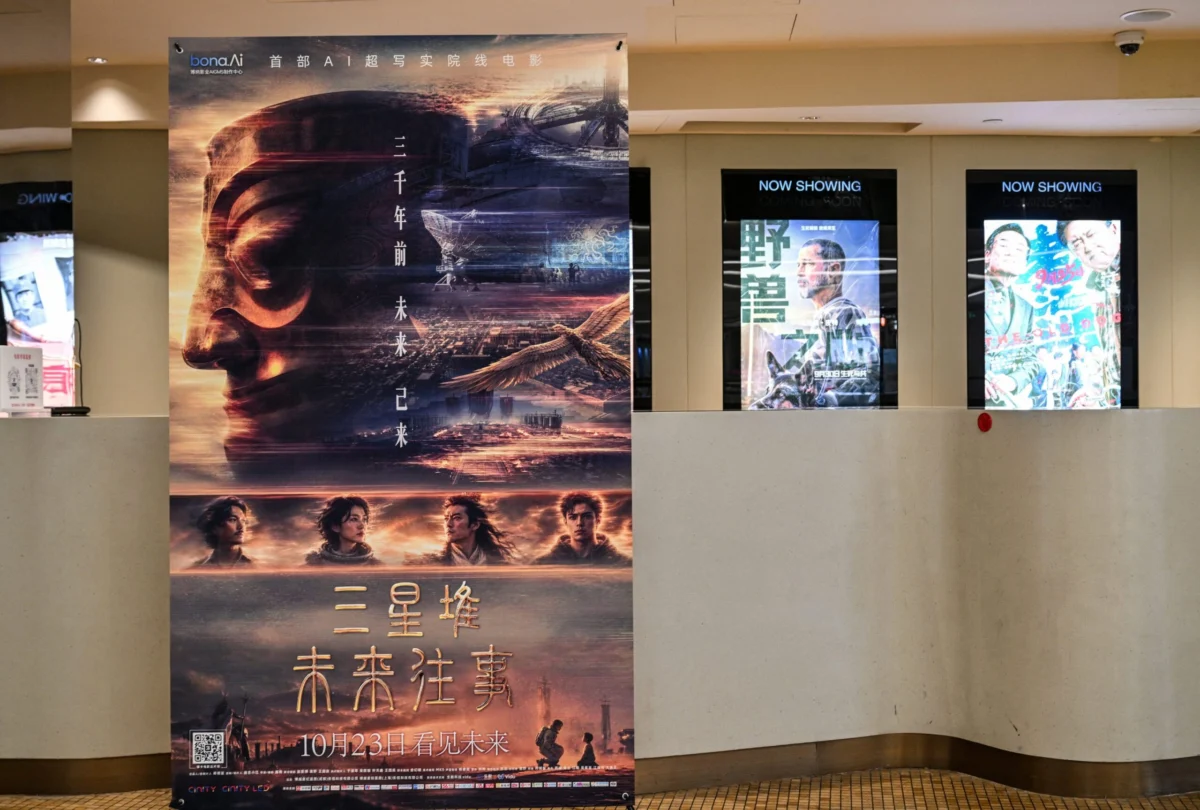
The global cinematic landscape is witnessing a profound technological transition, yet the boundaries of consumer acceptance are being sharply defined at the box office. While audiences around the world increasingly embrace artificial intelligence in short-form content, digital avatars, and rapid content creation, long-form storytelling remains a bastion of human craftsmanship. This tension was thrust into the spotlight in China with the theatrical release of Sanxingdui: Future Past, billed as the nation’s first fully artificial intelligence-generated feature film. Produced by the prominent Bona Film Group, the high-concept sci-fi thriller was designed to be a historic milestone for digital entertainment. Instead, its dismal performance at the box office has triggered a fierce industry-wide debate over whether moviegoers are truly prepared to accept artificial intelligence as the primary author of feature-length cinema.
The theatrical run of Sanxingdui: Future Past has fallen severely short of financial expectations. According to ticketing platform Maoyan, the sci-fi thriller managed to generate an estimated $180,000 in ticket sales by Monday following its release. This gross revenue stands in stark contrast to its production budget, which industry reports from Agence France-Presse place at approximately $1.5 million. In a market accustomed to domestic blockbusters pulling in hundreds of millions of dollars, the film’s financial trajectory points to a stark commercial rejection. The narrative premise of the movie centers on an archaeologist tasked with saving a future world enslaved by artificial intelligence—a thematic irony that has not been lost on cultural commentators and social media users alike.
The genesis of Sanxingdui: Future Past reflects a broader, aggressive push within the Chinese entertainment sector to integrate cutting-edge generative tools into traditional production pipelines. Over the past several years, media conglomerates and technology startups have sought to drastically reduce overhead costs and compress production timelines. Bona Film Group positioned this project not merely as a commercial venture, but as a pioneering technical trial. Jiang Defu, the chief operating officer of Bona Film Group, addressed the film’s lukewarm reception in an interview with Chinese film outlet Yuli, defending the project as an essential industry test. He emphasized that the company was the first to attempt a fully AI-generated feature, the first to secure a theatrical release permit from regulators, and the first to subject a synthetic cinematic product to direct audience evaluation, noting that clearing those administrative and technical hurdles was no small feat. Despite these administrative victories, the market response has forced the studio and its peers to reevaluate the commercial viability of fully synthetic feature filmmaking.
Public reaction across digital platforms has exposed deep divisions among consumers regarding the artistic merit and emotional resonance of artificial intelligence in cinema. On Xiaohongshu, a prominent Chinese lifestyle and social media platform, user sentiments ranged from mild curiosity to outright alienation. One reviewer bluntly declared that China’s inaugural artificial intelligence movie had left them entirely traumatized, pointing to the uncanny valley effect often produced by synthetic character rendering and automated visual effects. Conversely, other internet users adopted a more pragmatic, technophilic view, highlighting the economic advantages and creative autonomy offered by these tools. One positive reviewer remarked that the primary takeaway from the experiment was the ultra-low cost of production and the absolute freedom afforded to storytellers to manifest imaginative worlds without traditional budgetary constraints.
The stark disparity in reception between short-form media and feature-length films highlights a major psychological barrier for audiences. While consumers have proven remarkably receptive to artificial intelligence in microdramas—rapidly consumed narrative content designed for vertical viewing on mobile applications—they hold feature films to an entirely different standard of emotional and artistic integrity. Data compiled by financial and industry outlets reveals the staggering scale of the microdrama revolution. According to reports from Caixin, over 95 percent of the more than 120,000 Chinese microdramas released in the first quarter of the year were generated using artificial intelligence, a dramatic leap from nearly zero market penetration just twelve months prior. Furthermore, the cost of producing these bite-sized narratives has plummeted to as little as $3,000 per title, fueling an explosive boom in digital consumption on platforms like TikTok and its domestic equivalents.
However, scaling this methodology from a three-minute vertical video to a ninety-minute theatrical experience has proven to be a bridge too far for the contemporary consumer base. Stanley Rosen, a professor at the University of Southern California and an expert on Chinese film and society, noted that public skepticism toward artificial intelligence in major cinematic releases remains exceptionally high, despite the widespread societal normalization of short-form digital media. According to Rosen, audiences sitting in a darkened theater expect a level of emotional depth, directorial vision, and human nuance that current generative models struggle to sustain over the duration of a standard feature film.
The controversy surrounding the integration of generative technology into filmmaking extends far beyond the borders of mainland China, resonating deeply within the global entertainment industry. In Hollywood and other major Western production hubs, the friction between automated content creation and labor protection has been a focal point of intense industrial conflict. The historic strikes staged by U.S. screenwriters and actors in 2023 were driven, in significant part, by urgent demands for robust legal and contractual protections against the uncompensated replacement of human creative labor by automated systems. Despite these regulatory battles and ethical concerns, major studios and prominent filmmakers are quietly incorporating artificial intelligence tools into their workflows. Advanced models developed by technology firms such as ByteDance and Higgsfield AI are increasingly utilized for pre-visualization, visual effects enhancement, and editorial refinement.
The complex reality of this technological shift was underscored by acclaimed filmmaker Ben Affleck. Discussing his crime thriller Animals, released globally via Netflix, Affleck candidly admitted during a public appearance at a Bloomberg event that he utilized artificial intelligence for numerous components of the production. He confessed to being somewhat hesitant to explicitly detail every instance of its application, explaining that the foundational goal of cinema is to foster and sustain the illusion of reality for the audience. When viewers become overly conscious of the machinery behind the artifice, the immersive spell of the cinematic experience risks being broken.
Looking ahead, industry analysts suggest that the commercial failure of Sanxingdui: Future Past will serve as a cautionary tale for studio executives and investors worldwide. Professor Rosen posits that audiences are unlikely to embrace fully synthetic feature films in traditional theatrical settings unless the production values match or exceed the staggering visual fidelity of established blockbusters like Avatar or domestic juggernauts like Nezha 2. Consequently, pioneering works of this nature may bypass traditional theatrical distribution entirely, finding a more natural and forgiving home on subscription streaming services such as Netflix and Amazon Prime Video, where viewers consume content within the comfort of their homes and often maintain a higher tolerance for experimental media formats.
Ultimately, the commercial stumble of China’s first artificial intelligence feature film marks a critical juncture in the evolution of modern entertainment. It demonstrates that while technological automation can drastically reduce production costs and democratize content creation at the micro-scale, the intangible human elements of storytelling, emotional authenticity, and directorial intent remain irreplaceable commodities for the theatrical audience. As studios navigate the treacherous waters of technological innovation, the financial lessons of this ambitious experiment will compel producers to tread significantly more carefully, balancing the siren song of computational efficiency with the enduring demands of human cinemagoers.