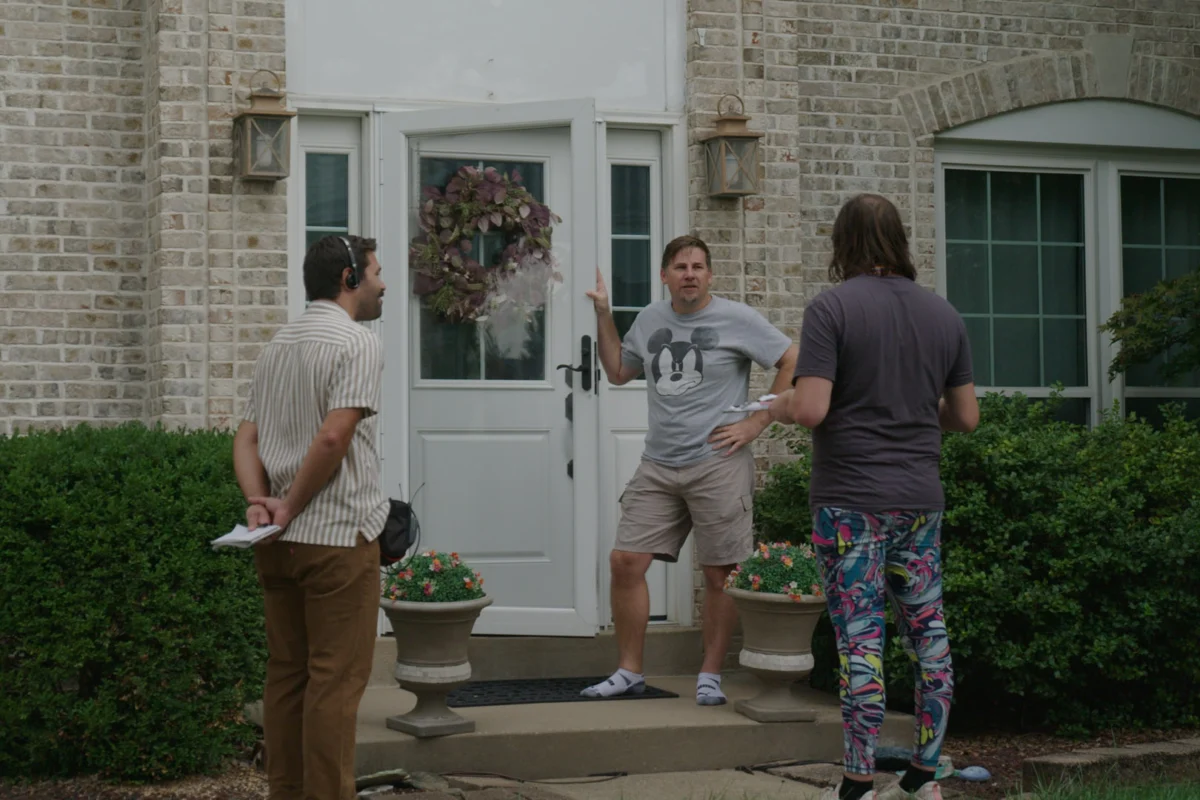
The crisp, syncopated rap of a knuckle on a front door in Creve Coeur, Missouri, is carefully calibrated to disarm. For Renée Luckfield, a 29-year-old transgender woman working as a field lead for the LGBTQ+ advocacy organization PROMO Missouri, the psychological weight of approaching strangers to discuss transgender healthcare is heavy, even if she wears a practiced smile.
"Honestly, it’s not something that I’m entirely comfortable with," Luckfield admits, navigating the manicured lawns of an affluent St. Louis suburb. "And it’s not fair that we have to do this work."
Luckfield is part of a high-stakes human infrastructure project ahead of the midterm elections. PROMO Missouri has set an ambitious target: knock on 100,000 doors across five of the state’s largest metropolitan areas to defeat a proposed constitutional amendment. The ballot measure seeks to permanently enshrine a ban on gender-affirming surgeries, cross-sex hormone therapy, and puberty blockers for minors, while simultaneously aiming to reinstate a near-total ban on abortion.
As transgender rights and bodily autonomy merge into a singular, high-voltage political flashpoint across the United States, Missouri has emerged as a central laboratory for both legislative restriction and grassroots resistance.
The Legislative and Electoral Landscape
The current ballot measure is the latest chapter in a multi-year legislative offensive. In May 2023, Missouri’s Republican-dominated General Assembly permanently blocked minors’ access to gender-affirming surgeries while temporarily restricting new prescriptions for puberty blockers and cross-sex hormones for a four-year period. This legislative push placed Missouri among 27 states that have enacted restrictions on medical care for transgender youth over the past half-decade, according to data from KFF.
The issue escalated from statehouses into a dominant national theme during the 2026 midterm cycle, echoing the heavy financial investments seen in previous election cycles. During the 2024 presidential election, pro-Trump political action committees and conservative groups poured tens of millions of dollars into anti-transgender television and digital advertisements. Campaigns frequently leveraged identity politics to drive voter turnout, a strategy that galvanized conservative bases while forcing progressive and moderate Democrats to navigate a volatile cultural minefield.
In Missouri, the political topography is further complicated by abortion politics. In 2024, an amendment safeguarding abortion access narrowly cleared the ballot by fewer than 100,000 votes, overcoming fierce opposition from conservative groups that warned the measure could inadvertently threaten restrictions on youth gender transitions. This year’s proposed constitutional amendment combines both issues into a single package, creating a complex ballot question where voters must reconcile their views on reproductive freedom and medical care for minors.
Recent polling reflects the razor-thin margins dividing the electorate. A September poll conducted by Saint Louis University (SLU) found the combined constitutional amendment polling neck and neck: 43% of likely voters support the bans, 44% oppose them, and 13% remain undecided, with a margin of error of roughly 4%. While earlier state polls showed stronger, more decisive public support for abortion access when polled in isolation, the bundled nature of the upcoming vote has muddied public perception, creating an opening for targeted persuasion campaigns.
Deep Canvassing: A Relational Approach to Polarizing Politics
Recognizing that traditional political flyers and television advertisements struggle to move the needle on deeply personal cultural topics, organizations like PROMO Missouri have turned to "deep canvassing."
Pioneered as a psychological and sociological tool over the past decade, deep canvassing rejects the typical hit-and-run tactics of political door-to-door operations. Canvassers do not hand out pamphlets and rush to the next house; instead, they spend upwards of 10 to 15 minutes engaging in vulnerable, open-ended, and non-judgmental conversations.
The methodology has a proven, if narrow, track record in American politics. In 2012, deep canvassing played a pivotal role in overturning a ban on same-sex marriage in Maine. In 2021, similar techniques were deployed during contentious police reform debates in Minneapolis. Organizers hope the same interpersonal model can neutralize fear-based messaging regarding transgender healthcare.
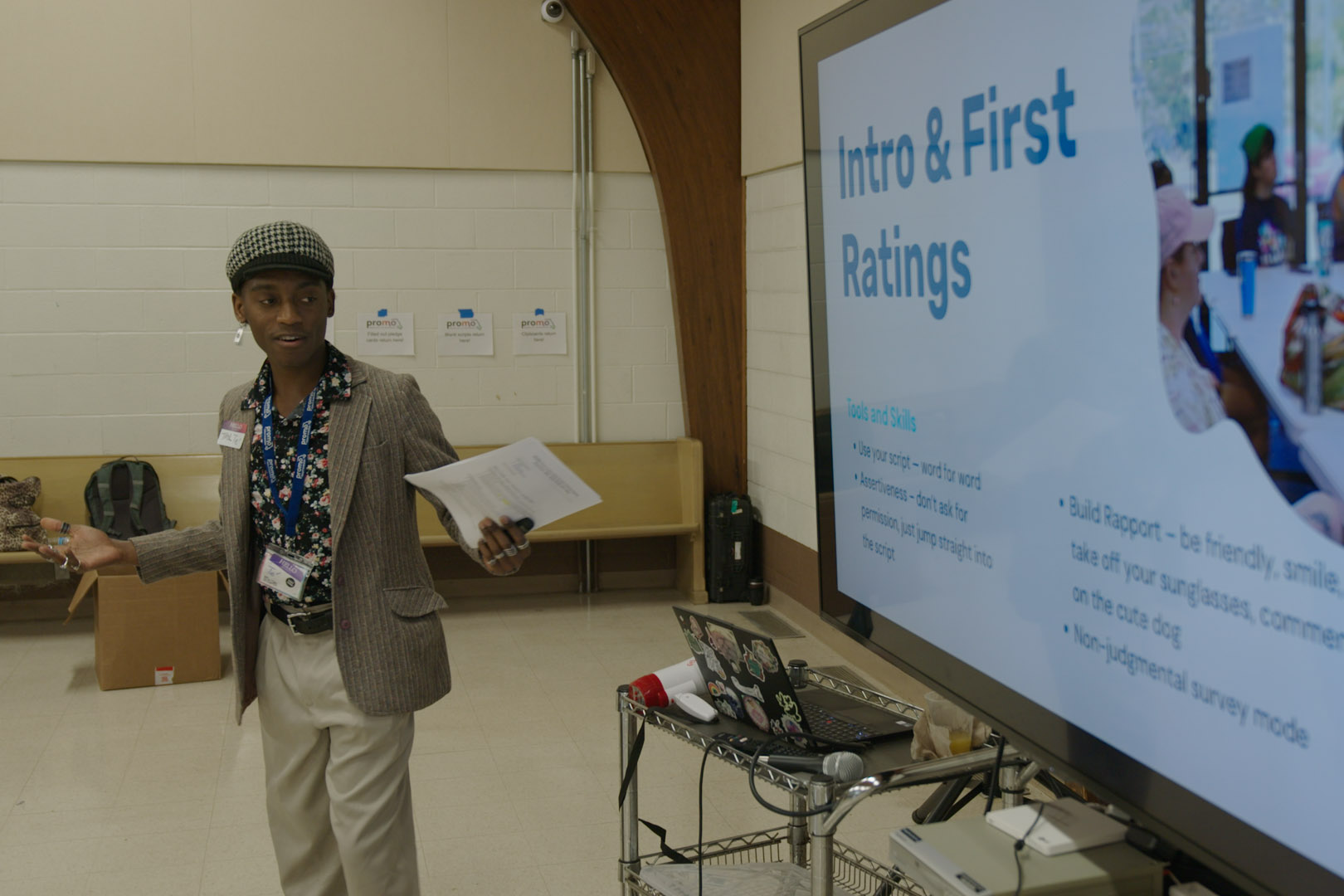
The training regimen for PROMO canvassers is rigorous. Volunteers and staff are instructed to bypass defensive posturing by leading with personal vulnerability and establishing rapport—whether by commenting on a homeowner’s dog or shedding sunglasses to make direct eye contact. Canvassers use a structured numerical scale, asking residents to rate their stance on abortion and transgender healthcare from 0 (totally opposed to bans) to 10 (totally in favor of bans), followed by the pivotal question: "Why is that number right for you?"
By focusing resources away from hardened ideologues—those firmly entrenched at 0/0 or 10/10—canvassers concentrate their efforts on movable middle-ground voters. These are individuals who may possess abstract moral concerns about youth transitions but have not deeply considered the role of government mandates in private medical decisions.
The Reality of Pediatric Gender-Affirming Care
A major hurdle for canvassers is combating widespread misconceptions regarding the frequency and nature of medical treatments available to transgender youth. Conservative messaging often employs stark imagery, invoking phrases like "tax-paid child sex change surgery" to generate alarm.
However, public health data indicates that surgical interventions for minors are exceptionally rare. A comprehensive study of national insurance claims published in JAMA Network Open examined records for nearly 23 million children and found that gender-affirming surgeries occurred at a rate of just 2.1 per 100,000 adolescents aged 15 to 17, dropping to 0.1 per 100,000 for those aged 13 to 14, and registering at zero for children 12 and under. Prescription treatments, such as puberty blockers and cross-sex hormones, are similarly uncommon, administered to fewer than 1 in every 1,000 adolescents with commercial insurance, according to recent policy reports.
During her Saturday morning route in Creve Coeur, Luckfield encountered voters representing the entire spectrum of this debate. One resident, firmly entrenched as a 10/10 voter, cited her Christian faith and a belief that minors—and their parents—lack the developmental capacity to consent to irreversible medical choices. Luckfield accepted the feedback gracefully, avoiding an argument: "I hear you. That’s everything I need from you today. Thank you very much for your time."
Minutes later, Luckfield spoke with Carol Parsons, a resident who rated herself a 0/0, expressing initial opposition to both bans. When Parsons voiced lingering doubts about surgical procedures for young people, Luckfield validated the sentiment before providing clarifying context. She explained that the proposed amendment would also outlaw puberty blockers—medications that are fully reversible and designed to give adolescents experiencing gender dysphoria time to mature alongside comprehensive psychological counseling.
"Well, I definitely agree with that," Parsons responded after the explanation. "I think that would be a good solution."
Another local resident, Louis Meyer, shifted his perspective over the course of the conversation from mild ambivalence to a firm 0/0 opposition to the bans. Meyer told Luckfield that his initial hesitation stemmed from confusing his personal moral opinions with what he believed the government should legally dictate. "The original question was about where my morals sit and what I would do, which is a different statement than what I want the government to dictate," Meyer said.
Broader Implications and Public Perception
While St. Louis County leans more progressive than rural and exurban regions of Missouri, the conversations highlight a recurring phenomenon identified by social researchers. According to data from the Transgender Law Center, individuals routinely report personal acceptance or neutrality when asked about transgender people directly, but express pessimistic assumptions about how their neighbors or communities feel.
"People are more accepting than they think the people around them are," Luckfield observed after completing a block of doors that yielded five extended conversations, four of which leaned toward opposing the bans.
As election day draws closer, the outcome in Missouri will likely carry national reverberations. For supporters of the constitutional amendment, a victory would cement a conservative legislative model restricting bodily autonomy and youth medical care, offering a blueprint for other states aiming to roll back LGBTQ+ rights. For advocates like Luckfield and PROMO Missouri, the strategy relies on the belief that personal human connection can pierce through political polarization, one front porch at a time.