
The scorching July sun beat down on the front porch of a quiet residential home in Northern Virginia as 53-year-old Stephanie Rowell experienced a terrifying medical emergency. Standing outside her parents’ house, Rowell was suddenly stung on her left arm by a wasp. What began as a routine summertime insect encounter quickly escalated into a full-scale systemic crisis. Almost immediately, an intense burning sensation radiated up her arm, followed rapidly by a body-wide itch, a sudden flush of red across her face, and visible swelling. Recognizing the terrifying physical shifts, Rowell ingested an over-the-counter antihistamine, Benadryl, while her father hastily loaded her into a vehicle to begin the 25-minute journey to the nearest emergency room.
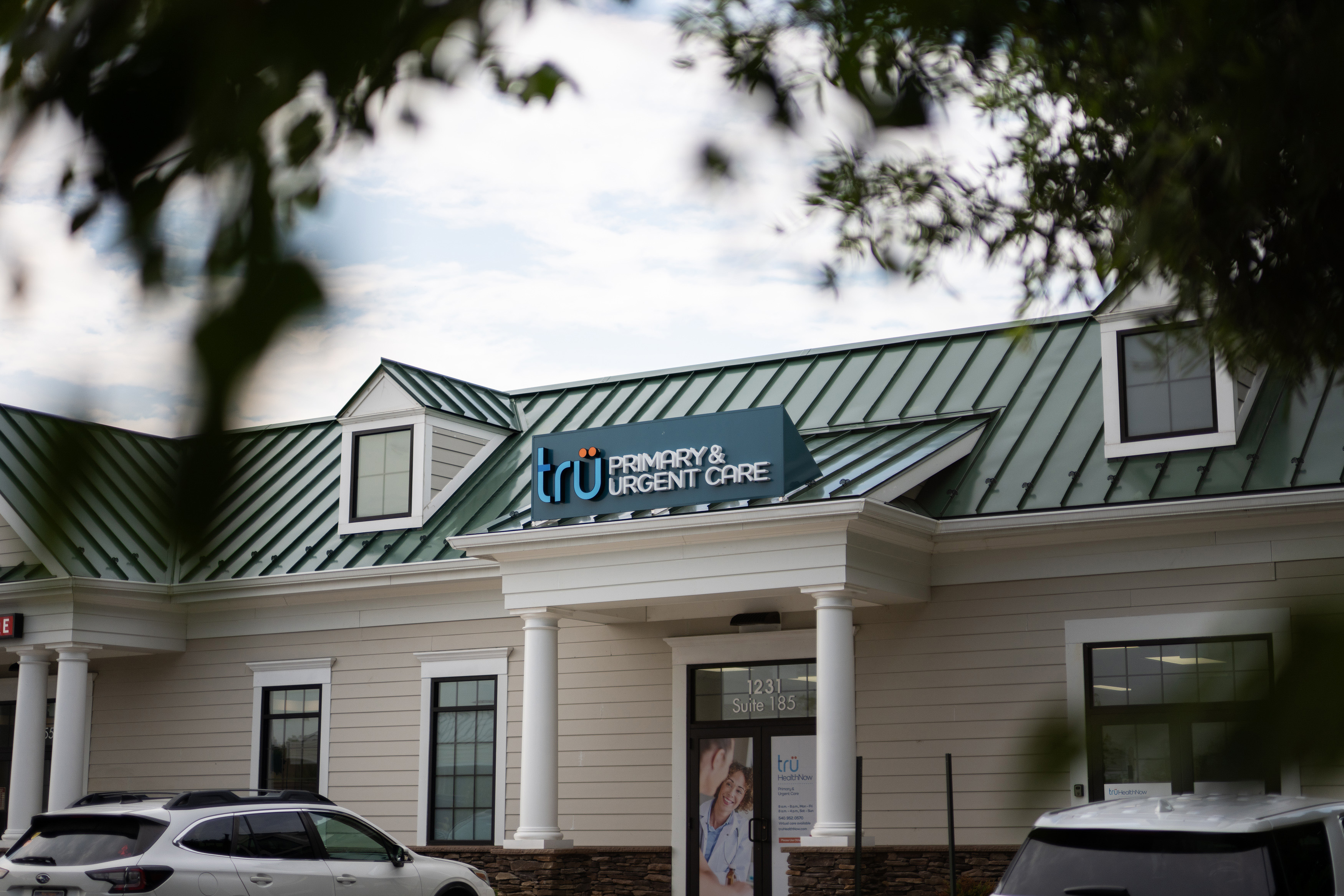
Ten minutes into the drive, however, the desperate search for relief led them to spot a TruHealthNow urgent care facility located in Purcellville, Virginia. Hoping to secure immediate medical intervention much faster than a traditional hospital emergency department could offer, they pulled into the parking lot. Little did Rowell know, this diversion would plunge her into a contentious debate concerning medical ethics, emergency triage protocols, and the controversial practice of demanding upfront payments for life-saving interventions in outpatient clinics.
A Rapidly Escalating Crisis and the Pivot to Urgent Care
As Rowell walked through the doors of the Purcellville clinic, her condition was deteriorating rapidly. She later recalled the terrifying sensation of her throat tightening, restricting her airflow with every passing second. "I thought I was going to die," she said, reflecting on the helplessness of experiencing acute respiratory distress without immediate medical assistance.
At the time, Rowell, an agritourism business manager residing in Round Hill, Virginia, was entirely uninsured. She had been forced to drop her health coverage in 2025 after premium costs climbed beyond her financial reach. Stepping up to the front desk, she transparently disclosed her uninsured status during the check-in process.
Promptly escorted to an exam room, Rowell was evaluated by an on-duty nurse practitioner. The clinical assessment was swift and accurate: Rowell was suffering from anaphylaxis, a severe, systemic, and potentially fatal allergic reaction that requires immediate administration of epinephrine to prevent cardiovascular collapse and asphyxiation. The nurse practitioner informed Rowell that she urgently needed an injection of the synthetic hormone to reverse her closing throat and declining vital signs.
Yet, before the life-saving medication could be drawn and injected into her body, the clinical protocol shifted abruptly from patient care to administrative processing.

The Financial Ultimatum: Payment Before Protection
A medical assistant entered the exam room with news that transformed a medical crisis into a financial standoff. According to Rowell, the staff member apologized before delivering an ultimatum: Rowell was required to pay $400 upfront for the epinephrine shot before any treatment could be administered.
Stunned by the demand while struggling to breathe, Rowell stumbled back out to the waiting area to retrieve her wallet from her father. Handing over her debit card, she authorized the transaction. Only after the payment cleared did the clinic proceed with the injection. Within minutes of receiving the dose, the constriction in her throat began to ease, and her physiological symptoms started to recede.
Before leaving the clinic, Rowell voiced the question that would later echo through public forums and medical ethics discussions: "If I didn’t have the money, would you have just let me die?" According to Rowell, the staff responded that it was simply company policy.
The total bill issued by TruHealthNow came to $605. This comprehensive breakdown included $400 for the epinephrine medication itself, a $40 administration fee, and a $165 facility charge for the urgent care visit. While the cost of a generic epinephrine auto-injector typically hovers around $175 on consumer discount platforms like GoodRx, urgent care clinics often markup medications and bundle administrative fees into their point-of-service billing structures.
Institutional Defense and the Defending Narrative
Leadership at TruHealthNow—a privately owned entity operating eight urgent care centers across Northern Virginia and Maryland—vigorously defended the clinic’s actions, offering a different perspective on the sequence of events. Preet Takhar, the CEO of TruHealthNow, stated in interviews that company policy mandates treating patients experiencing true medical emergencies first and handling financial transactions later. "Our policy is we give the shot and worry about the money later," Takhar maintained.
At the same time, company officials insisted that Rowell’s life was never in immediate danger during the payment interaction. Dr. Manbir Takhar, the medical director of TruHealthNow and wife of the CEO, asserted that the nurse practitioner had already stabilized Rowell’s condition before the financial request was made. According to the medical director, the request for payment coincided with the preparation of the injection, meaning that the credit card transaction did not delay the delivery of the life-saving medicine.
"The patient was stable, and that is why we took the payment then," Manbir Takhar explained, emphasizing that vital signs monitoring and a subsequent 30-minute observation period were carefully executed by the medical staff following the injection.

The Regulatory Landscape: Emergency Rooms vs. Urgent Care Clinics
The incident highlights a significant regulatory gray area within the American healthcare system. Under the federal Emergency Medical Treatment and Labor Act (EMTALA), hospital-based emergency departments are legally mandated to screen and stabilize any patient presenting with an emergency medical condition, strictly regardless of their insurance status or ability to pay.
However, standalone urgent care facilities do not automatically fall under the jurisdiction of EMTALA unless they are directly owned and operated by a hospital system. Barry Furrow, director of the health law program at Drexel University in Philadelphia, pointed out this crucial distinction. Because private urgent care clinics operate more like traditional outpatient doctor’s offices, they lack the federal mandate that forces emergency rooms to treat indigent or uninsured patients without upfront guarantees of payment.
This structural difference has become increasingly significant as the urgent care industry experiences massive national expansion. Data from the Urgent Care Association indicates that more than 15,000 urgent care centers handled approximately 185 million patient visits in recent years. These facilities have filled a vital gap in the healthcare delivery system, offering accessible, walk-in care for non-life-threatening ailments like sore throats, mild sprains, and upper respiratory infections, particularly during evenings and weekends when traditional primary care offices are closed.
Industry Experts Weigh In on Ethics and Triage
The blurring lines between urgent care convenience and emergency medical needs have ignited a broader debate among healthcare analysts, medical ethicists, and emergency physicians.
Alan Ayers, an industry consultant specializing in urgent care operations, noted that patients frequently misjudge the severity of their symptoms and walk into urgent care clinics when they actually require a hospital emergency department. While collecting a standard copay or basic service fee at check-in is customary for routine outpatient medicine, Ayers argued that financial friction should never enter the equation when a patient is facing a life-threatening crisis like anaphylaxis. "For a sore throat, it doesn’t matter much," Ayers said. "For anaphylaxis, it should never come up."
Arthur Caplan, professor emeritus and former head of the medical ethics division at the New York University Grossman School of Medicine, emphasized that physicians and medical personnel maintain a fundamental professional and ethical obligation to preserve human life. In acute, life-threatening scenarios, Caplan argued that clinicians should not force vulnerable patients to navigate financial transactions while experiencing severe medical trauma. "You don’t need to have a patient go fumbling around for a credit or insurance card," Caplan noted. "If you have the skill to take care of someone, you should."
Steven Sellars, CEO of the Urgent Care Association, acknowledged that patient conditions can change rapidly and that individuals do not always possess the medical knowledge to distinguish between urgent and emergent states. Consequently, individual urgent care operators maintain disparate internal policies dictating how staff should handle patients who require emergency stabilization or hospital transfer.
Broader Implications and Public Fallout
Following her discharge, Rowell returned home to recover under the watchful eye of her brother, noting that the physical exhaustion lingered for several days before she regained her baseline health. Seeking community support and processing the shock of the encounter, Rowell’s daughter published a summary of the incident on a local Facebook community page. The post quickly went viral, generating hundreds of comments, expressions of outrage, and widespread debate regarding medical billing practices in outpatient settings.
While Rowell harbored no underlying dispute regarding the legitimacy of the medical charges, she remained deeply troubled by the sequence of events that prioritized her debit card over her failing airway. Realizing the ongoing risk of future insect stings, Rowell has since obtained a personal prescription for an epinephrine auto-injector, ensuring she carries the life-saving device with her at all times.
Medical professionals and emergency leaders emphasize that public awareness remains the primary defense against such dangerous medical standoffs. Ryan Stanton, an emergency physician in Lexington, Kentucky, and president of the American College of Emergency Physicians, strongly advises that individuals experiencing symptoms indicative of a severe systemic reaction—such as breathing difficulties, widespread swelling, or chest pain—should bypass urgent care entirely and dial 911 or head straight to a hospital emergency department.
As the debate over healthcare accessibility, corporate clinic policies, and emergency triage continues to unfold, stories like Stephanie Rowell’s serve as a stark reminder of the high stakes involved when corporate billing models intersect with human survival.