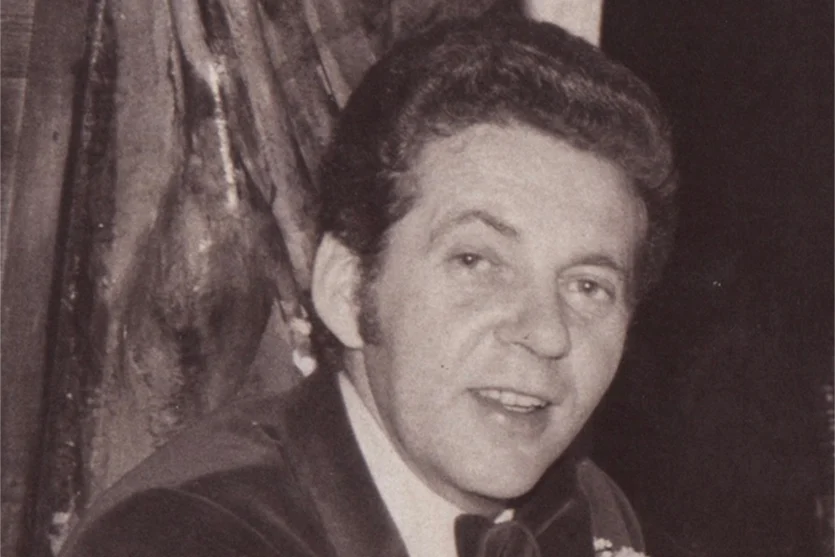
A Career Forged in the Classroom
The trajectory of Earl Barret’s career serves as a quintessential example of the "Hollywood Dream," defined not by immediate success, but by rigorous training and serendipitous mentorship. Born in Canton, Ohio, Barret’s early exposure to the arts was grounded in the disciplines of music and dance. He was a child prodigy of sorts, honing his rhythmic sensibilities through tap dancing lessons and his technical ear through violin study. These formative years in the Midwest provided the bedrock for what his family would later describe as an innate gift for timing—a skill that is arguably the most essential, yet elusive, component of comedy writing.
After moving to California and graduating from Hollywood High School and Los Angeles City College, Barret initially attempted to break into the industry as an actor. He obtained his Screen Actors Guild (SAG) card, a milestone that provided him with a unique vantage point on the production process. However, his pivot to writing in 1961 proved to be his true calling. His entry into the writers’ room was facilitated by Robert C. Dennis, who hosted a weekly, free television writing seminar. This instructional setting was more than a classroom; it was a breeding ground for the talent that would eventually supply the networks with decades of content. Barret and Dennis formed a formidable partnership, collaborating on numerous episodes for various shows and establishing the collaborative, room-based writing culture that remains the industry standard today.
Chronology of a Prolific Writer
Barret’s career spanned over three decades, a period that saw television evolve from a novelty to the central medium of American cultural discourse. His filmography reflects the tectonic shifts in television history:
- The 1960s (The Era of Variety and Adventure): Barret was a contributor to some of the most iconic programs of the decade. His writing credits during this period included the surrealist comedy My Favorite Martian, the camp-classic Batman, the whimsical Bewitched, the down-home charm of The Andy Griffith Show, and the espionage thriller I Spy. This period was defined by a rapid-fire development cycle, where writers were often expected to produce scripts under immense time constraints.
- The 1970s (The Rise of Socially Conscious Comedy): As the cultural climate changed, so did Barret’s output. He worked on shows like Sanford and Son and Welcome Back, Kotter. These programs were pivotal in bringing diverse voices to the forefront of network television and using humor to address issues of class, race, and the educational system.
- The 1980s (The Sitcom Creator): Barret reached the zenith of his career when he co-created, wrote, and executive produced Too Close for Comfort. Partnering with Arne Sultan, Barret managed the creative direction of the show, even stepping behind the camera to direct 13 episodes.
The Cultural Impact of Too Close for Comfort
Too Close for Comfort, which debuted on ABC in 1980, was a defining sitcom of the early 1980s. The show starred Ted Knight, who had already achieved fame as the blustering news anchor Ted Baxter on The Mary Tyler Moore Show. In Too Close for Comfort, Knight portrayed Henry Rush, a conservative, neurotic cartoonist living in liberal San Francisco. The premise—a father struggling to maintain boundaries with his two adult daughters living in an apartment below him—was a masterclass in the "domestic comedy" format.
The series ran on ABC until 1983 and found a second life in syndication from 1984 to 1987. For the television industry, the show represented the transition between the traditional family sitcom and the more complex, character-driven narratives that would dominate the late 80s and 90s. The show’s success was largely attributed to the chemistry between the leads—Knight, Nancy Dussault, and Jim J. Bullock—and the sharp, often biting scripts penned by Barret and Sultan. It provided a template for how to handle generational conflict through a lens of humor that was both accessible and character-deep.
Versatility Beyond the Small Screen
While television was his primary medium, Barret was not confined by it. His collaborative relationship with Arne Sultan extended into the realms of theater and cinema. Notably, the pair co-wrote the 1989 feature film See No Evil, Hear No Evil, a slapstick comedy starring Gene Wilder and Richard Pryor. The film was a commercial success, highlighting Barret’s ability to adapt his comedic sensibilities to the pacing and demands of a feature-length narrative. The ability to pivot between the episodic constraints of television and the narrative structure of film is a rare trait, and it solidified Barret’s reputation as a versatile craftsman.
Reflections on a Lifelong Learner
The passing of Earl Barret has prompted reflections from his family and colleagues on his character and his work ethic. His daughter, J.K. Barret, noted that her father remained a "lifelong learner" with a "keen, curious mind." This description is perhaps the most accurate summary of his career. To write for over 30 different shows—ranging from superhero camp to suburban satire—requires a writer to be constantly learning the "voice" of the show, the rhythm of the characters, and the shifting tastes of the viewing public.
His comic timing, which was praised as "impeccable," was the product of decades of refinement. It was not merely a talent but a cultivated craft, rooted in the tap and violin lessons of his youth. The transition from the performing arts to the writer’s room allowed him to apply his understanding of cadence and physical comedy to the written word.
Analysis: The Legacy of the Mid-Century Writer
The death of a writer like Earl Barret serves as a reminder of the anonymous labor that builds the foundations of pop culture. In the modern era, showrunners and head writers are often celebrity figures, but in the 1960s and 70s, the "writer for hire" was the backbone of the industry. Barret belonged to a cohort that operated with a high degree of anonymity, often writing for multiple shows simultaneously.
The implications of his work are seen in the continued relevance of the sitcom format. The "single-camera vs. multi-camera" debate often dominates current discussions about television, but Barret’s career reminds us that the success of a show rests on the structural integrity of the script. Whether it was the high-concept premise of My Favorite Martian or the grounded domesticity of Too Close for Comfort, Barret understood that the audience’s investment was earned through narrative consistency and character stakes.
His career also serves as a case study for the value of long-term professional partnerships. The synergy between Barret and Arne Sultan, which lasted for decades, was essential to their creative output. In an industry known for its volatility and high turnover, such partnerships provided a level of creative stability that allowed for the development of consistent, high-quality television.
Conclusion and Remembrance
Earl Barret is survived by his wife, Barbara Barnett Barret; his daughter, J.K. Barret; his son, John Nelson; and five grandsons. He was preceded in death by his daughter, Lisa Nelson.
As the industry looks back on his body of work, it is clear that Barret’s contributions were foundational. He was part of a generation that learned the ropes through hands-on experience, taught by the practitioners who came before them, and who, in turn, helped shape the expectations of the modern television viewer. His legacy remains preserved in the thousands of hours of entertainment that he helped produce, a testament to a man who understood that at the heart of every great story—whether it’s a superhero saving the world or a father trying to understand his daughters—is the essential, universal need for a good laugh. Barret’s life and work represent a dedicated, lifelong commitment to the art of storytelling, and his impact will continue to be felt by those who study the evolution of the American sitcom.