

The landscape of consumer loyalty programs is witnessing a significant shift as online shopping portals transition from simple discount engines into sophisticated financial arbitrage tools for savvy travelers and reward enthusiasts. Rakuten, a global leader in the e-commerce and rewards sector, has recently launched a series of high-value promotions that effectively allow consumers to acquire digital services at a net-zero cost, or in some instances, at a profit when valued against travel loyalty benchmarks. By offering cash back or point-based rewards reaching up to 100% of the purchase price, Rakuten is redefining the economics of customer acquisition for its partner brands while providing a unique opportunity for users to "buy" transferable currency at historically low rates.
The Mechanics of High-Yield Shopping Portals
Online shopping portals operate on an affiliate marketing model. When a consumer clicks through a portal like Rakuten to a retailer’s website, the retailer pays the portal a commission for the referral. Most portals share a portion of this commission with the consumer in the form of cash back. However, Rakuten distinguishes itself by offering a unique "Points" option. Through a strategic partnership with American Express, Rakuten allows members to earn Membership Rewards points instead of traditional cash. More recently, a similar integration with Bilt Rewards has expanded the utility of the platform for those focusing on Hyatt, Alaska Airlines, and other high-value transfer partners.
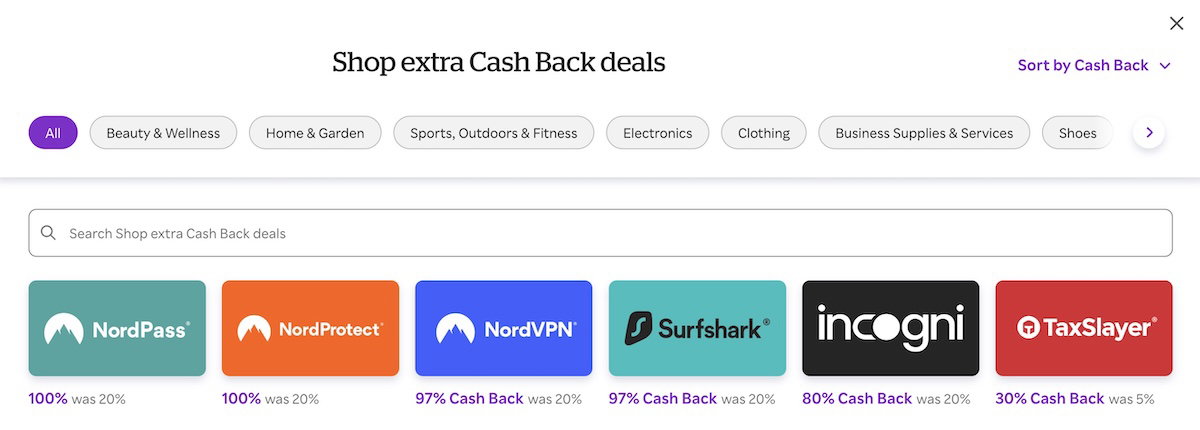
The current promotion cycle features several retailers, most notably in the software-as-a-service (SaaS) and cybersecurity sectors, offering between 97% and 100% cash back. For consumers who opt for point-based rewards, this translates to earning 97 to 100 points per dollar spent. Given that many travel analysts value American Express Membership Rewards and Bilt Rewards points at approximately 2.0 cents per point when redeemed for international premium cabin travel or high-end hotel stays, a 100% back offer effectively yields a 200% return on investment.

Case Study: The Surfshark Subscription Arbitrage
A primary example of this phenomenon is found in the current offer for Surfshark, a prominent Virtual Private Network (VPN) provider. Under the terms of the Rakuten promotion, users can purchase a multi-year subscription and receive nearly the entire purchase price back in rewards.
For instance, a "Surfshark One+" bundle, which includes VPN services, antivirus software, and data breach monitoring, is often priced around $113.13 for a 27-month term. By navigating through the Rakuten portal, a user is eligible for 97% to 100% back. In the 97% scenario, the user pays $113.13 upfront and receives approximately $109.74 in cash back or 10,974 points.
If the user chooses the point-based reward, the "cost" of the points is negligible—roughly $3.39 for nearly 11,000 points. On the secondary market of travel redemptions, 11,000 Bilt or Amex points can easily be converted into a one-night stay at a Category 3 Hyatt hotel or a short-haul flight on a partner airline, values that often exceed $200. This creates a scenario where the consumer is essentially paid to trial a cybersecurity service.
Historical Context and Evolution of Rakuten
To understand the scale of these offers, one must look at the evolution of Rakuten Rewards. Originally founded as Ebates in 1998, the company was a pioneer in the cash-back space. In 2014, the Japanese e-commerce giant Rakuten acquired Ebates for $1 billion, eventually rebranding the service in 2019.

The most transformative moment for travel enthusiasts occurred in 2019 when Rakuten integrated with American Express. This allowed users to bypass cash payments in favor of a currency that could be transferred to over 20 airline and hotel partners. This move shifted the portal’s target demographic from casual shoppers to the "miles and points" community. The recent addition of Bilt Rewards as a payout option in 2024 has further intensified competition and increased the frequency of these 100% "flash" deals as the platform seeks to maintain its dominant market share against competitors like TopCashback and RetailMeNot.
Strategic Analysis: Why Retailers Offer 100% Back
The logic behind a retailer offering 100% cash back may seem counterintuitive from a traditional profit-and-loss perspective. However, in the SaaS industry, the primary metrics for success are Customer Acquisition Cost (CAC) and Lifetime Value (LTV).
Industry analysts suggest that for companies like Surfshark, NordVPN, or Norton, the marginal cost of adding one additional user to their existing server infrastructure is nearly zero. By offering a 100% reward through Rakuten, the company is essentially spending its entire first-year marketing budget to "buy" a customer. The gamble is that a significant percentage of these users will:
- Forget to cancel their subscription before the auto-renewal at the end of the term.
- Become reliant on the service and choose to renew at full price.
- Improve the company’s "active user" metrics, which are vital for venture capital valuations and public market sentiment.
For the consumer, these promotions represent a temporary imbalance in the market that can be exploited for significant gain, provided they remain disciplined regarding subscription management.
The Referral Ecosystem and New Member Incentives
In addition to the specific merchant offers, Rakuten maintains a robust referral program designed to drive viral growth. Currently, the platform is offering a $50 bonus (or 5,000 points) for new members who sign up through a referral link and spend at least $50 within their first 90 days of membership.
This referral bonus stacks with the 100% back merchant offers. For a new member, the math becomes even more compelling. If a new user spends $113 on a VPN service:
- They receive ~$113 worth of points from the merchant offer.
- They receive an additional 5,000 points from the referral bonus.
- Total reward: ~16,300 points for a net spend of $113.
In this scenario, the cost per point drops to approximately 0.69 cents. Given that American Express often sells points directly to consumers for 2.5 cents each, this method represents a 72% discount compared to direct purchase, and a massive windfall for those who understand the value of transferable currencies.
Implications for the Loyalty and Travel Industry
The proliferation of these high-yield portal offers has broader implications for the travel industry. As more consumers flood their loyalty accounts with points earned through shopping rather than flying, the "points economy" faces potential inflation. When points are "cheap" to acquire, loyalty programs often respond by increasing the number of points required for a free flight or hotel night—a process known as devaluation.

However, for the time being, these shopping portal deals remain one of the most efficient ways to "top off" an account for a specific award. They also lower the barrier to entry for luxury travel, allowing individuals who do not have high organic credit card spend to accumulate the balances necessary for business-class travel.
Risk Management and Best Practices for Consumers
While the rewards are high, participating in these "arbitrage" deals requires careful attention to detail. Professional shoppers and rewards experts recommend the following protocol to ensure points are properly credited:
- Disable Ad-Blockers: Tracking cookies are the primary mechanism through which Rakuten verifies a purchase. Ad-blockers can interfere with this process, leading to "missing" cash back.
- Read the Exclusions: Many 100% offers are strictly for "New Customers Only." If a user has had an account with the merchant in the past, the portal may deny the reward.
- Document the Transaction: Taking screenshots of the offer percentage and the final checkout screen provides essential evidence if a manual claim needs to be filed with Rakuten customer service.
- Monitor Auto-Renewals: To avoid unexpected charges in the future, users should set calendar reminders to evaluate the service before the subscription period ends.
Conclusion and Outlook
The current Rakuten promotions offering near-total reimbursement for digital services represent a high-water mark in the world of incentivized spending. By leveraging the competitive landscape of the VPN and cybersecurity industries, Rakuten has created a "win-win-win" scenario: the merchant gains a new user, Rakuten earns an affiliate commission, and the consumer acquires valuable travel points at a fraction of their market value.
As the digital economy continues to prioritize user growth over immediate profitability, it is likely that these high-yield offers will continue to appear periodically. However, their "flash" nature—often lasting only 24 to 48 hours—demands a level of alertness and financial agility from the consumer. For those willing to navigate the technicalities of tracking and subscription management, the era of "profitable shopping" is firmly established, turning everyday digital purchases into the fuel for future global travel.










Leave a Reply