
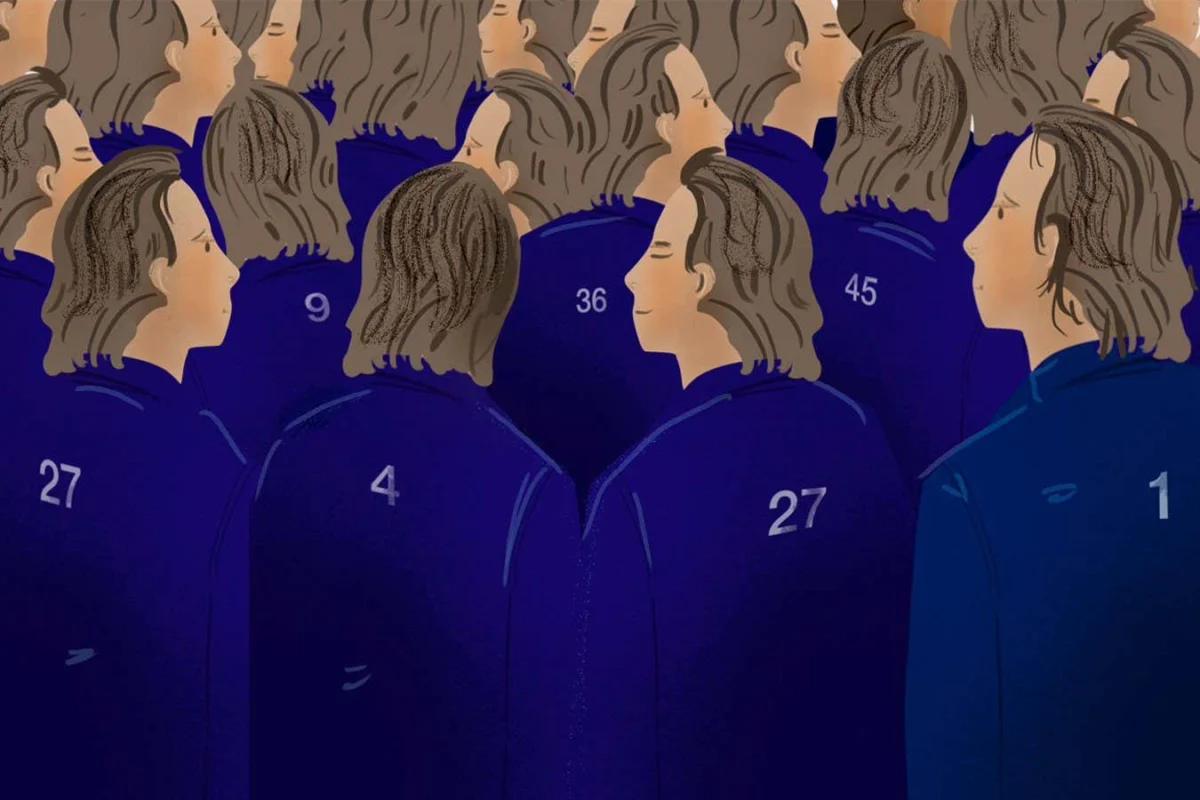
The persistent allure of conspiracy theories, particularly those involving the secret replacement of public figures, has once again captured the public imagination. Recent online discourse has focused on actor Jim Carrey, with claims circulating that the individual who appeared at the 51st César Awards in Paris on February 26th was not the original actor, but a sophisticated clone. This sensational claim, while lacking any verifiable evidence, taps into a long-standing fascination with doppelgängers and shadowy organizations operating behind the scenes.
The Jim Carrey Clone Theory: A New Chapter in Celebrity Doppelgänger Myths
The genesis of this particular theory appears to stem from Jim Carrey’s relatively infrequent public appearances in recent years and a perceived change in his physical appearance. While such transformations are commonly attributable to the natural processes of aging, cosmetic interventions, or simply shifts in personal style, the internet’s echo chambers have amplified these observations into a narrative of clandestine replacement. The César Awards appearance, his first in some time, became the focal point, with online communities dissecting his every feature, searching for anomalies that could support the cloning hypothesis.
This is not an isolated phenomenon. The "cloning" narrative has been previously applied to other prominent figures, most notably Paul McCartney, with the enduring "Paul is dead" conspiracy theory suggesting his demise in 1966 and subsequent replacement by a look-alike. More recently, singer Avril Lavigne has been the subject of similar speculation, with claims that she died in 2003 and was replaced by a body double. These theories, while widely debunked by scientific consensus and lacking concrete proof, persist due to their inherent dramatic appeal and the human tendency to seek patterns and explanations, even in the absence of evidence.
The Scientific and Logistical Hurdles of Human Cloning
The core of these celebrity cloning theories, particularly the Jim Carrey case, hinges on a fundamental misunderstanding of human cloning technology and its current limitations. As the original article points out, the scientific community has yet to achieve successful, widespread human cloning. While significant advancements have been made in cloning other species, human cloning remains an ethically fraught and technically challenging endeavor.
Even if we were to hypothetically assume the existence of a clandestine, highly advanced cloning laboratory in Hollywood, the practicalities of producing a convincing clone of an adult celebrity present insurmountable obstacles. The most significant hurdle is the developmental stage of a cloned organism. A clone, harvested from adult cells, would emerge as a nascent embryo or, at best, a newborn. To reach the physical appearance of a fully grown adult, such as Jim Carrey, the clone would require decades of growth and development.
Consider the timeline: If a clone were created today using cells harvested from Carrey, for instance, from the set of a hypothetical Sonic the Hedgehog 4, this clone would emerge as an infant. It would then need approximately 64 years to mature to an age that approximates Carrey’s current appearance. By that time, the original Carrey would be 128 years old, a lifespan that, while not impossible, would render the premise of a seamless replacement highly improbable. Furthermore, the ethical implications of such an undertaking, from the sourcing of genetic material to the potential exploitation of a cloned individual, are immense and largely unaddressed by the conspiracy narratives.
Echoes from Science Fiction: The "Accelerated Aging" Problem
The notion of creating a fully formed, adult clone instantly is a common trope in science fiction, often employed to advance a narrative without grappling with biological realities. A notable example, referenced in the original article, is the film Star Trek: Nemesis. In this installment, the antagonists attempt to replace Captain Picard with a genetically engineered clone. To achieve this, the clone is subjected to accelerated aging. However, even with the advanced technology depicted in the 24th century, this process is portrayed as imperfect and problematic. This fictional portrayal, while entertaining, highlights the inherent biological challenges that a real-world cloning conspiracy would face. The biological processes of aging are complex and deeply intertwined with cellular mechanisms, making rapid, controlled maturation a monumental scientific challenge.
The Rise of Sonic Seasoning: When Sound Meets Taste
Shifting from the realm of speculative fiction to the tangible world of sensory science, the practice of "sonic seasoning" is emerging as a fascinating area of research. This innovative field explores how carefully curated sounds can profoundly influence our perception and enjoyment of food. The underlying principle is sensory cross-modality, a phenomenon where different senses are interconnected in the brain. This cross-connection can lead to intriguing correspondences, such as a specific sound evoking a particular smell or even taste.
While some individuals experience synaesthesia, a neurological condition where stimulation of one sensory or cognitive pathway leads to automatic, involuntary experiences in a second sensory or cognitive pathway (e.g., seeing colors when hearing music), sonic seasoning operates on a broader neurological level, affecting most people to varying degrees. The sounds experienced during a meal can subtly, yet significantly, alter our overall culinary experience, influencing not just taste but also texture and aroma perception.
The Theremin and the Metallic Taste: A Harmonious (and Unearthly) Connection
A recent study by Charles Spence and Tianyi Zhang at the University of Oxford, highlighted by writer Chris Simms, delves into the intriguing quest to identify a "musical match for the metallic taste." This particular taste sensation, often associated with certain medications, supplements, or even deficiencies, had not previously been systematically linked to specific auditory stimuli.
The research, with a touch of what the original article calls "graceful inevitability," identified the theremin as the sound most strongly associated with a metallic taste. For those unfamiliar with this unique electronic instrument, the theremin is played without physical contact. Two antennas control pitch and volume, and the musician manipulates their hands in the air around them. This method of playing, combined with the instrument’s distinct, ethereal wail, has made it a staple in science fiction soundtracks, evoking otherworldly and often unsettling atmospheres. The researchers found that the theremin’s distinctive soundscape effectively primes the brain to perceive a metallic flavor.
This finding raises intriguing questions about how our auditory environment can influence our gustatory perceptions. The association with old sci-fi movies further deepens this connection, suggesting that our brains may form subconscious links between specific sounds and the emotional or sensory experiences they accompany. The original article humorously notes the absence of a theremin in the original Star Trek theme, attributing a perceived metallic taste to their own "wonky brain," while also pointing out common misconceptions about the theremin’s presence in iconic tracks like the Forbidden Planet soundtrack and the Beach Boys’ "Good Vibrations."
Nominative Determinism: When Names Align with Professions
The concept of nominative determinism, the idea that a person’s name influences their behavior or life choices, often leads to delightful coincidences. Reader Richard Black has brought to light a particularly intricate example that weaves together astronomy, music, and a classic song.
The chain of connection begins with an article by Chanda Prescod-Weinstein on the definition of a galaxy. In her piece, Prescod-Weinstein references a paper by astronomer Simon Smith, detailing the discovery of a star cluster named Ursa Major III. This cluster derives its name from its location within the constellation Ursa Major, Latin for "the great bear."
Richard Black’s mind, as he recounts, immediately leaped to the Alan Price song, "Simon Smith and the Amazing Dancing Bear." This seemingly tangential connection, linking an astronomer named Simon Smith and a celestial "great bear" to a song about a dancing bear, exemplifies the playful nature of nominative determinism. While the connection might be seen as a "giant game of Six Degrees of Kevin Bacon" by some, it undeniably creates a memorable and amusing cognitive link.
To further illustrate the principle, reader Richard Bartlett has provided an additional example: the head coach of Leicester City women’s football team is Rick Passmoor. While not as intricate as the Simon Smith connection, it still presents a name that, in a certain context, seems to align with the individual’s profession.
The Broader Implications: Perception, Science, and the Human Psyche
These seemingly disparate news items – the enduring power of celebrity clone conspiracy theories, the scientific exploration of sonic seasoning, and the whimsical nature of nominative determinism – all offer glimpses into the complexities of the human psyche and our relationship with the world around us.
The persistence of cloning conspiracy theories, despite overwhelming scientific evidence to the contrary, speaks to a deep-seated human desire for narrative and an inclination to question authority and established facts. In an era of information overload, these theories can offer a sense of order and a compelling, albeit false, explanation for perceived anomalies. The scientific exploration of sonic seasoning, on the other hand, demonstrates the intricate ways in which our senses interact and how subtle environmental factors can influence our experiences. This research has potential applications in fields ranging from gastronomy to therapeutic interventions, offering a scientifically grounded approach to understanding sensory perception.
Finally, the amusement derived from nominative determinism, while seemingly trivial, highlights our human tendency to find patterns and connections, even in random occurrences. These instances, though often coincidental, can serve as lighthearted reminders of the subtle ways in which language and identity can intertwine.
In conclusion, while the idea of celebrity clones remains firmly in the realm of fiction, the fascination with such theories, coupled with genuine scientific advancements in understanding sensory perception and the playful nature of language, offers a rich tapestry of human curiosity and the ongoing quest to make sense of our world. The "Feedback" section of New Scientist serves as a valuable platform for these diverse observations, reminding us that science and popular culture often intersect in unexpected and thought-provoking ways.










Leave a Reply