
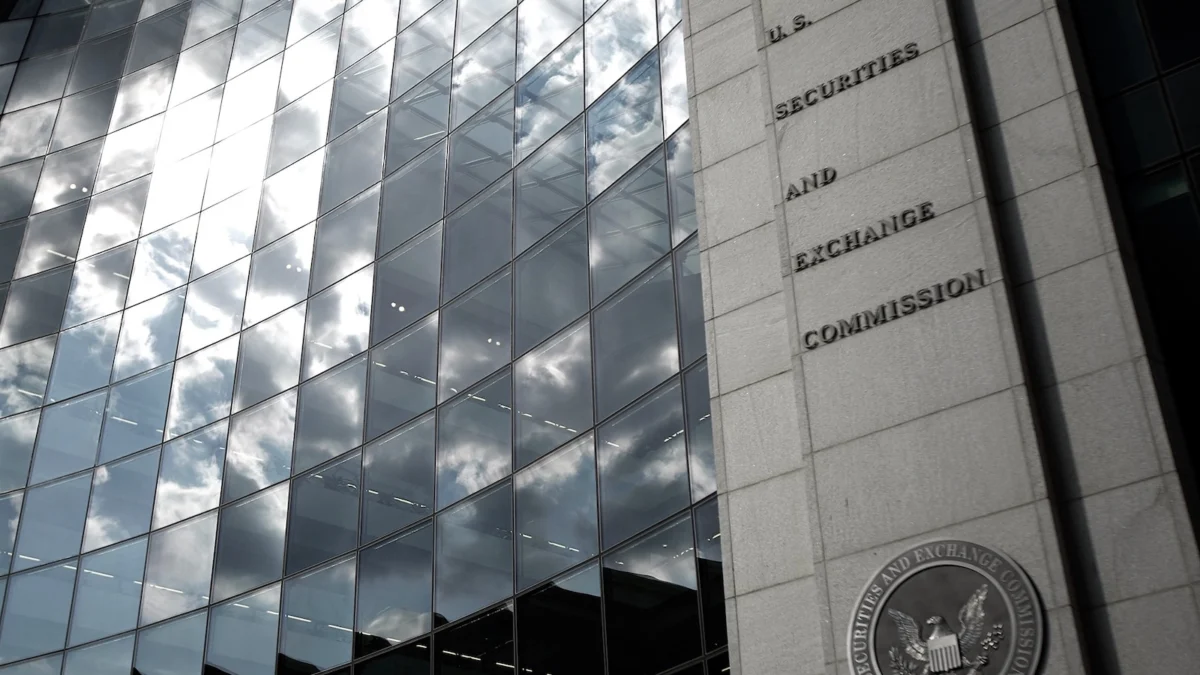
In a significant challenge to the regulatory landscape of corporate governance, a coalition of activist investors and shareholder advocacy groups has launched the Proxy Open Exchange (POE), a decentralized digital platform designed to bypass recent restrictions imposed by the Securities and Exchange Commission (SEC). The initiative, spearheaded by the non-profit group As You Sow, serves as a direct response to policy shifts under the Trump administration that have systematically curtailed the ability of smaller investors to utilize the government’s primary filing system, known as EDGAR (Electronic Data Gathering, Analysis, and Retrieval). By providing an alternative venue for "exempt solicitations," POE aims to preserve the transparency and communicative freedom that proponents argue are essential for a functioning free market.
The emergence of POE marks a pivotal moment in the ongoing struggle between retail investors and large-scale regulatory bodies. For decades, the SEC’s EDGAR system has been the gold standard for corporate transparency, allowing investors of all sizes to file documents that inform fellow shareholders about critical issues ranging from climate risk and executive compensation to diversity, equity, and inclusion (DEI) initiatives. However, recent rule changes have effectively barred investors with holdings of less than $5 million from using the system to distribute exempt solicitations. These documents are vital tools for activists who wish to advocate for specific board actions or environmental policies without the prohibitive costs of a full-scale proxy contest.
The Evolution of EDGAR and the Regulatory Shift
To understand the impetus behind the Proxy Open Exchange, one must examine the historical role of the EDGAR system. Established in the 1980s and transitioned to a fully electronic format in the mid-1990s, EDGAR was intended to level the playing field by providing equal access to market-moving information. It became the central repository for 10-Ks, 10-Qs, and various proxy materials. Among these, the "exempt solicitation" allowed shareholders to voice concerns and organize support for resolutions without triggering the burdensome filing requirements of a formal proxy solicitation, provided they did not seek the power to act as a proxy for others.
The regulatory environment began to shift significantly during the Trump administration. Critics argue that the SEC, under various leadership appointments, moved to insulate corporations from the perceived "nuisance" of small-scale activism. In January 2024, the SEC formalized a threshold that restricted EDGAR access for exempt solicitations to those holding at least $5 million in shares. The commission justified this move as an effort to "rein in the scope of government" and "ease burdensome regulation." An SEC spokesperson previously noted that the volume of requests was becoming unmanageable and that corporations had expressed concerns regarding "confusion" among the broader investor base caused by a perceived misuse of the system.
The Birth of the Proxy Open Exchange
The response from the advocacy community was not merely rhetorical. Andrew Behar, CEO of As You Sow, viewed the SEC’s restrictions as a direct threat to shareholder democracy. "We believe a free market requires communication," Behar stated during the launch of the new platform. "If they’re going to take away EDGAR, we’re going to give them POE." The name itself is a nod to the literary figure Edgar Allan Poe, but the platform’s function is strictly pragmatic.
POE was engineered to mimic the functionality of EDGAR to ensure a seamless transition for users. It utilizes the same Central Index Keys (CIK)—unique identifiers assigned by the SEC to individuals and entities—to categorize and organize filings. This technical alignment allows users to track the activities of specific companies and investors just as they would on the official government site. Despite being a private initiative, the platform maintains a commitment to neutrality. While As You Sow reviews submissions for basic clerical errors, it does not filter content based on political or social orientation.
This open-access policy has already yielded results. In its first week of operation, POE hosted 63 filings, a figure that notably outpaces the 39 exempt solicitations recorded on the official EDGAR system during the same period in 2026. This data suggests a significant migration of shareholder discourse from the public sector to this new private alternative.
Legal Framework and Technical Reliability
One of the primary concerns regarding alternative filing platforms is the veracity of the information provided. On the official EDGAR system, filers are subject to federal securities laws, including strict anti-fraud provisions. Jill Fisch, a professor of business law at the University of Pennsylvania, notes that the transition to POE does not grant filers a "free pass" to disseminate misleading information. "The postings have to be accurate; that doesn’t change," Fisch explained. Any individual or group posting to POE is still subject to the same legal liabilities regarding fraud and misrepresentation that apply to any public communication intended to influence investors.
Furthermore, POE offers a modern technological advantage over its predecessor. The SEC’s EDGAR system has frequently been criticized by users as "old and glitchy," with an interface that feels rooted in the early days of the internet. In contrast, POE has been designed with contemporary user experience (UX) principles in mind, making it more accessible to the average retail investor. This "democratization of data" is a central pillar of the project, ensuring that the barrier to entry for corporate engagement is as low as possible.
Institutional Resistance and Market Reactions
While the activist community has embraced POE, the institutional response has been more measured. Institutional Shareholder Services (ISS), one of the world’s dominant proxy advisory firms, has reportedly indicated that it will not consider information that is not published on the official EDGAR platform. This stance presents a significant hurdle for activists, as ISS and its competitor, Glass Lewis, wield immense influence over how institutional investors—such as pension funds and mutual funds—vote on shareholder resolutions.
The reluctance of major proxy advisors to recognize POE highlights the "gatekeeper" role these firms play in the financial ecosystem. If the information on POE is not integrated into the research reports used by the world’s largest asset managers, the impact of the filings may be localized to smaller, independent investors. However, Professor Fisch suggests that the sheer accessibility of the site may eventually force a change in institutional behavior. As mutual funds, university endowments, and smaller institutions begin to rely on POE for their research, the pressure on advisors to include this data will likely mount.
Corporate Counter-Strategies and Future Implications
The corporate sector has viewed the rise of alternative platforms with a mixture of silence and strategic opposition. Companies like Exxon Mobil, which have historically been at the center of high-profile shareholder battles over climate change, have not officially commented on the launch of POE. However, analysts suggest that corporations may respond in one of two ways: by launching their own proprietary communication portals to control the narrative, or by lobbying the SEC to reverse its restrictions and bring all solicitations back under the "regulated umbrella" of EDGAR.
The current situation creates a paradoxical environment for corporations. While the SEC’s restrictions were intended to reduce the "noise" of small investors, they have inadvertently birthed an unregulated alternative that is harder for corporations to monitor and counter. On EDGAR, filings are centralized and follow a predictable format; on the open web, communications can take many forms and reach wider audiences through social media integration.
Chronology of the Shareholder Communication Conflict
The tension leading to the creation of POE can be traced through a series of regulatory and market events:
- 2017-2020: The SEC begins exploring ways to modernize the proxy process, frequently citing the need to reduce the "burden" of shareholder proposals on public companies.
- September 2020: The SEC adopts amendments to Rule 14a-8, raising the requirements for shareholders to submit proposals for inclusion in a company’s proxy statement.
- January 2024: The implementation of the $5 million threshold for exempt solicitations on EDGAR effectively silences thousands of smaller activist investors.
- Late 2024: Non-profits like the Interfaith Center on Corporate Responsibility (ICCR) begin hosting proxy memos on their private websites to fill the information gap.
- Early 2026: As You Sow officially launches the Proxy Open Exchange (POE), providing a robust, searchable, and CIK-integrated alternative to EDGAR.
- Current Status: POE sees a rapid influx of filings, surpassing the volume of exempt solicitations on the official government system.
The "Cat Out of the Bag" Phenomenon
As the financial world watches the development of POE, the prevailing sentiment among legal experts is that the landscape of corporate communication has been permanently altered. Even if a future administration or a different SEC leadership were to restore full access to EDGAR, the precedent for private, decentralized platforms has been set.
"Once investors figure out how cheap and easy and convenient it is to use the internet and social media to communicate, I don’t think they’re going to stop," said Professor Fisch. She describes the situation as a "one-way street" where the "cat is out of the bag." The decentralization of market information is a trend seen across various sectors of finance—from the rise of "meme stocks" coordinated on Reddit to the use of decentralized finance (DeFi) protocols.
For Andrew Behar and the team at As You Sow, the ultimate goal remains a return to a robust, publicly funded system of transparency. They view POE as a temporary necessity—a digital "underground railroad" for shareholder rights. "We do not want this to be a necessary platform into perpetuity," Behar remarked. "When the SEC returns to its core mission, we expect EDGAR to be restored because transparent information sharing is essential for the free market."
Whether POE remains a permanent fixture or a historical footnote, its existence serves as a potent reminder of the resilience of shareholder activism. In an era where regulatory hurdles can be erected overnight, the digital age provides the tools for those on the periphery of power to build their own systems of influence, ensuring that the conversation between a company and its owners remains open, regardless of the size of their stake.










Leave a Reply