
On a sweltering July day, thirty fighters from the Kurdistan Workers’ Party (PKK) performed a ritual that many hoped would signal a definitive shift in regional history. They unslung their rifles, walked toward a central pyre, and tossed their weapons into a blazing fire. This symbolic ceremony, captured on video and circulated globally, was intended to mark an inflection point in a conflict that has spanned four decades and claimed tens of thousands of lives. However, as the smoke from the ceremonial fire cleared, it revealed a landscape scarred not just by political division, but by profound ecological devastation. The lingering question for diplomats, scientists, and local communities is no longer just how to maintain a ceasefire, but how to repair the grim environmental toll of a war that has transformed the geography of the Kurdish region.
The conflict in the Kurdish territories, which extend across the borders of Turkey, Iraq, Iran, and Syria, has left a legacy of scorched forests, contaminated water tables, and a precipitous decline in regional biodiversity. Researchers at the United Nations University’s Institute for Water, Environment and Health (UNU-INWEH) are now advocating for a paradigm shift in how peace is brokered. They argue that the PKK and the Turkish government have a historic opportunity to pioneer "green transitional justice"—a framework that places environmental restoration at the heart of peace treaties.
The Ecological Cost of Decades of Conflict
War is rarely contained within the parameters of human casualties and political boundaries; its most enduring victim is often the land itself. In the Kurdish regions of southeastern Turkey, military operations have frequently utilized "scorched earth" tactics to deny cover to insurgent groups. This has resulted in the systematic burning of vast forest tracts, which are essential for carbon sequestration and local microclimates. Beyond the immediate loss of flora, these fires destroy the habitats of endemic species, leading to a "biodiversity vacuum" that can take centuries to recover.
The Kurdish conflict is not an isolated example of environmental warfare. History provides a somber roadmap of what happens when ecological damage is ignored during peace settlements. In Vietnam, more than fifty years after the United States military ceased the spraying of Agent Orange, dangerous levels of dioxins remain in the soil and sediment, continuing to cause severe health defects in newborns and contaminating the food chain. Similarly, munitions from World War I and World War II still litter the floors of the North Sea and the Baltic, leaking toxic heavy metals and chemical agents into the marine environment.
In contemporary contexts, experts have issued urgent warnings regarding the long-term environmental-health consequences of the wars in Ukraine, Gaza, and Iran. In Ukraine, the destruction of the Kakhovka Dam and the heavy metal contamination of agricultural soil have created an ecological crisis that will outlast the current geopolitical tensions. In Gaza, the collapse of waste management and water treatment infrastructure has led to catastrophic groundwater contamination. The UNU-INWEH researchers argue that unless these factors are addressed in peace negotiations, the resulting environmental instability will inevitably sow the seeds for future conflict.
A New Framework: Green Transitional Justice
Pinar Dinc, a research fellow at the United Nations University institute and lead author of a recent report on the Kurdish conflict, suggests that conventional peace treaties are fundamentally flawed because they focus almost exclusively on security and disarmament. "If we go beyond this security perspective and think more around a holistic peace approach, then we might actually manage to create something new," Dinc stated. This "something new" is the integration of ecological health into the legal and social framework of reconciliation.
The UNU-INWEH report outlines a multi-step process for implementing green transitional justice. The first step involves the formal recognition of a healthy environment—including clean air, safe water, and fertile soil—as a fundamental human right. By establishing this legal baseline, the peace process can hold state and non-state actors accountable for environmental crimes committed during wartime.
Furthermore, the report emphasizes the protection of "environmental defenders." Globally, activists who protect land and water from exploitation are frequently targets for violence and harassment. In conflict zones, these individuals are often caught between warring factions. A peace plan that includes environmental restoration must provide legal and physical safeguards for those tasked with monitoring and repairing the land.
Chronology of the Conflict and Stalled Negotiations
The conflict between Turkey and the PKK began in 1984 when the group launched an armed struggle for Kurdish autonomy. Since then, the violence has moved through various phases of escalation and tentative diplomacy.
- 1984–1999: A period of high-intensity conflict characterized by village evacuations and significant casualties on both sides.
- 1999–2004: A period of relative calm following the capture of PKK leader Abdullah Öcalan.
- 2013–2015: The "Solution Process," the most significant attempt at a peace treaty to date. This period saw a ceasefire and direct negotiations between the Turkish government and Öcalan.
- 2015–Present: The collapse of the peace process led to a return to urban warfare and cross-border operations in northern Iraq and Syria.
Earlier peace efforts collapsed in 2015 amid mutual distrust and a surge in regional instability. Michael Gunter, a political science professor at Tennessee Technological University and a specialist in Kurdish affairs, notes that the current atmosphere remains fraught. "They’re not even in the same universe," Gunter said of the two parties. "Turkey considers the PKK a terrorist organization that should surrender now. The PKK considers Turkey to have an ultra-nationalist constitution, which should be changed to make room for the ethnic Kurds."
In February 2024, a Turkish parliamentary commission advanced a "terror-free Türkiye" initiative. While the initiative proposes legal reforms and fast-tracking negotiations, it notably lacks any mention of environmental restoration or "green" clauses. For researchers like Dinc and Kaveh Madani, the director of UNU-INWEH, this is a missed opportunity to find common ground.
Community-Led Restoration as a Path to Stability
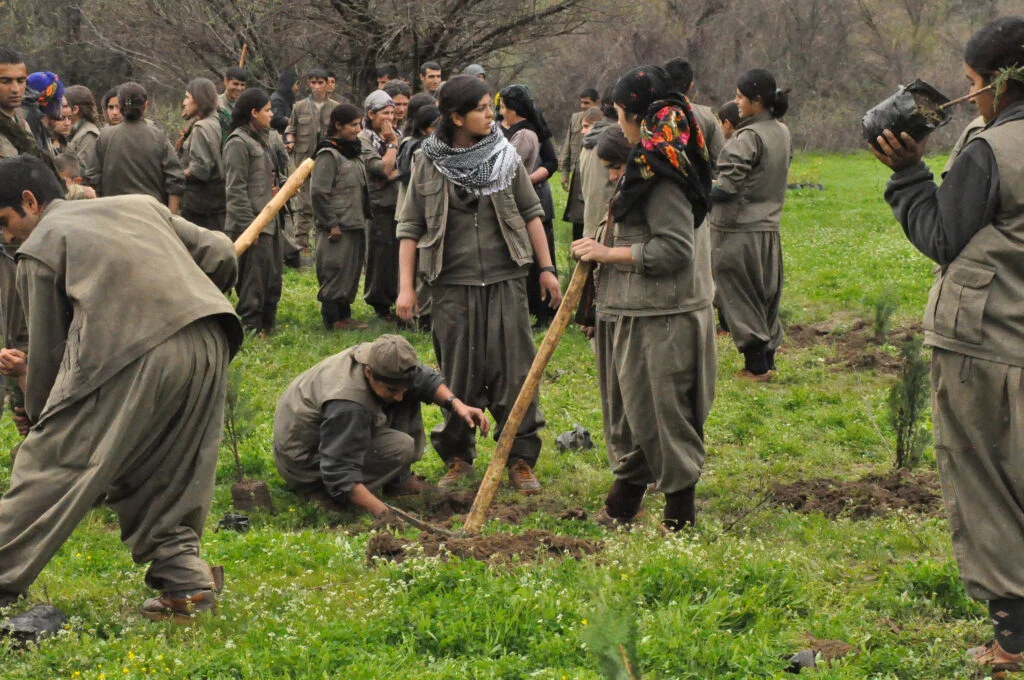
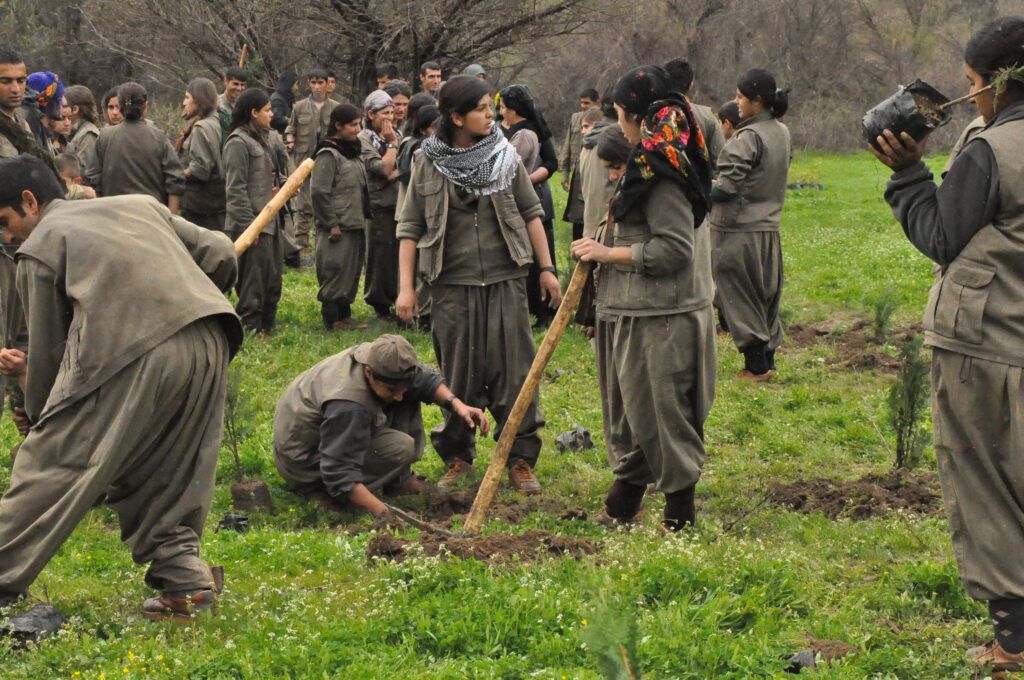
A central tenet of the UNU-INWEH proposal is that environmental repair should be spearheaded by those most affected: the local Kurdish communities. Since the war began, more than 3,000 Kurdish villages have been razed or evacuated, displacing upwards of 378,000 people. The human cost is staggering, with nearly 40,000 deaths recorded over the decades.
If restoration efforts are managed locally, they could serve as a powerful economic engine for the region. Creating jobs in reforestation, water treatment, and sustainable agriculture would provide an alternative to the "war economy" that often persists in post-conflict zones. Moreover, it allows displaced populations to return to their ancestral lands with a sense of purpose and agency.
Kaveh Madani views the environment as a potential point of unification. "The environment can also be a cause, a contributor to the peace-building process and building trust," Madani said. Because environmental issues—such as the management of the Tigris and Euphrates rivers—transcend political borders, they necessitate cooperation. Cross-border environmental management could serve as a "soft" entry point for diplomatic engagement between Turkey, Iraq, and the Kurdish administration.
Economic Mechanisms and Global Funding
One of the primary hurdles to environmental restoration is the astronomical cost. However, the UNU-INWEH report suggests that the international community has existing mechanisms that could be leveraged for this purpose.
Funding could be secured through:
- The Global Environment Facility (GEF): As the world’s largest multilateral fund for the environment, the GEF provides grants for projects related to biodiversity and land degradation.
- The Green Climate Fund (GCF): This fund aims to help developing countries limit or reduce their greenhouse gas emissions and adapt to climate change. Since the Kurdish region is highly vulnerable to the impacts of climate change, it qualifies for such support.
- Peace Bonds: A novel financial instrument where investors provide capital for post-conflict reconstruction with the return tied to the successful maintenance of peace and the achievement of specific environmental milestones.
Nazan Üstündağ, an independent researcher who has studied exclusionary regimes and autocratization in Turkey, acknowledges that implementing these recommendations will be an uphill battle. She notes that while direct clauses in a formal agreement might be difficult to secure, the peace process creates a vital "space for non-armed struggles," allowing civil society to advocate for the land.
Implications for Global Conflict Resolution
The Kurdish case serves as a microcosm for a global problem. As climate change intensifies resource scarcity, the link between environmental degradation and violent conflict will only strengthen. If Turkey and the PKK were to adopt even a fraction of the "green transitional justice" framework, it would provide a blueprint for other conflict-ridden regions.
The necessity of this approach is underscored by the interconnectedness of human and ecological health. As Pinar Dinc warned, "Human life and environmental health are so interconnected with each other that if one isn’t holding, the other one will also collapse. And then we just see a continuation of all sorts of damage and suffering."
Ultimately, the goal of green transitional justice is to ensure that when the guns are finally silenced, the land that remains is capable of sustaining the life that survived. By acknowledging that a peace treaty is not merely a cessation of hostilities but a commitment to the future of the earth itself, negotiators may find the "lasting peace" that has eluded the region for forty years. As Madani concluded, "We live in a dynamic world where things are continuously changing; we learn from the past." The question remains whether the leaders of today are ready to apply those lessons to the soil beneath their feet.








Leave a Reply