
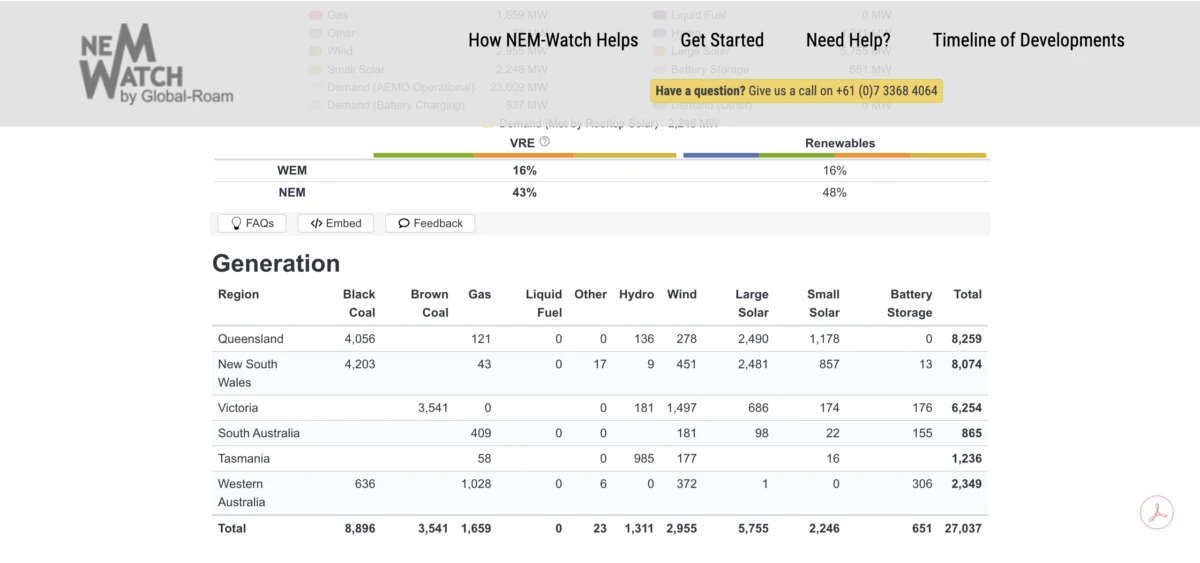
Australia’s energy landscape underwent a significant transformation during the first quarter of 2026, as renewable energy production reached unprecedented levels, fundamentally altering the nation’s National Electricity Market (NEM). According to the latest data from the Australian Energy Market Operator (AEMO) and industry analysis from Energy Source and Distribution (ESD), renewable sources accounted for 46.5% of total generation across the NEM in Q1 2026. This figure represents a 4% increase compared to the same period in 2025, marking a new record for the first quarter of any year and signaling an accelerated departure from fossil fuel dependency.
The surge in clean energy production has been driven by a combination of favorable weather conditions, increased utility-scale wind and solar capacity, and a massive expansion in residential energy systems. This shift has not only impacted the environmental profile of the Australian grid but has also begun to exert downward pressure on wholesale electricity prices, which saw a 12% decline year-over-year.
The Dominance of Solar and Wind in the National Electricity Market
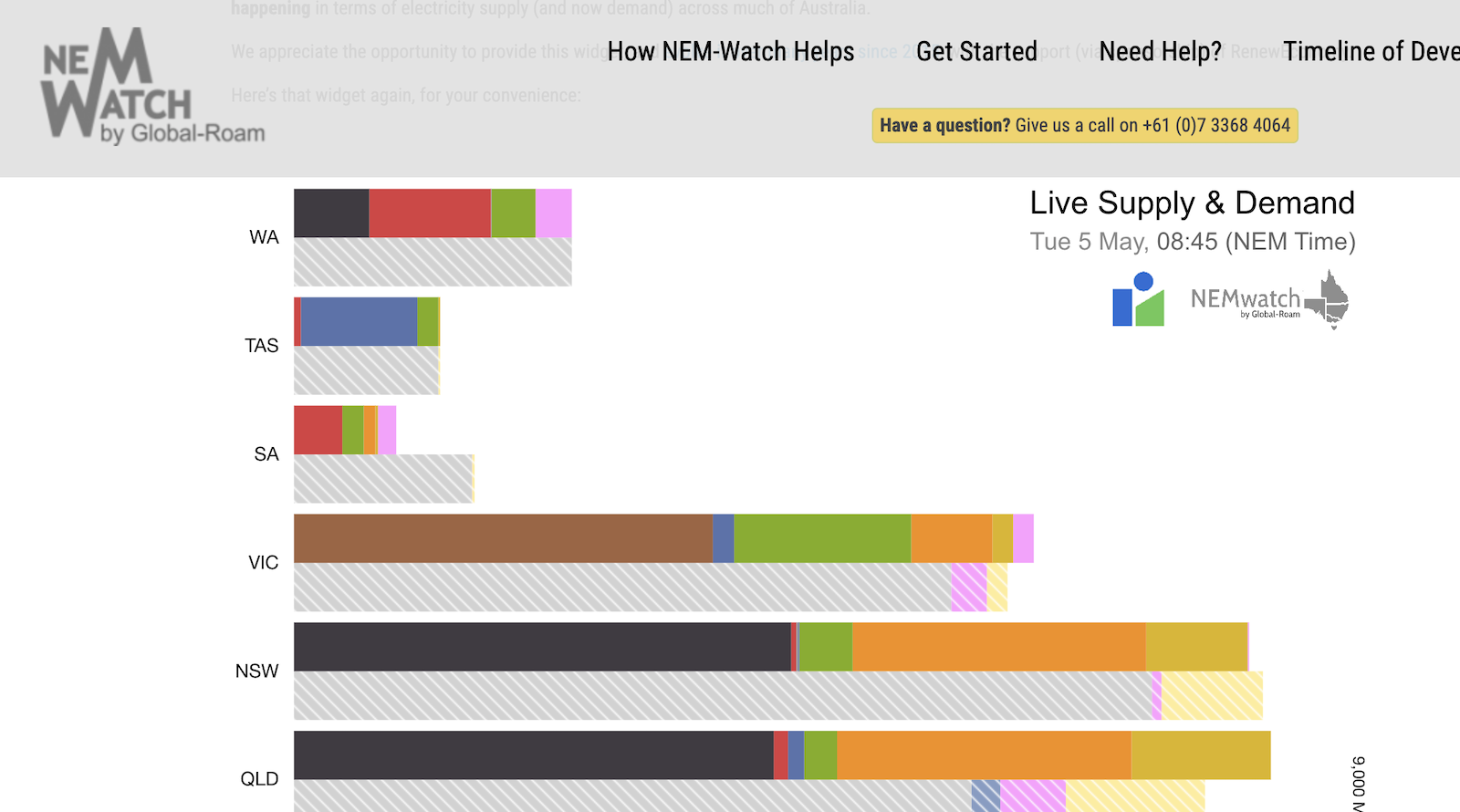
The National Electricity Market, which interconnects the electrical grids of Queensland, New South Wales, Victoria, South Australia, Tasmania, and the Australian Capital Territory, has become a primary staging ground for the world’s most rapid energy transitions. During the morning hours of the current autumn season, solar production has consistently dominated the generation mix on the Eastern Seaboard.
Rooftop solar remains a cornerstone of the Australian energy strategy. In the first quarter of 2026, residential and small-business solar installations contributed over 4 gigawatts (GW) to the grid, representing approximately one-sixth of the total supply. This decentralized form of generation has allowed households to bypass traditional transmission costs and provide essential support to the grid during peak daylight hours.
Wind energy has also demonstrated robust growth, with output increasing by nearly 10% compared to the previous year. The synergy between solar and wind—where solar peaks during the day and wind often provides consistent output during evening and overnight periods—is becoming increasingly vital as coal-fired plants are retired.
Record Lows for Coal and Gas Generation
As renewable energy capacity expands, the role of traditional thermal generation continues to diminish. The Q1 2026 data reveals that total coal-fired generation fell to a historic low of 13,102 megawatts (MW), a 4.4% reduction from Q1 2025. This decline is part of a broader trend as aging coal assets become less economically viable in a market characterized by low-cost renewable surges.
Gas-fired generation experienced an even more dramatic contraction. Averaging just 712 MW, gas output plummeted by 24% year-on-year, reaching its lowest quarterly average since the final quarter of 1999. Historically, gas has been utilized as a "peaking" fuel to manage demand spikes; however, the rapid deployment of battery storage is increasingly displacing the need for gas-fired firming.
The Household Battery Revolution and Federal Subsidies
A critical factor in the stabilization of the Australian grid is the "Cheaper Home Battery" initiative. Recent government reports indicate that more than 350,000 household batteries are now operational across the country, providing over 10 gigawatt-hours (GWh) of combined storage capacity. These systems allow homeowners to capture excess solar energy generated during the day and discharge it during the evening peak, effectively "shaving" the peak demand that traditionally required expensive gas or coal generation.
In response to the overwhelming success of these programs, the Australian Federal Government has significantly expanded its financial commitment to domestic energy storage. Initially, AU$2.3 billion was allocated for battery subsidies. However, due to high uptake rates and a trend toward consumers installing larger-capacity systems, the government has announced an additional AU$5 billion in funding.
This funding is designed to provide a 30% discount on the upfront cost of small-scale battery systems, ranging from 5 kWh to 100 kWh. The government’s strategic objective is to have 2 million Australian homes equipped with battery storage by 2030. Minister for Climate Change and Energy, Chris Bowen, emphasized that these "sovereign renewables" are essential for shielding the domestic grid from the volatility of global energy markets.
"Our plan focuses on two fronts: delivering cheaper, cleaner energy and providing a better deal for households," Bowen stated. "By utilizing our world-class wind and solar resources, we are bringing down energy bills and ensuring that the benefits of the transition are felt directly by Australian families."
Global Context: Australia as a Battery Powerhouse
Australia’s progress in residential battery storage is particularly striking when viewed through a global lens. In March 2026 alone, Australian households and small businesses installed approximately 1.65 GWh of battery capacity. To put this in perspective, the entire European continent (including the United Kingdom) brought 3.4 GWh of grid-scale battery capacity online during the same month.
Furthermore, the installation rate of Australian household batteries currently represents about 9% of the total battery capacity installed by power companies globally. When compared to China, a global leader in renewable infrastructure, Australia’s residential battery installations in March were equivalent to 19% of the total capacity China brought online in the same period. This suggests that Australian consumers are adopting storage technology at a per-capita rate that far exceeds most other developed economies.
Agrivoltaics: Harmonizing Energy and Agriculture
As the footprint of solar farms expands, concerns regarding land use and the displacement of agriculture have surfaced. However, data from the Wellington North Solar Farm in New South Wales suggests that solar infrastructure and livestock can coexist effectively through a practice known as agrivoltaics.
Tony Inder, a sheep farmer operating on the site, recently provided evidence that solar panels can actually enhance agricultural productivity. With a flock of 6,000 sheep, Inder noted that the panels provide essential shade, reducing heat stress on the animals and promoting more consistent fodder growth by retaining soil moisture.

"The sheep live under these panels constantly," Inder remarked, addressing skeptics who claimed the land was no longer being used for farming. "They are often not visible from the road because they are sheltering in the shade, but the integration is seamless."
This model is being championed by organizations such as RE-Alliance, a non-profit dedicated to ensuring that regional communities benefit from the renewable transition. By centering regional voices and demonstrating the compatibility of renewable energy with traditional farming, advocates hope to mitigate local opposition to large-scale projects.
Economic Implications and Future Outlook
While wholesale electricity prices have dropped by 12%, industry analysts note a lag in these savings reaching retail consumers. The reduction in wholesale costs is primarily attributed to the "merit order effect," where zero-marginal-cost renewables (solar and wind) displace more expensive fossil fuel generators. However, retail prices are also influenced by transmission investments and retail margins.
The Australian Energy Market Operator’s "Integrated System Plan" (ISP) suggests that for Australia to meet its 2030 climate targets, the pace of wind and solar installation must continue to accelerate, supported by long-duration storage and transmission upgrades. The government’s move to regulate battery installations to prevent "overbuilding" is intended to ensure that subsidy funds are distributed efficiently across a larger number of households.
The shift toward a decentralized, renewable-heavy grid is not without its technical challenges. Issues such as minimum system strength and frequency control are being addressed through the deployment of "grid-forming" inverters and large-scale "big batteries" like the Victorian Big Battery and the Waratah Super Battery.
Conclusion
Australia’s Q1 2026 performance serves as a global case study for the rapid decarbonization of a major economy. With renewables nearing a 50% share of the total generation mix and a massive infusion of capital into residential storage, the nation is successfully decoupling its energy needs from fossil fuels.
The combination of federal policy, technological innovation in battery storage, and the practical integration of solar with agriculture suggests a resilient path forward. As the grid continues to evolve, the focus remains on ensuring that the stability and economic benefits of this transition are shared by all sectors of the Australian population. Despite political and logistical hurdles, the trajectory for the Australian energy market remains firmly fixed on a low-carbon, electrified future.









Leave a Reply