
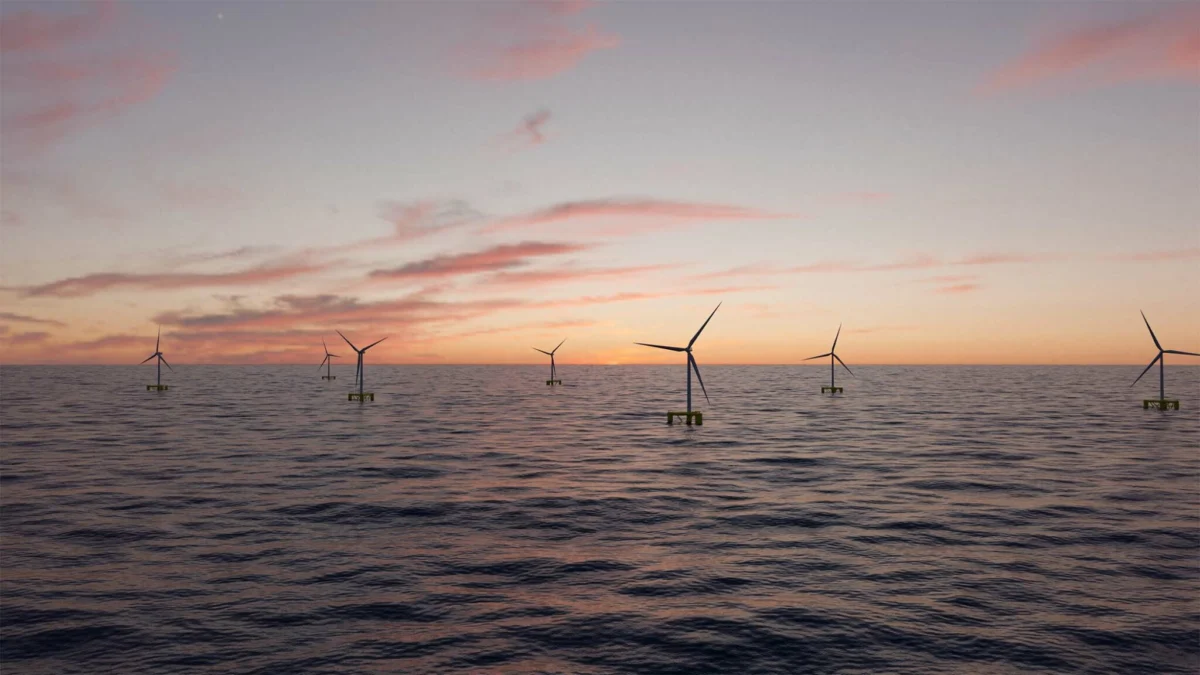
The Philippines has long been recognized for its vast renewable energy potential, yet for decades, the consistent breezes sweeping across its archipelagic waters remained an untapped resource. Today, that narrative is shifting as the nation moves from theoretical resource mapping to the concrete planning of a massive offshore wind pipeline. However, the transition from identifying potential to delivering actual electricity to the national grid presents a complex set of logistical, financial, and infrastructural challenges. As the country looks toward the end of the decade, the central question is no longer whether the wind can be harnessed, but how quickly the necessary industrial ecosystem can be built to support it.
At the heart of this transition are two primary zones: San Miguel Bay in the Bicol region and the Guimaras Strait in Western Visayas. These areas have been identified as the country’s first large-scale offshore wind hubs. According to a 2026 study by the Global Wind Energy Council (GWEC), these sites are far from conceptual; they are now modeled with specific capacity targets and phased development timelines. San Miguel Bay is projected to start with an initial 1 gigawatt (GW) capacity, eventually scaling to 2 GW. Simultaneously, the Guimaras Strait project is slated to begin at 500 megawatts (MW) and expand to 1.5 GW. Combined, this 3.5 GW pipeline represents one of the most ambitious renewable energy undertakings in Southeast Asia.
The Scale of the Energy Shift
The implications of a 3.5 GW offshore wind buildout are profound when translated into energy generation. Using GWEC’s production estimates of approximately 3,205 megawatt-hours (MWh) per megawatt annually, these projects could collectively generate roughly 11 terawatt-hours (TWh) of electricity per year at full capacity. This is not a marginal addition to the Philippine power mix. In a country where coal still accounts for over 60% of total power generation, 11 TWh represents a significant share of national demand—enough to power millions of households and drastically reduce the carbon footprint of the Philippine energy sector.
Beyond decarbonization, the shift toward offshore wind is a matter of strategic economic security. The Philippines currently suffers from some of the highest electricity prices in Asia, largely due to its heavy reliance on imported fossil fuels. When global coal or gas prices spike, Filipino consumers and industries bear the brunt of the volatility. Offshore wind offers a structural hedge against these external shocks. Unlike thermal power plants, wind farms require no fuel imports once constructed. The "fuel"—the wind—is harvested locally at zero cost, allowing for long-term price stability that is impossible to achieve with imported hydrocarbons.
A Chronology of Development and the Road Ahead
The journey toward offshore wind in the Philippines has accelerated significantly over the last three years. In 2022, the Department of Energy (DOE), in collaboration with the World Bank, released the Philippines Offshore Wind Roadmap, which estimated a technical potential of 178 GW of offshore wind capacity. This landmark study served as the catalyst for a flurry of policy activity and investor interest.
By early 2023, President Ferdinand Marcos Jr. signed Executive Order No. 21, which directed the DOE to establish a clear framework for offshore wind development and mandated various government agencies to streamline the permitting process. Since then, the DOE has awarded over 80 offshore wind service contracts to both local and international developers, including major global players such as Copenhagen Infrastructure Partners (CIP) and BlueFloat Energy.
The current phase (2024–2026) is characterized by pre-development activities, including site characterization, wind resource assessment, and environmental impact studies. According to GWEC’s modeled timelines, the San Miguel Bay project is projected to reach its first 1 GW of capacity by 2029, with the full 2 GW online by 2031. The Guimaras Strait projects are expected to follow a similar trajectory, reaching 500 MW by 2030 and 1.5 GW by 2032. These timelines assume a standard three-year construction cycle per phase, but achieving these milestones depends on the rapid maturation of the domestic supply chain.
Infrastructure and Logistical Bottlenecks
Despite the clear pipeline, the gap between modeled output and "steel in the water" remains wide. Offshore wind is not a plug-and-play technology; it requires a specialized industrial base that the Philippines is only beginning to conceptualize. One of the most critical bottlenecks is port readiness. Offshore wind turbines are among the largest machines ever built, with blade lengths exceeding 100 meters and nacelles weighing hundreds of tons.
Currently, the Philippines lacks dedicated staging and assembly ports capable of handling these massive components. Existing commercial ports do not have the required load-bearing capacity or the vast "back-up" land areas needed for component storage and pre-assembly. Without the modernization of specific ports—potentially in areas like Batangas, Iloilo, or Bacolod—developers will be unable to move from the permitting stage to actual construction. The investment required for port upgrades is substantial and requires a coordinated effort between the Philippine Ports Authority (PPA) and private developers.
Furthermore, the national grid must be prepared to absorb large, intermittent loads from offshore sources. Most of the high-potential wind sites are located in regions distant from the primary demand centers of Metro Manila. This necessitates significant investments in high-voltage subsea transmission cables and grid reinforcement to ensure that the power generated in San Miguel Bay or Guimaras can reach the national grid without causing instability or significant transmission losses.
Workforce Development and Local Capacity
The GWEC study also highlights a significant "skills gap" that could hamper project timelines. The offshore wind industry requires a specialized workforce ranging from marine engineers and specialized divers to turbine technicians and vessel operators. At present, the Philippines has a strong maritime tradition, but the specific technical skills required for offshore wind construction and long-term operations and maintenance (O&M) are only partially available.
Bridging this gap will require a multi-year effort involving vocational training centers, universities, and international partnerships. If the country fails to develop a domestic workforce, developers will be forced to rely on expensive international expertise, which could drive up project costs and reduce the local economic benefits of the energy transition. Industry experts suggest that the Philippines has an opportunity to become a regional hub for offshore wind services in Southeast Asia, provided it invests in human capital today.
Social and Environmental Considerations
The social dimension of offshore wind development is equally consequential. These projects will intersect with coastal economies, most notably the fisheries sector. San Miguel Bay and the Guimaras Strait are vital fishing grounds for thousands of local fisherfolk. Construction activities will inevitably cause temporary disruptions to fishing routes, and the long-term presence of turbine foundations will alter the local marine environment.
Addressing these concerns requires careful marine spatial planning and proactive community engagement. The Philippine government and developers must establish transparent compensation mechanisms and explore "coexistence" strategies, such as allowing certain types of aquaculture or small-scale fishing within the wind farm boundaries. If local stakeholders perceive offshore wind as a threat to their livelihoods rather than a benefit, the resulting social friction could lead to legal delays and political pushback, jeopardizing the 2030 targets.
Broader Impact and Global Context
The Philippine push for offshore wind is happening against a backdrop of global supply chain volatility. While the technology itself is mature, the global industry has recently struggled with cost inflation and bottlenecks in the production of specialized installation vessels. For the Philippines, this presents both a risk and an opportunity. The risk lies in competing with established markets in Europe and North America for limited global resources. The opportunity lies in the country’s timing; by entering the market now, the Philippines can design its regulatory and physical infrastructure to meet the latest industry standards from the outset.
The success of the 3.5 GW pipeline would signal to the global investment community that the Philippines is a viable destination for large-scale green capital. It would also set a precedent for other archipelagic nations in the region, such as Indonesia and Vietnam, demonstrating how offshore wind can serve as the backbone of a modern, independent energy system.
Conclusion: From Paper to Power
The Philippines is currently at a critical transition point. It has successfully moved beyond the stage of mere resource mapping and policy signaling. It now possesses a defined project pipeline, quantified output targets, and a clear strategic rationale for offshore wind. However, the path from 2024 to the first spinning turbine in 2029 is fraught with technical and logistical hurdles.
The 11 terawatt-hours of annual generation promised by the San Miguel Bay and Guimaras Strait projects are within reach, but they require more than just service contracts. They require a national commitment to building ports, reinforcing the grid, and training a new generation of workers. If the Philippines can synchronize its infrastructure development with its policy ambitions, it will secure a future defined by energy independence and price stability. If not, the country risks remaining in a state of perpetual pre-development, where gigawatts exist only on paper while the grid continues to depend on the whims of global fuel markets. The next five years will determine whether the Philippine breeze finally becomes a powerhouse for the nation.









Leave a Reply