
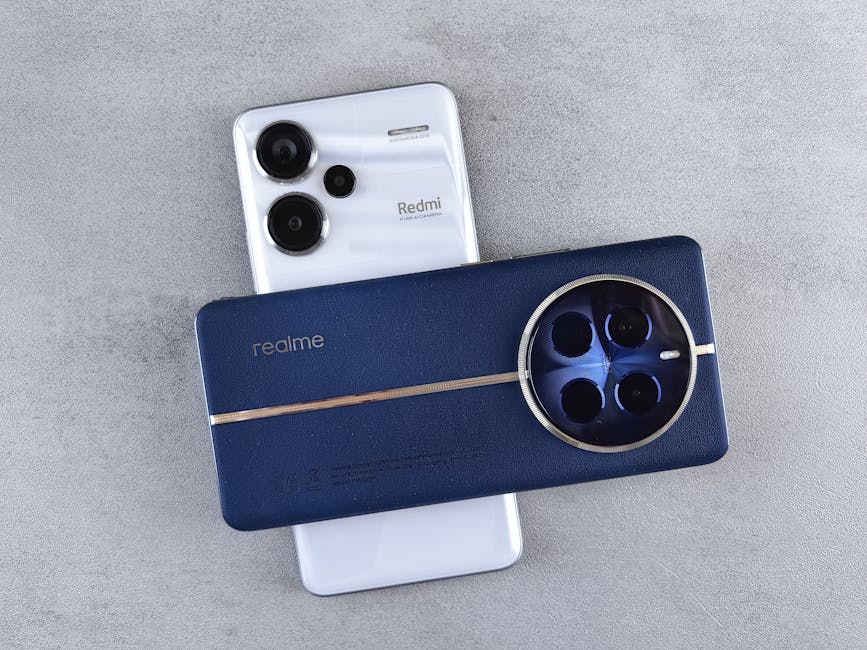
Dimensity’s Dominance: Unpacking the Power and Potential of MediaTek’s Chipsets in Modern Smartphones
MediaTek’s Dimensity series has rapidly ascended to become a cornerstone of the modern smartphone industry, powering a diverse range of devices from budget-friendly contenders to flagship powerhouses. This comprehensive exploration delves into the technological advancements, market impact, and future trajectory of Dimensity chipsets, offering insights for consumers, tech enthusiasts, and industry observers alike. The Dimensity lineup represents a significant leap forward for MediaTek, shifting its perception from a provider of mid-range solutions to a serious competitor in the high-performance mobile processor arena. This transformation is largely attributable to the company’s strategic focus on integrating cutting-edge technologies like 5G, advanced AI capabilities, and sophisticated imaging pipelines directly into its System-on-Chips (SoCs).
The foundation of Dimensity’s success lies in its architectural design and the specific technologies it champions. At the forefront is 5G integration, a crucial differentiator in today’s connectivity-driven world. MediaTek was an early adopter and aggressive implementer of 5G across its Dimensity portfolio, ensuring that devices equipped with these chips were future-proof and capable of leveraging the latest network speeds. This wasn’t just about slapping a modem onto a chip; it involved optimizing power efficiency and performance for the unique demands of 5G, including sub-6GHz and mmWave spectrums where applicable in certain higher-tier chipsets. The integration of 5G modems directly onto the SoC, often referred to as "5G on a chip," reduces power consumption and board space, contributing to sleeker device designs and improved battery life. This integrated approach also allows for more efficient data routing and processing, leading to a smoother and more responsive user experience when engaging with 5G networks.
Beyond connectivity, the CPU and GPU architectures within Dimensity SoCs are key to their performance. MediaTek has consistently utilized Arm’s latest CPU cores, including Cortex-A78, Cortex-X1, and the newer Cortex-X3 and Cortex-A715 for its higher-end offerings, often in a tri-cluster configuration. This arrangement typically includes a prime core for maximum single-threaded performance, several performance cores for demanding tasks, and several efficiency cores for everyday operations, striking a balance between raw power and energy conservation. The GPUs employed, often Arm Mali or Imagiq units, are equally crucial, providing the graphical horsepower necessary for gaming, high-resolution video playback, and augmented reality applications. The continuous evolution of these components, coupled with MediaTek’s custom optimizations and AI Processing Units (APUs), allows Dimensity-powered devices to compete effectively with offerings from established rivals. The APUs are particularly noteworthy, as they are designed to accelerate machine learning tasks, enabling features like advanced image processing, AI-driven battery management, and intelligent scene recognition in cameras, ultimately enhancing the overall user experience through smarter software functionalities.
A significant segment of the Dimensity lineup is dedicated to the mid-range and budget segments, areas where MediaTek has historically excelled and continues to dominate. Chipsets like the Dimensity 700, 800 series, and the more recent 1000 series have democratized 5G, making it accessible to a much wider consumer base. These chips often feature a well-balanced mix of performance and efficiency, ensuring that even more affordable smartphones can deliver a fluid daily user experience, handle moderate gaming, and capture good quality photos. The strategy here is to offer compelling performance and feature sets at aggressive price points, allowing smartphone manufacturers to create highly competitive devices that appeal to a broad market. This approach has been instrumental in MediaTek’s market share gains, as it provides a viable and often superior alternative to older 4G chipsets or less capable 5G solutions from competitors. The inclusion of advanced multimedia codecs and robust imaging ISPs (Image Signal Processors) within these mid-range Dimensity chips further elevates their value proposition, enabling features often found in more expensive devices.
The Dimensity 9000 series, and its successors like the 9200 and 9300, represent MediaTek’s formidable assault on the flagship tier. These chipsets are engineered to compete head-to-head with the best processors from Qualcomm and Samsung, boasting top-tier CPU and GPU performance, advanced AI capabilities, and sophisticated camera support. The Dimensity 9000, for example, was one of the first mobile SoCs built on a 4nm process node, enabling significant improvements in performance and power efficiency. Its architecture typically includes a high-performance Cortex-X2 prime core, enhanced Cortex-A710 performance cores, and efficient Cortex-A510 cores, all working in concert to deliver exceptional speeds for demanding applications. The integrated APU is also more powerful, supporting complex AI workloads with greater speed and lower power consumption. This push into the flagship segment has been crucial for MediaTek’s brand image and its ability to attract premium smartphone manufacturers. The inclusion of advanced memory controllers and support for LPDDR5X RAM further bolsters their performance, allowing for faster data access and improved multitasking capabilities.
Image processing is another area where Dimensity chipsets have made substantial strides. MediaTek’s Imagiq ISPs are designed to handle complex computational photography tasks, enabling features like multi-frame noise reduction, advanced HDR processing, AI-powered scene detection and optimization, and high-resolution video recording in various formats, including 8K. This focus on imaging is critical as smartphone cameras have become a primary selling point for consumers. Dimensity’s ability to deliver excellent image quality, even in challenging lighting conditions, contributes significantly to the overall appeal of the devices they power. The AI Engine integrated into these SoCs plays a vital role in image processing, allowing for real-time enhancements and intelligent adjustments that improve the aesthetic and technical quality of captured photos and videos.
Gaming performance is a key consideration for many smartphone users, and Dimensity chipsets are increasingly optimized for this market. The high-performance CPU cores and advanced GPUs provide the necessary power to run demanding mobile games smoothly, often at higher frame rates and with more visually impressive graphics. MediaTek has also collaborated with game developers and implemented technologies like HyperEngine to further enhance the gaming experience, reducing latency, improving network stability, and optimizing power consumption during gameplay. This focus on gaming is particularly evident in their higher-tier Dimensity offerings, but even mid-range chips are designed to provide a capable gaming platform for the average user. The integration of advanced cooling technologies and power management strategies within the chipsets also contributes to sustained performance during extended gaming sessions, preventing thermal throttling and maintaining a consistent frame rate.
The impact of MediaTek’s Dimensity series on the smartphone market cannot be overstated. By providing powerful, feature-rich, and increasingly competitive chipsets across various price points, MediaTek has fostered greater competition, leading to more innovative and affordable devices for consumers. Their aggressive pricing strategies have also put pressure on competitors, forcing them to re-evaluate their own offerings and pricing. This increased competition ultimately benefits the end-user by providing a wider selection of high-performing smartphones at various price points. Furthermore, MediaTek’s commitment to integrating the latest technologies, such as 5G and advanced AI, has accelerated the adoption of these features across the entire smartphone spectrum. Their success has also diversified the supply chain for smartphone manufacturers, reducing reliance on a single dominant player and fostering a more robust and dynamic ecosystem.
Looking ahead, MediaTek’s Dimensity lineup is poised for continued growth and innovation. The company is investing heavily in next-generation technologies, including advancements in AI, improved power efficiency, and even more sophisticated imaging capabilities. As 5G networks mature and new applications emerge, Dimensity chipsets will undoubtedly play a crucial role in enabling these advancements. The ongoing pursuit of higher performance, coupled with a relentless focus on power efficiency, will ensure that Dimensity remains a compelling choice for smartphone manufacturers and consumers alike. The company’s roadmap likely includes further integration of specialized processing units for emerging technologies like augmented reality and virtual reality, as well as enhanced capabilities for on-device AI processing to support more personalized and intuitive user experiences. The continuous refinement of their manufacturing processes and architectural designs will also be critical in maintaining their competitive edge in the rapidly evolving mobile landscape. The future of Dimensity appears bright, solidifying MediaTek’s position as a leading force in the global smartphone chip market.





Leave a Reply