The emergence of life on Earth remains one of the most profound mysteries in the known universe, existing as a phenomenon that the fundamental laws of physics do not strictly mandate, yet one that has flourished into a multi-billion-year odyssey of complexity. In their collaborative work, The Silent Teachers: How Nature Wrote the Story of Life, neuroscientist Brian Isett and artist Claudia Biçen examine this transition from inanimate matter to conscious thought. Published by Enchanted Lion Books, the volume serves as a multidisciplinary exploration of biological history, bridging the gap between rigorous scientific inquiry and the aesthetic appreciation of the natural world. By synthesizing the mechanics of molecular biology with the evocative power of visual art, the authors present a narrative that spans the arrival of the first ribonucleic acid (RNA) strands in primordial oceans to the development of the human mind.
The Genesis of Biological Complexity
The narrative of life begins not with a grand design, but with the subtle chemistry of the early Earth. According to the "RNA World" hypothesis, which the book explores through its opening chapter titled "Ocean," the foundations of life were laid in high-energy environments such as hydrothermal vents or shallow, sun-warmed bays. In these locales, thermal energy facilitated the bonding of carbon rings, known as nucleotides, into long, complex chains. While many of these sequences were non-functional, others formed the first "genetic texts" capable of self-replication.
These early molecules, specifically ribozymes—RNA molecules that possess catalytic properties—marked the transition from simple chemistry to biology. This period, occurring approximately 3.5 to 4 billion years ago, established the precedent for all subsequent evolution. Isett describes this process as a "chain reaction" where molecules began to fold into intricate structures, enabling further chemical reactions and eventually leading to the first cellular membranes. This shift allowed for the compartmentalization of life, protecting delicate genetic material from the chaotic external environment of the early ocean.

A Chronological Progression of Form and Function
As the story of life progresses, the book utilizes a structural approach reminiscent of the famous Eames "Powers of Ten" film, gradually scaling up from microscopic origins to macroscopic wonders. This chronological progression highlights several key evolutionary milestones:
- The Rise of the Cell: The development of the first prokaryotic cells and the subsequent emergence of eukaryotes through endosymbiosis—a process where one organism lives inside another, eventually becoming an integral part of it (such as mitochondria).
- Photosynthesis and Atmospheric Shift: The evolution of organisms capable of converting sunlight into energy, which eventually led to the Great Oxygenation Event, fundamentally altering the Earth’s atmosphere and enabling more energetic life forms.
- The Structural Revolution: The emergence of skeletons, lungs, and the transition of fins into limbs, allowing life to move from the aquatic depths to the terrestrial landscape.
- Symbiosis and Connectivity: The development of fungi and mycorrhizal networks, which established the "wood wide web" that facilitates communication and nutrient exchange between plants.
Each of these stages is presented not merely as a set of data points, but as a series of "lessons" taught by the environment. The title of the work reflects this philosophy: nature is the silent teacher, and the biological traits we observe today are the "written" records of survival and adaptation.

Supporting Data: The Scale of the Natural Story
To understand the magnitude of the "story" Isett and Biçen describe, one must look at the empirical data surrounding Earth’s biodiversity. Scientists estimate that there are approximately 8.7 million species currently inhabiting the planet, though the vast majority remain undescribed. This current diversity is the result of roughly 4 billion years of iterative "writing" by natural selection.
- Genetic Continuity: All life forms on Earth share a common genetic code, suggesting a single origin for all known biology.
- The Fossil Record: The transition from fish to tetrapods, mentioned in the book as the "fin that became a foot," is supported by transitional fossils such as Tiktaalik roseae, which dates back approximately 375 million years.
- Neurological Complexity: The human brain, the ultimate "mind" referenced in the book’s subtitle, contains roughly 86 billion neurons, representing the pinnacle of biological information processing that began with the first babbling threads of RNA.
By grounding the narrative in these facts, the authors ensure that the "psychedelic dream" of the book’s illustrations remains tethered to the reality of evolutionary science.

The Role of Illustration in Science Communication
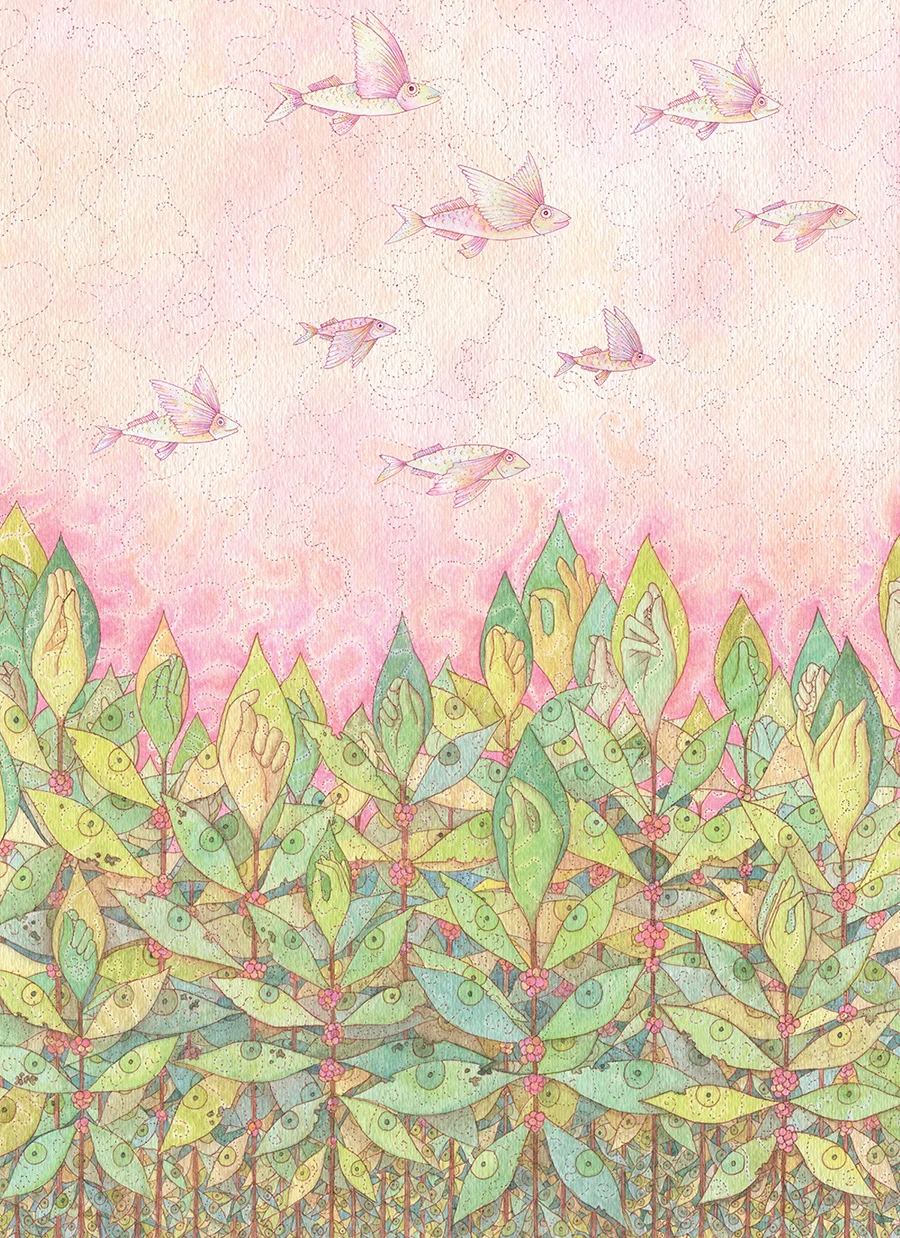
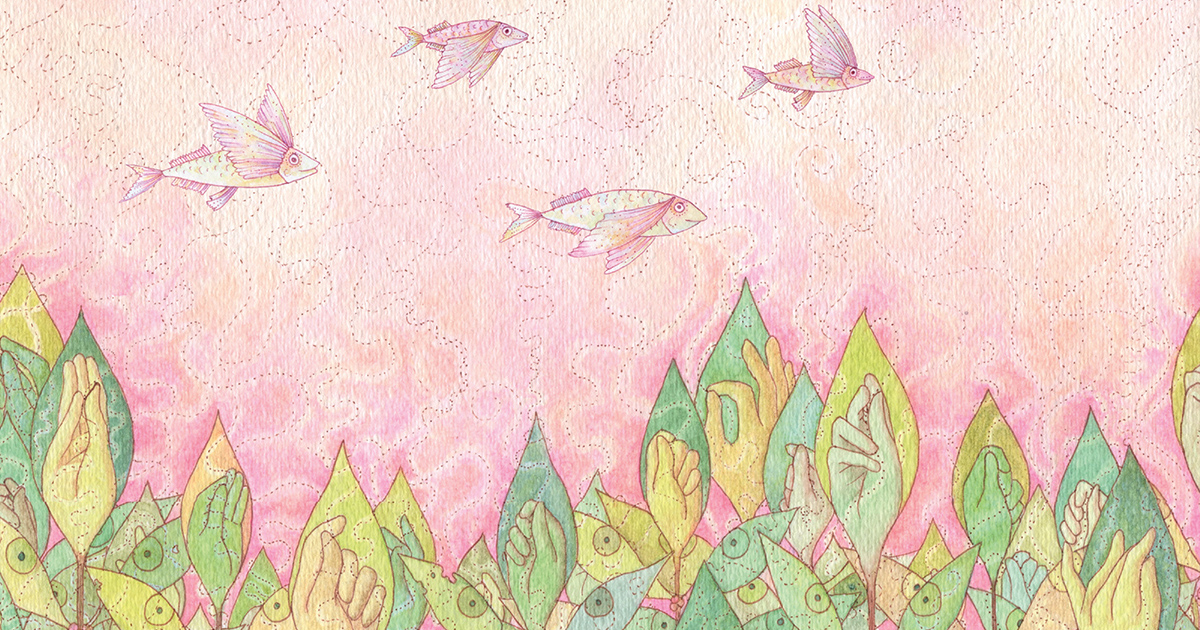
Claudia Biçen’s contributions to the volume represent a growing trend in science communication: the use of fine art to translate complex abstract concepts into visceral experiences. The illustrations are described as being part fairy tale and part psychedelic dream, a style intended to evoke the "rapturous wonder" that the authors argue is essential for modern ecological engagement.
Historically, scientific illustration was used primarily for identification and classification (such as the work of Ernst Haeckel or John James Audubon). However, Biçen’s work in The Silent Teachers serves a more philosophical purpose. By visualizing the "spirituality of nature" through a scientific lens, the art invites the reader to view biological processes not as cold, mechanical events, but as a vibrant, ongoing narrative. This approach is designed to combat "nature deficit disorder" and the growing alienation between modern society and the biological systems that sustain it.

Broader Implications and the Ecological Crisis
While the book is a celebration of life’s history, it is underpinned by a sense of urgency regarding the current state of the global ecosystem. The "catastrophic course of ecology" mentioned in the text refers to the Anthropocene—the current geological age during which human activity has been the dominant influence on climate and the environment.
According to the Intergovernmental Science-Policy Platform on Biodiversity and Ecosystem Services (IPBES), approximately one million species are currently threatened with extinction, many within decades. This rate of loss is tens to hundreds of times higher than the average over the past 10 million years. Isett and Biçen argue that the solution to this crisis lies in "listening closely and creatively" to nature’s silent lessons.

The book suggests that by understanding the deep history of life—how a bowerbird evolved its aesthetic sense or how the scallop developed its hundreds of eyes—humanity can cultivate a sense of "rapturous wonder." This wonder is presented as a "mightiest instrument of resilience." The implication is that a society that views nature as a series of profound, ancient teachers is less likely to treat the environment as a mere resource to be exploited.
Analysis of the Neuroscientific Perspective
Brian Isett’s background as a neuroscientist brings a unique layer to the narrative. Typically, natural history books are written by paleontologists or evolutionary biologists. By approaching the story of life through the lens of neuroscience, Isett is able to focus on the evolution of perception.

The book explores how life went "from mitochondria to minds," implying that the ultimate achievement of evolution was the ability for the universe to observe itself. This transition—from simple metabolic processes to complex consciousness—is one of the most difficult problems in science (often referred to as the "Hard Problem" of consciousness). While the book does not claim to solve this mystery, it frames it as the logical conclusion of the "genetic text" that began in the ocean.
Conclusion: Reclaiming the Narrative of Life
The Silent Teachers: How Nature Wrote the Story of Life stands as a significant contribution to contemporary popular science literature. It rejects the dichotomy between the "objective" world of science and the "subjective" world of wonder, arguing instead that the two are inextricably linked.

The volume’s structure, moving from the microscopic "babbling threads" of RNA to the macroscopic majesty of the ginkgo tree and the bowerbird, reinforces the idea that humans are part of a continuous, 4-billion-year-old conversation. In a time of ecological instability, the authors suggest that the most radical act of preservation is to remember the story of how we arrived here. By highlighting the "forgotten teachers" of the natural world, Isett and Biçen provide a framework for a more harmonious relationship with the biosphere—one rooted in knowledge, expressed through art, and sustained by a profound sense of mystery.