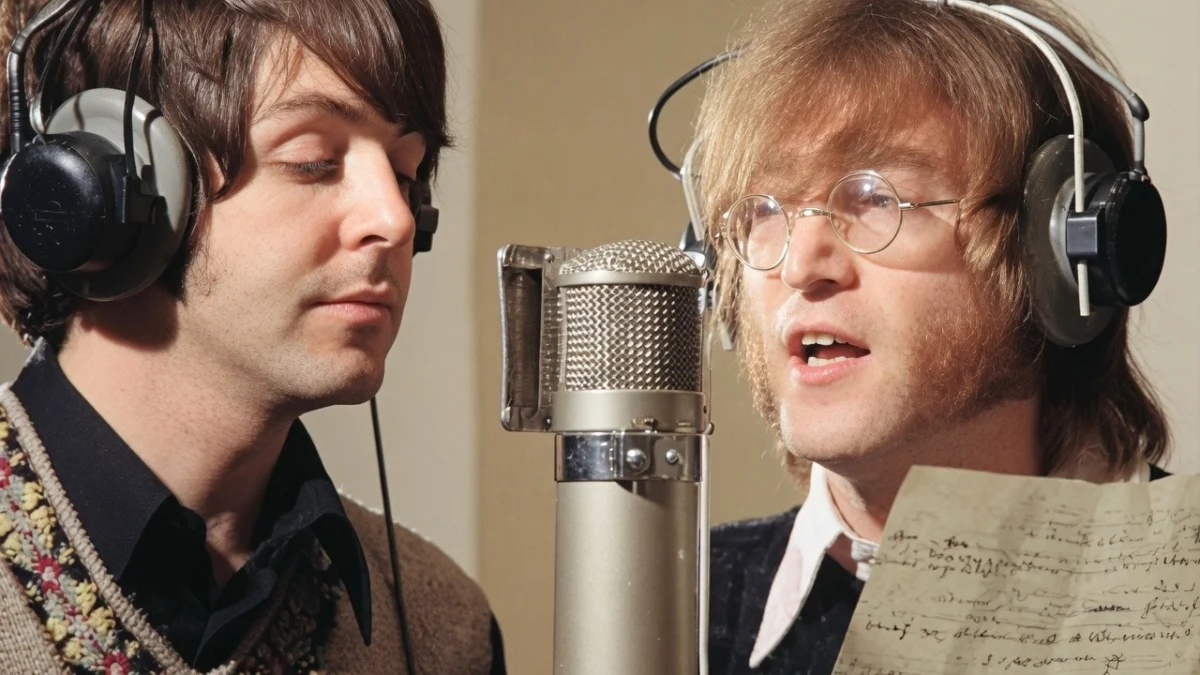
The final track of the 1967 landmark album Sgt. Pepper’s Lonely Hearts Club Band, "A Day in the Life," stands as a pinnacle of the collaborative genius of John Lennon and Paul McCartney. Often cited by critics and musicologists as the greatest song in the history of popular music, its creation was a complex journey of avant-garde experimentation, technical innovation, and fortuitous accidents. While the song appears as a seamless masterpiece, it was actually constructed from two distinct, unfinished pieces of music—one by Lennon and one by McCartney—bridged by an orchestral crescendo that pushed the boundaries of what was possible in a recording studio during the mid-1960s.
The Genesis of the Lyrics: From Headlines to the Studio
The song’s lyrical foundation was laid by John Lennon in January 1967. Drawing inspiration from his daily routine of reading the newspapers, Lennon began composing verses based on two specific stories found in the Daily Mail. The first was the tragic death of Tara Browne, a 21-year-old heir to the Guinness fortune and a close friend of the Beatles and the Rolling Stones, who had died in a car accident in December 1966. Lennon’s lyrics, "He blew his mind out in a car," immortalized the event, though he later clarified that while the accident was the catalyst, the lyrics were not a literal biography of Browne.
The second news item involved a brief report about a survey in Blackburn, Lancashire, which claimed there were 4,000 holes in the local roads. Lennon found the absurdity of the statistic compelling, leading to the famous closing verse: "I read the news today, oh boy / 4,000 holes in Blackburn, Lancashire." Lennon struggled with how to connect the holes to the Albert Hall until his friend Terry Doran suggested that the holes would be enough to "fill" the venue.
Despite having these evocative verses, Lennon lacked a middle section. Paul McCartney provided the solution by offering a short, upbeat fragment he had been working on—a song about a man waking up and rushing to catch a bus. This "middle eight" provided a stark, mundane contrast to Lennon’s ethereal and somber reflections, creating a "day in the life" narrative that bridged the gap between the dreamlike and the everyday.
Chronology of the Recording Sessions
The recording of "A Day in the Life" began on January 19, 1967, at EMI’s Abbey Road Studios, under the working title "In the Life of…" The timeline of its production reveals a meticulous yet improvisational approach:
- January 19, 1967: The band recorded several takes of the basic track. At this stage, the song featured Lennon on acoustic guitar, McCartney on piano, Harrison on maracas, and Starr on congas. It was during these early takes that the famous 24-bar gap was left in the middle of the song to be filled later.
- January 20, 1967: Additional vocals and instruments were layered. McCartney’s "woke up, fell out of bed" section was integrated into the structure.
- February 3, 1967: Ringo Starr re-recorded his drum parts, and McCartney recorded the bass line. Starr’s drumming on this track is often highlighted for its unique, "slushy" feel, achieved by using loose skins and heavy muffling.
- February 10, 1967: The most ambitious session took place, involving a 40-piece orchestra. The Beatles invited friends and fellow musicians to the studio, turning the recording into a "happening" where orchestral players were asked to wear evening dress and novelty items, such as fake noses and gorilla paws.
- February 22, 1967: The final touch—the iconic ending chord—was recorded, replacing a vocal "hum" that had been tried previously.
The 24-Bar Gap and the Mal Evans Alarm Clock
One of the most famous "happy accidents" in music history occurred during the placeholder sessions. Because the band knew they wanted a transition between Lennon’s first section and McCartney’s middle section, but had not yet decided what it would be, they left a 24-bar void. To keep time, the Beatles’ assistant, Mal Evans, stood by the piano counting the bars aloud from one to twenty-four. His voice, heavily treated with echo, can still be heard in the final mix.
To mark the end of the 24-bar count, Evans set off an alarm clock. While the clock was intended only as a signal to the band that the transition was over, the timing coincided perfectly with the start of McCartney’s lyrics: "Woke up, fell out of bed…" The coincidence was so striking that the band decided to keep the alarm clock in the final version, where it serves as a literal and metaphorical wake-up call within the narrative of the song.
Orchestral Chaos and Aleatoric Innovation
The transition between the song’s segments required something more substantial than a simple count. Paul McCartney envisioned an "orchestral orgasm"—a sound that started from nothing and built into a wall of noise. To achieve this, producer George Martin and engineer Geoff Emerick utilized a technique known as aleatoric (or chance) music.
Martin hired 40 musicians from the London Philharmonic and the Royal Philharmonic. Rather than writing a traditional score, he gave them a simple instruction: start at the lowest possible note on their instrument and, over the course of 24 bars, move toward the highest note near an E-major chord. Crucially, they were told to move at their own pace, ensuring that the instruments did not rise in unison.
The result was a terrifying, swirling crescendo. To make the 40-piece orchestra sound like a 160-piece ensemble, George Martin and Geoff Emerick performed a technical feat that was revolutionary for 1967. They synchronized two four-track recording machines—a difficult task at the time due to fluctuations in motor speed—allowing them to layer the orchestral rise multiple times.
The Final E-Major Chord: A Study in Sustain
The conclusion of "A Day in the Life" is perhaps the most famous single chord in the history of recorded sound. The band wanted an ending that would last "forever." On February 22, Lennon, McCartney, Starr, and Mal Evans crowded around three different pianos, while George Martin played a harmonium. On the count of three, they all struck an E-major chord simultaneously.
To maximize the sustain, Geoff Emerick performed a daring maneuver in the control room. As the natural sound of the pianos began to fade, he gradually increased the input gain on the recording consoles. By pushing the faders to their absolute limit, he captured the vibrating strings for over forty seconds. The recording is so sensitive toward the end that listeners can hear the faint rustle of paper and the air conditioning system in the studio.
Following the chord, the Beatles added two "hidden" features for the vinyl release: a high-frequency 15-kilohertz tone designed to be audible only to dogs, and a "run-out groove" loop of nonsensical studio chatter. The loop, which sounds like "never could see any other way" when played forward, was intended to play indefinitely on manual turntables, ensuring the album never truly "ended."
Technical Challenges and Studio Innovation
The production of "A Day in the Life" pushed EMI’s Abbey Road equipment to its breaking point. At the time, the studio was limited to four-track recording. To accommodate the layers of vocals, guitars, bass, drums, and the massive orchestra, Emerick had to "bounce" tracks—combining multiple recordings onto a single track of a second machine to free up space.
The synchronization of the two four-track machines was achieved using a variable-speed oscillator. This allowed the engineers to keep the machines in relative sync, a precursor to the multi-track recording standards that would emerge in the 1970s. The heavy use of ADT (Artificial Double Tracking) and tape echo on Lennon’s vocals also contributed to the "dreamy" atmosphere that defines the track’s first half.
Cultural Impact and Institutional Reaction
Upon its release in June 1967, "A Day in the Life" was met with immediate acclaim from critics, but it also faced institutional resistance. The BBC officially banned the song from airplay, citing the line "I’d love to turn you on" as an alleged reference to drug culture. The Beatles denied that the song was a "drug song," with McCartney arguing that the line was about "turning someone on to the truth" or "turning them on to life."
Despite the ban, the song became a cultural touchstone of the "Summer of Love." It represented the shift from the Beatles as a "mop-top" pop group to serious avant-garde artists. Musicologist Alan Pollack noted that the song’s structure—moving from the mundane reality of the news and a morning commute to the cosmic explosion of the orchestra—perfectly captured the psychedelic experience and the tension of the late 1960s.
Legacy and Implications for Modern Music
The legacy of "A Day in the Life" is found in its influence on the progressive rock movement and the evolution of the recording studio as an instrument in itself. It proved that popular music could incorporate classical elements, avant-garde techniques, and complex social commentary without losing its melodic appeal.
Today, the song remains a subject of intense study. In 2004, Rolling Stone ranked it number 26 on its list of the 500 Greatest Songs of All Time, and it consistently tops fan polls. The "fortuitous accidents"—from the alarm clock to the newspaper clippings—remind modern producers that while technology is essential, the "Beatlesque" magic often comes from the willingness to embrace the unexpected. As a historical document, "A Day in the Life" serves as the definitive end to the first half of the Beatles’ career, signaling their total mastery over the studio and their transition into the realm of high art.