In a literary and scientific endeavor that spans the breadth of human knowledge, Buddhist scientist and pathologist Neil Theise has released a comprehensive framework for understanding the universe not as a collection of disparate objects, but as a singular, self-organizing system. His work, which synthesizes decades of advancements in biology, quantum physics, and complexity theory with ancient metaphysical traditions, seeks to resolve the enduring mystery of consciousness and the paradox of individual identity. Theise’s inquiry arrives a century after quantum pioneer Erwin Schrödinger first posited that the individual life is not merely a fragment of existence but is, in a profound sense, the whole.
The Synthesis of Empirical Science and Metaphysics
Theise’s primary objective is to bridge the gap between three distinct modes of investigating reality: empirical science, Western idealism, and Eastern metaphysics. By focusing on complexity theory, he argues that the universe and its constituent parts—from subatomic particles to social structures—function as a "vast, self-organizing, complex system." In this view, every phenomenon we observe is an "emergent property" of a deeper, interconnected process.
Complexity theory, as defined in this context, is the study of open-ended, evolving, and adaptive systems. Unlike machines, which are rigid and unable to alter their behavior in response to environmental shifts, complex systems exhibit a form of "creativity." This adaptability is seen in the way life self-organizes from quantum foam into atoms, molecules, cells, and eventually, sentient human beings capable of complex social interactions.
The Mechanics of Emergence and Self-Organization
A central pillar of Theise’s work is the concept of emergence—the process by which a whole becomes greater than the sum of its parts. To illustrate this, he points to the behavior of ant colonies and bird murmurations. In an ant colony, there is no centralized "commander." The queen serves a purely reproductive role rather than an administrative one. The sophisticated, efficient food lines and structural order of the colony arise solely from "local interactions" between individual ants.
This bottom-up organization means that even if a scientist understands every individual element of a living system, the properties that emerge from their collective interactions remain unpredictable. This unpredictability is what Theise identifies as the "essence of complexity." When applied to the human scale, this suggests that consciousness itself may be an emergent property of the biological and quantum interactions within the body, rather than a localized phenomenon contained within the brain.
Biological Continuity and the Paradox of the Self
Theise challenges the common subjective experience of the "autonomous self" by presenting biological data on cellular and molecular turnover. From a pathological perspective, the human body is in a state of constant flux. Statistics show that the human body is composed of approximately 30 to 37 trillion cells, yet the majority of these cells are replaced over time. Skin cells may renew every two to four weeks, while the lining of the stomach is replaced every few days. Even the atoms within our DNA are subject to replacement through the molecules we ingest and the air we breathe.
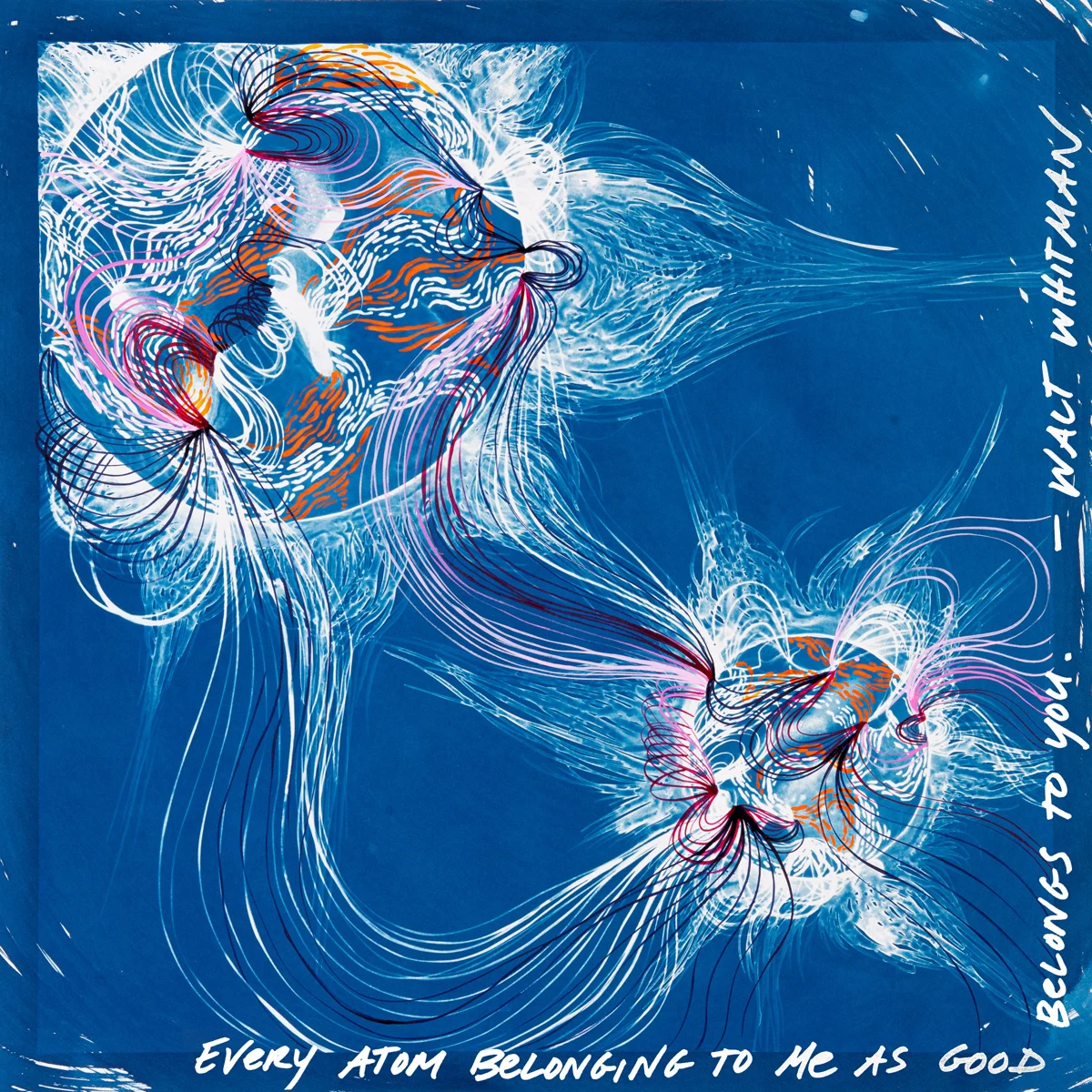
This "endless atomic recycling" creates a philosophical and biological paradox: if the material components of a person are entirely replaced over a decade, what constitutes the "same" person? Theise argues that we are not beings moving across the Earth, but are "the Earth itself," whose atoms have temporarily self-organized into transitory forms. At the molecular level, there is no hard boundary between the individual and the environment. We are in perpetual continuity with the planet’s biomass, exhaling carbon dioxide that becomes part of the forest and consuming molecules that were once part of other living entities.
Quantum Foundations and the Principle of Complementarity
To reconcile the feeling of being a distinct individual with the scientific reality of interconnectedness, Theise utilizes Niels Bohr’s principle of complementarity. This quantum concept suggests that two different descriptions of reality can both be true, even if they cannot be observed simultaneously. Just as light can be viewed as either a wave or a particle depending on the experiment, human existence can be viewed through two complementary lenses.
From one perspective, we are independent, autonomous humans with limited lifespans and free will. From the complementary perspective, we are "one utterly minute, utterly brief unit of a single vast body that is life on Earth." Theise suggests that the passing of human generations is akin to the shedding of skin cells from a larger, planetary organism. This perspective aligns with Max Planck’s observation that because humans are part of nature, we are part of the mystery we are attempting to solve.

A Chronology of Scientific Discovery and Philosophical Inquiry
Theise’s work is situated within a century of rapid scientific advancement that has deepened, rather than solved, the mystery of existence. The timeline of this inquiry reflects a shift from Newtonian "clockwork" physics to a more fluid, complex understanding of reality:
- 1920s-1940s: Quantum pioneers like Schrödinger and Bohr begin to bridge physics with philosophy, suggesting that "the over-all number of minds is just one."
- 1953: The discovery of the double helix structure of DNA provides a blueprint for biological organization but raises questions about how information translates into consciousness.
- Late 20th Century: The development of chaos theory and the formalization of complexity theory at institutions like the Santa Fe Institute provide new tools for studying non-linear systems.
- 21st Century: The detection of the Higgs boson, the recording of gravitational waves, and the imaging of black holes confirm the existence of invisible fields and structures that govern the universe.
- Present Day: Theise and his contemporaries integrate these findings to suggest that the "quantum foam" and the "energetic field of space-time" are the fundamental awareness from which all matter emerges.
Societal and Ethical Implications
The implications of viewing humanity as a single, self-organizing organism are profound, particularly regarding ecology and social conflict. Theise, whose perspective is informed by his history as a gay man who survived the AIDS epidemic and as the child of Holocaust survivors, finds a "redemptive" quality in complexity. If the "other" is recognized as part of the same biological and quantum whole, the basis for tribalism and conflict begins to dissolve.
Furthermore, this worldview provides a scientific basis for environmental stewardship. If there is no real distinction between "our own" molecules and the molecules of the world around us, then environmental degradation is a form of self-inflicted harm. Theise suggests that "complexity theory can foster an invaluable flexibility of perspectives" that allows individuals to reclaim a sense of intimacy with the "larger whole."
The "Hard Problem" of Consciousness
At the heart of the discussion is what philosophers call the "Hard Problem of Consciousness"—the question of how physical processes in the brain give rise to subjective experience. Theise’s "Notes on Complexity" proposes that consciousness is not an isolated byproduct of human evolution but a fundamental permeation of the universe. He argues that we do not simply live in the universe; we embody it.
By examining the smallest scales of existence—the Planck scale—Theise describes a reality where things "merely emanate from space-time and dissolve back into it like phantoms." At this level, the distinction between "real" and "not real" becomes blurred. Everything appears as a distinct object only from a specific vantage point; when one zooms in or out, the object disappears into the active phenomena from which it emerged.

Conclusion and Future Outlook
Theise’s work serves as a modern synthesis of the "implicate order" theorized by physicist David Bohm and the "moments of being" described by literary figures like Virginia Woolf. By aligning the discoveries of particle physics, neuroscience, and chaos theory with the meditative insights of Zen Buddhism and other traditions, he offers a framework for the 21st century that addresses both the physical and the metaphysical.
As science continues to explore the boundaries of the human genome and the far reaches of the cosmos, the "complexity" lens suggests that the most significant discovery may not be a new particle or a distant planet, but a renewed understanding of the connection between the observer and the observed. For Theise, the ultimate reward of this scientific inquiry is a return to what he calls the "birthright of being one with all," a perspective that transforms the mystery of existence into a source of deep intimacy and connection.