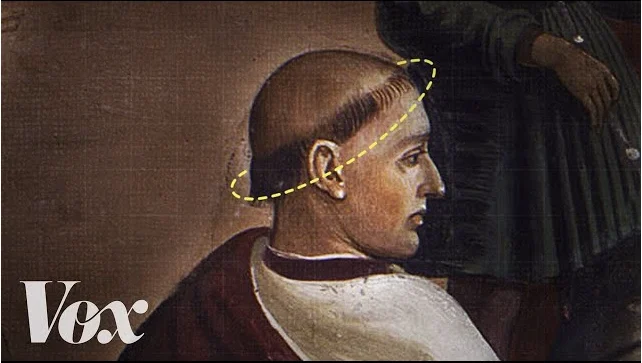
The practice of the tonsure, the ritualistic shaving of the head for religious purposes, remains one of the most enduring and visually striking symbols of monastic life in the history of Western and Eastern Christianity. While modern observers might view the distinctive "monk’s ring" of hair as a curious relic of the Middle Ages or a pragmatic response to male pattern baldness, historical and theological evidence suggests a far more complex origin. The tonsure was never merely a fashion choice or a grooming habit; it was a profound "badge of slavery" to Christ, a marker of ecclesiastical rank, and a central point of contention in the geopolitical struggles of the early medieval Church.
The Etymology and Ancient Origins of the Tonsure
The word "tonsure" is derived from the Latin verb tonsurare, meaning "to shear" or "to clip." Its origins predate the Christian era, rooted in the social structures of ancient Greece and Rome. In these societies, a shaven head was rarely a choice of the elite; rather, it was a compulsory mark of the enslaved. To be shaven was to be stripped of one’s status, dignity, and individual will, signaling total submission to a master.
When the early Christian monastic orders began to coalesce in the 4th and 5th centuries, they deliberately adopted this "badge of slavery." In a theological inversion characteristic of early Christianity, monks sought to become "slaves of Christ." By shaving their heads, they visually renounced their worldly identities, their vanity, and their personal autonomy. The Catholic Encyclopedia notes that this practice was adopted specifically to symbolize the total surrender of the will to God. What was once a mark of worldly shame became a crown of spiritual devotion.
The Great Tonsure Wars: Style as a Political Weapon
By the 7th century, the tonsure had become more than a symbol of humility; it had become a marker of institutional loyalty. This led to what historians often refer to as the "Tonsure Wars," a period of intense ecclesiastical conflict where the shape of a man’s haircut could determine his standing within the global Church. During this era, three distinct styles emerged, each representing a different tradition and center of power.
The Roman (Petrine) Tonsure
The Roman tonsure, also known as the Coronal tonsure or the Tonsure of St. Peter, is the style most familiar to the modern public. It involved shaving the top of the head entirely, leaving a circular fringe of hair around the base of the skull. This style was intended to evoke the "Crown of Thorns" placed upon Jesus during the Passion. By wearing this style, Roman clergy signaled their direct alignment with the Papacy and the traditions of the Roman Church.
The Pauline Tonsure
Named after St. Paul the Apostle, this style involved the total shaving of the head. While it was occasionally found in the West, it became the standard practice within Eastern Orthodoxy. It represented a total renunciation of the world, leaving no room for even the most basic elements of personal grooming or aesthetic concern.
The Celtic (Simon Magus) Tonsure
The most controversial of the three was the Celtic tonsure, practiced by the monks of Ireland and Britain. Because it largely disappeared by the 8th century and few contemporary illustrations remain, its exact appearance has long been a subject of scholarly debate. However, recent research by Daniel McCarthy, a fellow emeritus at Trinity College, Dublin, suggests a unique configuration. Utilizing computer simulations and historical descriptions, McCarthy posits that the Celtic tonsure involved shaving the front of the head from ear to ear in a triangular shape, with the apex pointing toward the forehead, while leaving the hair long in the back.
Roman authorities viewed the Celtic tonsure with extreme suspicion. They disparagingly referred to it as the "Tonsure of Simon Magus," referencing the biblical sorcerer who attempted to buy the power of the Holy Spirit. By associating the Celtic haircut with a heretical magician, the Roman Church sought to delegitimize the independent traditions of the British Isles, portraying them as pagan or "out of sync" with the true faith.
The Synod of Whitby and the Triumph of Rome
The conflict over the tonsure reached a fever pitch in 664 AD at the Synod of Whitby. This landmark gathering was convened by King Oswiu of Northumbria to resolve the differences between the Roman and Celtic traditions that were causing division within his kingdom. While the primary debate centered on the correct method for calculating the date of Easter, the tonsure served as the most visible indicator of these underlying tensions.
The Roman delegation, led by Saint Wilfrid, argued that the Roman customs were those of St. Peter, the keeper of the keys to the kingdom of heaven. The Celtic faction, led by Bishop Colmán of Lindisfarne, defended their traditions as those handed down by their forefathers and Saint Columba. Ultimately, King Oswiu ruled in favor of Rome, famously stating that he would obey the decrees of Peter to avoid being turned away at the gates of heaven.
Following the Synod of Whitby, the Celtic tonsure was systematically phased out. Across the British Isles and Ireland, monks were forced to adopt the Roman "crown" as a sign of their submission to the central authority of the Pope. This transition marked a significant step in the homogenization of Western Christianity and the consolidation of Papal power.
The Theological and Legal Framework
Beyond the political disputes, the tonsure was codified in Canon Law as a requirement for those entering the clerical state. For centuries, the "first tonsure" was a formal rite of passage. It was not merely a haircut but a liturgical act performed by a bishop or an abbot. This ceremony officially transitioned a layman into a cleric, granting him the "privilegium canonis" (protection under church law) and the "privilegium fori" (the right to be tried in ecclesiastical rather than secular courts).
Theologically, the hair was viewed as a symbol of "superfluous" energy and worldly pride. By removing it, the cleric was making a "spiritual circumcision," cutting away the excesses of the flesh to focus on the life of the spirit. The 13th-century theologian Thomas Aquinas argued that the tonsure represented the "royal dignity" of the priesthood, as the circular shape suggested a crown, while the baldness represented the poverty and humility of Christ.
The 1972 Reform and the End of an Era
The mandatory practice of the tonsure survived for over a millennium, but it did not survive the modernizing reforms of the mid-20th century. Following the Second Vatican Council (Vatican II), the Catholic Church sought to simplify its rituals and focus more on the internal spiritual life rather than external markers of status.
On August 15, 1972, Pope Paul VI issued the Motu Proprio titled Ministeria Quaedam. This document abolished the "first tonsure," stating that entry into the clerical state would henceforth be linked to the ordination of deacons rather than the ritual shaving of the head. While some traditionalist orders and Eastern Orthodox monasteries continue to practice variations of the tonsure, it ceased to be a universal requirement for the Roman Catholic clergy.
In English-speaking countries, the practice had already begun to fade from public view centuries earlier, often relegated to the private confines of monasteries to avoid the social stigma or persecution that followed the Protestant Reformation. However, the 1972 decree officially closed the chapter on the tonsure as a matter of universal Canon Law.
Socio-Cultural Analysis: The Power of the Uniform
From a sociological perspective, the tonsure functioned as a precursor to the modern uniform. It provided an immediate, non-verbal signal of an individual’s role, beliefs, and social standing. In the medieval world, where literacy was low and visual symbols were paramount, the tonsure told a stranger exactly who a man was: someone who had renounced the world, someone who was under the protection of the Church, and someone who was bound by a specific set of rules.
The "Tonsure Wars" highlight a fundamental aspect of human group dynamics: the use of aesthetic markers to define "in-groups" and "out-groups." By mandating a specific haircut, the Roman Church ensured that its agents were recognizable and that dissenters were easily identified. The disappearance of the Celtic tonsure was not just a change in style; it was the erasure of a competing cultural identity.
Legacy and Modern Implications
Today, the monk’s haircut survives primarily in the popular imagination through historical dramas, Renaissance paintings, and Medieval literature. Yet, the underlying impulse behind the tonsure—the desire to signal devotion and community membership through physical appearance—remains as strong as ever. Whether in the shaven heads of Buddhist monks, the distinctive dress of the Amish, or even the specific "aesthetics" adopted by modern secular subcultures, the human tendency to use the body as a canvas for identity persists.
The history of the tonsure serves as a reminder that even the most mundane aspects of human life, such as how we cut our hair, can be imbued with profound religious and political significance. What began as a Roman slave’s mark of shame became a monk’s badge of honor, a battleground for empires, and finally, a discarded relic of a Church seeking to redefine itself for the modern age. In the story of the tonsure, we find a microcosm of the history of the Western world: a tale of sacrifice, power, and the enduring search for a visible connection to the divine.