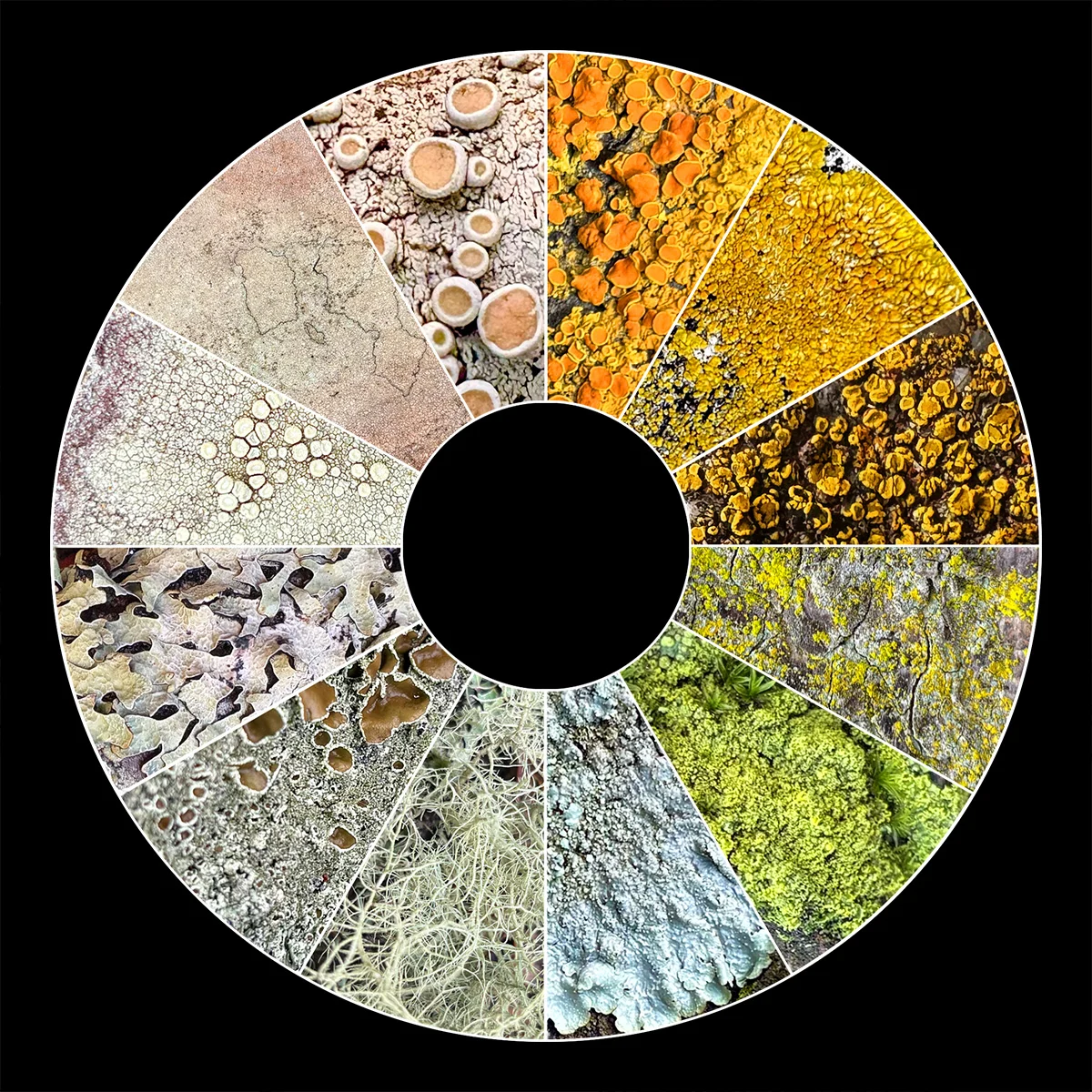
The scientific community identifies more than 20,000 distinct species of lichen, a figure that represents nearly double the number of known bird species globally. These organisms, often overlooked due to their diminutive size and slow growth rates, constitute a critical component of the Earth’s biodiversity. Found in environments ranging from the Arctic tundra to the most arid deserts, lichens are not individual plants but complex composite organisms. They represent a specialized biological partnership, primarily between a fungus (the mycobiont) and a photosynthetic partner (the photobiont), which is typically either green algae or cyanobacteria. Recent genomic research has further revealed that many lichens also host specific bacterial communities, suggesting a tripartite or even multipartite symbiotic relationship that challenges traditional biological classifications.
Historical Scientific Evolution and the Discovery of Symbiosis
The classification of lichens has undergone significant revision since the 18th century. Carolus Linnaeus, the father of modern taxonomy, originally categorized lichens as "rustici pauperrimi" or "poor peasants" of the plant kingdom, incorrectly identifying them as a form of moss or primitive plant. This classification remained largely unchallenged until the late 19th century.
A pivotal shift in understanding occurred through the work of Beatrix Potter, better known for her literary contributions, who conducted extensive microscopic studies of fungi and lichens in the 1890s. Potter was among the first to hypothesize that lichens were symbiotic organisms. Her findings supported the theories of German botanist Simon Schwendener, who in 1867 proposed the "dual hypothesis" of lichen nature. Although Potter’s scientific papers were initially marginalized by the male-dominated Linnean Society of London, her observations laid the groundwork for modern lichenology.
In 1879, the German mycologist Heinrich Anton de Bary coined the term "symbiosis" (living together) specifically to describe the relationship within lichens. This discovery was revolutionary, as it introduced the concept of "unselfing" in evolutionary biology—where distinct species merge their biological interests to form a new, more resilient entity.
Physiological Mechanisms and Environmental Adaptation
Lichens lack a vascular system and true roots, a physiological trait that distinguishes them from vascular plants. While plants draw nutrients and moisture from the soil through roots, lichens utilize structures known as rhizines. These root-like filaments serve primarily as anchors, allowing the organism to attach to diverse substrates, including volcanic rock, tree bark, man-made concrete, and even the shells of living organisms.
Because they lack the ability to regulate water loss, lichens are poikilohydric. They can survive extreme desiccation by entering a state of metabolic suspension known as cryptobiosis. During this state, the organism’s moisture content may drop to as low as 15% of its total weight, effectively pausing all biological functions until moisture becomes available again. This allows lichens to thrive in "biological frontiers" where other life forms perish.
The metabolic efficiency of lichens is driven by their internal division of labor. The fungal component provides the structural framework and protects the photosynthetic partner from environmental stressors, such as high ultraviolet (UV) radiation and desiccation. In return, the algae or cyanobacteria produce carbohydrates through photosynthesis, which nourish the fungal host. This exchange allows lichens to grow in nutrient-poor environments by synthesizing "sugar from sunlight" and extracting minerals directly from the atmosphere.
Resilience in Extreme Environments and Extraterrestrial Applications
The durability of lichens has made them a subject of intense interest for astrobiology and space research. In 2005, a study led by Spanish scientists in coordination with the European Space Agency (ESA) tested the limits of lichen endurance. Two species, Rhizocarpon geographicum and Xanthoria elegans, were launched into Earth orbit aboard a Russian Soyuz rocket.
For 15 days, these organisms were exposed to the vacuum of space, extreme temperature fluctuations, and the full spectrum of cosmic and solar UV radiation. Upon their return to Earth, the lichens showed no significant cellular damage and resumed normal metabolic and reproductive activity within 24 hours. This experiment demonstrated that lichens are among the most radiation-resistant organisms on the planet, capable of surviving conditions that would be lethal to most other forms of life.
Furthermore, simulations conducted by the German Aerospace Center (DLR) have shown that certain lichen species can survive in simulated Martian conditions. By entering a dormant state and utilizing protective pigments like parietin and usnic acid to block radiation, lichens represent a potential model for "pioneer" life on other planets.
Ecological Impact and Bio-monitoring Roles
Lichens serve as "pioneer species" in primary succession. They are often the first organisms to colonize bare rock following volcanic eruptions, landslides, or glacial retreats. Through a combination of mechanical pressure and the secretion of organic acids (lichen acids), they slowly break down rock into smaller particles. Over centuries, this process contributes to pedogenesis—the formation of soil—enabling the eventual growth of mosses, grasses, and trees.

In addition to soil formation, lichens play a vital role in nutrient cycling. Cyanolichens (those containing cyanobacteria) are capable of nitrogen fixation, converting atmospheric nitrogen into a form that can be used by other plants. In old-growth forests, particularly in the Pacific Northwest of the United States and parts of Scandinavia, nitrogen-fixing lichens can contribute significantly to the overall nitrogen budget of the ecosystem.
Lichens are also highly sensitive indicators of air quality. Because they absorb water and nutrients directly from the atmosphere, they also accumulate airborne pollutants such as sulfur dioxide, heavy metals, and nitrogen compounds. The absence or decline of lichen populations in urban areas is often used by environmental agencies as a biological proxy for high levels of atmospheric pollution. This sensitivity makes them invaluable tools for long-term ecological monitoring and climate change research.
Chronology of Lichen Growth and Longevity
The growth rate of lichens is exceptionally slow, often measured in fractions of a millimeter per year. This characteristic has led to the development of lichenometry, a geomorphic method used to date the age of exposed rock surfaces. By measuring the diameter of the largest lichen thalli on a surface, scientists can estimate how long the rock has been exposed.
- Colonization Phase: Initial attachment to substrate; high mortality rate for spores.
- Great Growth Phase: A period of relatively rapid radial expansion (1–2 mm per year for some crustose species).
- Maturation Phase: Growth slows as the organism reaches its maximum sustainable size for the local micro-environment.
- Senescence or Fragmentation: Older portions of the lichen may die off, or pieces may break away to form new colonies.
Some colonies in the Arctic are estimated to be over 8,000 years old, making them some of the oldest living organisms on Earth. Their longevity provides a stable biological record of environmental conditions over millennia.
Reproductive Strategies and Genetic Diversity
Lichens employ both sexual and asexual reproductive strategies to ensure survival across fragmented habitats. Sexual reproduction is generally handled by the fungal partner, which produces spores in structures called apothecia. However, for a new lichen to form, the germinating fungal spore must encounter a compatible algal partner in the environment—a high-risk strategy.
To mitigate this risk, many lichens reproduce asexually through fragmentation or the production of specialized structures called soredia and isidia. These are "starter kits" that contain both fungal hyphae and algal cells. When these structures are dispersed by wind, water, or animals, they can immediately begin growing into a new lichen thallus upon landing on a suitable substrate. This dual-track reproductive system allows lichens to maintain genetic diversity while also ensuring rapid colonization of new areas.

Broader Implications and Conservation Status
The significance of lichens extends into the realms of pharmacology and industry. Lichen extracts have been used for centuries in traditional medicine for their antimicrobial and anti-inflammatory properties. Today, compounds derived from lichens are being investigated for potential use in treating multi-drug-resistant bacteria and certain types of cancer.
Despite their resilience, lichen populations face threats from habitat loss, intensive forestry practices, and rapid climate change. Because they grow so slowly, they cannot quickly migrate to new areas as their current habitats become unsuitable. Organizations like The Nature Conservancy emphasize that protecting old-growth forests and reducing atmospheric pollutants are essential steps in preserving these "tiniest titans of tenacity."
As bio-indicators and keystone species, lichens provide essential services that stabilize ecosystems. Their ability to turn stone into soil, survive the vacuum of space, and persist for thousands of years positions them as a fundamental subject of study for understanding the limits of life and the power of biological cooperation. The study of lichens continues to yield insights into the complex interdependencies that sustain the natural world, proving that even the smallest organisms can have a global impact.