NASA’s ambitious Sun Radio Interferometer Space Experiment (SunRISE) mission, designed to provide an early warning system for potentially disruptive solar storms, is undergoing a significant shift in its launch plans. Originally slated to ascend into Earth orbit aboard a United Launch Alliance (ULA) Vulcan Centaur rocket, the six-satellite constellation will now fly on a SpaceX Falcon Heavy, according to a recent NASA mission update. This change underscores ongoing developments within the launch industry and highlights the U.S. Space Force’s proactive approach to ensuring the reliability of its national security space missions.
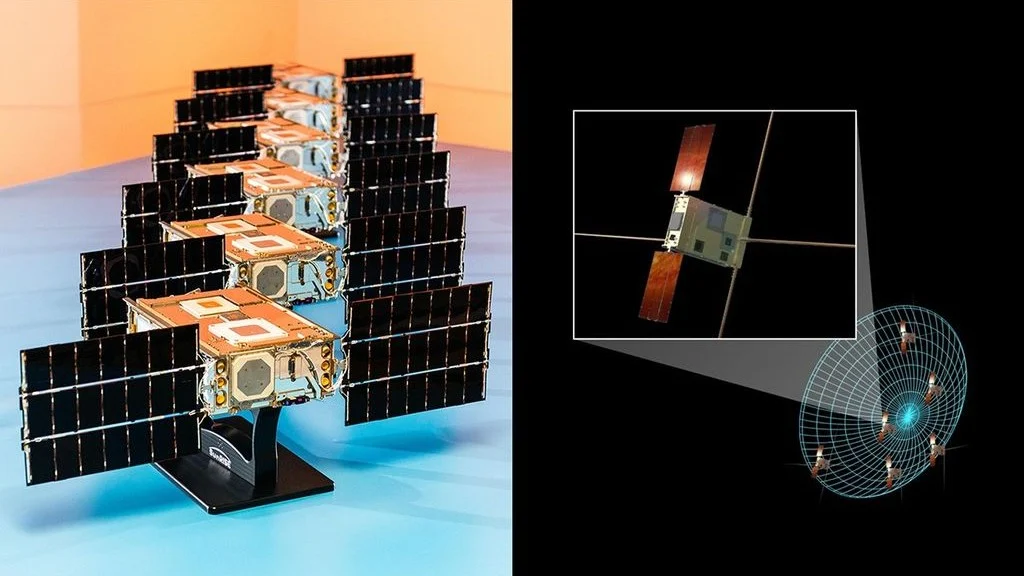
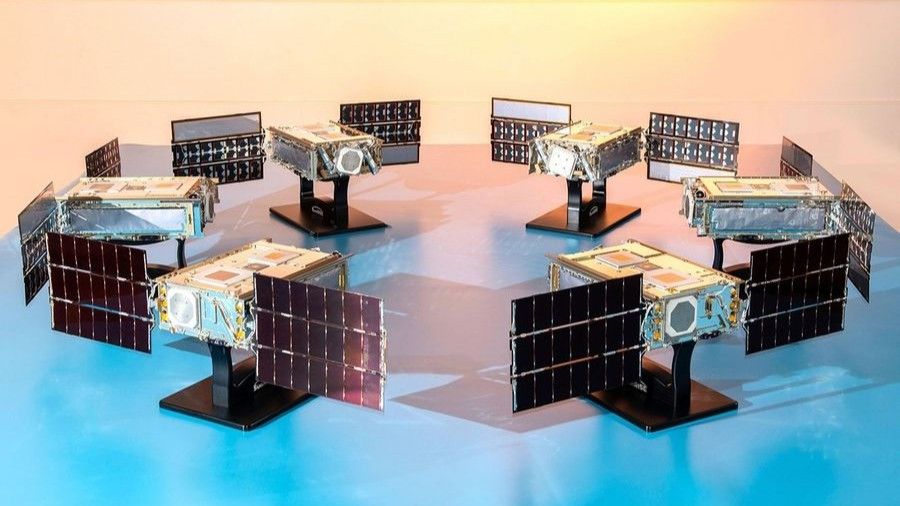
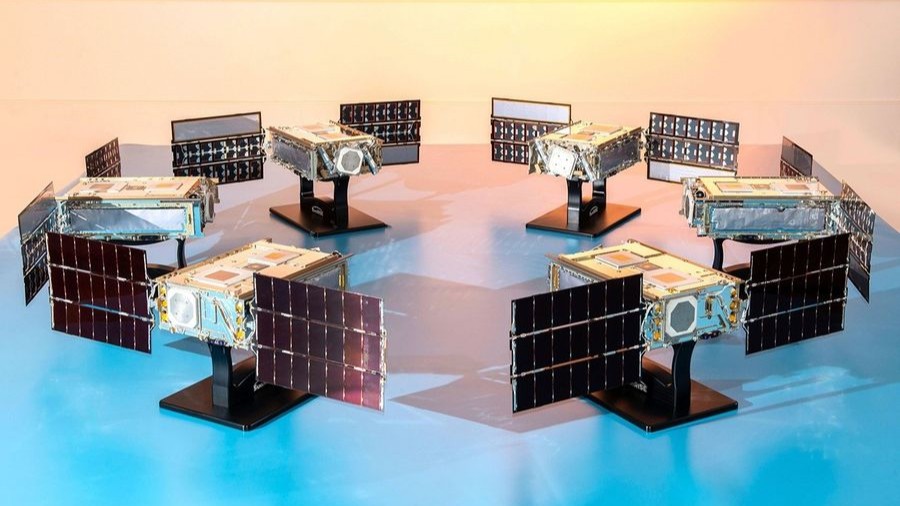
The SunRISE mission, a vital component of NASA’s heliophysics research, comprises six compact satellites, each approximately the size of a mailbox. These small spacecraft will form a distributed radio telescope in space, operating in tandem to track and analyze solar radio bursts. These bursts, which precede the arrival of more energetic particles associated with solar storms, offer crucial lead time for potential mitigation efforts. The mission is managed by NASA’s Jet Propulsion Laboratory in Southern California and led by scientists at the University of Michigan, falling under the umbrella of NASA Science Mission Directorate’s "missions of opportunity" and the Explorers Program.
The shift in launch providers is intrinsically linked to recent performance anomalies experienced by the ULA Vulcan Centaur rocket, particularly concerning its solid rocket boosters. During its fourth launch, USSF-87, the Vulcan Centaur encountered a significant performance anomaly in one of its solid rocket boosters. While the rocket successfully delivered its payload to orbit, this marked the second such incident in the rocket’s operational history. The recurrence of this issue prompted the U.S. Space Force (USSF), a key partner in national security space launches, to place a temporary pause on further national security launches utilizing the Vulcan Centaur until the booster performance could be thoroughly investigated and rectified.
This pause has had ripple effects across the launch manifest, influencing the scheduling and provider choices for various missions. The SunRISE mission’s relocation to a SpaceX Falcon Heavy suggests a strategic recalibration by the U.S. Space Force’s Space Systems Command (SSC), which sponsors the rideshare mission that will carry SunRISE into space. While not explicitly detailed in the NASA announcement, the possibility exists that SunRISE has been remanifested onto a different SSC rideshare utilizing SpaceX’s launch capabilities, or that another SSC mission has been moved from the Vulcan Centaur manifest altogether to accommodate this change. SSC has a history of agilely shifting launch priorities and providers, as demonstrated by previous adjustments involving SpaceX’s Falcon 9 rocket.
Understanding the SunRISE Mission’s Scientific Imperative
The SunRISE mission is designed to operate at an altitude of approximately 22,000 miles (35,000 kilometers) above Earth, positioning the satellites just above geostationary orbit. In this vantage point, they will form a vast, 10-mile (16-kilometer) "X" formation. Each satellite will deploy antenna booms extending to roughly 10 feet (2.5 meters), collectively functioning as a single, colossal radio telescope. This sophisticated arrangement will enable them to meticulously track the radio waves emitted by the sun, specifically those associated with solar flares and coronal mass ejections (CMEs) – the primary drivers of space weather events.
The scientific rationale behind this approach is rooted in the speed of different solar phenomena. Solar radio bursts travel at the speed of light, reaching Earth significantly faster than the streams of energetic particles and plasma that constitute a full-blown solar storm. By detecting these radio bursts, scientists can gain invaluable advance notice, potentially hours before the more hazardous components of a solar storm impact Earth. This foresight is critical for protecting our increasingly space-dependent infrastructure.
The Growing Threat of Space Weather
The impact of severe space weather events on Earth and its technological systems is a growing concern. Powerful solar storms, such as the one that significantly impacted Earth in January, can cause widespread disruptions. These events are capable of interfering with or outright disabling satellites by affecting their onboard electronics, sensitive scientific instruments, and vital communication systems. The economic and societal ramifications of such widespread satellite failure could be immense, impacting everything from global communication networks and navigation systems like GPS to financial transactions and weather forecasting.
Beyond the realm of satellites, severe solar storms pose risks to human spaceflight. Astronauts in orbit, particularly those on missions outside the protection of Earth’s atmosphere, face increased radiation exposure. Even passengers on commercial flights, especially those traversing polar routes where Earth’s protective magnetic field is weaker, could be subjected to elevated radiation levels during intense solar events. The potential for these storms to induce currents in power grids on Earth, leading to widespread blackouts, is also a well-documented concern, as highlighted by historical events like the 1989 Quebec blackout.
The SunRISE mission aims to bolster our predictive capabilities in this critical domain. While the spacecraft themselves will not issue direct alerts, the data they collect will be instrumental in refining space weather prediction models. This enhanced understanding will empower scientists and policymakers to develop more effective mitigation strategies, thereby enhancing the resilience of our orbital assets and terrestrial infrastructure against the unpredictable fury of the sun.
SpaceX Falcon Heavy: A Proven Heavy-Lift Solution
The selection of the SpaceX Falcon Heavy as the launch vehicle for SunRISE signifies a move to a proven and powerful heavy-lift capability. Falcon Heavy is SpaceX’s most potent rocket, designed for missions requiring substantial payload capacity. It is a triple-booster configuration, integrating three modified Falcon 9 first stages. Since its debut in 2018, the Falcon Heavy has undertaken 12 successful launches, demonstrating its reliability and versatility.
Notably, four of these launches have been dedicated to delivering national security payloads into orbit, underscoring its capability to meet stringent mission requirements. Its most recent national security deployment was USSF-52 in December 2023. The rocket’s most recent operational flight occurred in April, successfully placing the Viasat-3 F3 telecommunications satellite into orbit.
The Falcon Heavy’s next scheduled mission is the highly anticipated launch of NASA’s Nancy Grace Roman Space Telescope, currently slated for no earlier than August 30th. Following this significant deployment, SunRISE will embark on its journey to space later this year. While a more precise launch window for SunRISE has not yet been publicly announced, its transition to the Falcon Heavy platform indicates a confident path forward for the mission’s eventual ascent.
A Broader Context of Evolving Launch Landscapes
The decision to switch launch providers for the SunRISE mission is emblematic of the dynamic and competitive nature of the modern space industry. NASA, like other government agencies, relies on a diverse array of launch providers to ensure mission success and redundancy. The ULA Vulcan Centaur represents a significant investment in a new generation of American launch vehicles, intended to provide robust capabilities for both commercial and government payloads. However, the recent performance issues, while not preventing mission success on USSF-87, have necessitated a period of careful review and adjustment.
SpaceX, with its established Falcon 9 and Falcon Heavy fleets, has become a dominant force in the launch market, offering a high cadence of flights and a proven track record. The company’s ability to rapidly integrate new missions and adapt to changing manifest requirements makes it an attractive option for agencies seeking flexibility. The U.S. Space Force’s proactive stance in pausing national security launches on the Vulcan Centaur, while potentially causing short-term schedule adjustments, ultimately prioritizes long-term mission assurance. This approach allows for thorough investigation and resolution of technical issues, reinforcing confidence in the reliability of its chosen launch partners.
The SunRISE mission’s successful deployment hinges on a reliable launch. By transitioning to the SpaceX Falcon Heavy, NASA and the USSF are ensuring that this critical scientific endeavor proceeds with a robust and proven launch vehicle. As the space industry continues to mature and evolve, such strategic adjustments in launch providers will likely become more common, reflecting a commitment to mission success and the ongoing pursuit of space exploration and scientific discovery. The successful operation of SunRISE promises to enhance our understanding of the sun and equip us with better tools to navigate the challenges of space weather in the years to come.