
AUSTIN, Texas — For years, musician Zack Morgan lived a dual life that many creative professionals in urban centers know all too well: he spent his daylight hours navigating the rigid demands of a corporate technology job, while his nights were dedicated to playing the Austin music scene as a funk keyboardist. But in 2015, the delicate balance collapsed when Morgan lost his day job. He recalls the sudden termination as feeling akin to being pushed off a cliff.
Left without corporate backing, Morgan faced a stark crossroads. Deciding to lean into his passion, he asked himself whether this was finally the universe signaling that he should pursue a full-time career in music. Yet, stepping into the unpredictable world of professional artistry demanded an immediate, pragmatic priority: securing health insurance.
Today, Austin heavily markets itself to tourists and corporations alike as the Live Music Capital of the World. Beneath the neon glow of the city’s famous strips and the booming tourism revenue, however, lies a harsh economic reality. The very artists who generate the city’s profound cultural cachet frequently find themselves priced out by skyrocketing costs of living, soaring housing markets, and the crushing expenses of basic medical care.
For Morgan, bridging the gap between artistic survival and personal health security became possible through the Health Alliance for Austin Musicians, widely known as HAAM. By patching together various performance gigs and leveraging the nonprofit’s specialized assistance, Morgan managed to keep health coverage active. As Morgan notes, that safety net is an integral component of making a modern music career function sustainably in a rapidly gentrifying city.
The Architecture of HAAM: A Unique Public-Private Partnership
Founded more than a decade ago, HAAM has evolved into an indispensable financial and operational anchor for Austin’s sprawling musician community. The core mechanics of the program are designed to alleviate the prohibitive costs of medical coverage. HAAM directly subsidizes the monthly insurance premiums of local musicians who purchase health plans through the Affordable Care Act (ACA) marketplace.
To fund this roughly $4 million annual program, the nonprofit operates in close tandem with Central Health, a public hospital district and governmental agency tasked with providing healthcare resources for low-income residents throughout Austin and surrounding Travis County. Because of this strategic funding model, a significant portion of participating performing artists pay $0 out of pocket toward their monthly health insurance premiums.
The program’s resilience has been tested through major historical disruptions, including the economic turmoil of the coronavirus pandemic. Over the years, it has transformed from a localized experiment into an institutionalized pillar of financial support for Austin’s creative workforce. Furthermore, as systemic healthcare costs mount nationwide, HAAM’s operational model is increasingly viewed by policymakers and health advocates as a viable blueprint for other metropolitan areas seeking to protect vulnerable, gig-economy populations.

A Historical Retrospective: From Clinic Care to Marketplace Subsidies
Texas has long grappled with severe healthcare disparities. According to data from KFF, Texas maintained the highest uninsured rate in the nation as of 2024, with approximately 19% of residents aged 64 and under entirely lacking health insurance coverage.
Even before the rollout of the ACA online marketplaces in 2014, HAAM spent its foundational decade trying to stem this tide. The nonprofit connected local musicians with free and heavily discounted medical care at various clinics and hospitals scattered across Travis County. Yet, despite these efforts, roughly 85% of HAAM members remained fundamentally uninsured. This left them dangerously exposed to catastrophic medical debt, particularly when traveling out of town or out of state to perform on tour.
When the Affordable Care Act became operational and cemented its place in the national healthcare landscape, leadership at HAAM recognized a strategic imperative. Rachel Blair, HAAM’s chief strategy officer, noted that the arrival of the federal marketplace made it clear the organization needed to pivot toward helping musicians attain comprehensive, fully insured status rather than relying solely on ad-hoc clinic visits.
Similar advocacy nonprofits exist in other iconic American music hubs—such as Seattle (SMASH), New Orleans (New Orleans Musicians’ Clinic), and Nashville (Music Health Alliance). While many of these regional organizations evolved to help musicians navigate the notoriously complex federal enrollment processes, most stopped short of directly subsidizing monthly premium costs. HAAM’s leadership quickly realized that navigation alone was insufficient. Given that the average HAAM member earns approximately $30,000 annually, expecting artists to allocate a third of their earnings toward healthcare premiums was entirely unfeasible.
To solve this, HAAM scaled its operations dramatically. Since implementing direct premium assistance, the organization’s membership has surged by 77%, expanding to more than 3,300 active participants. Today, over 90% of HAAM members are fully insured.
The Mechanics of Enrollment and Regional Replication
To maintain eligibility for HAAM’s premium assistance, participating musicians must enroll in specific silver-level benchmark plans offered by Sendero Health Plans, a nonprofit insurance company operated by Central Health.
The financial burden is shared based on a sliding income scale tied to the federal poverty level (FPL):
- Lower-Income Tiers: For musicians earning between 100% and 200% of the federal poverty level, Central Health covers the remaining balance of the monthly premium after federal tax credits are applied.
- Moderate-Income Tiers: For members whose earnings exceed that specific threshold, HAAM steps in to provide a targeted, secondary subsidy covering 50% of their remaining monthly premium balances.
The success of this model has naturally sparked interest beyond Austin’s city limits. In 2017, HAAM assisted in establishing a parallel framework in Denton, a vibrant college town north of Dallas renowned for producing legendary musical acts ranging from Meat Loaf to Norah Jones.

The Denton Music and Arts Collaborative approaches the challenge through a slightly different administrative lens. Rather than tying members to a specific municipal insurer, the Denton collaborative pairs artists with an independent insurance agent to identify optimal coverage, subsequently providing a flat $100 monthly subsidy. Jennifer Kapinos, president of the Denton collaborative, emphasized that these interventions are vital to preserving the town’s rich jazz and underground art-rock history against the pressures of rising costs and youth brain-drain.
Closer to home, Austin’s broader labor market has taken note of HAAM’s longevity. In 2025, Good Work Austin—a nonprofit advocacy group representing restaurant and food service workers—launched a pilot program modeled after HAAM’s framework. Partnering with Central Health, the initiative assists local culinary workers with Sendero enrollments and premium coverage.
Kit Abney Spelce, vice president of operations for Central Health, stressed that the success of these programs relies heavily on trusted community intermediaries. Simply broadcasting a public announcement about free healthcare options is rarely enough to drive engagement; deep, pre-existing relationships built by sector-specific advocacy groups are essential to overcoming skepticism and driving enrollment.
Navigating Federal Headwinds and Surging Premiums
Despite its proven track record, the safety net faced unprecedented financial strain heading into the 2026 plan year. Across the United States, healthcare markets experienced severe volatility. Following the expiration of pandemic-era enhanced premium tax credits authorized by Congress, federal subsidies shrank significantly for millions of Americans. A national report released in mid-2026 revealed that roughly 5 million people nationwide dropped their ACA marketplace coverage as a direct result of these expiring federal supports.
Simultaneously, insurance providers faced mounting pressures from rising pharmaceutical and clinical expenses. Sendero Health Plans was forced to implement an average 16% rate hike for its enrollees. When combined with the rollback of federal tax credits, the impact on Austin’s creative sector was immediate and severe.
"Our premiums for our members went up 60% from one year to the next," Blair explained.
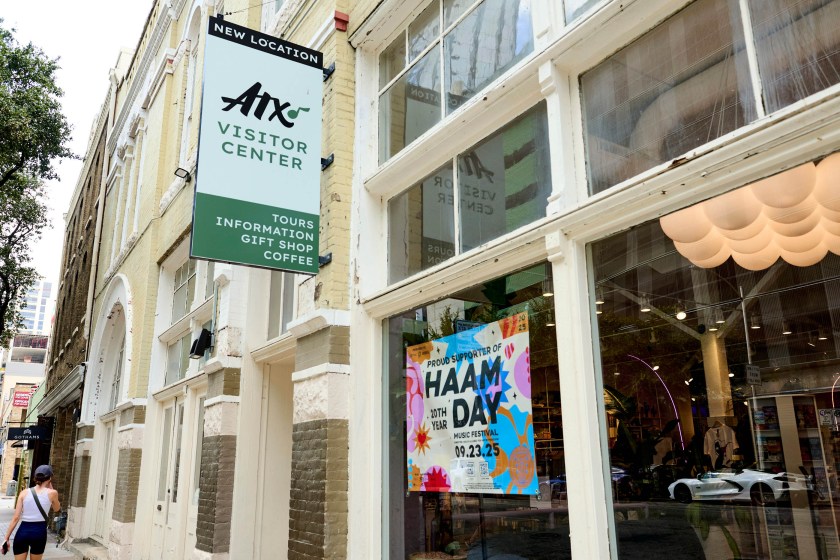
In response, HAAM aggressively escalated its fundraising efforts throughout 2026—epitomized by its annual HAAM Day Music Festival, where local bands perform everywhere from neighborhood grocery stores to the steps of the Texas Capitol. Despite these efforts, the organization faced painful limitations. Financial constraints forced HAAM to turn away hundreds of qualified applicants who requested assistance.
Nevertheless, for existing members already inside the program, the partnership held firm. Central Health and HAAM mobilized resources to ensure that current participants would not lose their coverage. Spelce affirmed the commitment of the public agency, emphasizing that their primary operational goal remained intact: ensuring that active members’ monthly premiums continued to be paid in full, month after month.
Structural Gaps and the Medicaid Expansion Dilemma
While HAAM and Central Health have successfully shielded thousands of Austin musicians from market volatility, structural limitations within the American healthcare system continue to leave critical gaps in the safety net.
Crucially, the marketplace plans subsidized by HAAM are explicitly designed for individuals with low-to-moderate incomes. Under the architecture of the Affordable Care Act, the poorest individuals—those earning below 100% of the federal poverty level, which sits at approximately $15,000 annually—were intended to be absorbed by a nationwide expansion of Medicaid.
However, Texas remains one of a dwindling number of states that have consistently refused to expand Medicaid since the ACA’s inception. Consequently, many of the state’s most economically vulnerable residents—including destitute artists operating entirely outside formal revenue streams—remain locked out of federal marketplace subsidies and traditional Medicaid alike.
To mitigate this systemic shortfall, Central Health and HAAM have attempted to engineer local workarounds. Central Health operates the Medical Access Program (MAP), an alternative healthcare network that grants uninsured, low-income Travis County residents access to local medical providers. Concurrently, HAAM has cultivated direct relationships with primary care clinics to accommodate uninsured members.
Yet, program leaders are frank about the inadequacy of these stopgap measures when compared to systemic state-level reform. Blair acknowledged that while these localized solutions provide temporary relief, they ultimately fail to match the comprehensive stability that statewide Medicaid expansion would provide. Describing the current patchwork approach, Blair noted that it is far from a sustainable long-term solution, particularly when a robust, proven national alternative exists.