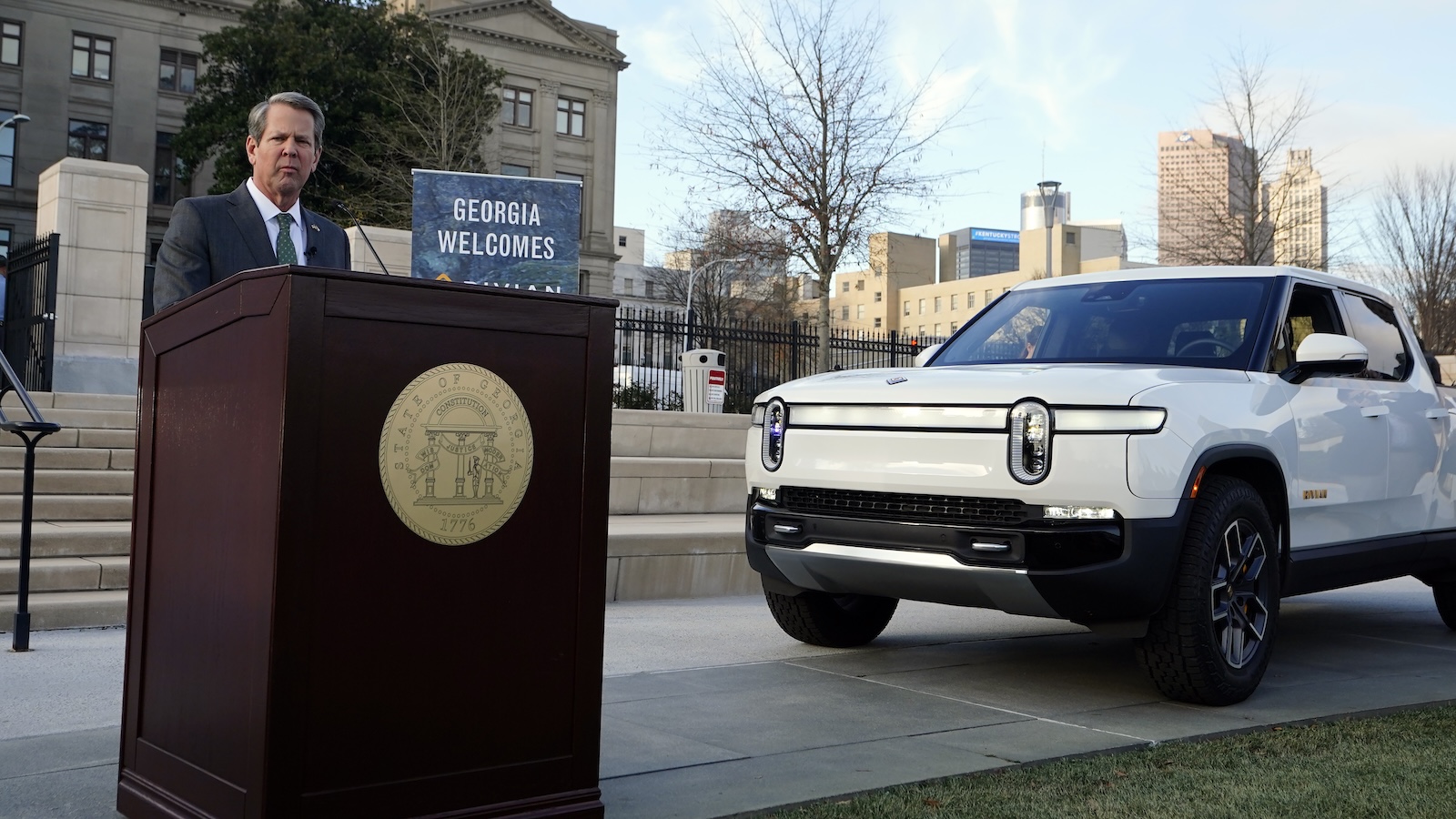
Georgia has spent the better part of a decade positioning itself as the undisputed capital of the American clean energy transition. Under the aggressive economic development banner of Governor Brian Kemp, state officials rolled out an extensive red-carpet treatment—featuring lucrative tax incentives, localized workforce training programs, and aggressive recruitment strategies—to lure electric vehicle (EV) manufacturers, battery producers, and solar panel companies to the Peach State. For a considerable stretch, the gamble paid off handsomely, transforming rural expanses and mid-sized industrial towns into bustling hubs of 21st-century manufacturing.
However, the landscape for clean technology and automotive manufacturing has undergone a seismic shift over the past eighteen months. A combination of changing federal policies, shifting consumer preferences, geopolitical tensions, and localized hurdles has forced automotive giants and component suppliers to recalibrate. Despite these turbulence-inducing headwinds, Georgia’s clean energy sector is far from collapsing; instead, industry leaders are demonstrating a high degree of operational resilience, pivoting their product lines and manufacturing strategies to weather a messy, transitional chapter in the American automotive market.
The Rise of Georgia’s Clean Energy Corridor
The foundation of Georgia’s green manufacturing boom was laid years ago through deliberate industrial planning. Long before federal legislation supercharged the movement, homegrown companies were carving out market share. Blue Bird, a historic school bus manufacturer based in Fort Valley, Georgia, began commercial sales of electric buses in 2018 and subsequently opened an expanded, dedicated electric bus factory in 2023 to meet growing municipal demand.
The momentum accelerated dramatically following federal legislative milestones. In 2022, South Korean automotive giant Hyundai broke ground on its sprawling $5.5 billion "Metaplant America" near Savannah, touted as a dedicated facility for electric vehicles and associated components. Shortly thereafter, in 2024, Kia officially integrated EV production lines into its established manufacturing facility in West Point, Georgia. Meanwhile, electric truck pioneer Rivian advanced plans for a massive manufacturing campus east of Atlanta, breaking ground in 2025.
Together, the Hyundai and Rivian endeavors represent two of the largest economic development projects in the entire history of the state of Georgia, promising tens of thousands of direct and indirect jobs. Beyond finished vehicles, the state successfully courted the upstream and downstream supply chains, attracting battery cell manufacturers, recycling facilities, and high-tech solar panel producers.
A Perfect Storm: Policy Shifts and Market Realities
Despite the initial euphoria, the economic outlook for these multi-billion-dollar investments has encountered substantial turbulence following shifts in the federal political and regulatory landscape. Under the second Trump administration, the macroeconomic and policy framework supporting green technology has been systematically dismantled or heavily restricted.
Federal consumer tax credits for electric vehicle purchases have been phased out, removing a critical financial incentive that once helped bridge the price gap between internal combustion engine (ICE) vehicles and battery-powered alternatives. Additionally, the federal government has imposed restrictive tariffs on imported battery packs, charging hardware, and other vital technological components. Environmental regulations governing vehicular emissions have been loosened, relieving traditional automakers of strict compliance pressures, while the federal push to electrify government vehicle fleets has been formally abandoned.
Compounding these regulatory and financial hurdles are labor and geopolitical pressures. Approximately a year ago, federal immigration enforcement agencies conducted a high-profile raid at a major electric vehicle battery plant in the state, detaining more than 400 workers—predominantly South Korean nationals who had traveled to the United States to provide specialized technical assistance required to get the complex, automated manufacturing lines up and running.
The cumulative effect of these developments has injected a high degree of volatility into an industry that relies heavily on long-term regulatory predictability and stable supply chains. Across the broader Southeast region, the Southern Alliance for Clean Energy (SACE) reports that more than $4 billion in clean energy manufacturing investments have either been canceled or significantly scaled back over the past year. High-profile setbacks, including localized layoffs at facilities like SK Battery, underscored the fragility of the rapid expansion.
The Flexibility Playbook: Pivoting to Hybrids and Energy Storage
Rather than retreating from the market entirely, Georgia’s manufacturers are displaying remarkable operational flexibility. Recognizing that consumer adoption curves are flattening due to persistent pricing concerns, range anxiety, and a developing public charging infrastructure, automakers are redesigning their production lines to embrace a middle-ground strategy.
At Kia’s manufacturing plant in West Point, the assembly line serves as a prime example of this industrial adaptation. Rather than locking the facility into a rigid, singular focus on all-electric models, engineers designed the plant to function with the versatility of a short-order kitchen. The facility seamlessly weaves different vehicle specifications down the same continuous line, accommodating various models, colorways, interior trims, and—crucially—multiple powertrain options, including traditional gas-powered engines, hybrid systems, and full electric batteries.
Stuart Countess, CEO of the Kia manufacturing facility, emphasized that this multi-powertrain flexibility is essential for matching real-time market demand. While electric vehicles remain a long-term industry trajectory, consumers are currently favoring transitional technologies like hybrids.
"What we’ve seen is a transition back away from maybe full EV vehicle building to this kind of a middle-of-the-road opportunity," Countess explained. Reflecting on the abrupt policy changes, he noted that the loss of consumer tax incentives fundamentally altered the retail environment: "We had a tax incentive credit that did go away. Sales were really moving in the right direction, but once it went away, it became a much different environment."
Following a parallel trajectory, Kia’s sister company, Hyundai, quickly integrated hybrid vehicle production into the assembly blueprint at its massive Savannah Metaplant, adapting a facility originally designed solely for pure electric vehicles to capture shifting consumer demand.
Stephanie Valdez-Streaty, director of industry insights at Cox Automotive, characterizes this phase as a necessary, albeit messy, evolutionary period. "It’s kind of a messy period we’re in right now," Valdez-Streaty said. "But I think the manufacturers are adjusting."
Simultaneously, the state’s battery manufacturing sector is diversifying its output. Rather than focusing exclusively on automotive battery cells, several major producers have begun redirecting production capacities toward stationary energy storage systems, supplying the booming commercial and utility-scale battery storage market needed to stabilize electrical grids.
The Domestic Disconnect: Infrastructure and Local Adoption
Despite hosting some of the nation’s most advanced clean energy manufacturing facilities, Georgia faces a paradoxical domestic market. Unlike progressive states that actively stimulate EV adoption through generous state-level point-of-sale rebates or purchasing grants, Georgia lacks direct consumer incentives. In fact, the state levies an additional annual registration fee on electric vehicle owners—a policy explicitly designed to offset lost motor fuel tax revenues from drivers who bypass traditional gas stations.
Stan Cross, electric vehicle program manager at the Southern Alliance for Clean Energy, points out that the political narrative surrounding clean energy within the state remains deeply fractured. "When it comes to electric vehicles, Georgia politics remains utterly confused," Cross observed.
Despite this legislative hesitancy, private sector investment and utility-driven infrastructure development are stepping in to fill the policy vacuum. Major automakers, including Kia and Hyundai, have partnered in a national charging consortium known as IONNA, which is actively deploying high-speed charging infrastructure throughout the region, including a newly installed charging station directly on-site at the West Point manufacturing facility.
Furthermore, regulated electric utilities in the Southeast are aggressively expanding their footprint in the transportation electrification space. According to SACE data, utility-sponsored EV infrastructure investments across the region increased by 14 percent over the past year.
"Though we’re not seeing a lot of activity on the legislative side, we do see potential on the regulatory side and really are encouraging Georgia Power to step up and help kind of fill the void that policymakers in the state are creating," Cross noted.
Long-Term Outlook: Familiarity Breeds Acceptance
When measured against broader economic metrics, the scale of Georgia’s green manufacturing commitment remains staggering. The $4 billion in localized project cancellations or contractions across the Southeast pales in comparison to the nearly $74 billion in total clean manufacturing investments that are currently moving forward across the region.
Industry analysts remain optimistic that the long-term fundamentals of the transition remain intact. As manufacturing plants become deeply embedded in local communities, cultural and consumer familiarity with the technology is expected to organically drive domestic adoption. When local residents are employed by the very companies building advanced electrified vehicles and clean energy components, a natural brand loyalty and product awareness takes root.
"It’s like that familiarity, right?" Valdez-Streaty remarked, emphasizing the human element of industrial economic development. "People have jobs at those companies and familiarity with those products."
While the road ahead remains uneven and the automotive industry continues to navigate shifting regulatory baselines, the consensus among industry insiders is clear: the transition toward an electrified transportation future has not been derailed, but rather forced to mature. Georgia’s manufacturing sector is proving that it has the industrial agility to survive policy whiplash, adapt to consumer realities, and maintain its status as a cornerstone of America’s evolving energy economy.