
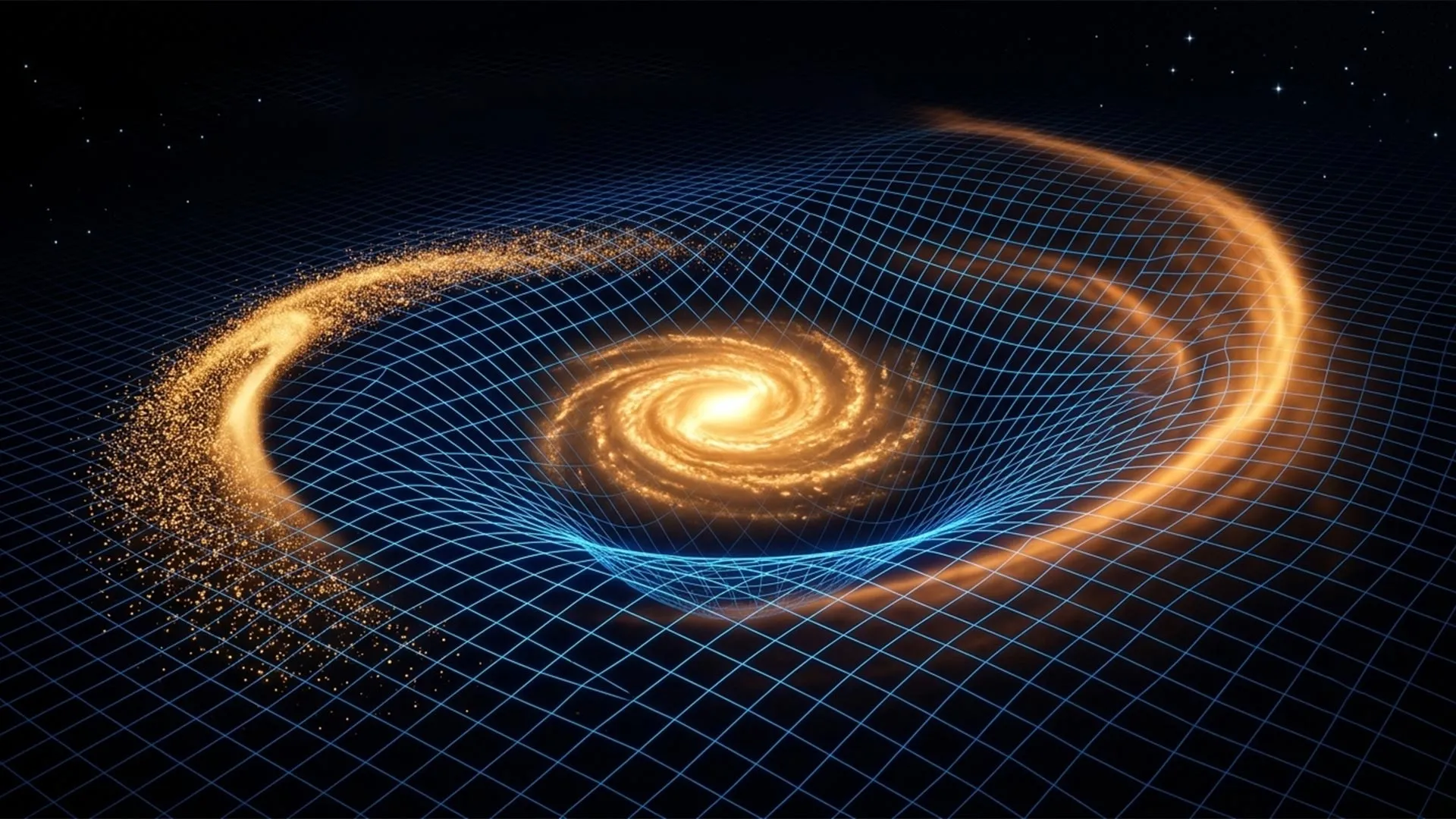
The landscape of contemporary physics, once viewed by the public as a march toward a singular, unified "Theory of Everything," has been revealed to be a map of profound intellectual divergence. A comprehensive global survey, spearheaded by researchers from the Perimeter Institute and the American Physical Society’s Physics Magazine, has shattered the illusion of consensus within the scientific community. By canvassing the opinions of the world’s leading physicists, the study exposes deep-seated uncertainty regarding the most fundamental tenets of our universe, from the mechanics of gravity to the very nature of dark energy and the birth of time itself.
The findings, published recently in Physics Magazine, indicate that the bedrock theories of modern science are being met with growing skepticism and a lack of unified support. This study serves as a critical diagnostic tool for the state of fundamental physics, suggesting that rather than nearing a final resolution, the field is entering an era of intense, healthy, and necessary debate.
The Erosion of the Standard Model
For decades, the Lambda Cold Dark Matter ($Lambda$CDM) model has served as the gold standard of cosmology. It posits a universe dominated by cold dark matter and a constant form of dark energy, the mysterious force driving the accelerated expansion of the cosmos. However, the survey reveals that this model no longer commands a majority consensus among experts.
This skepticism is not occurring in a vacuum. It follows closely on the heels of data from the Dark Energy Spectroscopic Instrument (DESI), which has provided preliminary evidence suggesting that dark energy might not be the constant "cosmological constant" that Einstein once hypothesized. Instead, DESI observations indicate that dark energy may evolve over time—a finding that, if confirmed, would necessitate a total rewrite of the $Lambda$CDM framework. The survey confirms that this atmospheric shift in data is mirrored by a shift in theoretical confidence; physicists are no longer tethered to the standard model as an absolute truth.
Chronology of the Theoretical Crisis
The journey to this current state of uncertainty has been a long one. Following the mid-20th-century triumph of the Standard Model of particle physics, the latter half of the century was defined by an ambitious, albeit largely unfulfilled, quest to merge quantum mechanics—the physics of the very small—with general relativity, the physics of the very large.
- 1970s–1980s: The rise of String Theory as a candidate for a "Theory of Everything." Optimism was high, and the mathematical elegance of the theory suggested that a breakthrough was imminent.
- 1990s: The discovery of the accelerating expansion of the universe introduced dark energy as a primary, yet unexplained, component of the cosmos, complicating existing models.
- 2010s: The Large Hadron Collider confirmed the Higgs Boson, completing the Standard Model of particle physics but failing to find evidence for "New Physics," such as supersymmetry, which many had expected to appear.
- 2020s: The current era, characterized by high-precision experiments like DESI and the James Webb Space Telescope (JWST), is consistently challenging established paradigms, leading to the current widespread re-evaluation of theoretical foundations.
The Fragility of Consensus: Data Breakdown
The survey’s most striking revelation is the lack of majority support for almost every major theoretical pillar. When asked to evaluate the standard answers to fundamental questions, the respondents consistently demonstrated a fragmented landscape of opinion.
Regarding the Big Bang, 68% of physicists rejected the popular notion that it signifies the absolute beginning of time. Instead, the consensus is that the Big Bang represents an epoch of rapid evolution from a hot, dense state, leaving the question of a "beginning" firmly in the realm of the unknown. This nuance is vital: it separates the mathematical description of the early universe from the philosophical or metaphysical assumption of a chronological starting point.
The concept of cosmic inflation—the rapid expansion of the early universe—fared only slightly better, garnering just 51% support. With a razor-thin majority, inflation remains a contested subject, with many theorists advocating for alternative mechanisms to explain the homogeneity of the observable universe.
The Dark Matter Impasse
Perhaps the most glaring hole in modern understanding is dark matter, which accounts for roughly 27% of the mass-energy content of the universe yet remains entirely undetected in direct laboratory experiments. The survey highlights a field in disarray:
- Low-mass particle hypothesis: Only 17% of respondents believe dark matter is a yet-to-be-discovered low-mass particle.
- Modified Gravity: 12% support theories that suggest we have fundamentally misunderstood gravity, rather than needing to find a new particle.
- The Hybrid Approach: 21% favor a combination of theories, indicating that the solution may not lie in a single, simple discovery.
This lack of convergence suggests that the community is moving away from the "WIMP" (Weakly Interacting Massive Particle) paradigm that dominated the late 20th century, favoring a more pluralistic approach to the mystery.
The Quantum Gravity Quagmire
The effort to reconcile general relativity with quantum mechanics—often described as the "Holy Grail" of physics—has resulted in a stalemate. String theory, once the undisputed heavyweight champion of theoretical physics, secured only 19% of the vote. Loop Quantum Gravity, its primary rival, garnered 12%. Crucially, 18% of respondents suggested that gravity might not be quantizable at all, representing a radical departure from the assumption that all fundamental forces must follow quantum rules.
This division underscores the "theory fatigue" that has set in after forty years of searching for a unified framework without significant experimental breakthroughs.
Expert Analysis: The Virtue of Disagreement
Niayesh Afshordi, an associate faculty member at the Perimeter Institute and a lead researcher on the study, argues that this lack of consensus is not a symptom of failure, but a prerequisite for progress. "Scientific truth is not decided by a vote," Afshordi stated. "The interesting point is not that physicists are confused. It is that the frontier is genuinely alive."
From a scientific perspective, consensus can often act as a blinder, preventing researchers from considering "out-of-the-box" solutions that might otherwise resolve long-standing anomalies. When the community is fractured, it implies that the field is in a state of high creative tension—the precise environment required for a paradigm shift.
Implications for the Future of Physics
The survey results carry significant implications for the allocation of research funding and the direction of future experiments. Historically, funding agencies have favored approaches that align with the consensus. However, if there is no clear consensus, there is a strong argument for diversifying research efforts.
- Experimental Diversification: The results support the current trend of moving away from massive, single-track experiments toward smaller, more diverse observational projects that can test a wider array of theories.
- Theoretical Re-evaluation: The data provides a mandate for theorists to revisit "fringe" ideas that were previously sidelined in favor of the now-unstable $Lambda$CDM and String Theory frameworks.
- Educational Reform: The findings suggest that the next generation of physicists must be trained not in the mastery of a single, "correct" theory, but in a broad, multi-disciplinary approach that emphasizes the limitations of current models.
Conclusion
As the field of physics navigates this period of instability, the Leonard Cohen quote cited by the researchers—"There is a crack in everything, that’s how the light gets in"—takes on a literal meaning. The "cracks" in the standard models of cosmology and gravity are exactly where the next great discovery will likely emerge. By documenting the lack of consensus, this survey has provided a roadmap of where those cracks are widest.
The future of physics will not be defined by the victory of one theory over another, but by the ability of the community to embrace the current state of uncertainty. If history is any guide, it is precisely when the experts are most divided that a fundamental breakthrough is waiting to be found. The survey stands as a testament to the resilience of the scientific method, proving that physicists are as willing to question their own foundations as they are to explore the furthest reaches of the cosmos. As we look to the next decade of astronomical observation and theoretical innovation, the only consensus that truly remains is that the universe is far more mysterious, and far less understood, than we dared to imagine.








Leave a Reply