

The annual IAA Transportation trade show in Hannover, Germany, has long served as the global barometer for the logistics and commercial vehicle sectors. In the 2026 iteration, the discourse has shifted decisively from theoretical feasibility to practical implementation. While legacy manufacturers and new entrants showcase their latest hardware, a significant tension has emerged between the technological potential for rapid decarbonization and the regulatory recalcitrance of major truck manufacturers seeking to delay European Union CO2 emissions mandates.
The Technological Leap: CATL and Zerova Redefine Standards
The core narrative of this year’s exhibition centers on overcoming the "range anxiety" and "charging downtime" that have historically plagued heavy-duty electric vehicle (EV) adoption. Two companies, CATL and Zerova, have introduced technologies that effectively reset the baseline for what is possible in long-haul freight.
CATL’s unveiling of the Tectrans II battery system marks a significant advancement in energy density and operational flexibility. With a gravimetric energy density of 170 Wh/kg—a 13 percent improvement over the current industry average—the Tectrans II is engineered for a 12-year, 1.5-million-kilometer service life. Most importantly, the system boasts a 1,000-kilometer range and a rapid-charging capability that allows an 80 percent state-of-charge in just 25 minutes using megawatt-class infrastructure. By offering modular packaging, the battery can be adapted for diverse chassis configurations, including roof-mounted placements on electric buses, which enhances the versatility of the technology across different vehicle segments.

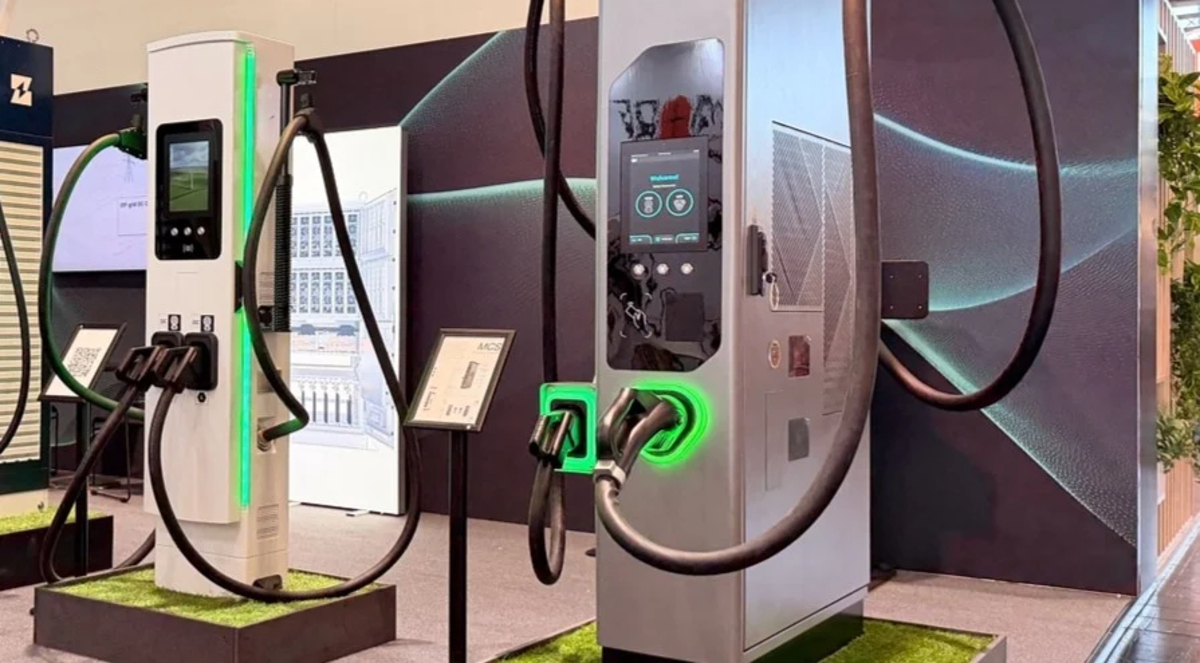
Parallel to this, the charging infrastructure sector has received a substantial upgrade through Zerova’s new 1440 kW Megawatt Charging System (MCS) dispenser. By delivering power levels that nearly double the current offerings of many existing heavy-duty chargers, Zerova is addressing the logistical bottleneck of depot-based charging. The ability to push 1.44 megawatts into a commercial vehicle drastically reduces the time a vehicle remains stationary, effectively aligning electric fleet operations with the tight schedules of modern just-in-time logistics.
The Context of European Regulatory Challenges
The technological optimism at the Hannover show stands in stark contrast to the political maneuvering occurring within the European Union. Currently, EU regulations mandate a 43 percent reduction in CO2 emissions for new heavy-duty vehicles by 2030, rising to 64 percent by 2035 and 90 percent by 2040. However, a coalition of Europe’s leading truck manufacturers—including giants such as Daimler Truck, Scania, DAF, and Iveco—has petitioned for a three-year extension of these targets.
The manufacturers argue that the current economic and infrastructural environment makes compliance an untenable burden. They point to the slow rollout of high-power charging networks and the high costs associated with grid connectivity as primary barriers. The European Automobile Manufacturers’ Association (ACEA) highlights that only 2.4 percent of new heavy-duty vehicle registrations in the EU are currently zero-emission, a figure that remains significantly behind the curve required to hit the 2030 milestones.
Chronology of Emission Standards and Industry Response
The trajectory of European heavy-duty decarbonization has been marked by a series of progressively tighter requirements. Since the implementation of initial CO2 standards, the industry has experienced fluctuating rates of adoption.
- 2023–2024: Initial phase-in of monitoring systems leads to a moderate increase in zero-emission vehicle (ZEV) pilot programs.
- 2025: Manufacturers achieve the first major milestone, with the industry average reducing CO2 emissions by 15 percent, largely driven by incremental improvements and initial fleet electrification.
- 2026 (Current): The IAA Transportation show reveals a disconnect: while hardware technology (batteries and chargers) has reached a state of maturity capable of supporting mass adoption, the policy landscape faces a potential "backsliding" period as manufacturers cite economic headwinds.
- 2030–2040: The projected window for the mass transition to zero-emission freight, contingent upon the enforcement of existing EU legislation.
The Economic and Environmental Stakes
The debate over these targets is not merely environmental; it is a high-stakes competition for industrial dominance. Proponents of maintaining the current timeline, including clean transport advocacy groups like Transport & Environment, argue that weakening the standards would be a strategic error. They contend that if European manufacturers are granted a reprieve, they will lose their competitive edge to Chinese and American rivals who are investing heavily in the electric transition.
Economic analysis suggests that the transition to electric trucking offers significant long-term savings. Electric trucks are projected to reduce fuel costs for logistics operators by approximately €1,800 per month. Furthermore, the broader economic impact of adhering to the 2030 targets is estimated to save the EU approximately €28 billion in fuel imports and environmental externalities. Critics of the manufacturers’ request for a delay suggest that the push for flexibility is a tactical effort to prioritize short-term shareholder payouts over the capital expenditure required for long-term modernization.
Implications for Global Logistics
The partnership between CATL and the DHL Group to develop "green freight corridors" in Europe serves as a blueprint for the future of the industry. By integrating energy storage systems and advanced energy management platforms into logistics hubs, companies are beginning to treat the electric grid as an extension of the fleet itself. This shift requires a collaborative approach between energy providers, vehicle manufacturers, and logistics firms—a reality that is currently being tested at the IAA trade show.
The inclusion of battery swapping as a core component of the CATL-Octopus Energy collaboration provides a potential alternative to the "fast-charging only" model. For many fleet operators, the ability to swap a depleted battery in minutes, rather than waiting for a charge, represents a more viable transition path for routes that do not yet have access to megawatt-level charging infrastructure.

A Critical Juncture for the Transport Sector
As the 2026 IAA Transportation show concludes, the industry finds itself at a crossroads. The technical capabilities—represented by 1,000 km range batteries and 1440 kW charging systems—are now arguably ahead of the policy and infrastructure implementation curves. The "wolf at the door" scenario, characterized by rising fuel volatility and the physical impacts of climate change, is placing unprecedented pressure on both policymakers and industry leaders to find a compromise.
If European manufacturers are allowed to delay their decarbonization commitments, the result could be a fractured market where non-European firms gain a foothold by filling the void left by domestic incumbents. Conversely, if regulators maintain the current path, the pressure will be on the energy sector and grid operators to accelerate the deployment of charging stations at a pace commensurate with the rapid advancements in battery technology.
Ultimately, the events in Hannover demonstrate that the transition to sustainable freight is no longer a question of "if" or "can." The hardware exists, the economic benefits are quantifiable, and the global competition is intensifying. The final challenge is one of coordination, requiring a synchronization of public policy and private sector investment that has yet to be fully realized. As the European market decides whether to double down on its climate goals or seek a reprieve, the rest of the world is watching closely, noting that in the global race for electric freight dominance, the cost of hesitation may far exceed the cost of action.










Leave a Reply