
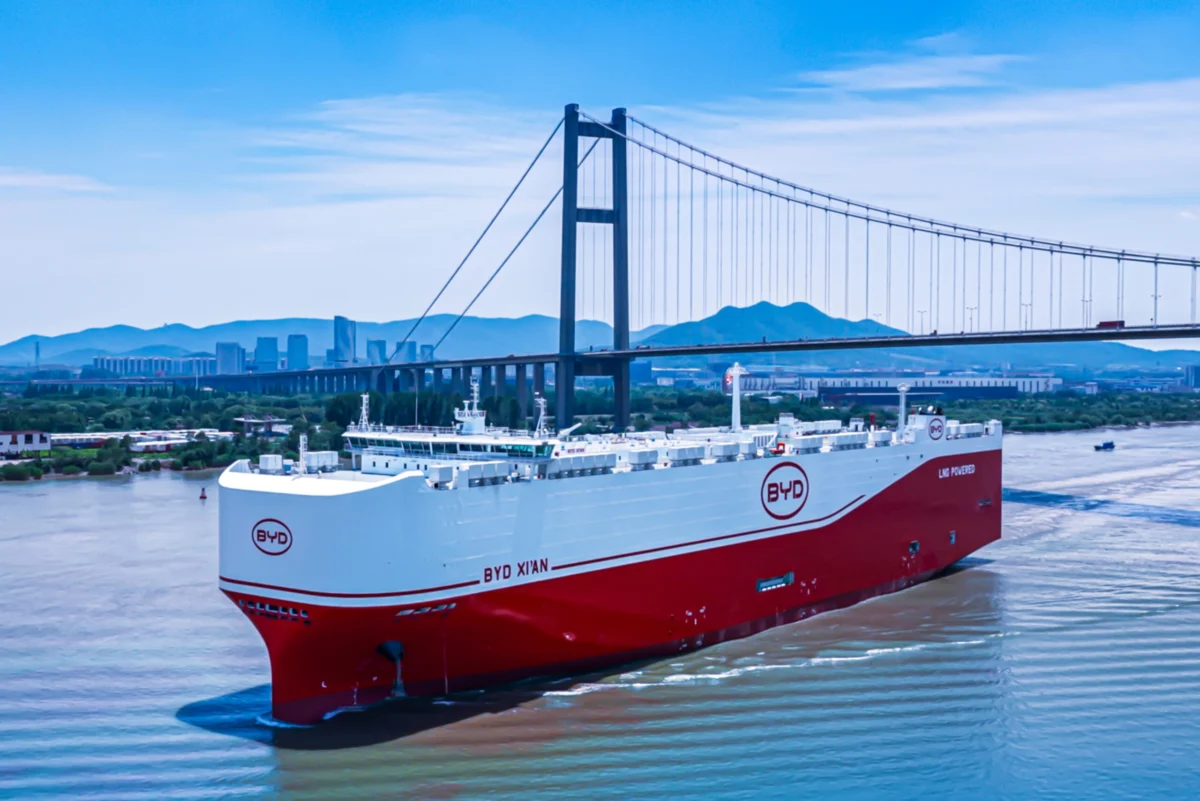
When the European Commission first moved to impose restrictive tariffs on Chinese-manufactured battery electric vehicles (BEVs) two years ago, the policy was hailed by Brussels as a necessary shield for the domestic auto industry. However, the regulatory framework contained a critical blind spot that analysts were quick to identify: the tariffs were narrowly tailored to full battery-powered vehicles, leaving a significant loophole for plug-in hybrid electric vehicles (PHEVs). Today, that policy gap has fundamentally altered the European market, as Chinese automakers pivot their export strategies to flood the continent with PHEVs, effectively circumventing trade barriers while capturing record-breaking market share.
The latest industry data from market research firm Dataforce reveals that Chinese automotive brands reached a historic milestone in August, accounting for 12 percent of all new vehicle registrations across Europe. This surge is not merely a statistical anomaly but a direct consequence of shifting consumer demand in an era of volatile fuel prices. With gasoline and diesel costs exerting consistent pressure on European household budgets, consumers are increasingly prioritizing efficiency, driving a 27 percent year-over-year increase in combined BEV and hybrid sales. In fact, analysts suggest that without this robust demand for electrified drivetrains, the overall European new car market would have faced a significant contraction in the third quarter of this year.
A Chronology of Regulatory Oversight and Market Adaptation
The current situation is the result of a two-year evolution in trade policy and corporate strategy. In 2024, the European Commission initiated a series of investigations into state subsidies provided to Chinese EV manufacturers, which culminated in the implementation of punitive tariffs. Industry observers, including long-time sector analysts, warned at the time that such measures would likely force a rapid realignment of supply chains.
The strategy adopted by Chinese manufacturers has been remarkably consistent: leverage the lack of equivalent tariff protections on PHEVs to maintain price competitiveness. As of late 2026, the European Commission is reportedly preparing an urgent package of economic security measures intended to address this oversight. According to reports from the German business daily Handelsblatt, Brussels is actively considering extending trade remedies to include hybrid and plug-in hybrid models. This prospective policy shift reflects a growing realization within the Commission that the "green transition" is being facilitated by non-European manufacturers who have successfully navigated the complexities of international trade law.

The German Market Paradox
Germany remains the bellwether for the European automotive industry. While Chinese brands currently hold approximately 6.4 percent of the German market, the absolute volume of these sales is substantial given the sheer scale of the nation’s consumer base. Julian Litzinger, an analyst at Dataforce, notes that even with a modest market share percentage, the attractiveness of the German market ensures that it remains the primary battleground for international competitors.
The dominance of domestic giants like Volkswagen Group in Germany is currently being tested by this influx. Volkswagen’s recent internal struggles—characterized by a need to reconcile production overcapacity with shifting consumer preferences—highlight the precarious nature of the European automotive transition. With the company reporting an annual production output 100,000 units higher than current demand, the executive board has been forced into a rapid re-evaluation of its manufacturing footprint.
Plans to pivot away from internal combustion engine (ICE) production at the historic Wolfsburg plant, while simultaneously expanding battery electric vehicle capacity at the Zwickau and Emden facilities, signify a major strategic U-turn. Just months ago, the viability of the Zwickau facility was under intense scrutiny, with suggestions that it might be repurposed for non-automotive industrial applications. However, the recent spike in demand for the refreshed ID.3 Neo and the ID. Tiguan models has necessitated a swift operational pivot.
Supply Chain Pressures and the Profitability Gap
Despite the uptick in demand for electric models, the transition remains financially fraught for European legacy manufacturers. Martin Sander, a board member for sales at Volkswagen, recently characterized the current market state as a "turning point in the transformation of the automotive market." Yet, the transition from high-margin ICE vehicles to lower-margin battery-powered units continues to strain balance sheets.
The financial pressure is further exemplified by the performance of other major players. Stellantis, for instance, recently announced a temporary production halt at its Mirafiori plant in Italy. The facility, which produces the electric and hybrid variants of the iconic Fiat 500, is expected to fall significantly short of its annual target of 100,000 units, with current projections suggesting a final tally closer to 60,000. This shortfall underscores the disconnect between the ambition of European green policy and the practical realities of consumer adoption rates and manufacturing cost structures.

The "Urban Electric" Response
To remain competitive, Volkswagen is banking on its new "Urban Electric Car Family," which includes the MEB+-based ID. Polo, the Cupra Raval, the Škoda Epiq, and the ID. Cross. These vehicles, slated for production in Spanish facilities, have generated significant early interest, with over 100,000 pre-orders already logged. The ID. Polo alone has secured over 40,000 pre-orders, suggesting that there is a deep, unmet market demand for affordable, entry-level electric vehicles.
However, these pre-orders present a double-edged sword. While they validate the company’s shift toward smaller, more efficient electric vehicles, they also highlight the difficulty of achieving profitability at a price point that can effectively compete with Chinese imports. As European manufacturers grapple with energy costs, labor regulations, and the need to scale battery supply chains, the competitive gap remains a primary concern for policymakers in Brussels.
Broader Implications and Future Outlook
The current surge in Chinese-branded PHEV sales is a case study in the limitations of protectionist trade policy. By focusing exclusively on battery electric vehicles, the EU inadvertently created a "bridge" for Chinese manufacturers to secure a foothold in the European market through hybrid technology. The implications for the European automotive sector are three-fold:
- Regulatory Harmonization: The European Commission will likely move to harmonize trade barriers across all electrified vehicle types to prevent further leakage. This, however, risks increasing costs for European consumers who are currently utilizing PHEVs as a transitional vehicle while charging infrastructure continues to develop.
- Manufacturing Realignment: Legacy automakers are now forced to accelerate the transition to electric-first production, even at the cost of short-term profitability. The "transformation" mentioned by industry leaders like Martin Sander is now a matter of corporate survival rather than long-term strategic planning.
- Infrastructure and Energy Costs: The shift in consumer preference toward electric and hybrid models is fundamentally tied to the high cost of fossil fuels in Europe. As long as fuel prices remain elevated, the market for internal combustion engines will continue to erode, placing further pressure on automakers to achieve economies of scale in the EV sector.
As the European Commission prepares its upcoming economic security package, the focus will likely shift from merely protecting domestic manufacturers to fostering a more competitive ecosystem that can handle the reality of globalized automotive production. The coming months will be decisive, as both the Commission and European automakers attempt to balance the need for climate-conscious transportation with the protection of one of the continent’s most critical industrial pillars. The lesson of the past two years is clear: in the rapidly evolving landscape of automotive technology, static trade policies are no match for a dynamic, highly adaptive global market.










Leave a Reply