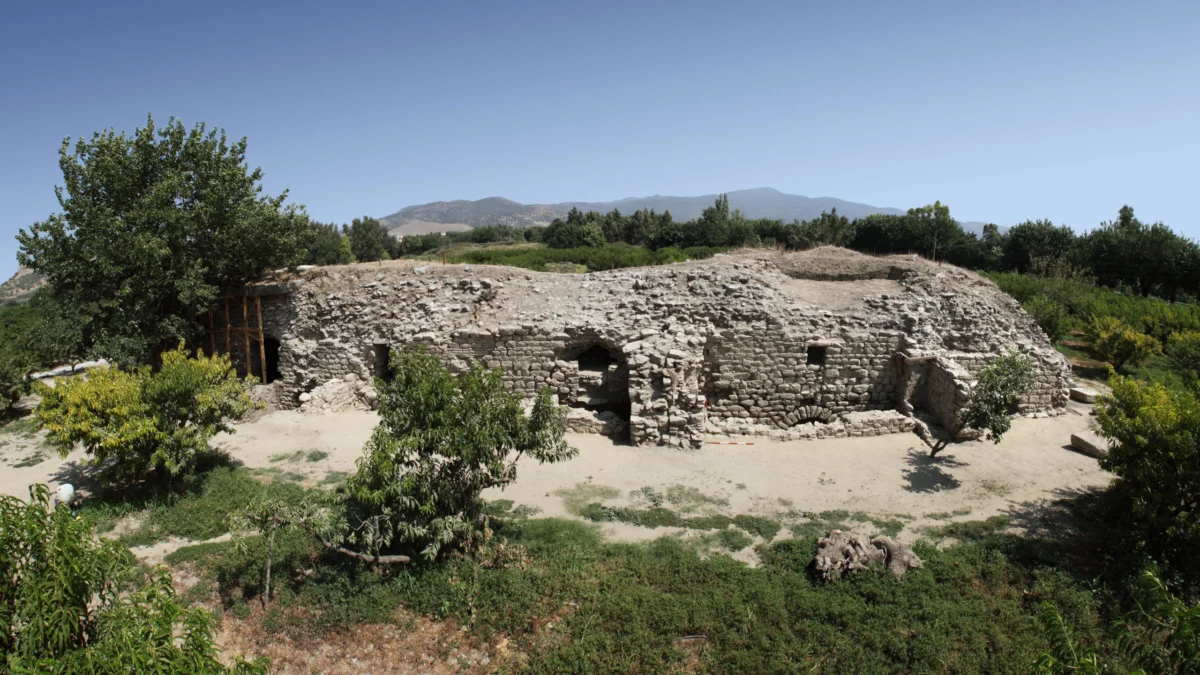
The discovery of a rare and unusual burial of premature twins within a 1,200-year-old tomb near the ancient Temple of Artemis at Ephesus, Turkey, is shedding new light on the funerary practices and beliefs of the Byzantine era. While the interment was found within what appears to be an abandoned latrine, researchers suggest the location was chosen with the intent of protecting the infants in the afterlife, a finding that challenges conventional understanding of burial sites in the region. This discovery, detailed in a new study, offers a poignant glimpse into the lives and deaths of the most vulnerable members of ancient society.
The Unconventional Setting: A Sanctuary in the Mundane
The burial, dating back to approximately the 8th century CE, presents a stark contrast to previously documented interments in Ephesus. Typically, burials from this period and location have been found in dedicated cemeteries situated outside the sacred precincts of the renowned Temple of Artemis, one of the Seven Wonders of the Ancient World. The decision to inter the twins in such an unexpected and seemingly incongruous setting has sparked considerable debate among archaeologists and historians.
Lilli Zabrana, an archaeologist at the Austrian Academy of Sciences and co-author of the study, emphasized the exceptional nature of the find. "This interment was made in an unexpected and exceptional setting," Zabrana stated in an email to Live Science. The presence of the infants within a structure that served a utilitarian purpose, like a latrine, raises questions about the motivations behind this choice. However, the prevailing theory among the research team is that the unusual location was not a sign of disrespect or neglect, but rather a deliberate act of protection.
Contextualizing Ephesus: A City of Religious and Cultural Significance
Ephesus, located in modern-day Turkey, was a prominent ancient city with a rich and complex history spanning millennia. Its zenith as a major port city and a center of religious pilgrimage, particularly due to the cult of Artemis, left an indelible mark on the region. The Temple of Artemis, a monumental structure of immense grandeur, attracted devotees from across the Roman Empire and beyond. After the decline of paganism and the rise of Christianity, Ephesus continued to be an important urban center, eventually becoming part of the Byzantine Empire.
The Byzantine period in Ephesus (roughly from the 4th to the 15th centuries CE) saw the city adapt to new religious and political landscapes. While the Temple of Artemis eventually fell into ruin, other religious sites, including churches, gained prominence. Funerary customs during this era were influenced by a blend of earlier traditions and evolving Christian beliefs. The discovery of this tomb adds a unique data point to our understanding of these practices, particularly for infants and children, whose lives were often fragile and whose deaths were deeply mourned.
The Timeline of the Discovery and Analysis
The excavation that led to this significant discovery was part of ongoing archaeological work in the vicinity of the Temple of Artemis. While the exact timeline of the excavation and the initial discovery of the latrine structure is not explicitly detailed in the provided text, the subsequent analysis and publication of the findings indicate a multi-year research effort.
- Excavation Phase: The archaeological team meticulously excavated the site, identifying the structure as a latrine and discovering the burial within it.
- Initial Assessment: Preliminary examination of the skeletal remains and the context of the burial likely indicated the presence of infants.
- Detailed Analysis: Scientific methods, potentially including osteological analysis and radiocarbon dating (though not specified in the source), would have been employed to determine the age of the infants, their developmental stage, and the age of the tomb.
- Interpretation and Research: The researchers collaborated to interpret the findings, considering the historical and cultural context of Ephesus during the Byzantine period.
- Publication: The culmination of this research is the new study detailing the discovery and its implications, as referenced by Zabrana’s participation.
The fact that the burial was found in an abandoned latrine is crucial. This suggests the structure was no longer in active use as a sanitation facility when the infants were interred. This abandonment likely allowed the space to be repurposed, perhaps seen as a secluded or protected area.
Supporting Data and Scientific Insights
While the initial report focuses on the location and the implication of protection, further scientific analysis would have been crucial to understand the infants themselves. Key supporting data that would have been gathered or inferred includes:
- Skeletal Remains: The examination of the skeletal remains would confirm the presence of premature twins. This would involve assessing the degree of ossification and bone development to estimate gestational age. For instance, bones that are not fully developed, such as unfused epiphyses in long bones, would be indicative of premature birth.
- Number of Individuals: Confirming the presence of two distinct individuals, even in their underdeveloped state, would be a primary objective. This could involve examining separate skulls or sets of long bones.
- Gestation Age Estimation: Based on skeletal maturity, researchers could estimate the gestational age, likely placing them in the premature category (born before 37 weeks of gestation). This level of detail would highlight the fragility of their lives and the significance of their burial.
- Grave Goods (or lack thereof): The presence or absence of any grave goods, even simple items, could offer further clues about the beliefs and rituals surrounding the burial. The lack of elaborate offerings might be consistent with infant burials, but their inclusion could speak to specific protective intentions.
- Taphonomic Analysis: Studying the condition of the bones and their context within the latrine would help understand how they were deposited and how the structure might have offered protection from elements or scavenging animals.
The term "premature twins" itself implies a heightened vulnerability. In many ancient societies, infants who did not survive infancy, especially those born prematurely, faced a particularly precarious existence both in life and in the afterlife. Their spirits were often believed to be in a liminal state, requiring specific rituals or protections to ensure their safe passage.
Broader Implications and Analysis
The discovery of this burial has several significant implications for our understanding of Byzantine Ephesus:
- Evolving Belief Systems: The finding suggests that funerary practices were not monolithic and could adapt to specific circumstances and beliefs, even incorporating seemingly unconventional spaces for burials deemed significant. It points towards a nuanced understanding of the afterlife and the need for protection for even the youngest members of society.
- Infant Mortality and Ritual: The burial of premature twins underscores the reality of high infant mortality rates in ancient times and the profound emotional and ritualistic responses to such losses. The decision to bury them in a protected, albeit unusual, location indicates a desire to ensure their well-being beyond death.
- Spatial Archaeology: This discovery challenges archaeologists to consider the potential for ritualistic or symbolic uses of spaces that might not be immediately apparent. Structures that were once utilitarian could have acquired new meanings or functions over time.
- Social Stratification (or lack thereof): The burial in a latrine, while interpreted as protective, does not necessarily indicate a low social status for the infants or their families. In some cultures, specific, secluded locations were chosen for particular types of burials, regardless of wealth. However, it does suggest that the intention of protection superseded the use of a formal cemetery in this instance.
The research team’s interpretation that the intention was to protect the babies in the afterlife is a critical element of this analysis. This could stem from various beliefs:
- Protection from Spirits: The belief that premature or stillborn infants could become restless spirits that might harm the living, or that they themselves were vulnerable to malevolent forces in the afterlife.
- Ensuring a Safe Passage: The idea that a secure and perhaps hidden location would aid their journey to the underworld or a peaceful resting place.
- Symbolic Burial: The latrine, as a place of departure for waste, might have been symbolically linked to the departure of the soul from the body, or conversely, as a place of cleansing and transition.
Official Responses and Expert Commentary
While the provided text does not include direct statements from other official bodies or external experts, such a discovery would undoubtedly elicit responses from:
- The Turkish Ministry of Culture and Tourism: As the custodians of national heritage, the ministry would be informed and would likely support further research and preservation efforts.
- International Archaeological Bodies: Organizations like UNESCO, given Ephesus’s status as a World Heritage site, would be interested in the findings as they contribute to the broader understanding of human history and cultural practices.
- Scholarly Community: Historians, anthropologists, and other archaeologists specializing in the Byzantine period and ancient funerary customs would engage with the findings, offering their own interpretations and potentially corroborating or refining the conclusions drawn by Zabrana and her team. It is likely that further academic discourse will emerge as the study is disseminated.
Conclusion: A Testament to Enduring Human Concerns
The discovery of the premature twins’ burial in Ephesus is a poignant reminder of the universal human concerns surrounding birth, death, and the afterlife. It highlights that even in ancient times, profound efforts were made to protect the most vulnerable and to ensure their peaceful transition into the next realm, often employing means that defy our modern assumptions. This unusual interment, nestled within the shadows of a once-magnificent temple, serves as a powerful testament to the enduring human desire to offer solace and security, even in the face of life’s most tragic departures. Further research and analysis of this site will undoubtedly continue to illuminate the complex tapestry of life and belief in the ancient world.