The foundational research that birthed the "science of reading"—a multi-decade movement that has fundamentally reshaped how American children learn to literacy—was not the product of a single administration or a solitary grant. Instead, it was meticulously constructed over fifty years through a robust pipeline of federally supported research spanning cognitive science, neuroscience, psychology, linguistics, and long-term classroom studies. Today, the organizations responsible for maintaining this scientific pipeline warn that a sweeping 100-page overhaul of federal grant rules could dismantle the very mechanisms that allow such critical bodies of evidence to form.
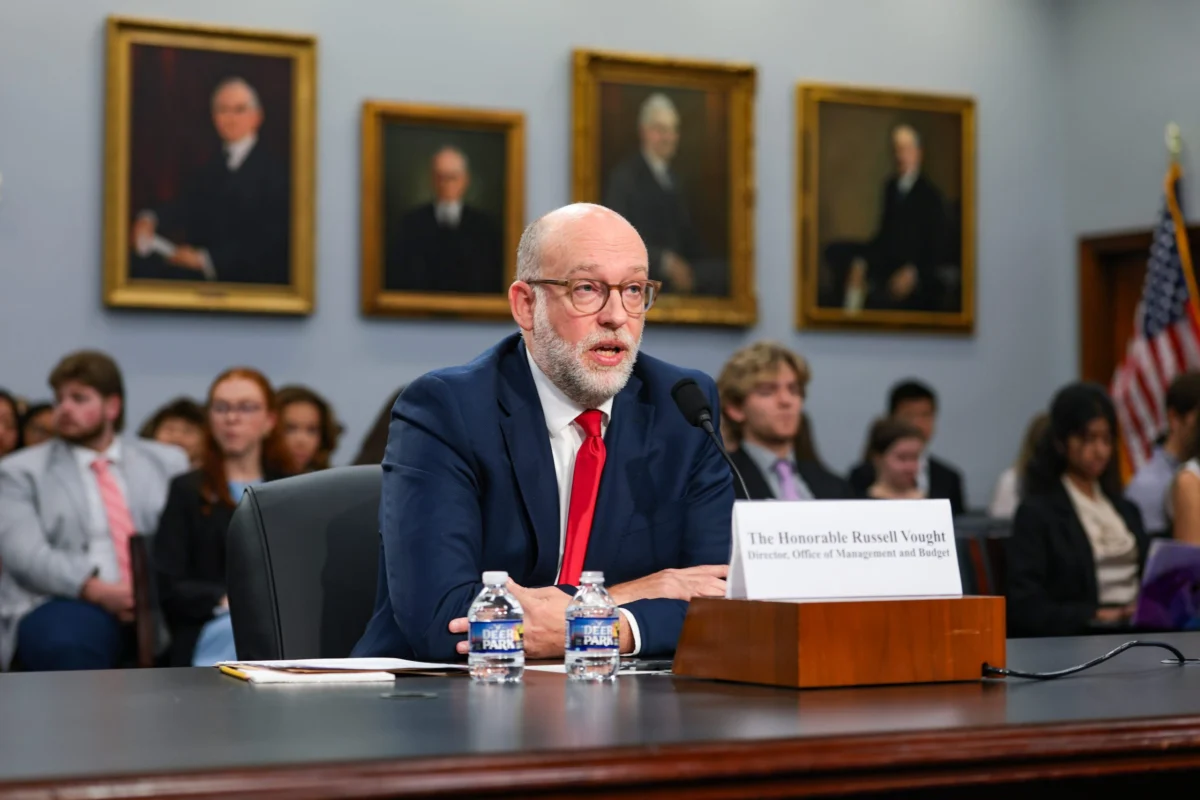
The federal Office of Management and Budget (OMB) recently introduced a proposal intended to revolutionize the way taxpayer-funded grants are issued, overseen, and evaluated. While the OMB maintains that these changes are designed to strengthen accountability, transparency, and fiscal oversight, the education research community has responded with a unified front of opposition. In a series of detailed letters and public comments, leading academic organizations argue that the proposal introduces a dangerous level of political influence into the scientific process, potentially stalling progress in student achievement for decades to come.
The Scope of the OMB Proposal
The OMB proposal, released on May 29, represents a comprehensive revision of the rules governing federal grants awarded by agencies such as the Department of Education and the National Science Foundation (NSF). These two entities serve as the primary engines for education-related innovation in the United States. Under the new guidelines, which the OMB aims to finalize by October 1, several traditional pillars of the grant-making process would be replaced by more centralized, politically overseen mandates.
Key provisions of the proposal include a mandatory review of all grants by political appointees before they are finalized, a prohibition on funding for research related to "diversity, equity, and inclusion" (DEI) activities deemed unlawful by the administration, and a strict restriction on "disparate impact" studies. Furthermore, the proposal seeks to prioritize research that promises "immediate results" or "breakthrough innovations," while simultaneously cutting funding for indirect costs (overhead), conference attendance, and publication fees.
A Chronology of the Regulatory Overhaul
The current tension between the research community and the federal government has been building over several months, marked by a rapid-fire series of regulatory filings and public responses:
- May 29: The Office of Management and Budget publishes the 100-page proposal in the Federal Register, opening a public comment period. The proposal emphasizes "national interest" and "gold standard science" as the new benchmarks for federal funding.
- June through early July: Major scientific societies, including the American Educational Research Association (AERA) and the National Academy of Education, convene emergency committees to analyze the impact of the 100-page document.
- July 13: The deadline for public comments. Education research groups submit three primary letters of objection. The National Academy of Education leads a coalition of 19 organizations; the AERA submits an independent analysis; and the Knowledge Alliance, representing 20 research firms, provides a separate critique.
- July 14: Reports surface that the OMB has been "flooded" with nearly 500,000 comments. Research organizations across various fields, including medicine and climate science, participate in a coordinated effort to create a massive administrative record.
- October 1 (Projected): The target date for the final rule to take effect, pending the OMB’s review of the public comments.
The Threat to Equity and Demographic Analysis
One of the most contentious aspects of the OMB proposal is the restriction on "disparate impact" studies. These studies are essential for determining whether educational policies that appear neutral on the surface actually produce unequal outcomes for different groups of students. For example, a school’s suspension policy might not mention race, but a disparate impact study might reveal that it is applied more frequently to students of color.
The National Academy of Education warned that the proposed language is so broad that it could effectively ban research into the racial or ethnic achievement gap—a cornerstone of American education policy for half a century. In their letter to the OMB, the coalition argued that these are not "fringe" questions but "central empirical questions of education policy research."
The researchers pointed out a significant legal contradiction: existing federal laws, such as Title I of the Elementary and Secondary Education Act, actually require states and districts to analyze student outcomes by race, income, disability status, and English learner status. By restricting federal funds for these types of analyses, the OMB proposal could put researchers and school districts in a position where they are unable to fulfill their statutory obligations under civil rights laws.
Political Oversight vs. Peer Review
For decades, the "gold standard" for federal research has been the independent peer-review process. Under this system, subject-matter experts—not politicians—evaluate grant proposals based on their scientific rigor, feasibility, and potential contribution to the field. The OMB proposal threatens to shift this balance by requiring political appointees to review all grants.

Researchers argue that this change would allow the "national interest" to be defined by whichever political party happens to be in power, leading to a "yo-yo effect" where research priorities are discarded and replaced every four to eight years. This is particularly concerning for education research, which often requires longitudinal data collected over 10 or 20 years to determine if a specific intervention—such as early childhood education or a new math curriculum—actually leads to better long-term life outcomes for students.
The proposal’s call for "gold standard science" also drew criticism for being ill-defined. While the term sounds objective, researchers fear it could be used to favor certain methodologies, such as randomized controlled trials, over other valid scientific approaches like qualitative interviews, surveys, and sophisticated data modeling. In education, where it is often unethical or impossible to randomly assign students to "good" or "bad" schools for the sake of an experiment, these alternative methods are vital.
Financial and Operational Hurdles
Beyond the ideological shifts, the OMB proposal introduces several practical barriers that could stifle the research community:
- Overhead Cost Restrictions: The proposal gives preference to grant applications with low overhead costs. This disproportionately affects large research universities that rely on "indirect cost" reimbursements to maintain laboratories, libraries, and administrative support systems necessary for high-level research.
- Travel and Publication Cuts: By cutting federal funding for attending conferences and paying for publication costs, the rule would limit the ability of researchers to share their findings with the public and other scientists. Science relies on the dissemination of information; without it, research happens in a vacuum.
- Increased Paperwork: The requirement for written justifications for every grant fund request adds a layer of "regulatory paperwork" that researchers argue will take time away from actual scientific discovery.
The Risks of Research Interruption
The potential for the sudden termination of grants is perhaps the most immediate concern for those currently in the field. Education research is frequently collaborative, involving partnerships between universities and local school districts. When a grant is terminated, it is not just the researchers who suffer; it is the students receiving services under that grant.
A recent historical precedent underscores this fear. In early 2025, the Department of Education terminated dozens of research studies, a move that resulted in 1,600 high school students with disabilities losing access to specialized services. The National Academy of Education warned that such interruptions are "permanently damaging" to longitudinal studies. If a researcher loses a year of data collection in a ten-year study, the entire dataset may become statistically invalid, wasting millions of dollars in prior taxpayer investment.
Furthermore, the proposal’s limits on international research partnerships could isolate the United States from global educational benchmarks. Studies like the Programme for International Student Assessment (PISA) and the Trends in International Mathematics and Science Study (TIMSS) allow U.S. policymakers to see how American students stack up against their peers in countries like Singapore, Finland, and Japan. Restricting these collaborations would leave American educators flying blind in a global economy.
Strategic Response and Future Implications
The sheer volume of public comments—nearly half a million—reflects a strategic effort by the scientific community to protect the integrity of federal research. By submitting 496,775 comments, organizations are forcing the OMB to address a mountain of evidence and concerns before the rule can be finalized. This "flooding" tactic is often used to slow the rulemaking process or to build a robust "administrative record." If the OMB ignores these comments and proceeds with the rule, that record can be used in future lawsuits to argue that the agency acted "arbitrarily and capriciously" under the Administrative Procedure Act.
The Knowledge Alliance, led by President Rachel Dinkes, emphasized that the "science of reading" is the perfect example of why the federal government must maintain a long-term, non-political approach to research. That body of work was not a "breakthrough innovation" that happened overnight; it was an accumulation of evidence across multiple administrations.
If the OMB proposal moves forward in its current form, the future of such breakthroughs is in jeopardy. By narrowing the scope of inquiry, prioritizing short-term results over foundational knowledge, and allowing political appointees to steer the ship, the federal government risks creating a research environment that is more concerned with ideological alignment than with empirical truth. For the millions of students whose education is informed by this research, the stakes could not be higher.