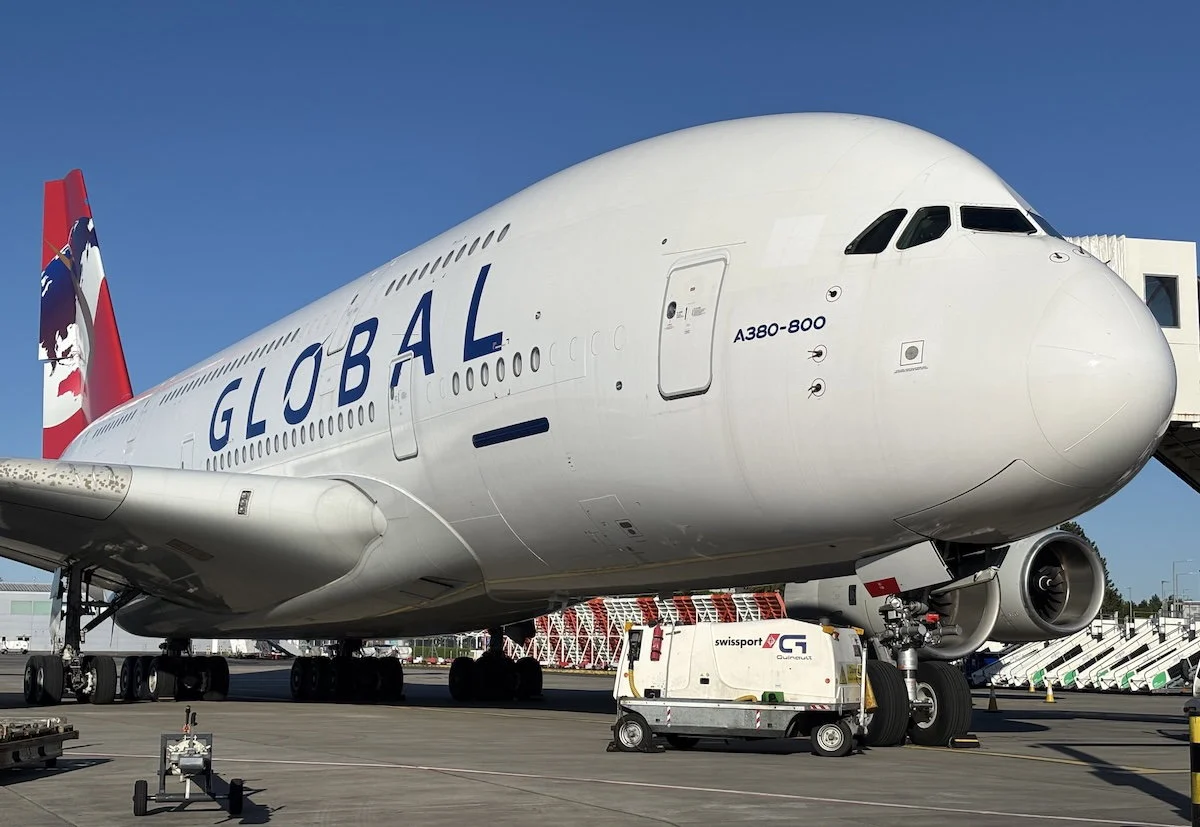
The controversial startup carrier Global Airlines has officially reached the end of its turbulent operational lifespan. Public records from the United Kingdom confirm that a British court has approved a formal winding-up order against the company, initiating a government-backed liquidation process. This judicial decision marks the definitive conclusion for an enterprise that promised to resurrect the "golden age" of commercial aviation using a single secondhand Airbus A380, but instead became the subject of intense scrutiny from aviation analysts, financial regulators, and creditors alike.
The liquidation order stems from a winding-up petition initially filed against the company in late May 2026. Following months of legal maneuvering, financial distress, and mounting pressure from unpaid entities, the court approved the order. Because of standard administrative publication lags, the official public registry updated to reflect the ruling shortly thereafter. Control of Global Airlines has now been stripped from its directors and transferred to an official receiver from the United Kingdom’s Insolvency Service. This state-appointed liquidator is tasked with investigating the company’s corporate governance, examining the conduct of its executive leadership, and seizing remaining assets to satisfy outstanding debts owed to creditors who sank millions of ventures into the enterprise.
A Chronology of Ambition and Grounding
The downfall of Global Airlines is the culmination of years of erratic operational milestones and heavily criticized strategic decisions. Founded by British entrepreneur James Asquith, the carrier captured global media attention by acquiring a single ex-Singapore Airlines Airbus A380, registered as 9H-GLO. Despite lacking its own Air Operator’s Certificate (AOC) — the regulatory approval required by civil aviation authorities to commercially operate aircraft—the company continually pushed aggressive timelines for long-haul passenger service.
In the spring of 2025, Global Airlines executed a surprising maneuver by operating two roundtrip charter flights between Europe and New York. Because the startup lacked regulatory certification, these flights were executed through a wet-lease agreement with Hi-Fly, a Portuguese charter specialist that provided the aircraft, insurance, maintenance, and flight crew. Aviation experts at the time questioned the economic viability and strategic purpose of operating a mere two roundtrips with a massive, high-capacity double-decker aircraft before immediately halting scheduled operations.
Immediately following these demonstration flights, the lone A380 was flown to storage facilities to undergo heavy maintenance checks—a notoriously capital-intensive requirement for widebody aircraft, particularly the complex quad-engine Airbus A380. Industry estimates place the cost of heavy maintenance checks for an A380 in the millions of dollars. Throughout the subsequent months, the aircraft remained grounded. While Asquith publicly attributed the prolonged storage to logistical bottlenecks and delays in securing maintenance slots, financial pressures began compounding rapidly behind the scenes.
Despite mounting evidence of cash flow shortages and grounded assets, the company continued to project an image of imminent global expansion. As recently as mid-2026, executive communications suggested plans to launch commercial routes to the Maldives before the end of the year, even though the flagship A380 remained out of service with no tangible progress made toward completing its required maintenance regimen.
Financial Claims and the Illusion of Viability
The trajectory of Global Airlines generated widespread skepticism within the global aviation community, though reactions among industry observers varied wildly. Mainstream business publications had previously highlighted Asquith’s apparent financial standing; in 2025, he was featured on prominent wealth indices, with reports citing a personal net worth running into the hundreds of millions of pounds. However, financial analysts and seasoned aviation commentators frequently pointed out a glaring disconnect between the company’s public relations campaigns and the harsh economic realities of running an airline.
Operating an airline is notoriously capital-intensive, characterized by razor-thin profit margins, high fixed costs, and stringent regulatory oversight. Launching a new carrier with a single, secondhand widebody aircraft—without an established route network, corporate contracts, or dedicated maintenance infrastructure—defied conventional industry wisdom. Yet, the venture successfully attracted substantial capital from private investors and captured the imagination of aviation enthusiasts who romanticized the return of luxury travel concepts popularized by the A380.
The divergence in how the aviation community received Global Airlines highlighted broader questions about accountability in modern startup culture. While independent aviation analysts voiced early warnings regarding the company’s lack of operational transparency and financial sustainability, certain digital media outlets and public figures embraced the narrative of a disruptive underdog challenging legacy carriers. Comparisons were occasionally drawn to legendary aviation entrepreneurs, fostering an environment where critical inquiries were minimized in favor of promotional optimism.
Implications of the Liquidation Process
With the court-mandated liquidation now underway, the focus shifts from promotional aspirations to forensic accounting and legal accountability. The Insolvency Service will execute a comprehensive audit of Global Airlines’ financial records to determine how invested capital was allocated, trace remaining assets, and assess whether the company’s leadership fulfilled their legal duties to creditors.
For creditors and investors who poured millions into the venture, recovery prospects remain uncertain. Liquidation proceedings typically prioritize secured creditors, administrative expenses, and statutory obligations before unsecured investors or private backers see any return of capital. Given the high costs associated with storing and maintaining an idle Airbus A380—alongside potential unpaid debts owed to leasing partners, maintenance facilities, and marketing agencies—available liquid assets may fall drastically short of total liabilities.
Broader Lessons for the Aviation Sector
The rise and fall of Global Airlines serves as a cautionary tale for the aviation startup ecosystem. The episode underscores the vital importance of regulatory compliance, operational realism, and financial transparency. In an industry where safety, precision, and capital management dictate survival, symbolic gestures and marketing narratives cannot substitute for a robust, well-capitalized business plan.
As the liquidator untangles the corporate wreckage of Global Airlines, the single Airbus A380 remains a silent monument to an ambitious yet deeply flawed venture. Whether the aircraft will eventually find a new home with an established carrier or face part-out and scrapping depends on the decisions made by the administrators managing the estate. Ultimately, the closure of Global Airlines closes a bizarre chapter in modern commercial aviation history, leaving behind a trail of financial fallout and valuable lessons for future market entrants.