The traditional perception of ukiyo-e, the iconic Japanese woodblock print medium that flourished from the 17th through the 19th centuries, often centers on the "floating world" of hedonistic pleasures. Common subjects typically include the serene landscapes of Hiroshige, the dramatic kabuki portraits of Sharaku, or the ethereal beauties of Utamaro. However, a specialized and intellectually rigorous sub-genre of ukiyo-e emerged during the late Edo period (1603–1867), focusing on the intersection of art, education, and public health. These anatomical prints, often characterized by their whimsical yet meticulous depictions of the human interior as a bustling, functioning town, represent a sophisticated attempt to translate complex physiological concepts into a visual language accessible to the general public.
Chief among the innovators of this style was Utagawa Kunisada (1786–1865), also known as Toyokuni III. A titan of the Utagawa school, Kunisada was one of the most prolific and commercially successful artists of his era. While he was renowned for his portraits of actors and fashionable women, his foray into medical and educational prints—known as yojo-e (health prints)—reveals a society increasingly preoccupied with the mechanics of longevity and the dangers of overindulgence. These prints served as early "infographics," predating modern medical illustrations by decades and utilizing metaphor to explain the delicate balance of the human "body economy."
The Body as a Microcosm: The Mechanics of Inshoku Yojo Kagami
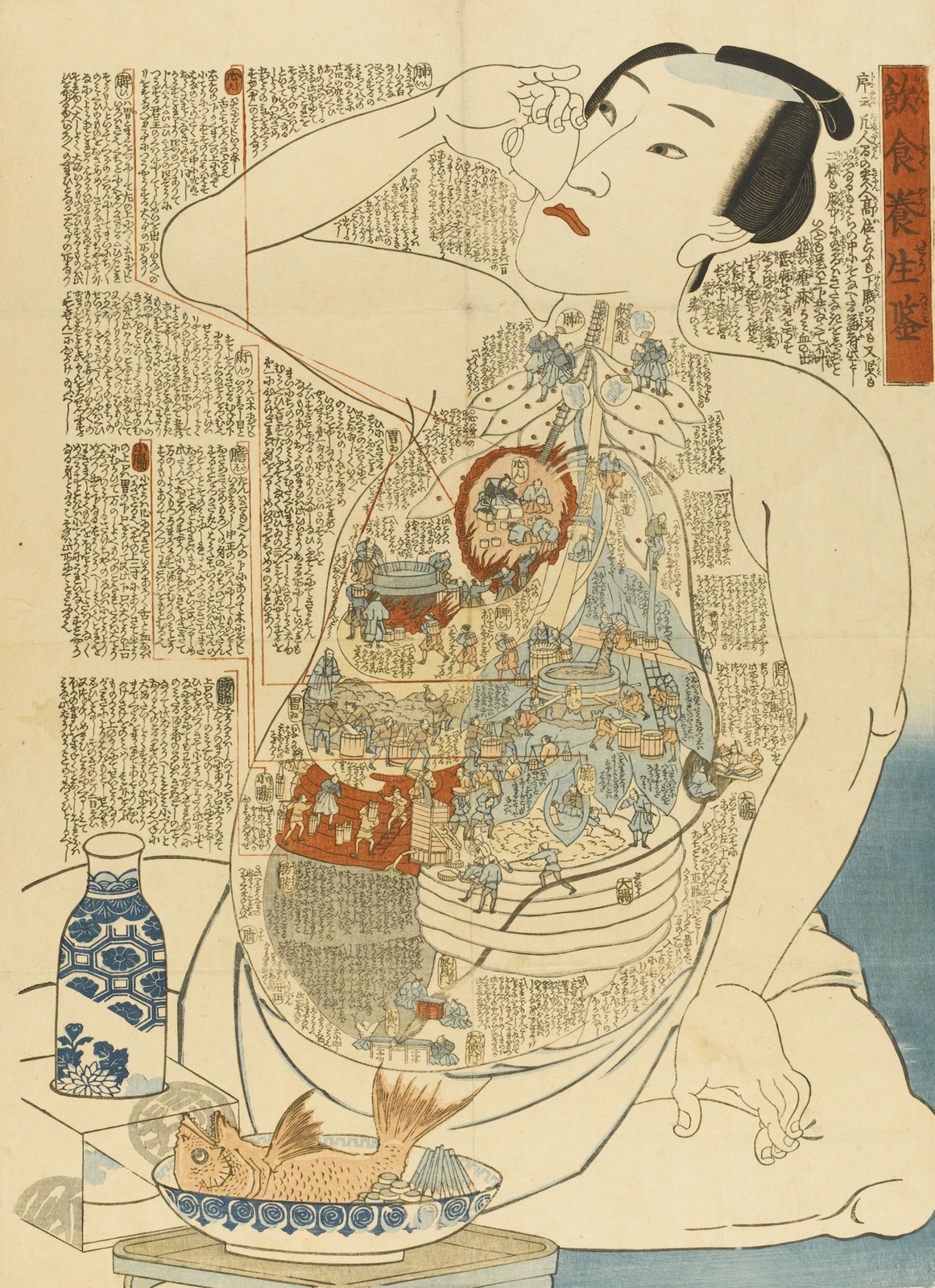
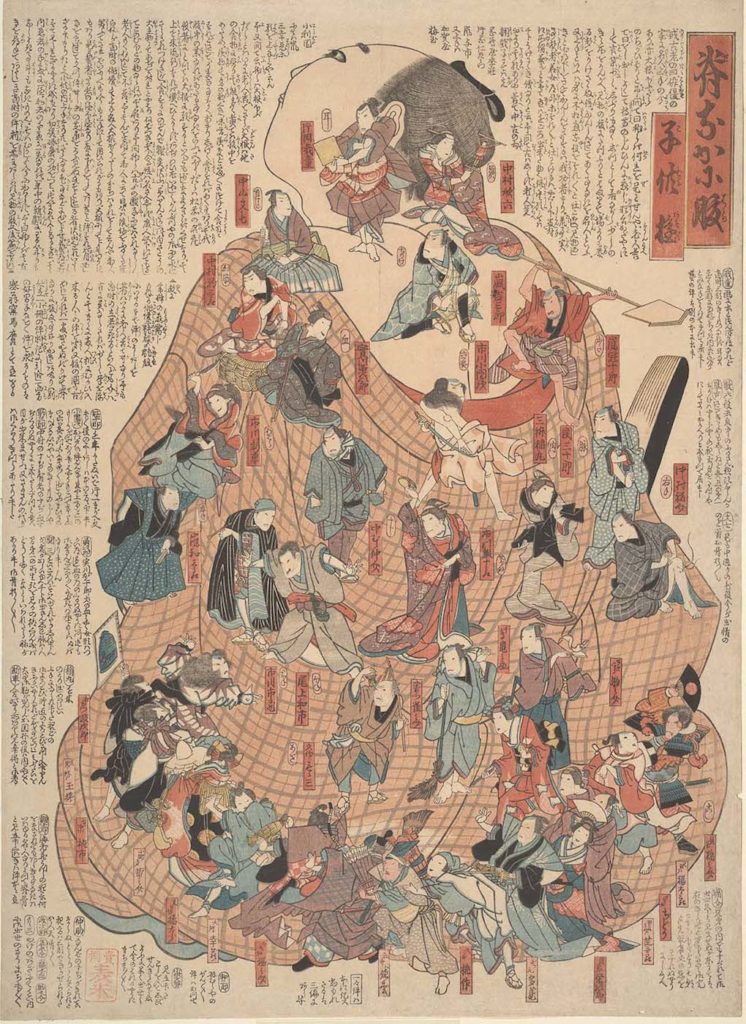
One of the most significant works in this genre is Kunisada’s Inshoku Yojo Kagami (Mirror of the Physiology of Drinking and Eating), published circa 1850. This print offers a cross-sectional view of a male figure engaged in the act of dining. However, the focus is not on the meal itself, but on the frenetic activity occurring beneath the skin. In a stunning display of imaginative anatomy, Kunisada depicts the internal organs as sites of labor populated by miniature human figures—essentially tiny workers maintaining a complex industrial or municipal system.
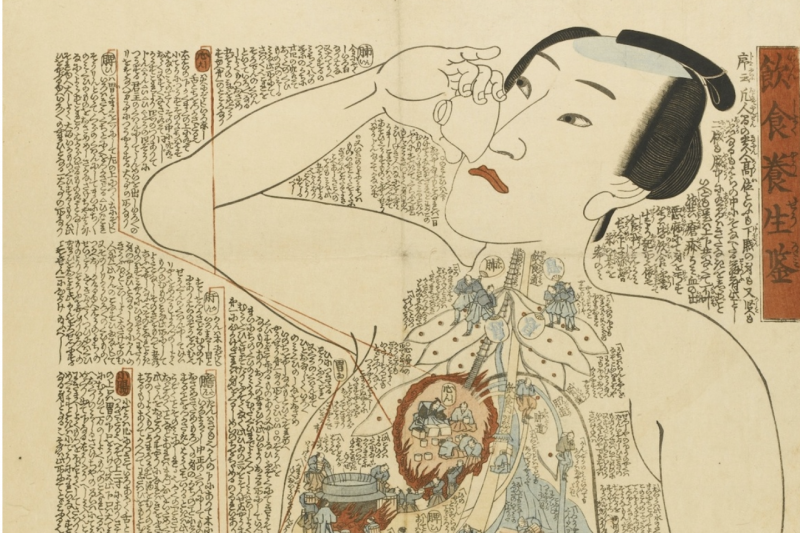
In this visual metaphor, the stomach is depicted as a large vat or pool where workers process incoming food and drink. The heart is visualized as a central command hub or a furnace, where workers stoke fires to maintain the body’s warmth and energy. Perhaps most striking is the presence of a "scholar" figure located near the brain or upper chest, surrounded by scrolls and reference materials, representing the cognitive and regulatory functions of the mind.
The digestive tract is illustrated as a series of winding paths and gates. At the lower end of the system, Kunisada includes the "urine gate" and the "feces gate," guarded by solitary figures tasked with the unenviable job of waste management. This literalization of "body as city" served a dual purpose: it made the invisible processes of digestion and filtration comprehensible to a lay audience, and it underscored the idea that the body requires constant, diligent upkeep to remain functional.
Chronology and Context: The Evolution of Japanese Anatomical Art
To understand the emergence of these prints, one must look at the broader timeline of Japanese medical history during the Edo period. For centuries, Japanese medicine was dominated by Kampo, or traditional Chinese medicine, which focused on the flow of qi (energy) and the balance of the five elements.
- 1774: The publication of Kaitaishinsho (New Book of Anatomy) by Sugita Genpaku. This was a seminal moment in Japanese history, as it was the first full translation of a Western (Dutch) anatomical text into Japanese. It introduced the concept of Rangaku (Dutch Studies) and sparked a national interest in empirical observation.
- Early 19th Century: As Rangaku spread, artists began to blend Western anatomical accuracy with traditional Japanese aesthetic sensibilities.
- 1840s–1860s: The "Tenpo Reforms" and subsequent social shifts led to an increased focus on moral and physical health. This is the period when Kunisada and his contemporaries produced their most famous yojo-e.
- 1868: The Meiji Restoration marks the end of the Edo period and the beginning of rapid Westernization, which eventually replaced these metaphorical woodblocks with strictly scientific medical diagrams.
Kunisada’s work sits at the peak of this transition, bridging the gap between the spiritual-metaphorical understanding of the body and the emerging empirical-scientific view.
Gender and Reproduction: Boji Yojo Kagami
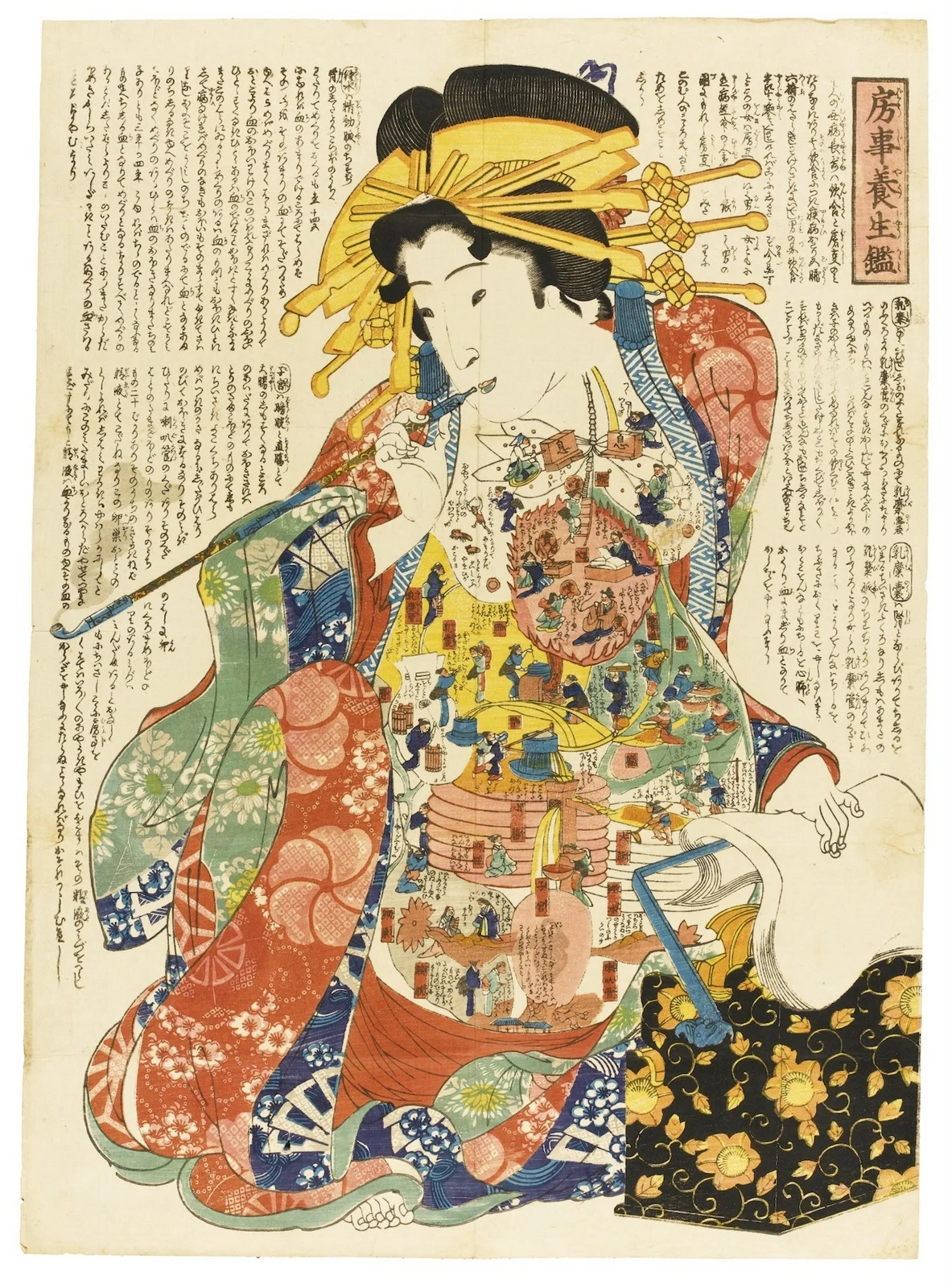
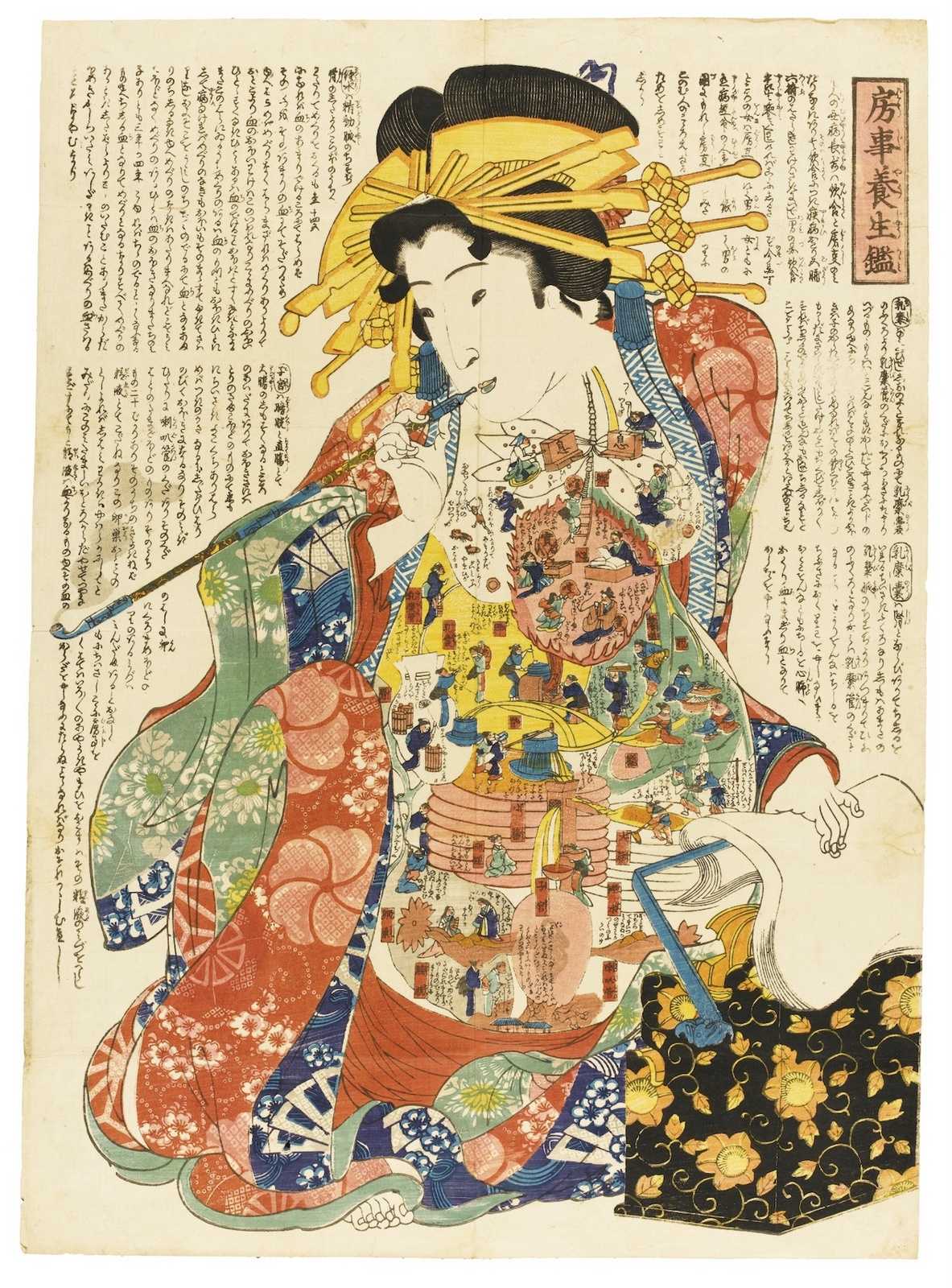
The educational reach of ukiyo-e was not limited to male physiology. One of Kunisada’s students, following the master’s style, produced Boji Yojo Kagami (Rules of Sexual Life), a print specifically designed for a female audience. This work focused on reproductive health and the internal mechanisms of the female body.
In a notable display of social reflection, the "workers" depicted inside the female figure are all women. This choice suggests an early recognition of gender-specific health needs and perhaps a catered approach to the female consumer base of the time. The print illustrates the reproductive organs not merely as biological structures, but as spaces requiring specific care and "governance." These prints often carried warnings against "overindulgence" and "excess," framing sexual health as a component of overall civic and personal duty.
Cultural Underpinnings: The Buddhist Influence and the Ten Realms
While many of these prints were grounded in the physical and the dietary, they were never entirely divorced from the spiritual landscape of 19th-century Japan. A prominent example is the Tainai jukkai no zu (Ten Realms within the Body), frequently depicted within the womb of a pregnant woman.
This concept is rooted in the "Ten Realms" of Buddhist cosmology, which range from the hellish realms of suffering to the enlightened state of Buddhahood. By placing these realms within the human body, artists like Kunisada suggested that the internal state of the individual was a reflection of their spiritual standing. The womb, in particular, was seen as a sacred space where the "Ten Realms" converged to form a new life. This intersection of embryology and theology highlights the holistic view of health prevalent in the Edo period, where the physical, the moral, and the spiritual were inextricably linked.
Supporting Data: The Literacy and Distribution of Ukiyo-e
The effectiveness of these prints as educational tools was bolstered by the unique socio-economic conditions of Edo-period Japan. Historians note that Japan possessed one of the highest literacy rates in the world during the 19th century, with some estimates suggesting that over 70% of men in large cities like Edo (modern-day Tokyo) could read.
However, "visual literacy" was even more widespread. Ukiyo-e prints were mass-produced and highly affordable, often costing no more than a bowl of noodles. This allowed health information to bypass the elite circles of physicians and reach the merchant and artisan classes. The use of the "internal worker" metaphor was a stroke of marketing genius; it utilized the familiar sights of Edo’s bustling urban life—laborers, scholars, and gatekeepers—to explain the unfamiliar terrain of internal biology.
Comparative Analysis: From Kunisada to the Industrial Palace
The metaphorical approach seen in Kunisada’s woodblocks finds a fascinating parallel in 20th-century Western art. In 1926, the German physician and artist Fritz Kahn produced his famous lithograph Der Mensch als Industriepalast (Man as Industrial Palace). Kahn’s work depicted the human body as a modern factory, complete with conveyor belts, chemical laboratories, and switchboards.
While separated by nearly 80 years and vastly different cultures, both Kunisada and Kahn reached for the same tool: the industrial metaphor. Kunisada’s "village" and Kahn’s "factory" both reflect the dominant technological structures of their respective times. For Kunisada, the body was a community of laborers; for Kahn, it was a machine of the high-industrial age. This comparison underscores a universal human tendency to understand the complexities of the self through the lens of the society one inhabits.
Broader Impact and Modern Implications
Today, these anatomical ukiyo-e prints are highly prized by collectors and historians alike, not only for their aesthetic beauty but for their value as cultural artifacts. They offer a window into a period when Japan was grappling with its identity, caught between centuries of isolation and the encroaching influence of Western science.
Modern medical historians view these prints as precursors to contemporary health communication. By humanizing the internal organs and presenting them as a collaborative society, Kunisada and his peers removed the "fear of the unknown" associated with illness. They promoted a proactive view of health, suggesting that if the "workers" within were treated well—through proper diet and moderate living—the "village" of the body would flourish.
Furthermore, the revival of interest in these prints in the 21st century—exemplified by exhibitions at institutions like the Wellcome Collection in London and the Museum of Fine Arts, Boston—speaks to their enduring relevance. In an era of increasingly abstract digital medical data, the tangible, relatable, and slightly humorous world of Kunisada’s "body workers" provides a refreshing and deeply humanistic way to view the internal workings of the human form. These prints remain a testament to the power of art to educate, to moralize, and to bridge the gap between the seen and the unseen.