The exploration of temporal perception remains one of the most enduring challenges in both literature and theoretical physics, finding its most profound articulation in the work of Argentine writer Jorge Luis Borges. His 1946 essay, “A New Refutation of Time,” serves as a cornerstone of metaphysical inquiry, challenging the foundational human assumption that time exists as a continuous, successive stream of moments. Published later in the 1962 collection Labyrinths, the essay synthesizes centuries of philosophical thought, from British empiricism to Eastern mysticism, to propose that the concept of "time" as a linear progression is a cognitive construct—a necessary illusion of the human consciousness rather than an intrinsic property of the universe.
The Intellectual Framework of Temporal Illusion
Borges’s inquiry does not exist in a vacuum but is situated within a broader lineage of thinkers who have grappled with the paradoxical nature of the "now." In the early 1930s, the French philosopher Gaston Bachelard observed that every instant is simultaneously a "giver and a plunderer," noting that the human heart lacks the capacity to fully grasp the density of life in its granular detail. Decades later, political theorist Hannah Arendt echoed this sentiment, suggesting that it is the "insertion of man with his limited life span" that converts the raw, chaotic flow of universal change into the structured experience we identify as time.
Borges occupies the middle ground between these eras, acting as a "muscular wrangler of paradox." In “A New Refutation of Time,” he begins with a self-aware contradiction: by titling the work "New," he acknowledges the very temporal succession he seeks to dismantle. He suggests that language itself is so "saturated and animated by time" that even the act of denying time requires the use of temporal markers. This linguistic trap serves as the first piece of evidence in his argument that humanity is inextricably bound to a concept it cannot proves exists outside of perception.
A Chronology of the Philosophy of Time
To understand the weight of Borges’s 1946 thesis, one must examine the chronological development of the theories he critiques and incorporates:
- 1687: Newtonian Absolute Time. Isaac Newton’s Principia establishes the concept of "absolute, true, and mathematical time," which flows equably without relation to anything external. This remains the dominant scientific view for over two centuries.
- 1710: Berkeley’s Idealism. George Berkeley argues that "esse est percipi" (to be is to be perceived). He suggests that matter does not exist independently of the mind, though he retains the idea of a "spirit" or "self" that perceives.
- 1739: Hume’s Bundle Theory. David Hume takes Berkeley’s logic further, denying the existence of a permanent "self." He describes the individual as a "bundle or collection of different perceptions" that succeed each other with inconceivable rapidity.
- 1922: The Einstein-Bergson Debate. Albert Einstein and philosopher Henri Bergson engage in a landmark debate in Paris. Einstein argues that the "time of the philosopher" does not exist, only a physical time governed by relativity, effectively moving time from the realm of metaphysics to the realm of hard physics.
- 1946: Borges’s Refutation. Borges publishes his essay, arguing that if one denies the existence of matter (as Berkeley did) and the existence of the self (as Hume did), one must logically deny the existence of a temporal series.
- 1970s: Arendt’s Inquiry. Hannah Arendt explores the "thinking ego" and its relationship to the "nunc stans" (the standing now), further refining the idea of time as a byproduct of human thought.
The Negation of the "Series" and the Present Moment
The core of Borges’s argument rests on the logical extension of British Empiricism. If, as Berkeley suggests, there is no material substance behind our perceptions, and if, as Hume suggests, there is no spiritual substance (the "self") behind those perceptions, then the concept of a "series" of moments becomes indefensible. Borges posits that "outside each perception (real or conjectural) matter does not exist; outside each mental state spirit does not exist; neither does time exist outside the present moment."

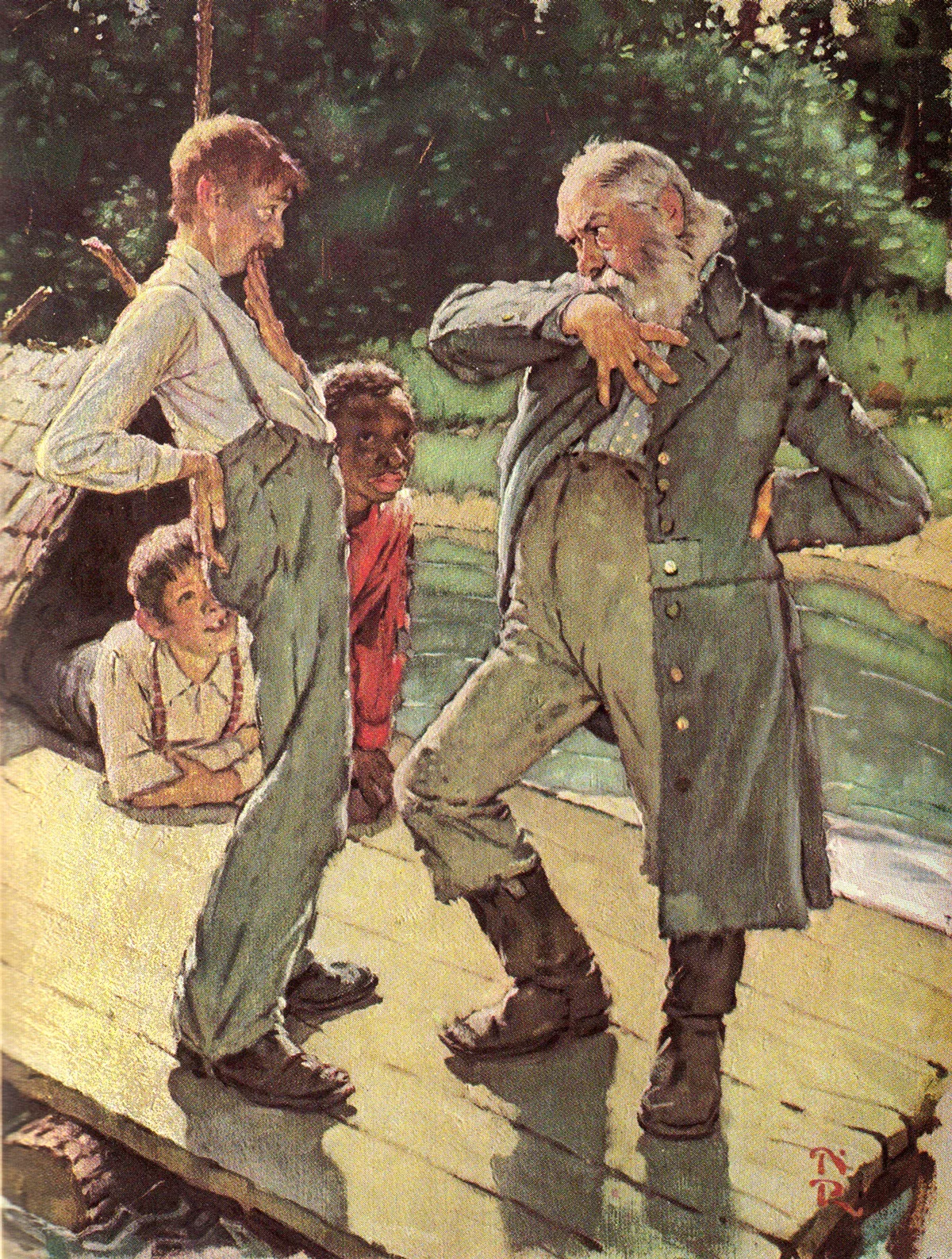
To illustrate this, Borges utilizes the literary figure of Huckleberry Finn. He describes Huck awakening on a raft on the Mississippi, noting the cold air and the sound of the water before drifting back to sleep. For the idealist, Borges argues, it is "unjustifiable" to assign a chronological precision to this event—to say it happened on a specific date at a specific minute. If the perception is the only reality, then the "vast temporal series" into which we slot that perception is an arbitrary addition. By denying the existence of a single, universal time in which all events are linked like a chain, Borges advocates for a world of "evanescent impressions."
Supporting Data: Science and the "Block Universe"
While Borges approached the problem through the lens of literature and metaphysics, his conclusions align remarkably with developments in 20th-century theoretical physics. The "Block Universe" theory, or Eternalism, which emerged from Einstein’s Theory of Relativity, suggests that the past, present, and future all exist simultaneously. In this model, the "flow" of time is a subjective experience created by the way human consciousness processes the four-dimensional manifold of space-time.
Borges’s assertion that "each moment contains all eternity" mirrors the scientific concept that there is no objective "now" that moves across the universe. Instead, every point in time is as real as every point in space. Borges’s essay effectively translated these complex mathematical realities into a poetic and philosophical framework, making the "illusory force of an axiom" accessible to the literary world.

Intellectual Reactions and Philosophical Implications
The reception of Borges’s work has evolved from viewing it as a mere "metaphysical game" to recognizing it as a profound commentary on the human condition. Critics have noted that Borges’s denial of time serves as a "secret consolation." If time is not a linear progression toward death, then the "vociferous catastrophes" of history—wars, fires, and epidemics—are not an endless chain of suffering but, as Borges writes, "one single pain, illusorily multiplied in many mirrors."
However, Borges concludes his essay with a sobering return to reality, a move that scholars describe as his "final paradox." After brilliantly arguing for the unreality of time, he admits: "And yet, and yet… Time is the substance I am made of. Time is a river which sweeps me along, but I am the river; it is a tiger which destroys me, but I am the tiger; it is a fire which consumes me, but I am the fire."
This admission highlights the tragic tension of human existence: the intellectual capacity to prove the unreality of time versus the biological and emotional reality of aging and mortality. Borges’s "unfortunate" realization that "the world, unfortunately, is real; I, unfortunately, am Borges," anchors his metaphysical flight in the inescapable gravity of personal identity.

Broader Impact and Modern Legacy
The legacy of “A New Refutation of Time” is evident in contemporary cognitive science and psychology. Modern researchers, such as Marc Wittmann, continue to explore how the brain constructs the "felt sense" of time, echoing Borges’s idea that time is a "hallmark of human consciousness." In literature, the essay’s themes of the "divided self" and the "labyrinth of the mind" have influenced generations of writers, from Vladimir Nabokov to Mark Danielewski.
Borges’s work remains a vital text because it does not offer a comfortable solution. Instead, it provides a rigorous rhetorical exercise that forces the reader to confront the "unstable world of the mind." By dismantling the "ideal architecture of space" and the "chain of succession," Borges invites a reconsideration of what it means to exist in the present.
In a modern era dominated by digital acceleration and the fragmentation of attention, Borges’s meditation on the "present moment" serves as a reminder of the depth contained within a single instant. His work suggests that while we may be "consumed by the fire" of time, the act of thinking—of "metaphysical perplexity"—is what allows humanity to momentarily transcend the river that sweeps it away. The essay continues to be studied not only for its "uncommon poetic beauty" but for its status as a masterwork of rhetoric that bridges the gap between the ancient mysteries of the soul and the cold certainties of modern science.