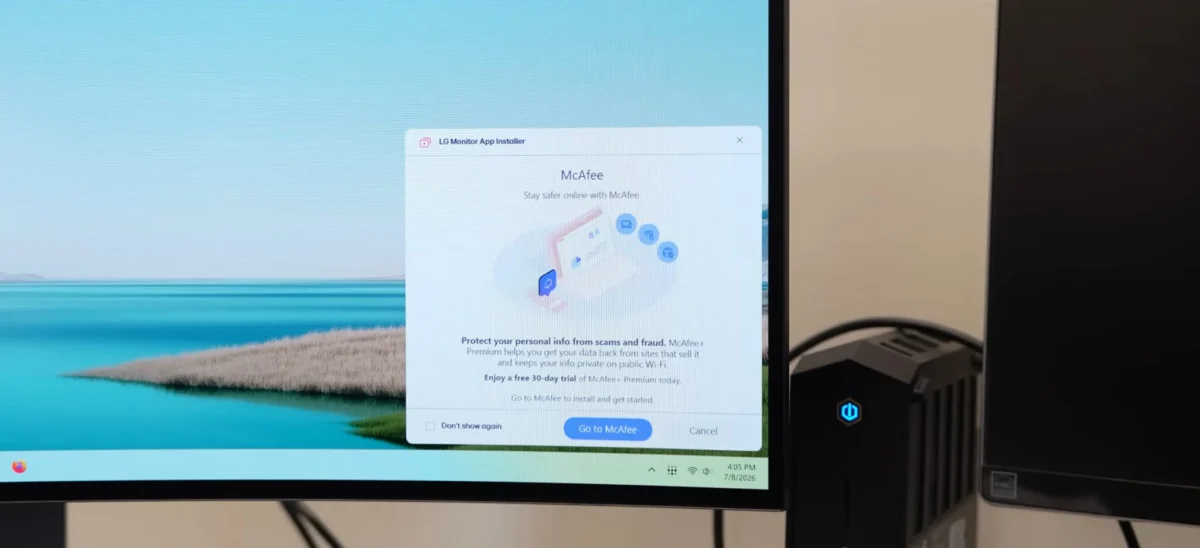
The premium display market, long a bastion of high-performance hardware and refined user experience, is currently embroiled in a significant controversy as users report the unconsented installation of the "LG Monitor App Installer" and its associated advertisements on their Windows systems. This revelation has sparked outrage among consumers, particularly those who have invested substantial sums, often exceeding $1,000, in LG’s high-end computer monitors, only to find their systems covertly installing applications that introduce disruptive advertising and raise profound privacy concerns. The incident casts a harsh light not only on LG’s practices but also on Microsoft’s policies regarding peripheral companion apps and the broader landscape of "bloatware" in the hardware industry.
Unveiling the Unwanted Installations and Alarming Permissions
The core of the issue lies in the discovery that the "LG Monitor App Installer" is appearing on users’ PCs without any explicit prompt or permission from LG itself. This surreptitious installation mechanism has been widely reported, most notably brought to widespread attention by tech review channel Gamers Nexus, which shared compelling screenshots depicting the LG app being installed via Windows Update—a pathway typically reserved for critical system updates and drivers, not commercial applications. The lack of user consent is a direct violation of expected digital etiquette and, more critically, an affront to privacy.
The implications extend far beyond mere annoyance. As highlighted by an individual identified as Burke in initial reports, once the "LG Monitor App Installer" is installed, the associated terms and conditions grant LG an alarming breadth of access. Burke noted that LG "technically possesses permission to use ‘all system resources’," a claim that, if accurate, grants the company unfettered access to a user’s computing environment. Even more concerning are the permissions related to data collection, which reportedly include the right to "collect geolocation, device data, online activity, contacts, user credentials, transactions, and more." This extensive data harvesting capability, obtained without clear, informed consent, transforms a premium display purchase into a potential vulnerability, turning what should be a passive display device into an active data-mining agent. For consumers who prioritize privacy and expect clean, unencumbered operation from their expensive hardware, this is an unacceptable breach of trust. The presence of ads further exacerbates the issue, suggesting a move towards monetizing users through their display hardware, long after the initial sale.
A Growing Concern with a Troubling Timeline
While the recent wave of user complaints and media attention has brought this issue to the forefront, evidence suggests that the practice of auto-installing the LG Monitor App Installer and its associated functions is not entirely new but has rather escalated in scope and visibility. Burke, for instance, reported that he only recently started seeing pop-up ads on LG monitors he had purchased as far back as three years ago, indicating a potentially evolving or newly activated aspect of the software. This suggests a gradual rollout or an update to existing installations that began leveraging these capabilities more aggressively.
The chronology of these events points to a systemic issue rather than an isolated glitch. The fact that the practice has been "going on for years" implies a deliberate strategy by LG, possibly in conjunction with platform policies, to integrate these applications into the user experience. The recent expansion, marked by the appearance of disruptive pop-up advertisements, has served as a critical tipping point, drawing the ire of users who previously might have been unaware of the silent installation or the dormant capabilities of the software residing on their systems. This slow creep of functionality, culminating in overt advertising, demonstrates a concerning trend where user consent is bypassed in favor of expanded corporate reach.
Microsoft’s Role and the UWP Device App Framework
The controversy also brings into sharp focus the policies and permissions granted by Microsoft within its Windows ecosystem, particularly concerning companion applications for peripherals. The "LG Monitor App Installer’s" description on the Microsoft Store vaguely states its purpose as enabling users to "easily install and use apps supported by your monitor," notably listing McAfee as one of these "supported apps." This immediately raises questions about the true intent of the installer – is it merely for monitor-specific utilities, or is it a conduit for third-party software, including potentially unwanted antivirus trials or other bloatware?
Crucially, Microsoft’s own documentation sheds light on how such installations can occur without explicit user interaction. According to a Microsoft support page for Windows developers, the Universal Windows Platform (UWP) device apps are permitted to "automatically install when the user connects their device to the PC." This automatic installation is contingent on specific user settings: the user must not have opted out of "Recommended Settings" during their initial Windows installation, and they must be connected to the Internet and signed into the Microsoft Store.
The same Microsoft page contains a rather prescient warning for developers: "The automatic installation feature does not provide a notification to the user when the app is installed. Some users may find this experience confusing and frustrating and give your app a bad rating." This statement, intended as guidance for developers, inadvertently describes the precise user experience currently fueling the LG monitor controversy. It highlights a design choice by Microsoft that, while perhaps intended to streamline device setup, inherently creates a loophole for manufacturers to install software without explicit user knowledge or consent, thereby eroding user control and fostering a climate of frustration and distrust. This policy, therefore, acts as an enabler for the very practices LG is being criticized for, raising questions about Microsoft’s responsibility in curating a secure and user-friendly platform.
A Broader Industry Pattern of "Bloatware" and Unwanted Installations
The situation with LG is not an isolated incident but rather fits into a broader, well-documented pattern within the hardware industry where manufacturers have been criticized for automatically installing unwanted software, commonly referred to as "bloatware," when their devices are connected to a computer. This practice often stems from a desire to bundle additional services, trials, or proprietary utilities, sometimes for legitimate functional reasons, but often for additional revenue generation through partnerships or data collection.
Examples abound across various hardware categories:
- Razer: Known for its gaming peripherals, Razer has faced scrutiny for automatically installing its Synapse software, which, while offering customization options, is often perceived as intrusive or excessive for basic functionality.
- Logitech: Another prominent player in gaming and productivity peripherals, Logitech has also drawn criticism for its software suites, which users report as being unnecessarily large or bundled with unwanted components.
- Asus: A major motherboard manufacturer, Asus has been noted for its "Armoury Crate" software, which sometimes installs without clear consent, providing driver updates but also bundling other utilities that users may not desire.
- Gigabyte: Similar to Asus, Gigabyte motherboards have been reported to auto-install bloatware, creating a frustrating experience for users building custom PCs who expect clean operating systems.
What makes the LG monitor situation particularly "egregious," as noted in initial reports, is the nature of the product itself. Unlike gaming mice or motherboards, which often benefit from companion software for advanced customization or system monitoring, monitors typically function perfectly well as plug-and-play devices. Their primary role is to display an image, and most common functionalities (brightness, contrast, input switching) are handled either via on-screen display (OSD) buttons or basic GPU drivers. The forcible installation of an "App Installer" for a monitor, especially one that leads to ads and extensive data collection, therefore feels like an unnecessary and intrusive overreach, especially for premium-priced devices. This highlights a troubling trend: the commodification of even the most basic hardware, where the user experience is increasingly polluted by attempts to extract additional value beyond the initial purchase.
LG’s Silence and the Call for Transparency
In light of the mounting concerns, journalistic inquiries have been made to LG seeking clarification. Ars Technica, for instance, reached out to LG for a statement regarding the purpose of the "LG Monitor App Installer," the specific range of affected monitors, and the serious privacy concerns raised by the app’s reported data collection capabilities. A company representative acknowledged receipt of these questions. However, critically, no substantive response was provided by LG ahead of publication.
This silence from LG is itself a significant part of the story. In an era where corporate transparency and accountability are increasingly demanded by consumers and regulators alike, LG’s failure to address these serious allegations directly and promptly only serves to deepen suspicion and erode consumer trust further. A clear explanation of the app’s necessity, its installation mechanisms, and a detailed breakdown of its data collection practices, along with an explicit statement on user consent, would be crucial for mitigating the damage to its brand reputation. The absence of such a response leaves users to draw their own conclusions, which are unlikely to be favorable.
While Gamers Nexus, based on user complaints, listed several monitors as auto-installing the "LG Monitor App Installer," the specific models were not detailed in the original source material. However, given Microsoft’s enabling policies for UWP device apps, it is plausible, and indeed concerning, that the scope of monitors engaging in this bloatware installation could be far broader than currently identified, potentially affecting a wide range of LG’s display lineup.
Broader Impact and Implications for Consumers and the Industry
The LG Monitor App Installer controversy carries significant implications across several fronts:
- Erosion of Consumer Trust: Forcing software, especially ad-supported and data-harvesting applications, onto users without consent fundamentally undermines the trust relationship between consumers and manufacturers. When users invest in premium products, they expect a premium, uncompromised experience, not an additional vector for monetization and surveillance. This incident could lead to a significant backlash and influence future purchasing decisions, pushing consumers towards brands perceived as more respectful of user privacy and control.
- Data Privacy Concerns and Regulatory Scrutiny: The reported permissions of the LG app—collecting geolocation, device data, online activity, contacts, user credentials, and transactions—are extraordinarily broad and invasive. Such extensive data collection, particularly without clear, explicit, and informed consent, raises serious questions under data protection regulations like Europe’s General Data Protection Regulation (GDPR) and California’s Consumer Privacy Act (CCPA). These laws mandate transparency and explicit consent for data processing, and practices like unconsented app installation and data harvesting could trigger investigations and substantial fines. The incident underscores the urgent need for robust privacy safeguards in hardware and software design.
- Industry Standards and Best Practices: This controversy could serve as a wake-up call for the entire hardware industry. It highlights the need for clearer industry standards regarding companion applications, driver installations, and user consent mechanisms. Manufacturers might be compelled to adopt more transparent practices, offering opt-in choices for supplementary software rather than defaulting to forced installations. It could also prompt Microsoft to re-evaluate its UWP device app auto-installation policies, potentially introducing more explicit user notifications or requiring higher levels of consent for certain types of applications.
- The "Smart" Device Conundrum: The trend of "smart" devices, from TVs to refrigerators and now monitors, becoming conduits for data collection and advertising is growing. This incident exemplifies the downside of this trend: the transformation of a physical product into a service platform where the user, rather than solely being a customer, also becomes a data point and an audience for advertisements. It challenges the traditional understanding of ownership and user rights in the digital age.
- User Empowerment and Awareness: The controversy also empowers users by raising awareness about how software can be covertly installed and what permissions it can gain. It encourages users to be more vigilant about their system settings, particularly Windows’ "Recommended Settings," and to regularly audit installed applications and their permissions. Community-driven efforts, such as those by Gamers Nexus, become vital in exposing such practices and holding corporations accountable.
In conclusion, the unconsented installation of the "LG Monitor App Installer" and its associated privacy implications represent a significant breach of consumer trust and a troubling indicator of how hardware manufacturers are attempting to monetize their products beyond the initial sale. While LG’s silence on the matter is deafening, the incident clearly demonstrates the need for greater transparency, stronger user consent mechanisms, and potentially tighter regulatory oversight in the tech industry. For consumers, the message is clear: even premium hardware purchases may come with hidden costs in the form of unwanted software and compromised privacy, necessitating increased vigilance and a demand for ethical business practices from all manufacturers.