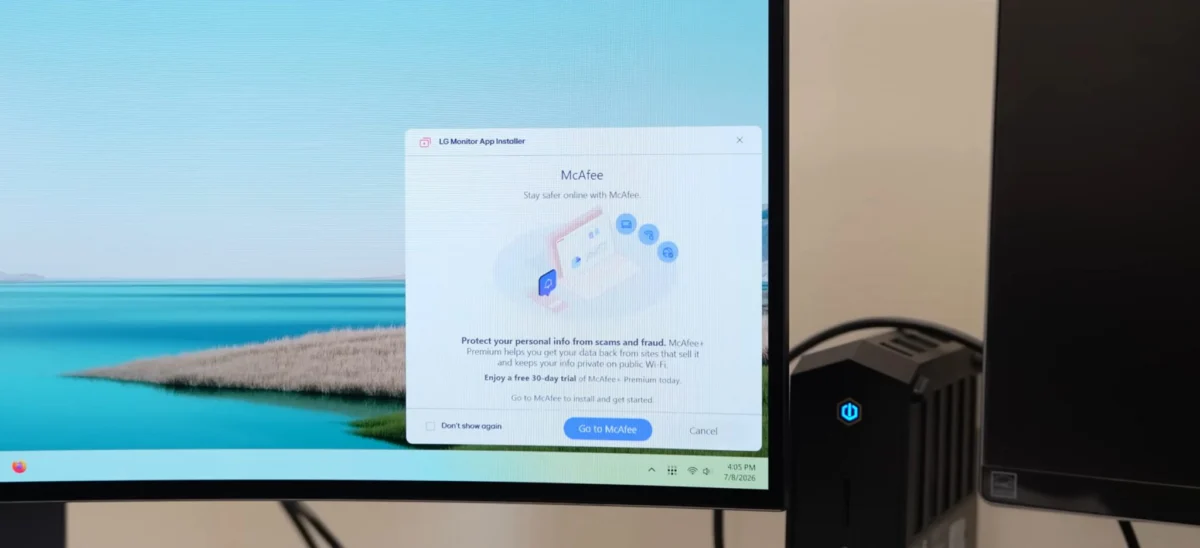
A significant controversy has erupted as numerous users of LG computer monitors report finding an application, "LG Monitor App Installer," along with unsolicited advertisements, installed on their Windows systems without explicit consent or prior notification. This practice has sparked widespread concern among consumers, particularly given LG’s position as a premium manufacturer in the computer monitor market, with many of its high-end displays commanding prices exceeding $1,000. The forced installation of this software, described as disruptive and a profound privacy risk, has drawn sharp criticism from tech enthusiasts and privacy advocates alike, raising fundamental questions about user control over their hardware and the extent of data collection by manufacturers.
The Unwelcome Installation: A Breach of Trust
The core of the issue lies in the discovery that the "LG Monitor App Installer" appears on users’ systems without any discernible prompt, dialog box, or explicit permission request from LG. For consumers who invest heavily in high-performance, high-cost monitors, the expectation is a clean, unencumbered experience, free from the kind of intrusive software typically associated with budget-tier products or freemium models. The presence of unsolicited ads, delivered through an application stealthily installed, represents a significant breach of this implied trust. Tech analyst Burke, cited in reports, highlighted the alarming scope of permissions granted to the application post-installation. According to Burke, once the app is on a user’s system, LG "technically possesses permission to use ‘all system resources,’" a blanket authorization that alone presents substantial security implications. Even more concerning are the specific data points the app is reportedly capable of collecting: "geolocation, device data, online activity, contacts, user credentials, transactions, and more." This extensive data harvesting capability transforms a peripheral device into a potential surveillance tool, turning a premium hardware purchase into a vector for pervasive data collection.
The financial outlay for an LG monitor, often positioned as a high-end or professional-grade display, makes the situation particularly egregious. Users paying upwards of a thousand dollars for a monitor do so with the expectation of quality, performance, and a user experience commensurate with the price tag, not a hidden cost in the form of unwanted software and a compromise of personal data. This incident not only undermines consumer confidence in LG but also casts a shadow over the broader premium hardware segment, where transparency and user privacy are often assumed to be cornerstones of the brand promise. The disruption caused by unexpected ads popping up on a display, interrupting work or leisure activities, further exacerbates the frustration, transforming what should be a seamless experience into an annoyance.
Deep Dive into Data Collection: A Privacy Minefield
The scope of data that the LG Monitor App Installer is authorized to collect, as detailed by Burke, reads like a comprehensive profile of a user’s digital life. "All system resources" is a vague yet powerful phrase that could imply access to virtually any component or function of the operating system. When combined with specific categories like "geolocation," which tracks physical movements, and "online activity," which details browsing habits and digital interactions, the privacy implications become stark. The ability to collect "contacts" raises concerns about the privacy of individuals beyond the immediate user, while "user credentials" and "transactions" represent a direct threat to financial security and identity.
In an era increasingly defined by heightened awareness around data privacy, and with regulations like the General Data Protection Regulation (GDPR) in Europe and the California Consumer Privacy Act (CCPA) in the United States setting stringent standards for data handling, such practices face intense scrutiny. Companies are generally expected to provide clear, affirmative consent mechanisms for data collection, outlining precisely what data is gathered, why it’s needed, and how it will be used. The alleged surreptitious installation and subsequent broad data permissions granted to the LG app appear to circumvent these principles, leaving users unknowingly exposed. This situation underscores a growing tension between hardware manufacturers’ desire to monetize user data and services, and consumers’ fundamental right to privacy and control over their personal information. The potential for this collected data to be shared with third parties, or used for targeted advertising, adds another layer of complexity and concern, further eroding the trust users place in their device manufacturers.
Microsoft’s Role and the UWP App Ecosystem
The controversy also shines a spotlight on Microsoft’s policies regarding companion applications for peripherals and the mechanics of the Universal Windows Platform (UWP) device app ecosystem. The LG Monitor App Installer’s description on the Microsoft Store vaguely states its purpose is for users to "easily install and use apps supported by your monitor," notably listing McAfee as one such application. This suggests a potential avenue for LG to generate revenue through partnerships or affiliate programs by pushing third-party software onto its users’ systems.
Crucially, Microsoft’s own documentation for Windows developers outlines how UWP device apps can "automatically install when the user connects their device to the PC." This automatic installation is contingent on specific conditions: the user must not have opted out of "Recommended Settings" during Windows installation, be connected to the Internet, and signed into the Microsoft Store. While seemingly designed for user convenience, ensuring essential drivers and basic functionality are readily available, this policy appears to create a loophole that can be exploited by manufacturers to install more intrusive "companion apps" without explicit, real-time user approval. Adding to the concern, Microsoft’s support page itself includes a warning: "The automatic installation feature does not provide a notification to the user when the app is installed. Some users may find this experience confusing and frustrating and give your app a bad rating." This admission by Microsoft acknowledges the potential for negative user experience, yet the policy remains in place, allowing practices like LG’s to proliferate. The incident prompts a critical examination of Microsoft’s responsibility in curating its platform, ensuring that convenience for manufacturers does not come at the expense of user privacy and control. The lack of notification during installation is a particularly thorny issue, as it deprives users of the opportunity to make an informed decision at the point of impact.
A Pattern of Predatory Practices: Industry Parallels
While LG’s situation with its monitors has garnered significant recent attention, the practice of hardware vendors automatically installing unwanted software, often referred to as "bloatware," is not new to the tech industry. Numerous other manufacturers have faced similar criticisms in the past, illustrating a broader systemic issue. Examples include gaming peripheral giants like Razer and Logitech, both of which have been called out for installing extensive, and sometimes performance-impacting, software suites alongside their devices. Motherboard manufacturers such as Asus and Gigabyte have also faced backlash for pre-installing utilities and applications that users did not request or desire, sometimes even embedding them at a firmware level.
These precedents highlight a concerning trend where the line between essential drivers and intrusive marketing/data collection tools becomes increasingly blurred. However, the case of LG monitors presents a particularly egregious example. Unlike a gaming mouse or keyboard that might genuinely benefit from a robust software suite for customization (though even then, consent should be paramount), a computer monitor typically functions perfectly well with generic display drivers. The necessity of a "companion app" for a monitor is highly debatable, especially one that carries such broad data collection permissions and pushes advertisements. The high price point of LG’s monitors further distinguishes this case; consumers expect a premium, uncompromised experience, not one marred by the very practices they might associate with cheaper, less reputable brands. This history of bloatware across different hardware categories suggests a pervasive industry mindset that prioritizes potential revenue streams from software and data over user autonomy and privacy.
The Business of Bloatware: Monetizing Premium Hardware
The motivation behind such practices is often rooted in the desire to extract additional value from hardware sales beyond the initial purchase price. In an increasingly competitive market, manufacturers are constantly seeking new revenue streams. Forcing the installation of an app like "LG Monitor App Installer" opens several potential avenues for monetization:
- Data Monetization: The collection of extensive user data—geolocation, online activity, contacts, transactions—is a highly valuable asset in the digital economy. This data can be anonymized, aggregated, and sold to third-party advertisers, market research firms, or used by LG itself for targeted marketing across its diverse product ecosystem.
- Affiliate Partnerships: The explicit mention of McAfee in the app’s description on the Microsoft Store strongly suggests an affiliate relationship. LG could be receiving a commission for every McAfee installation or subscription initiated through its "Monitor App Installer." This model allows LG to leverage its installed hardware base to push software from other vendors, generating passive income.
- Service Upselling: The app might eventually be used to promote other LG services, accessories, or even integrate with its smart home ecosystem, creating a sticky environment that encourages further LG product purchases.
- Recurring Revenue: In a market where hardware sales are typically one-off transactions, companion apps provide a mechanism for continuous engagement and potential recurring revenue through subscriptions, premium features, or continued data harvesting.
This shift towards "software as a service" even for hardware devices represents a significant change in the traditional consumer-manufacturer relationship. It transforms a product from a simple purchase into an ongoing data stream, often without the explicit knowledge or consent of the consumer. For premium brands like LG, which built their reputation on hardware quality and innovation, adopting such tactics risks alienating their most loyal and discerning customers. The long-term damage to brand reputation and consumer trust could far outweigh the short-term financial gains from bloatware.
Consumer Backlash and Calls for Accountability
The revelations, particularly amplified by investigations from tech media outlets like Gamers Nexus, have ignited significant consumer backlash across online forums, social media, and tech communities. Users are expressing feelings of betrayal, anger, and a sense of being exploited by a brand they previously trusted. The fact that this practice has reportedly been ongoing for years, with a recent expansion, only deepens the frustration. Tech analyst Burke noted that he recently began seeing the pop-up ads on LG monitors he purchased three years ago, indicating a retroactive application or expansion of this unwanted functionality.
The lack of an official response from LG to inquiries from publications like Ars Technica, beyond acknowledging receipt of questions, further fuels public discontent. In a crisis of trust, transparency and timely communication are paramount. LG’s silence in the face of serious privacy concerns is interpreted by many as an admission of guilt or a disregard for consumer rights. The incident has also prompted calls for greater accountability from both hardware manufacturers and platform providers like Microsoft. Consumers and privacy advocates are demanding clearer policies, opt-in consent mechanisms, and more stringent oversight to prevent such surreptitious installations in the future. The empty <ul> in the original text indicated that Gamers Nexus listed specific affected monitor models based on user complaints, further substantiating the widespread nature of the issue. This list, reportedly encompassing various LG monitor series, suggests that the problem is not isolated to a single product line but potentially affects a broad range of LG’s display offerings.
The Path Forward: What Consumers and Regulators Can Do
Addressing this issue requires a multi-pronged approach involving consumer vigilance, industry self-regulation, and potentially, regulatory intervention.
For consumers, immediate steps include:
- Checking for the App: Users with LG monitors should actively check their Windows system’s installed programs for "LG Monitor App Installer" and similar companion apps.
- Uninstalling: If found, users should attempt to uninstall the application through Windows settings. However, some users report difficulty in complete removal, as the app might reappear.
- Reviewing Privacy Settings: Users should review their Windows privacy settings, particularly those related to app permissions and automatic installations, to opt out of "Recommended Settings" if possible.
- Providing Feedback: Reporting the issue to LG support, Microsoft, and consumer protection agencies can help build a case for stronger action.
- Considering Alternatives: When purchasing new hardware, consumers should research a manufacturer’s reputation regarding bloatware and privacy practices.
For manufacturers, the incident should serve as a wake-up call regarding the critical importance of:
- Transparency and Consent: Adopting clear, opt-in consent mechanisms for any non-essential software installation and data collection.
- User-Centric Design: Prioritizing user experience and privacy over aggressive monetization strategies.
- Ethical Data Practices: Adhering to strict ethical guidelines for data collection, usage, and sharing, aligning with global privacy regulations.
For Microsoft, as the platform provider, there is a clear imperative to:
- Re-evaluate UWP Policies: Revisit and potentially revise the UWP device app auto-installation policy to ensure it doesn’t inadvertently facilitate unwanted software.
- Strengthen Oversight: Implement more rigorous vetting processes for apps distributed through the Microsoft Store, especially those from hardware manufacturers.
- Enhance User Control: Provide clearer, more accessible options for users to manage and opt out of automatic app installations from peripherals.
Regulatory bodies globally, particularly those focused on consumer protection and data privacy, may also need to:
- Investigate Practices: Launch investigations into manufacturers employing such stealthy installation and data collection methods.
- Enforce Regulations: Apply existing data privacy laws (like GDPR, CCPA) to ensure companies are held accountable for non-consensual data harvesting.
- Advocate for Standards: Work towards establishing industry-wide standards for software bundling with hardware, emphasizing user rights and transparency.
The LG monitor adware controversy is more than just an inconvenience; it represents a significant challenge to consumer trust in the tech industry and highlights the ongoing battle for digital privacy. As our lives become increasingly intertwined with connected devices, the expectation of explicit consent and control over our own data becomes not just a preference, but a fundamental right. The response from LG, Microsoft, and regulatory bodies in the coming weeks will be critical in shaping the future landscape of hardware ownership and digital privacy.