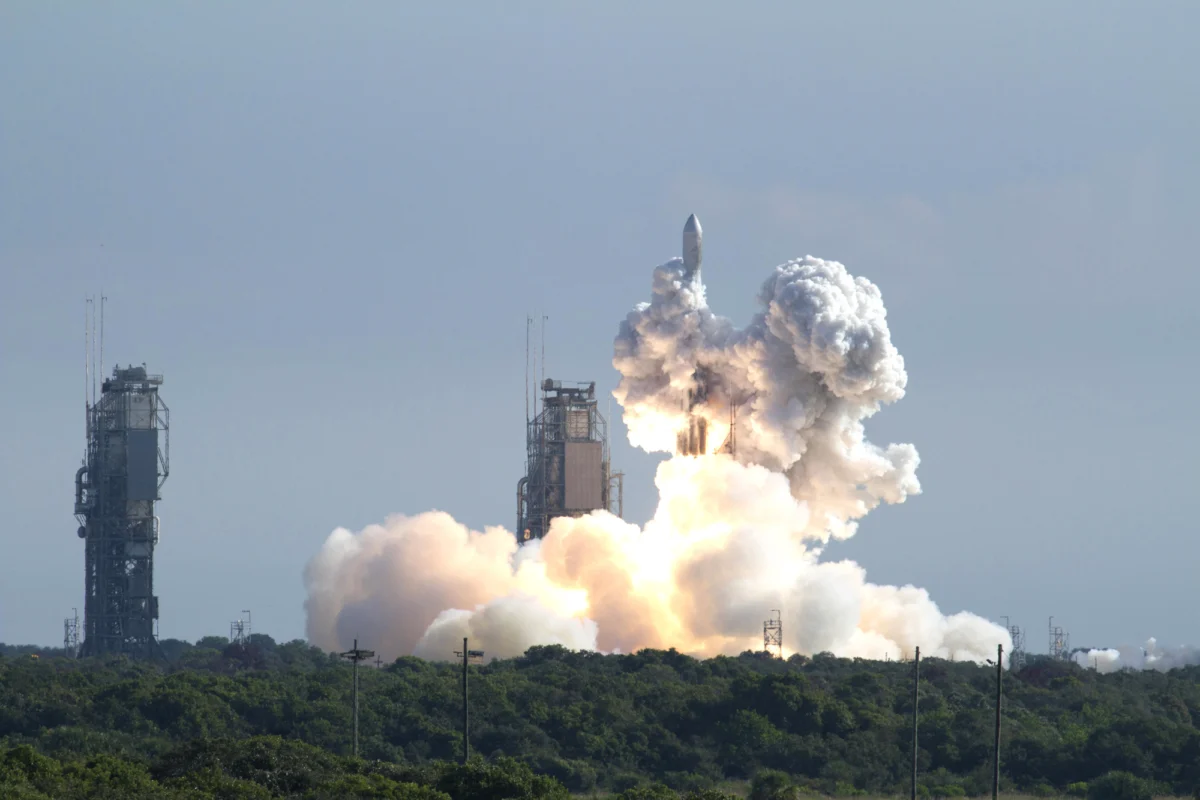
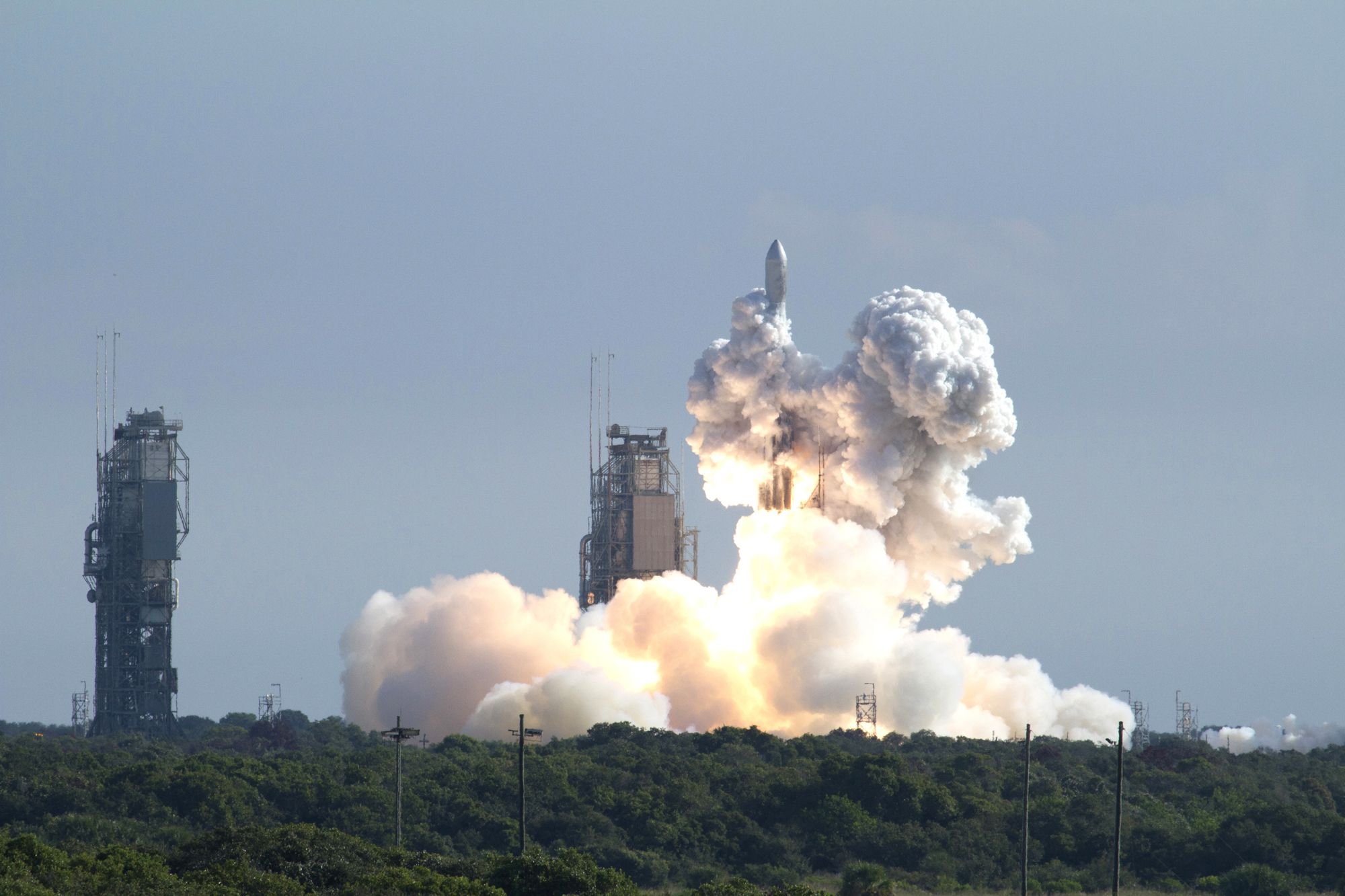
On September 10, 2011, NASA initiated one of the most ambitious lunar exploration projects in the agency’s history with the launch of the Gravity Recovery and Interior Laboratory (GRAIL) mission. Carried aloft by a venerable Delta II rocket from Cape Canaveral, Florida, the mission marked a significant shift in how scientists approached the study of the moon. Rather than focusing on the surface features visible to the naked eye or through conventional telescopes, GRAIL was designed to look beneath the skin of our celestial neighbor, utilizing high-precision gravity mapping to uncover the internal structure and thermal history of the moon.
The project, which came with a total price tag of $496 million, was defined by its twin spacecraft: Ebb and Flow. These two probes, nearly identical in their architecture, were engineered to fly in tandem, creating a dynamic, real-time gravitational measurement system that provided data of unprecedented resolution. By observing the subtle ways the moon’s uneven gravity influenced the distance between the two satellites, researchers were able to produce a "gravity map" that revealed the distribution of mass deep within the lunar crust and mantle.
A Chronology of the GRAIL Mission
The life cycle of the GRAIL mission was as precise as the instruments it carried. Following the successful liftoff in September 2011, the twin spacecraft embarked on a long, low-energy trajectory to the moon, arriving in lunar orbit on New Year’s Day and January 2, 2012, respectively. This four-month journey was necessary to ensure the probes could enter a circular, near-polar orbit while conserving fuel.
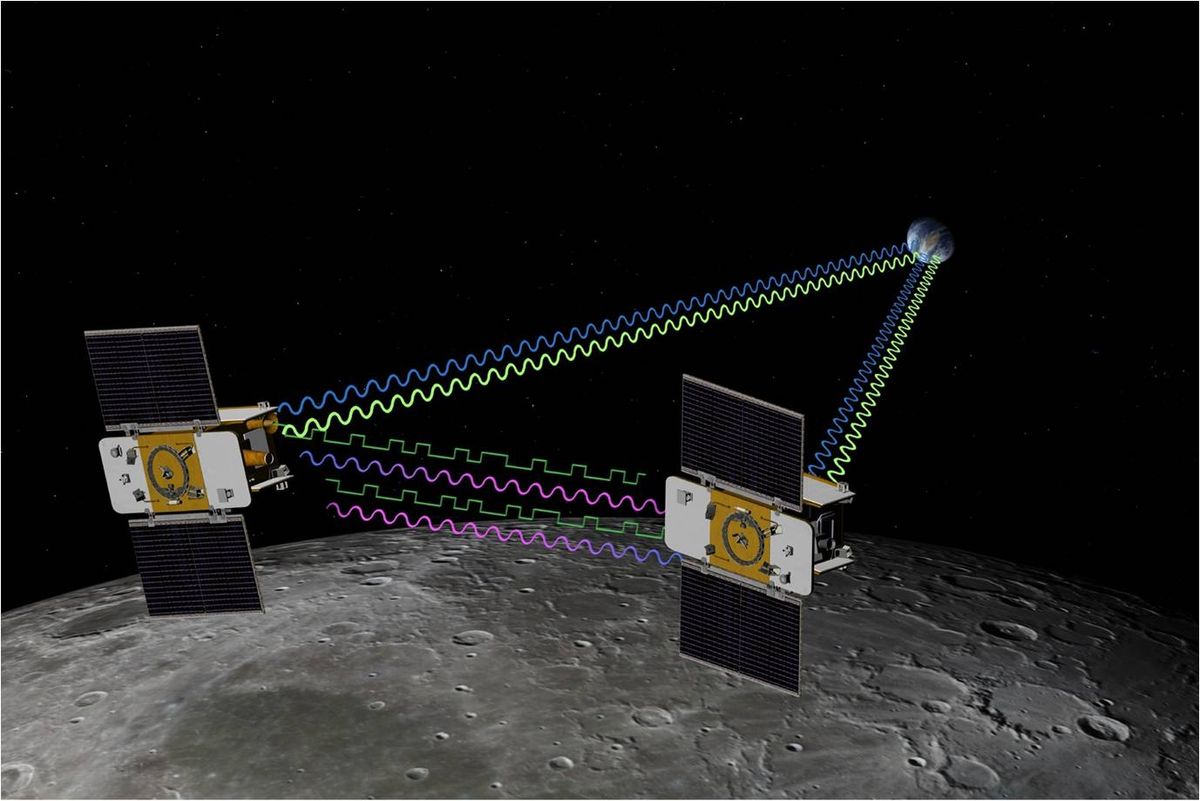
Once the orbit was stabilized at an altitude of approximately 34 miles (55 kilometers), the primary science mission began. For nine months, Ebb and Flow maintained a separation distance that varied between 109 and 140 miles (175 to 225 kilometers). By monitoring the precise timing of radio signals sent between the two, scientists measured changes in the distance between them to within a fraction of the width of a human hair.
As the mission progressed, it became clear that the gravitational data was exceeding initial expectations. By late 2012, the fuel reserves required to maintain such a tight, low-altitude formation were reaching critical levels. Rather than letting the orbit decay into an unpredictable, chaotic state, NASA engineers orchestrated a controlled end to the mission. On December 17, 2012, Ebb and Flow were commanded to perform a final series of maneuvers, intentionally impacting a crater rim near the moon’s north pole. This final act ensured that the mission concluded safely, away from sensitive historic lunar landing sites, such as the Apollo 11 base.
The Science of Mascons and Lunar Density
To understand why the GRAIL mission was a scientific necessity, one must first understand the concept of "mascons," or mass concentrations. Before the advent of high-resolution gravity mapping, lunar scientists had long suspected that the moon was not a uniform sphere of rock. There were regions of the lunar surface that exerted a stronger-than-average gravitational pull, causing spacecraft to accelerate or decelerate as they passed overhead.
The GRAIL data confirmed that these mascons were not random occurrences but were the direct result of catastrophic, ancient impacts. Billions of years ago, when the moon was geologically younger and its interior was significantly hotter and more pliable, massive asteroids and comets struck the surface. These impacts excavated deep basins and caused denser material from the lunar mantle to rise and solidify beneath the crust.
Jay Melosh, a distinguished professor at Purdue University and a co-investigator for the GRAIL mission, noted during the mission’s analysis phase that the data provided a clear link between surface scars and internal structure. The mapping revealed that the moon’s crust was far more shattered and porous than previously theorized. This discovery forced a revision of planetary formation models, as it suggested that the early bombardment phase of the inner solar system was far more intense and destructive than earlier models had accounted for.
Educational Engagement and the MoonKam
Beyond the hard physics, the GRAIL mission was notable for its commitment to public and student outreach. One of the three primary instruments on each spacecraft was the Moon Knowledge Acquired by Middle School Students (MoonKam) imaging system. This was not a standard scientific camera for professional use, but an educational tool designed to allow students to select lunar targets and request images from the moon’s orbit.

The MoonKam initiative, led by undergraduate students at the University of California, San Diego, in collaboration with the Sally Ride Science foundation, brought the lunar surface into classrooms across the United States. Furthermore, the very names of the two spacecraft, "Ebb" and "Flow," were selected through a national competition held for K-12 students. The winning suggestion came from fourth-grade students at Emily Dickinson Elementary School in Bozeman, Montana. This level of public engagement served to demystify the complexities of orbital mechanics and gravitational physics, fostering a new generation of interest in aerospace engineering and planetary science.
Technical Specifications and Instruments
The success of the mission relied heavily on three distinct instruments installed on each probe:
- Lunar Gravity Ranging System (LGRS): This was the core of the mission, utilizing a Ka-band microwave link to measure the inter-spacecraft range change with sub-micrometer precision. It effectively acted as a giant, orbiting scale.
- Radio Science Beacon (RSB): This system provided the necessary telemetry to track the probes from Earth-based stations, ensuring that the spacecraft’s precise location was always known relative to the lunar surface.
- MoonKam (Lunar Imaging System): As noted, this was the primary educational interface, capturing imagery that supplemented the gravity data with visual context.
The synergy of these instruments allowed NASA to map the moon’s gravity field with a resolution that was 1,000 times greater than any previous mission. This data remains a foundational resource for researchers studying the thermal evolution of rocky planets and the mechanisms of crustal formation.
Broader Implications for Space Exploration
The implications of the GRAIL mission extend far beyond the moon. By mastering the technique of using twin spacecraft to measure subtle gravitational variations, NASA laid the groundwork for future missions. The "GRAIL-style" approach of dual-spacecraft formation flying has since been discussed as a template for exploring other bodies in the solar system, including asteroids and even planets with complex gravitational fields, such as Mars.
Furthermore, the data collected by GRAIL has proven to be essential for modern lunar navigation. As space agencies and private companies prepare for a new era of lunar exploration—including the Artemis program—the precision maps of the moon’s gravity field are critical for ensuring that future landers and orbiters can operate safely. Understanding where the "lumpy" gravity regions are located prevents the risk of orbital drift, which could lead to navigation errors or potential collisions.
The mission also serves as a poignant reminder of the importance of the moon’s history. The craters and mascons identified by Ebb and Flow are, in effect, a time capsule. By studying these gravitational anomalies, scientists are essentially reading the record of the early solar system’s violent, formative years. The moon is no longer viewed as a static, dead rock, but as a dynamic repository of information that, when properly measured, tells the story of the inner solar system’s evolution.
In the years since the final crash of the probes, the scientific community has continued to pour over the datasets generated by the GRAIL mission. The legacy of Ebb and Flow continues to inform our understanding of planetary differentiation, the impact history of the Earth-Moon system, and the internal geology of our natural satellite. What began as a bold mission to map the "lumpy" gravity of the moon has resulted in a permanent shift in planetary science, cementing the GRAIL mission as a cornerstone of 21st-century space exploration.