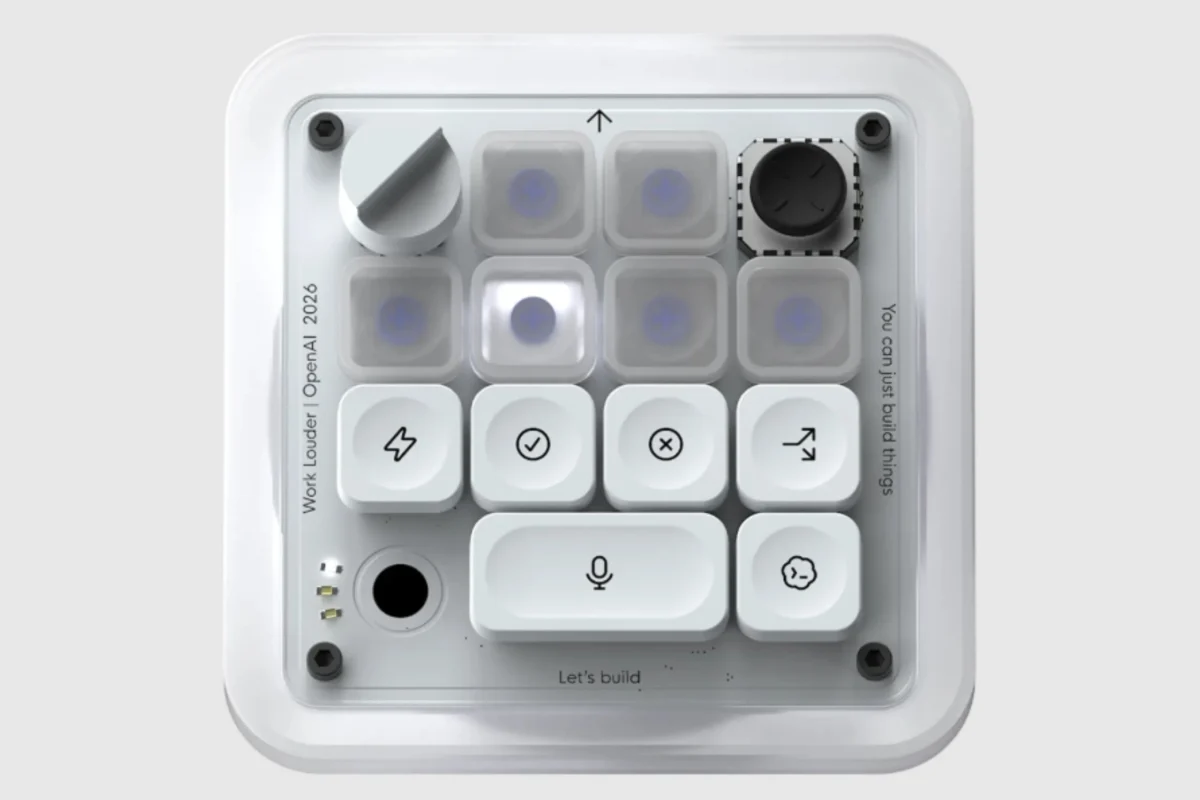
OpenAI, the vanguard of artificial intelligence research, last week marked a significant pivot in its corporate strategy with the launch of its inaugural hardware product: Micro, a sophisticated, compact keypad designed to seamlessly integrate with its flagship conversational AI, ChatGPT. Developed in a strategic collaboration with Work Louder, a recognized specialist in custom keyboard design, Micro represents an intriguing foray into physical interfaces for AI, positioned as an artisanal workplace novelty that is expected to resonate strongly with a segment of tech enthusiasts while potentially perplexing a broader audience. This launch signals a nascent, yet ambitious, expansion for OpenAI beyond its traditional software dominion, occurring concurrently with a period of heightened legal scrutiny and further speculation regarding its future hardware endeavors.
OpenAI’s Strategic Shift Towards Hardware
OpenAI’s entry into the hardware market is not merely an isolated product launch but rather a clear indication of a broader strategic evolution. For years, the company has been at the forefront of AI software development, democratizing access to powerful models like GPT and DALL-E. However, as AI capabilities become increasingly pervasive, the industry is witnessing a trend where leading AI developers are exploring tangible interfaces to enhance user interaction and create more immersive AI experiences. This move aligns OpenAI with other tech giants who have long understood the symbiotic relationship between software innovation and hardware delivery, aiming to control the full user experience from AI model to physical interaction.
Industry analysts suggest that this hardware push is a natural progression for a company aiming to embed AI more deeply into daily workflows and personal lives. By offering a dedicated physical interface, OpenAI seeks to streamline interactions with its AI models, potentially reducing friction and increasing efficiency for power users. This strategy could also serve to differentiate OpenAI in an increasingly crowded AI market, creating a unique ecosystem around its proprietary technologies. The collaboration with Work Louder underscores a recognition of the specialized expertise required for high-quality peripheral design, leveraging an established brand known for catering to discerning users in the mechanical keyboard community. This partnership allows OpenAI to quickly bring a refined product to market without needing to build extensive in-house hardware design and manufacturing capabilities from scratch.
A Timeline of Recent Developments and Hurdles
The introduction of Micro arrives at a particularly dynamic and challenging juncture for OpenAI. The past few weeks have been marked by a series of events that collectively paint a picture of an organization navigating rapid expansion, intense competition, and significant legal battles.
- Mid-2020s: OpenAI experiences exponential growth with the public release of ChatGPT, rapidly becoming a household name and a dominant force in generative AI. The company focuses primarily on software development and API access.
- Early July 2026: Reports begin to circulate about OpenAI’s exploration of dedicated hardware devices, hinting at a broader strategic intent to move beyond purely software-based offerings.
- July 10, 2026: Apple Inc. files a lawsuit against OpenAI, alleging "trade secret theft." This legal action, reportedly centered on the use of proprietary data or methodologies in training OpenAI’s models, casts a significant shadow over OpenAI’s operations and future partnerships. The lawsuit ignites what is widely anticipated to be a protracted and costly legal battle, with potentially far-reaching implications for the AI industry regarding data sourcing and intellectual property.
- July 14, 2026: News breaks regarding another smart home product reportedly in advanced development at OpenAI. This rumored device, described as a screenless speaker designed to pair with ChatGPT, reportedly benefits from the expertise of former Apple engineers. This detail further complicates the narrative surrounding the Apple lawsuit, raising questions about the proximity of talent and potential for intellectual property overlap.
- Last Week of July 2026: OpenAI officially launches Micro, its first piece of consumer-facing hardware, developed in partnership with Work Louder. The product is introduced to the market, marking a tangible step in the company’s hardware ambitions amidst the ongoing legal and developmental buzz.
This chronology highlights OpenAI’s aggressive push into new territories while simultaneously grappling with the complex realities of operating at the cutting edge of technology, where innovation often intersects with legal and ethical dilemmas.
The Micro Keypad: Design, Functionality, and User Experience
The Micro keypad, as observed in test units provided to tech media outlets like TechCrunch, immediately conveys a sense of robust construction and premium design. Its sturdy build quality suggests durability, prompting observations that it could easily double as a sophisticated paperweight if its primary AI accessory function doesn’t capture widespread adoption. This tactile impression is complemented by its packaging—an immaculate white box with a sleek, minimalist aesthetic that many have noted as remarkably "Apple-coded." This stylistic choice, whether intentional or coincidental, adds another layer to the ongoing dialogue surrounding OpenAI’s relationship with the tech giant.
Functionally, Micro is engineered for specialized interaction with ChatGPT and its agentic coding tool, Codex. The keypad features a meticulously arranged layout:
- Six Frosted "Agent" Keys: Positioned at the top, these keys are customizable, allowing users to assign specific tasks or pre-defined prompts within ChatGPT or Codex. This enables quick access to frequently used AI functions or specialized agentic workflows.
- Six Command Keys: Located below the agent keys, these are designed to control the AI programs, facilitating actions such as executing commands, navigating interfaces, or managing AI responses.
Connectivity options for Micro are versatile, offering both Bluetooth for wireless convenience and a USB cable for a stable wired connection, catering to different user preferences and workstation setups.
One of Micro’s most touted features is its integrated button for voice dictation. This allows users to simply hold down the button, speak their commands or queries, and then tap a "send" button to submit their request to the AI. This hands-free input method promises to significantly enhance efficiency, particularly for tasks requiring extensive text input or complex instructions, bypassing the need for typing out lengthy prompts.

Customization is a core aspect of the Micro experience. Users can personalize their keypad directly within the ChatGPT interface through a dedicated "Micro" tab. This control panel allows for adjustments ranging from the brightness of the key backlighting to the precise commands and projects linked to each physical key. This level of personalization is crucial for a device aimed at power users who seek to optimize their workflows.
The keypad also incorporates a color-coded feedback system to communicate the AI’s status:
- White: Indicates an agent is idle, awaiting instructions.
- Blue: Signifies the AI is actively thinking or processing a request.
- Green: Confirms that a task has been successfully completed.
- Red: Alerts the user to an error or a failed task.
While intuitive once learned, this system, combined with the memorization of key assignments, presents a learning curve for new users, potentially hindering immediate plug-and-play adoption.
Initial Market Reception and User Feedback
Despite its innovative premise and polished design, Micro’s initial reception, particularly within its intended target audience of hard-core coders and AI power users, has been decidedly mixed. Early reviews from platforms like Reddit have expressed significant skepticism. One Reddit user famously dismissed it as "a prank and not a real product," reflecting a sentiment among some professional developers who see little practical utility compared to existing tools or custom macros they already employ. Others have suggested that "serious coders won’t touch it," indicating a perceived disconnect between the device’s offering and the nuanced demands of advanced programming environments.
A review by the independent outlet Aftermath was notably critical, particularly concerning the device’s $230 price tag. The review’s blunt title, "OpenAI’s expensive macropad feels engineered to piss me off specifically," encapsulates the frustration over what some perceive as an overpriced novelty, especially when juxtaposed against cheaper DIY macropads or off-the-shelf alternatives that offer similar, if not greater, levels of customization and functionality. These alternatives often come at a fraction of Micro’s cost, appealing to the cost-conscious and technically adept user base.
The learning curve for Micro has also been a point of contention. While the reviewer noted that programming the keypad to their liking eventually proved "pretty fun" and "considerably more efficient and enjoyable" for managing multiple ChatGPT sessions and utilizing dictation, the initial investment of time required to master the device’s nuances—including memorizing color codes and key assignments—is a barrier. This raises a fundamental question about user value proposition: why invest a week learning a new peripheral when the existing computer mouse and keyboard are already familiar and highly functional?
Ultimately, the utility of Micro appears to be heavily contingent on the individual’s daily reliance on ChatGPT. For infrequent AI users, the device’s benefits may not outweigh its cost and learning curve. However, for dedicated ChatGPT power users who value vintage-looking hardware, enjoy clicky buttons, and have $230 to spare, Micro could represent a valuable enhancement to their workflow, potentially brightening their day with its specialized functionality and tactile feedback.
Broader Impact and Strategic Implications
OpenAI’s foray into hardware with Micro, while seemingly niche, carries significant strategic implications for the company and the broader AI ecosystem.
- Deepening User Engagement: By offering a dedicated physical interface, OpenAI aims to foster deeper engagement with its AI models. This could transform ChatGPT from a browser-based utility into an omnipresent assistant, seamlessly integrated into a user’s physical workspace.
- Pioneering AI-Specific Peripherals: Micro represents one of the first explicit attempts by a major AI developer to create hardware specifically tailored for AI interaction. If successful, it could pave the way for an entirely new category of AI-specific peripherals, much like the evolution of gaming mice or graphic design tablets.
- Data Collection and User Insights: Hardware products offer unique opportunities for data collection on user interaction patterns, preferences, and pain points when engaging with AI. This data could be invaluable for refining future AI models and designing more intuitive interfaces.
- Ecosystem Building: This move aligns with the larger trend of tech companies building comprehensive ecosystems around their core technologies. By offering both software and hardware, OpenAI could strengthen its brand loyalty and create a more sticky user base, making it harder for users to switch to competing AI platforms.
- Navigating Competition: The AI hardware market is heating up, with tech giants like Google, Amazon, and Apple already deeply entrenched in smart home devices, voice assistants, and integrated ecosystems. OpenAI’s independent hardware push positions it as a direct competitor in these spaces, albeit starting with a highly specialized product. The reported development of a screenless speaker further underscores this ambition to enter the broader consumer electronics market.
- Legal Landscape and Innovation: The ongoing lawsuit with Apple highlights the increasing legal complexities surrounding AI development, particularly concerning intellectual property and data sourcing. This legal battle could set precedents for how AI companies operate and innovate, potentially influencing future collaborations and hardware development strategies across the industry. The involvement of former Apple engineers in OpenAI’s other hardware projects adds a layer of intrigue and potential legal vulnerability.
Future Outlook
The future of OpenAI’s hardware ambitions, spearheaded by Micro, remains to be seen. The initial mixed reception suggests that while the concept holds promise, market education and refinement of the value proposition will be crucial. OpenAI will need to clearly articulate how Micro provides a demonstrably superior or more efficient interaction with AI compared to existing methods, especially given its premium price point.
Success will likely hinge on several factors: the continued evolution of ChatGPT and Codex to offer more compelling "agentic" capabilities that truly leverage dedicated hardware, a broader acceptance of specialized peripherals among professional users, and OpenAI’s ability to navigate its complex legal challenges without hindering its innovation pipeline. Should Micro gain traction, it could establish OpenAI as a significant player in the burgeoning AI hardware market, fundamentally reshaping how we interact with artificial intelligence in our daily lives. Conversely, if it fails to capture a substantial user base, it might be remembered as an interesting, albeit expensive, experiment in the early days of AI-specific hardware. The journey of Micro is not just about a keypad; it’s a test case for the future of AI’s physical manifestation.