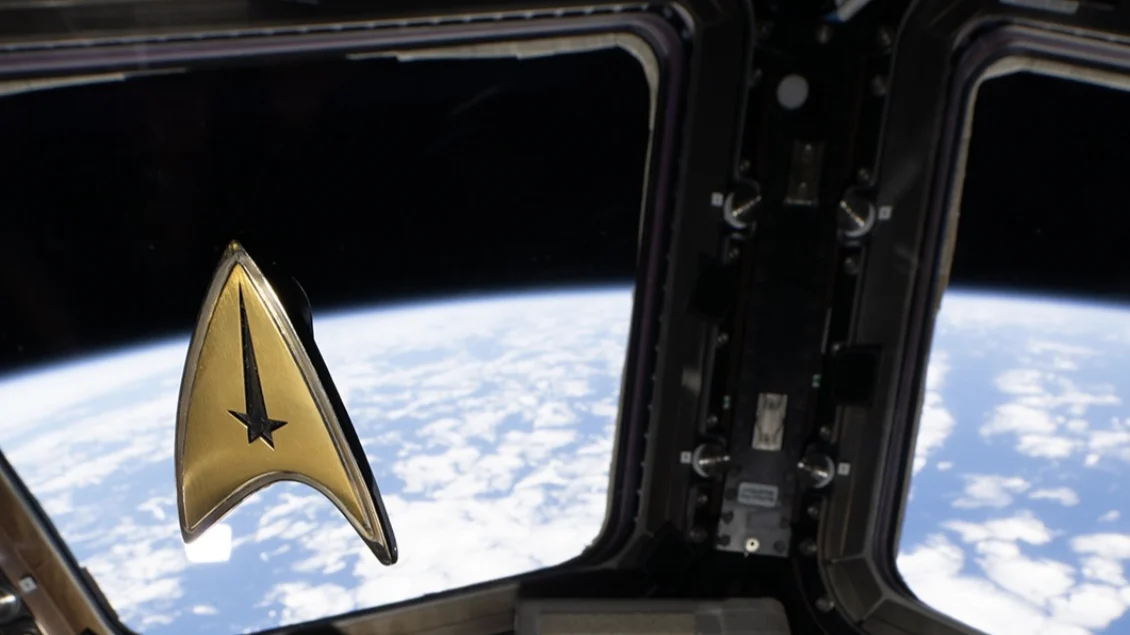
The enduring legacy of Gene Roddenberry’s seminal science fiction franchise, Star Trek, reached a symbolic milestone this month as an authentic piece of Starfleet memorabilia arrived aboard the International Space Station (ISS). Carried by European Space Agency (ESA) astronaut Sophie Adenot, the golden Starfleet delta badge from the contemporary series Strange New Worlds serves as a bridge between six decades of television history and the tangible, ongoing reality of human space exploration. As the franchise prepares to mark its 60th anniversary, this gesture underscores the profound influence that fictional narratives have had on the real-world pursuit of discovery, cooperation, and the advancement of humanity beyond Earth’s atmosphere.
A Mission Bridging Science and Fiction
ESA astronaut Sophie Adenot, a flight engineer for ISS Expedition 75, integrated this piece of pop culture history into her daily operations aboard the orbital laboratory. Launched on February 13, 2024, as part of NASA’s Crew-12 mission aboard a SpaceX Dragon spacecraft, Adenot’s presence on the station has been marked by a focus on scientific inquiry and international collaboration. The inclusion of the Starfleet badge—a symbol recognized globally as the insignia of an organization dedicated to peaceful exploration—is more than a promotional gesture; it is a nod to the philosophical framework that has guided generations of aerospace engineers, scientists, and astronauts.
In a video disseminated by both the European Space Agency and the official Star Trek media channels, Adenot is seen wearing the badge on her official ESA-issue flight suit while floating within the Columbus laboratory module. Her message, delivered while orbiting roughly 250 miles above the Earth, emphasized the synergy between the vision portrayed on screen and the work conducted on the ISS. "For me, exploration and science are about curiosity and cooperation, daring to go a little farther together, learning from what we discover and build, and turning that knowledge into a better future for everyone," Adenot stated.
The 60-Year Trajectory of Star Trek
To understand the significance of this event, one must consider the historical trajectory of Star Trek. Premiering on September 8, 1966, the original series introduced audiences to a future where humanity had moved past internal conflicts, poverty, and prejudice to explore the cosmos as a unified species. Over the subsequent 60 years, the franchise expanded into multiple television series, feature films, and literary works, consistently using the lens of space exploration to examine social issues, cultural diplomacy, and the ethics of scientific advancement.
The "Star Trek Philosophy," as described by Roddenberry in the 1976 collection of his musings, was rooted in the idea that humanity’s maturity would be measured by its ability to embrace diversity. Roddenberry famously argued that unless humanity could find joy in the differences between individuals on Earth, it would never be prepared for the vast diversity of the universe. This ethos has permeated the real-world space community for decades. Many individuals currently employed at NASA, ESA, and private spaceflight companies like SpaceX have cited the optimism of Star Trek as a primary motivator for their career choices.
Chronology of the Mission and Symbolic Arrival
The arrival of the badge at the ISS is a capstone to a long-standing relationship between the space community and the franchise.
- 1966: The original Star Trek series debuts, capturing the public imagination during the height of the Space Race.
- 1976: NASA names its first space shuttle prototype "Enterprise" following a massive letter-writing campaign by Star Trek fans.
- 2012: The death of Neil Armstrong, the first man to walk on the moon, is mourned by the Star Trek community, highlighting the cultural overlap between the two worlds.
- 2024 (February): ESA astronaut Sophie Adenot launches to the ISS on the Crew-12 mission, carrying the Starfleet badge as part of a commemorative effort.
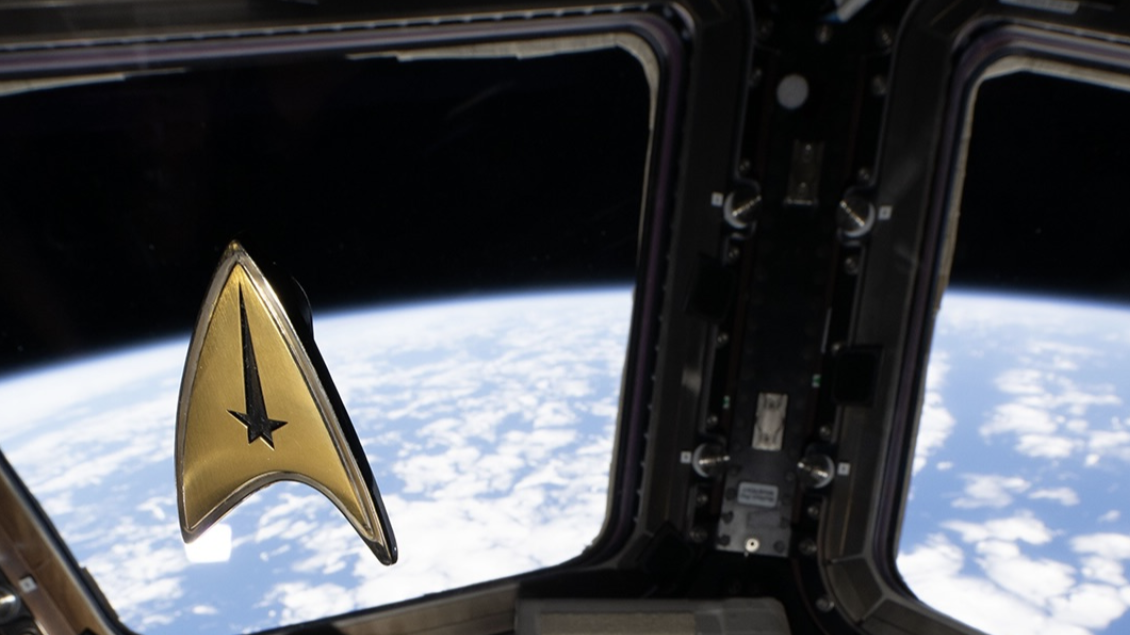
- 2024 (Present): The badge is displayed in the ISS Cupola, providing a visual juxtaposition of a fictional interstellar future against the backdrop of the actual Earth.
Data and Impact: The Reality of Orbital Collaboration
The International Space Station remains the pinnacle of international cooperation in space, hosting a rotating crew from NASA, ESA, Roscosmos, JAXA, and CSA. The facility has been continuously occupied since November 2000, representing 24 years of uninterrupted human presence in low Earth orbit.
The logistical reality of the ISS requires the kind of "cooperation" championed in both the Star Trek universe and ESA’s mission objectives. The station operates on a complex schedule of supply missions—such as those conducted by SpaceX’s Dragon capsules—which ensure that the station remains a viable habitat for research. Adenot’s upcoming transition, as her mission concludes and the Crew-13 mission prepares to dock, reflects the high-cadence, professional rhythm of current spaceflight.
Official Responses and Philosophical Implications
The European Space Agency has been particularly vocal about the symbolic nature of this event. In an official statement accompanying the imagery of the badge floating in the Cupola, the agency noted, "Science fiction imagines the future. We build it." This sentiment highlights the role of imagination in engineering. By setting a high bar for what society can achieve, science fiction provides a psychological framework that helps sustain long-term research and development efforts, even in the face of significant budgetary or technical challenges.
The reaction from the broader scientific community has been largely positive, viewing the crossover as a legitimate means of public engagement. By aligning the prestige of space exploration with the cultural relevance of Star Trek, agencies like ESA and NASA can reach audiences that might otherwise remain disengaged from the technical nuances of orbital research.
Analysis: Beyond the Badge
The inclusion of the Starfleet badge is, at its core, a testament to the "soft power" of science fiction. While the hardware of the ISS—the trusses, solar arrays, and life-support systems—is entirely grounded in Newtonian physics and rigorous engineering, the motivation to maintain such a structure often draws from a more abstract source.
The "Strange New Worlds" series, from which the badge originated, focuses on the early, optimistic days of the United Federation of Planets, mirroring the current era of space exploration where commercial partnerships and international coalitions are just beginning to push the boundaries of what is possible in deep space. As humanity looks toward the Artemis program—which aims to return humans to the lunar surface and eventually prepare for Mars—the themes of "exploring, discovering, and doing it together" are becoming less of a fictional trope and more of a mission requirement.
Ultimately, the presence of the badge in the Cupola window serves as a reminder that the boundary between the "final frontier" of science fiction and the reality of the ISS is thinner than it appears. As Adenot and her colleagues continue to perform experiments that will benefit life on Earth, they carry with them the legacy of a vision that helped inspire the very technology they are using to touch the stars. The 60th anniversary of Star Trek is not merely a celebration of a television show; it is a recognition of a shared human ambition that continues to drive the next generation of explorers toward a future that is, in many ways, just beginning.