
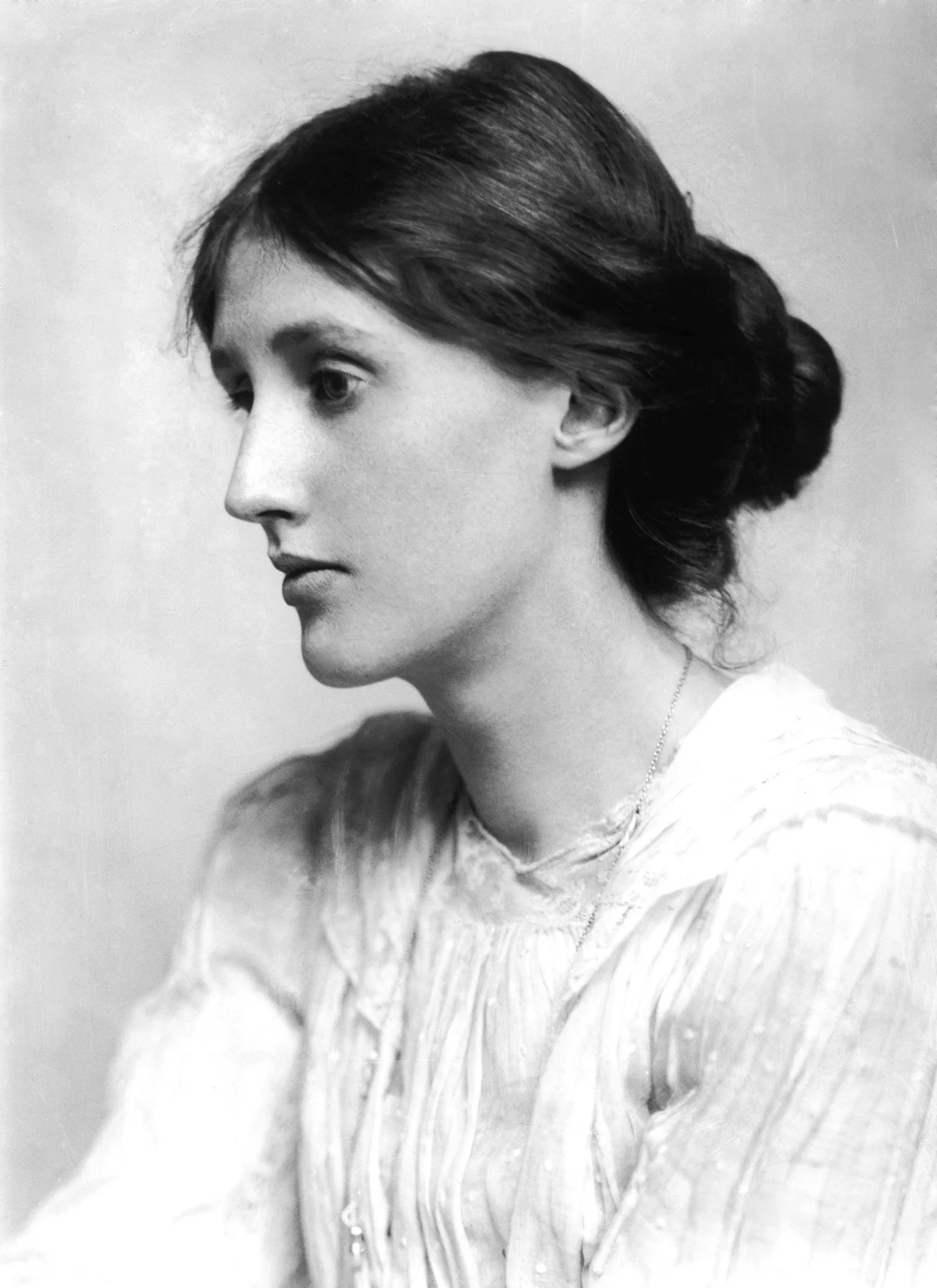
The intersection of artistic creation and human consciousness has long remained one of the most enigmatic subjects in literary history. While novelists and philosophers have spent centuries attempting to define why the human psyche feels a compelling urge to translate life into art, few have articulated the mechanics of this process with as much clarity as Virginia Woolf. In her posthumously published autobiographical collection, Moments of Being, Woolf provides a rare, candid examination of the psychological triggers that fueled her transition from a sensitive child into one of the most significant modernist writers of the 20th century. By analyzing her own developmental milestones, Woolf posited that art serves not merely as a decorative endeavor, but as a critical mechanism for processing reality and reclaiming agency from the chaos of existence.
The Genesis of the Creative Impulse
Virginia Woolf, born Adeline Virginia Stephen in 1882, grew up in a household deeply embedded in the Victorian intellectual tradition. However, her personal journals reveal that her internal life was defined by what she termed the "cotton wool" of daily existence—a state of non-being characterized by the mundane, rhythmic passage of time that left little impression on the individual.
According to Woolf’s retrospective accounts, her creative faculty was triggered by "sudden violent shocks." These shocks acted as ruptures in the fabric of her daily life, forcing her to confront reality in its rawest form. Woolf identified three formative childhood experiences that illustrate the divergent outcomes of these encounters: a moment of moral awakening while fighting with her brother Thoby, a profound realization regarding the interconnectedness of nature while observing a flower bed at St. Ives, and a traumatic encounter with the reality of suicide following the death of a family acquaintance, Mr. Valpy.
Chronology of Sensory Development
The trajectory of Woolf’s development suggests that these "moments of being" were not merely passive memories but active data points that shaped her adult cognitive architecture.
- Early Childhood (St. Ives Period): Woolf’s formative years at the family’s summer home provided the backdrop for her earliest shocks. The physical environment—the garden, the apple trees, and the coastline—became the laboratory for her developing philosophical inquiries.
- The Transition to Adolescence: As Woolf matured, the nature of these shocks shifted. While the childhood shocks were often paralyzing, her adolescent and early adult experiences began to incorporate an analytical component. She transitioned from being a victim of these emotional blows to being an investigator of them.
- The Literary Breakthrough: By the time Woolf was writing her major novels—such as Mrs. Dalloway (1925) and To the Lighthouse (1927)—she had codified the process of "turning experience around in the light." This practice allowed her to take the raw, painful elements of reality and reconstruct them into coherent, meaningful narratives.
Fact-Based Analysis of the "Shock-Receiving" Mechanism
From a psychological perspective, Woolf’s "shock-receiving capacity" can be interpreted as a form of high-order sensory processing. Research in modern cognitive psychology suggests that individuals who exhibit heightened emotional reactivity often develop advanced compensatory mechanisms to manage that reactivity. Woolf’s methodology—putting the shock into words—aligns with contemporary narrative therapy, where the act of linguistic articulation serves to integrate traumatic or intense experiences into a coherent sense of self.
Woolf herself noted a distinct qualitative difference between "despair" and "satisfaction." When she lacked the capacity to explain an event, such as the suicide of Mr. Valpy, she was paralyzed by a sense of powerlessness. Conversely, when she was able to rationalize an observation, such as her realization about the "whole" of the flower, she felt a sense of discovery. This distinction is foundational to her philosophy: art is the tool by which the individual imposes order upon the inherent chaos of the "cotton wool."
Contextualizing the Modernist Framework
Woolf’s assertions did not exist in a vacuum; they were part of a broader shift in Western thought during the early 20th century. As traditional structures—religion, social hierarchy, and Victorian morality—began to crumble in the wake of the First World War, writers like Woolf were tasked with finding a new "truth."

In her later reflections, Woolf famously rejected the notion of an external divine authority, arguing instead that humanity itself is the "music" and the "words" of the world. This radical subjectivity positioned the individual as the primary architect of reality. By asserting that "the whole world is a work of art," Woolf moved the locus of meaning from the heavens to the human mind. This perspective had profound implications for the literary movement of Modernism, which prioritized internal experience and stream-of-consciousness over objective, external narration.
Implications for Modern Literary Studies
The posthumous reception of Moments of Being has fundamentally altered the academic understanding of Woolf’s body of work. By providing the "source code" for her novels, these autobiographical writings allow scholars to track how she transmuted personal trauma into universal literature.
Critics and literary historians have noted that Woolf’s philosophy of "wholeness" is the driving force behind her innovative narrative structures. In works like The Waves and Jacob’s Room, the reader is invited to participate in the same process of "assembling" the world that Woolf practiced in her own life. The implication for current literary study is significant: Woolf’s work should not be viewed merely as fiction, but as an ongoing experiment in the philosophy of perception.
Broader Philosophical Impact
Woolf’s assertion that "there is no Shakespeare, there is no Beethoven; certainly and emphatically there is no God; we are the words; we are the music" remains one of the most provocative statements in 20th-century literature. It effectively democratizes the creative impulse. If we are the "thing itself," then the process of making art is not an act of creation by a chosen few, but a fundamental human necessity.

This philosophy of connection provides a bridge between the isolated individual and the collective experience. By turning our personal "shocks" into words, we participate in the larger project of defining existence. For Woolf, the ultimate goal of the artist was not to provide answers, but to provide a structure through which the "real thing behind appearances" could be glimpsed.
Conclusion: The Enduring Legacy of Woolf’s Insight
The study of Virginia Woolf’s life and work remains an essential pursuit for those interested in the nexus of psychology and creativity. Her ability to analyze the mechanism of her own mind—and to identify the precise moment where pain is transformed into aesthetic satisfaction—offers a roadmap for understanding the creative spirit.
As contemporary society navigates an era of unprecedented information overload, Woolf’s commitment to "taking hold of experience, of turning it around, slowly, in the light," serves as a timeless reminder of the power of introspection. Her work confirms that while we may be subject to the "cotton wool" of daily existence, we possess the unique capacity to penetrate that veil, to identify the pattern beneath, and to articulate our place within the vast, interconnected work of art that is human history. The legacy of Moments of Being is not merely the record of one woman’s life, but a testament to the transformative power of language and the human drive to make sense of the incomprehensible.










Leave a Reply