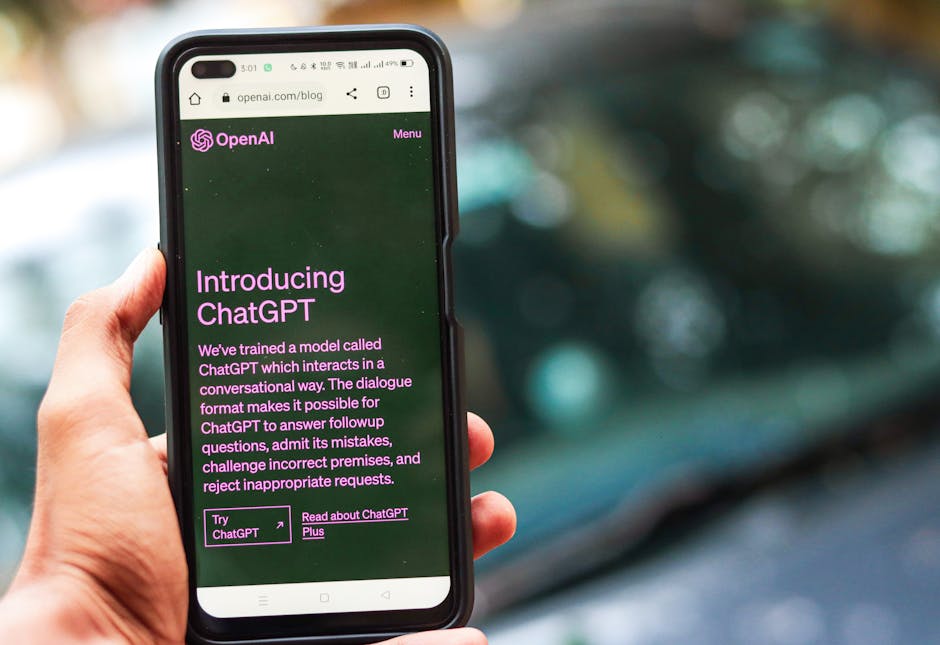
The GPT Store: Revolutionizing AI Application Development and Accessibility
The advent of the GPT Store signifies a monumental leap forward in the democratization and commercialization of generative AI technology. Building upon the foundational advancements of large language models (LLMs) like OpenAI’s GPT series, the GPT Store aims to be a central marketplace for bespoke AI applications, often referred to as "GPTs." This platform promises to empower individuals and businesses alike to create, customize, and share AI tools tailored to specific needs, ushering in an era of hyper-personalized AI experiences and fostering a vibrant ecosystem of AI innovation.
At its core, the GPT Store is designed to bridge the gap between the raw power of LLMs and the practical, everyday applications that users demand. Historically, accessing and deploying advanced AI capabilities required significant technical expertise, extensive coding knowledge, and substantial computational resources. This created a barrier to entry for many who could benefit from AI but lacked the means to implement it. The GPT Store endeavors to dismantle these barriers by providing a user-friendly interface and a framework that allows for the creation of specialized GPTs without necessarily requiring deep technical proficiency. Imagine a marketing professional needing an AI assistant to draft social media copy tailored to a specific brand voice, or a researcher requiring a GPT to summarize complex scientific papers in a particular field. These use cases, and countless others, are precisely what the GPT Store is built to address.
The creation process within the GPT Store is intended to be intuitive and accessible. While advanced users will undoubtedly have the latitude for intricate customization, the platform’s design prioritizes ease of use for a broader audience. This typically involves a conversational interface where users can instruct the system on the desired functionalities and characteristics of their GPT. This might include specifying the persona of the AI, defining its knowledge base (through uploaded documents or curated web browsing capabilities), setting behavioral guidelines, and even integrating external tools or APIs. For instance, a user could describe their ideal travel planning GPT, detailing preferences for budget-friendly options, specific types of activities, and dietary restrictions. The GPT Store’s underlying architecture would then translate these natural language instructions into a functional AI model, complete with defined parameters and capabilities.
One of the most compelling aspects of the GPT Store is its potential to foster a diverse and specialized AI ecosystem. Instead of a monolithic AI attempting to serve every conceivable purpose, the GPT Store encourages the development of niche-specific GPTs. This specialization allows for a level of accuracy, relevance, and efficiency that generic AI models often struggle to achieve. Consider the medical field: a general-purpose AI might offer broad health information, but a GPT trained on specific medical journals and diagnostic criteria could provide more precise and actionable insights for healthcare professionals. Similarly, in education, a teacher could create a GPT designed to generate personalized lesson plans, quiz questions, or study guides for specific age groups and subjects. This granular approach to AI development unlocks a vast spectrum of potential applications across all industries and domains.
The economic implications of the GPT Store are also profound. By enabling creators to build and potentially monetize their specialized GPTs, the platform introduces a new avenue for entrepreneurship and innovation within the AI landscape. Creators can offer their GPTs on a subscription basis, for a one-time purchase, or even for free, depending on their business model. This opens up opportunities for individuals and small businesses to capitalize on their expertise and creativity, transforming them into AI solution providers. Furthermore, established companies can leverage the GPT Store to develop and deploy internal AI tools that streamline operations, enhance customer service, or drive product development, all within a more controlled and cost-effective environment. The potential for revenue generation and cost savings across various sectors is substantial.
Security and privacy are paramount considerations for any AI marketplace, and the GPT Store is no exception. OpenAI, as the developer of the underlying technology, has emphasized its commitment to responsible AI development and deployment. This involves robust measures to prevent the misuse of GPTs, address bias, and protect user data. When creating GPTs, developers will likely be subject to guidelines and content moderation policies to ensure that their creations adhere to ethical standards. Users of the GPT Store will also have a role to play, with mechanisms for reporting problematic GPTs and providing feedback. The ongoing development of these security and privacy frameworks will be crucial for building trust and ensuring the long-term viability and widespread adoption of the GPT Store.
The integration of external data and functionalities is a key differentiator for GPTs developed within the store. Unlike traditional chatbots or AI assistants that are confined to their pre-programmed knowledge, GPTs can be empowered with "actions" that allow them to interact with the real world. This can involve connecting to APIs of popular services like travel booking sites, e-commerce platforms, or productivity tools. For example, a GPT designed for event planning could be granted access to calendar APIs to check availability, or to online ticketing platforms to facilitate purchases. This ability to perform actions, rather than just provide information, significantly enhances the utility and practical application of these AI tools, moving them from passive information providers to active agents capable of accomplishing tasks.
The concept of "custom instructions" further refines the user experience within the GPT Store. While each GPT can be tailored for specific tasks, individual users can also provide persistent custom instructions that inform how any GPT they interact with should behave. This acts as a meta-layer of personalization, allowing users to set overarching preferences that influence the AI’s tone, style, or adherence to certain principles, regardless of the specific GPT they are using. For instance, a user might consistently instruct all GPTs to communicate in a concise and factual manner, or to always prioritize ethical considerations. This layered approach to customization ensures a deeply personalized and user-centric AI interaction.
The GPT Store’s potential impact on the broader AI landscape cannot be overstated. It democratizes AI creation, making advanced capabilities accessible to a wider audience. It fosters specialization, leading to more effective and targeted AI solutions. It opens up new economic opportunities, empowering creators and businesses to innovate and monetize AI. And it promises a future where AI is not a monolithic entity, but a diverse ecosystem of intelligent tools tailored to the unique needs of every individual and organization. The journey of the GPT Store is just beginning, but its foundational principles suggest a transformative influence on how we create, interact with, and benefit from artificial intelligence. The continuous evolution of the platform, including the introduction of new features and the growth of its user base, will undoubtedly shape the trajectory of AI development and adoption for years to come. The GPT Store represents a pivotal moment, marking the transition from AI as a research endeavor to AI as an accessible, customizable, and integral part of our daily lives and professional endeavors. The emphasis on user-friendly creation, combined with powerful customization options and the ability to integrate real-world actions, positions the GPT Store as a catalyst for unprecedented AI innovation and widespread adoption.