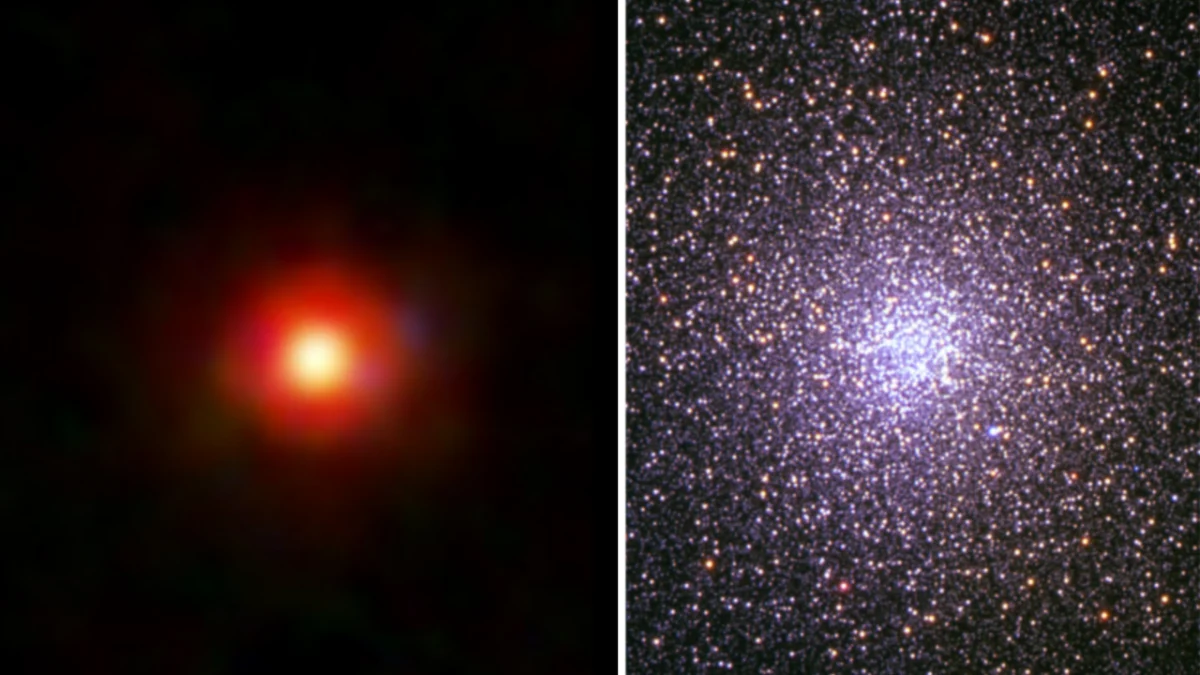
The cosmos, in its infancy, held mysteries that are only now beginning to be unraveled by the keen eye of the James Webb Space Telescope (JWST). Among the most perplexing discoveries were the "Little Red Dots," faint, reddish objects observed in abundance roughly 600 million years after the Big Bang. These enigmatic entities, seemingly disappearing from view as the universe aged, have presented astronomers with a significant puzzle. Now, new research, drawing parallels to the evolutionary paths of terrestrial life, suggests these cosmic "dinosaurs" may not have gone extinct but rather transformed into the familiar, majestic structures known as globular clusters.
This groundbreaking hypothesis, emerging from the work of a team led by John Chisholm of the University of Texas at Austin, proposes a compelling evolutionary link between these early, elusive objects and the densely packed stellar collections that populate galaxies today. Just as paleontologists have established that many dinosaur lineages did not vanish but instead gave rise to modern birds, this astronomical theory posits that the Little Red Dots could be the progenitors of globular clusters, offering a potential explanation for both their disappearance and the formation of these ancient stellar islands.
The Enigma of the Little Red Dots
The advent of the JWST in 2022 provided humanity with an unprecedented glimpse into the early universe. Among its many groundbreaking discoveries, the consistent observation of "Little Red Dots" in regions dating back to just 600 million years post-Big Bang immediately captured the attention of astrophysicists. Their peculiar characteristics, particularly their redness and apparent ephemeral nature, defied existing models of early cosmic evolution. By the time the universe reached approximately 2 billion years of age, these objects seemed to fade from view, leaving astronomers to ponder their true identity and ultimate fate.
Numerous theories were put forth to explain the Little Red Dots. Some scientists speculated they might be extremely massive, early galaxies in their nascent stages of formation. Others proposed they could be "black hole stars," a theoretical construct involving black holes enveloped by dense clouds of gas and dust, which would imbue them with a reddish hue. However, none of these explanations fully accounted for all the observed features and the peculiar timing of their appearance and disappearance.
A Bold Hypothesis: From Dots to Clusters
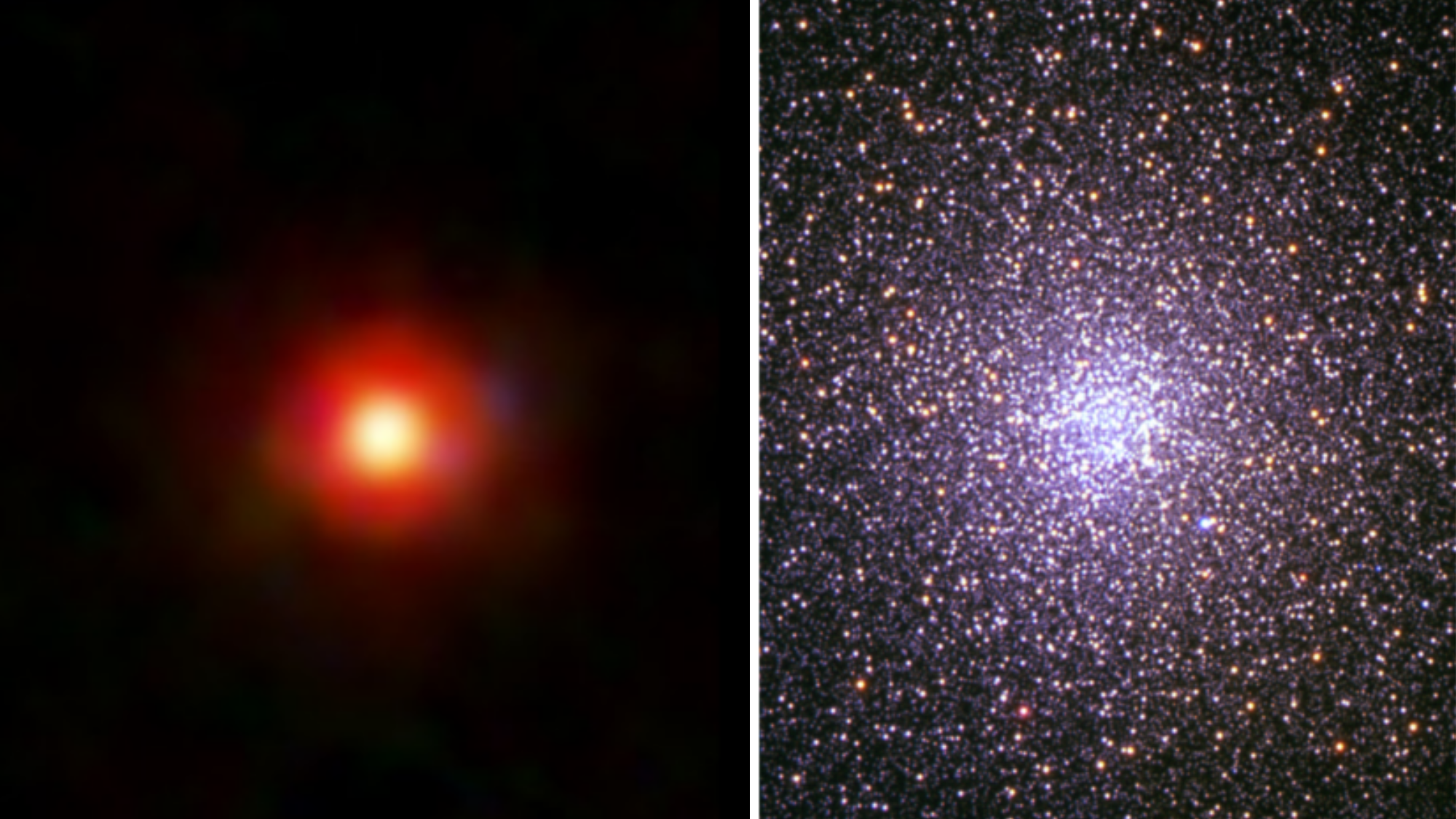
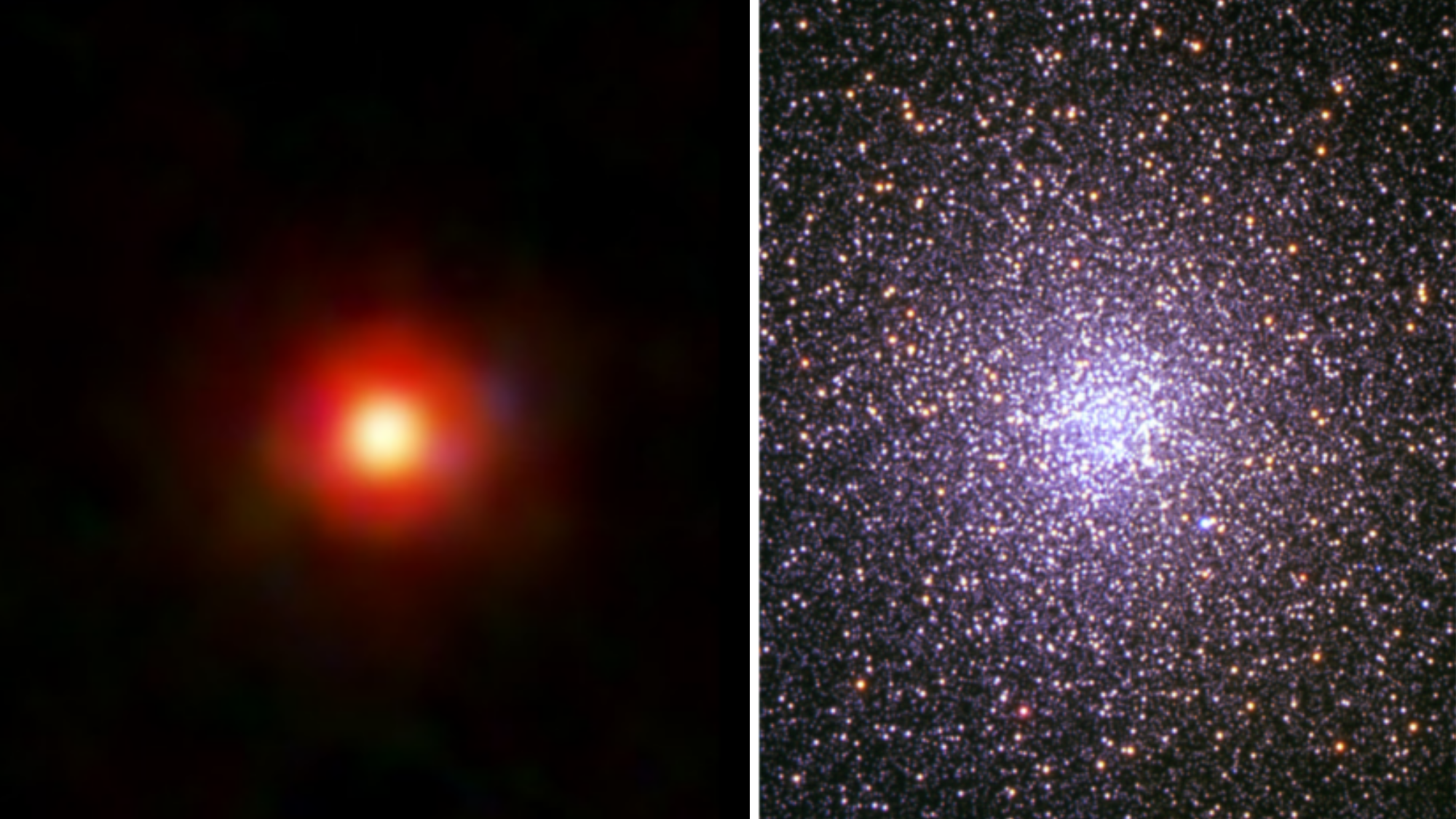
The new research, detailed in a pre-print available on arXiv, offers a unifying explanation by linking the Little Red Dots to the formation of globular clusters. The team’s central argument is that these early objects could represent the very initial stages of globular cluster formation, specifically those that hosted exceptionally massive stars.
"These may not be just a strange new JWST population with no connection to the universe around us today," stated team leader John Chisholm in a press release. "Instead, Little Red Dots may persist past the early universe, evolving into something relatively familiar."
The researchers theorize that a nascent globular cluster containing a "supermassive star" could appear as a Little Red Dot. A supermassive star, a hypothetical object with a mass ranging from 1,000 to 10,000 times that of our Sun, would have existed only in the very early universe. These behemoths are predicted to have been extremely short-lived, burning through their nuclear fuel at an astonishing rate. Their existence, however, could explain the peculiar chemical composition observed in older globular clusters.
The Chemical Fingerprints of Ancient Stars
Globular clusters are ancient, spherical collections of hundreds of thousands to millions of stars, gravitationally bound together. Our own Milky Way galaxy hosts at least 150 of these structures, but their formation process remains a subject of ongoing investigation. Typically, astronomers observe globular clusters as they are today: densely packed with old stars, their initial gas reserves long dispersed, and their structures modified by billions of years of cosmic evolution. This makes it incredibly difficult to reconstruct their birth conditions.
A key piece of evidence supporting the supermassive star hypothesis lies in the unusual elemental abundances found in the stars of globular clusters. It is believed that the stars within a single globular cluster all formed around the same time, from the same primordial gas cloud. In the early universe, this cloud would have primarily consisted of hydrogen and helium, with only trace amounts of heavier elements, which astronomers refer to as "metals."
However, many stars within globular clusters exhibit an anomalous chemical signature. They are surprisingly rich in elements like helium, nitrogen, sodium, and aluminum, while being deficient in elements like carbon, oxygen, and magnesium, which would be expected from standard stellar nucleosynthesis in the early universe.
"This specific pattern indicates nuclear fusion at very high temperatures, much higher than in the cores of even massive normal stars," explained team member Mike Boylan-Kolchin of UT Austin. "A supermassive star is precisely the kind of environment that could produce this combination."
The intense gravitational forces and extreme pressures within a supermassive star would drive nuclear fusion reactions far more vigorously than in typical stars. These reactions would forge heavier elements, including those observed in the peculiar chemistry of globular clusters.
The Life and Death of Supermassive Stars
The proposed supermassive stars would have been short-lived phenomena, existing for perhaps only a million years – a mere blink of an eye in cosmic timescales, especially when compared to the Sun’s 4.6 billion-year lifespan. Their formation would have occurred in the incredibly dense environments of early globular clusters, where frequent stellar collisions and mergers would have been commonplace, leading to the birth of these gargantuan stellar entities.
When these supermassive stars eventually met their end in cataclysmic supernova explosions, the elements they had forged would have been violently expelled into the surrounding gas. This enriched material would then have served as the raw ingredients for the subsequent generations of stars within the forming globular cluster. This process would imbue the cluster’s stellar population with the unique chemical signatures observed today, effectively acting as a cosmic evolutionary byproduct.
"In our model, the supermassive star that helps make the object look like a Little Red Dot would live for only a short time," Chisholm elaborated. "Once that star dies, the object may no longer look like a Little Red Dot, even if the cluster itself survives billions of years." This elegantly explains why the Little Red Dots appear to vanish from view: their defining characteristic, the supermassive star, would have long since ceased to exist.
Matching Distributions and Masses

Beyond the chemical evidence, the research team has identified other compelling correlations between Little Red Dots and globular clusters. Their analysis suggests that the spatial distribution of Little Red Dots in the early universe aligns with the predicted distribution of nascent globular clusters. Furthermore, their models indicate that the estimated masses of these early objects are consistent with the masses of globular clusters observed in the more recent universe.
The timing also aligns remarkably well. Little Red Dots are observed around 600 million years after the Big Bang, which is precisely the epoch when astronomers estimate that globular clusters would have begun to form. This confluence of observational data—appearance, disappearance, chemical anomalies, spatial distribution, mass estimations, and timing—provides a robust foundation for the proposed evolutionary link.
"There’s no single smoking gun at this point that says Little Red Dots are globular clusters, but it would explain a lot of diverse and surprising observations," acknowledged Boylan-Kolchin.
Implications for Cosmic Evolution
The implications of this research are far-reaching. If confirmed, it would not only solve the mystery of the Little Red Dots but also provide a clearer picture of how the first large, gravitationally bound structures in the universe formed. It suggests that the building blocks of today’s galaxies, such as globular clusters, have a deeper and more complex origin than previously understood.
This hypothesis offers a more complete narrative of cosmic evolution, demonstrating that seemingly transient phenomena in the early universe can play a crucial role in shaping the structures we observe today. It highlights the power of the JWST in probing these early cosmic epochs and underscores the ongoing quest to understand our universe’s origins.
The scientific community will undoubtedly be scrutinizing this research closely. Further observations with the JWST and other advanced telescopes, along with more sophisticated theoretical modeling, will be necessary to confirm or refute this intriguing hypothesis. However, the prospect that the faint, enigmatic Little Red Dots of the early universe are the evolutionary ancestors of the brilliant, ancient globular clusters is a testament to the dynamic and ever-evolving nature of the cosmos. It offers a profound connection between the distant past and the observable present, transforming our understanding of cosmic history one stellar evolution at a time.