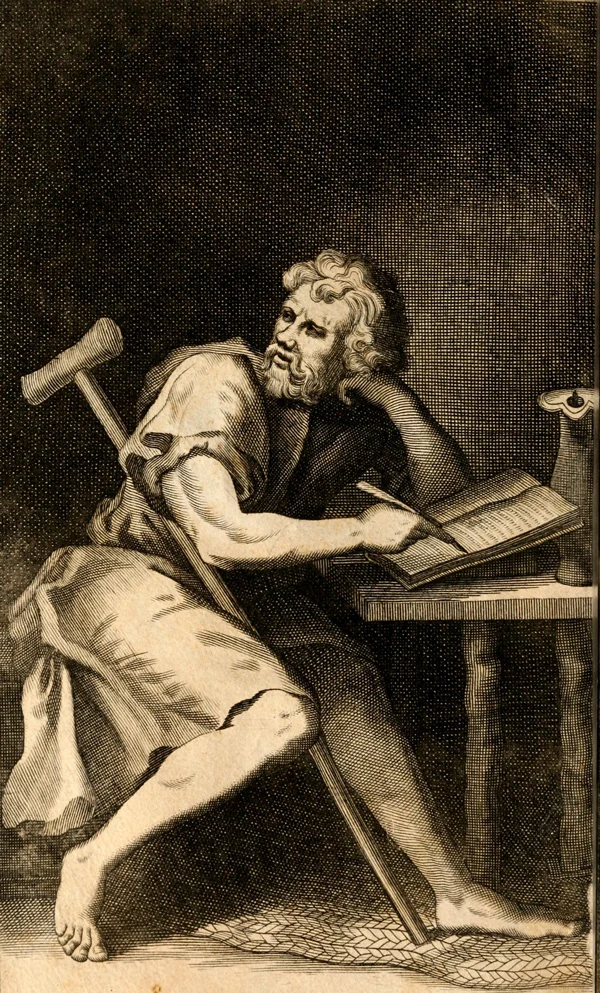
The Stoic Strategy for Surviving Heartbreak: Epictetus on Love, Loss, and the Impermanence of Life offers a profound lens through which to view the inevitable fractures of human relationships and the grief that follows. Leo Tolstoy once contemplated the paradoxical demands of love, writing that future love does not exist because love is a present activity only. To Tolstoy, the individual who does not manifest love in the immediate moment possesses no love at all. This conceptualization challenges the foundational socialization of modern society, which encourages individuals to grasp for a "happily-ever-after" future in every meaningful relationship. However, when these bonds dissolve—whether through the slow erosion of time, the sudden finality of death, or a deliberate parting of ways—the human psyche often finds itself unmoored. The philosophical teachings of Epictetus, a prominent figure in the Stoic tradition, provide a rigorous framework for navigating this "unsurvivable" loss by reframing our relationship with the transient nature of existence.
Born approximately in 55 AD in Hierapolis, Phrygia, Epictetus spent his youth as a slave in Rome. His life, characterized by physical hardship and eventual exile, informed a philosophy centered on the distinction between what we can control and what we cannot. Two millennia ago, he argued that the antidote to gutting grief is not found in artificial self-protection or the avoidance of intimacy, but in a radical orientation toward the temporality of all things. By training the mind to embrace the fleeting nature of even the most cherished bonds, Epictetus suggested that an individual could transition from paralyzing devastation to a state of "irrevocable gladness"—a gratitude for the fact that a loved one entered their life at all.
The Philosophical Foundation of The Discourses
In his seminal work, The Discourses, recorded by his pupil Arrian, Epictetus addresses the human tendency to cling to things beyond our power. He posits a fundamental question of identity and awareness: "Who is good if he knows not who he is? And who knows what he is, if he forgets that things which have been made are perishable, and that it is not possible for one human being to be with another always?" This inquiry serves as the bedrock of the Stoic strategy. It requires a rigorous form of self-scrutiny applied with kindness, where the individual acknowledges their own mortality and the mortality of those they love as a prerequisite for emotional stability.

Epictetus used vivid, domestic metaphors to illustrate the danger of over-attachment. He compared the objects of our affection to an "earthen pot" or a "glass cup." When such an object breaks, we are not surprised because we recognize its inherent fragility. He argued that human beings should be viewed with a similar understanding of their constitution. "What you love is nothing of your own," Epictetus wrote, "it has been given to you for the present, not that it should not be taken from you." He famously likened a loved one to a fig or a bunch of grapes given at an appointed season. To wish for these things in winter is, in his view, the height of folly. Similarly, to demand the presence of a friend or child when the "season" of their life or relationship has passed is to wish for a "fig in winter."
Chronology and Evolution of Stoic Thought on Grief
The Stoic approach to loss did not emerge in a vacuum but was part of a centuries-long development of Hellenistic philosophy.
- Zeno of Citium (c. 300 BC): Founded the Stoic school in Athens, emphasizing that happiness (eudaimonia) comes from living in accordance with nature and reason.
- Seneca the Younger (4 BC – 65 AD): A contemporary of Epictetus who wrote extensively on the "Consolations." Seneca argued that grief is natural but must be governed by reason, suggesting that we should pre-rehearse the loss of everything we value.
- Epictetus (55 – 135 AD): Focused on the "internal citadel," teaching that while we cannot control external events, we have absolute sovereignty over our judgments of those events.
- Marcus Aurelius (121 – 180 AD): The Roman Emperor whose Meditations applied Epictetus’s teachings to the highest levels of power, reflecting on the universe as a process of constant change and "becoming."
This timeline shows a consistent trajectory: the movement from external attachment to internal resilience. Epictetus’s specific contribution was the democratization of this philosophy, making it accessible to both slaves and emperors by focusing on the commonality of human suffering and the shared nature of the "loan" we receive from the universe.
Supporting Data: The Modern Resurgence of Stoic Resilience
In the 21st century, the principles laid out by Epictetus have seen a significant revival, particularly within the fields of psychology and self-help. According to data from the "Modern Stoicism" organization, which hosts an annual "Stoic Week," participants who practice these ancient techniques report an average 13% increase in life satisfaction and a 20% decrease in negative emotions like anger and grief after just seven days of practice.

Furthermore, Cognitive Behavioral Therapy (CBT), the gold standard for treating anxiety and depression, is explicitly rooted in Epictetus’s assertion that "men are disturbed not by things, but by the views which they take of things." Clinical studies have shown that the "Premeditatio Malorum"—the practice of imagining future losses, including the death of loved ones—can actually reduce the intensity of grief when the loss occurs. By normalizing the concept of impermanence, individuals build "psychological flexibility," allowing them to recover more quickly from the trauma of heartbreak.
The Practice of Premeditatio Malorum in Love
One of the most challenging aspects of Epictetus’s strategy is the practice of contemplating loss during moments of peak joy. He suggested that while kissing a child, one should silently say, "To-morrow you will die," or to a friend, "To-morrow you will go away or I shall, and never shall we see one another again." To a modern ear, this may sound morbid or even cruel. However, the Stoic intent is the opposite: by acknowledging the possibility of loss, the present moment is imbued with a higher degree of intensity and value.
This practice serves as a safeguard against the bitterness that often accompanies bereavement. When loss is viewed as the inevitable return of a "loan" to the universe, the survivor is left with what Abraham Lincoln would later describe as a "sad sweet feeling." Lincoln, who suffered profound personal losses throughout his life, found that the memory of sweetness could be retained without being embittered by the pain of parting. This integration of loss is considered the greatest achievement of the bereaved heart in Stoic philosophy.
Broader Impact and Modern Implications
The implications of Epictetus’s teachings extend beyond individual heartbreak into the broader societal understanding of mental health and resilience. In an era characterized by rapid change and "disposable" digital connections, the Stoic emphasis on the "present activity" of love offers a grounding influence. It suggests that the value of a relationship is not measured by its duration or its "happily-ever-after" conclusion, but by the quality of presence maintained during its existence.

Philosophers and scientists alike have drawn parallels between Epictetus’s work and modern concepts of mindfulness. Computing pioneer Alan Turing, in his letters regarding the loss of his close friend Christopher Morcom, echoed Stoic sentiments by focusing on the enduring nature of the spirit and the necessity of continuing one’s work despite personal tragedy. Similarly, the works of Seneca on resilience and Marcus Aurelius on the motivation to "rise each morning" provide a comprehensive toolkit for surviving the traumas of living.
In conclusion, the Stoic strategy for surviving heartbreak is not about the suppression of emotion, but the refinement of judgment. By accepting that all things—including the people we love—are perishable and merely "on loan," we protect ourselves from the paralyzing effects of shock and entitlement. As Epictetus taught, the goal is to live so fully in the present that when the "seasonal fruit" of love is taken away, we are not left in the winter of our souls, but are instead sustained by the irrevocable gladness of having known it at all. This ancient wisdom remains a vital resource for the modern heart, offering a path to grace through the acceptance of impermanence.