
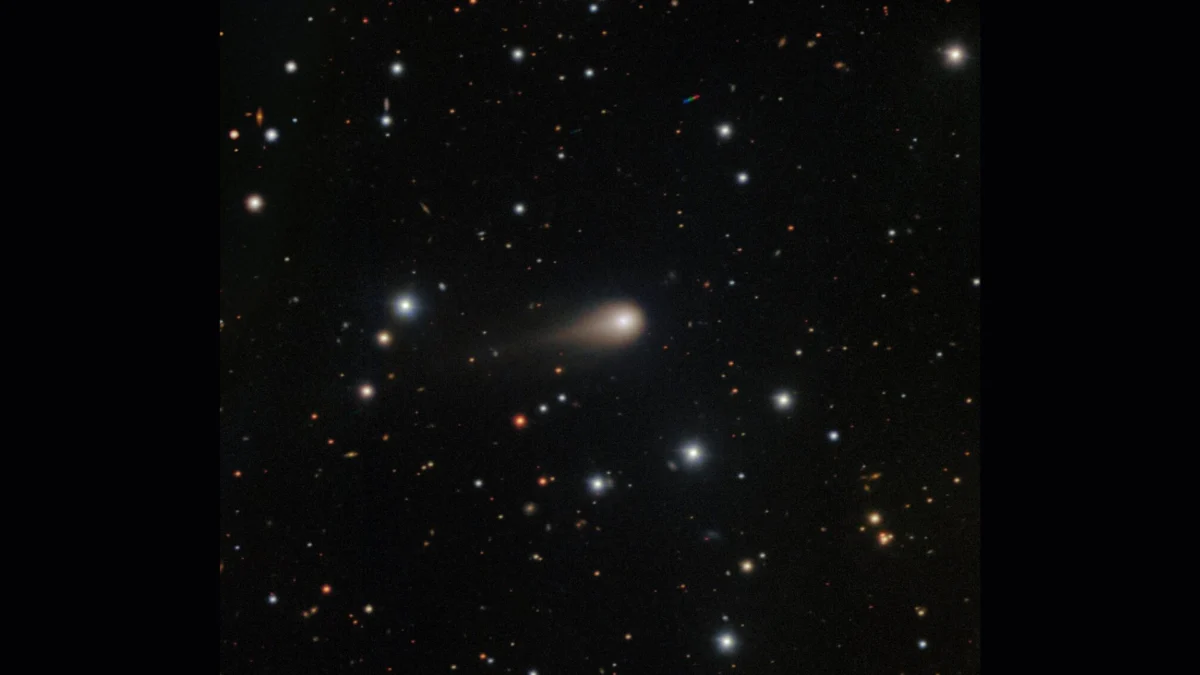
It has been just over one year since the scientific community first turned its collective gaze toward 3I/ATLAS, the third known interstellar visitor to traverse our solar system, and new data is finally beginning to peel back the layers of mystery surrounding its formation. Astronomers have recently achieved a major breakthrough in planetary science, successfully analyzing the chemical composition of charged particles within the comet’s tail. This feat, facilitated by advanced spectroscopic technology, has revealed that 3I/ATLAS possesses a distinct chemical signature—specifically, a high nitrogen content—that serves as a "fossil record" of the freezing, remote environment where the object originated.
A Rare Cosmic Visitor
Interstellar objects are rare, elusive, and highly coveted by astronomers. Unlike comets born within the gravitational influence of our own sun, 3I/ATLAS represents a literal piece of an alien star system. The ability to study such an object provides a unique "sample return" mission of sorts, without the need for an actual spacecraft to visit another solar system. By analyzing the light reflected and emitted by the comet, researchers can reconstruct its history, composition, and birth environment.
The discovery that 3I/ATLAS is enriched with nitrogen compared to the comets native to our own Oort Cloud or Kuiper Belt is more than just a chemical curiosity; it is a vital diagnostic tool. According to findings published on September 7 in the Monthly Notices of the Royal Astronomical Society, this high nitrogen-to-carbon-monoxide ratio strongly suggests that the comet coalesced in an extremely cold, dark region of its home system, likely far beyond the reach of its parent star’s warming radiation.
The Technological Leap: How WEAVE Changed the Game
The analysis was conducted by a research team led by Lea Ferellec, a research fellow at Northumbria University. The team utilized the William Herschel Telescope (WHT) located in the Canary Islands, specifically employing the cutting-edge WEAVE (WHT Enhanced Area Velocity Explorer) instrument.
Spectroscopy, the process by which light is dispersed into its component wavelengths, is the bread and butter of modern astrophysics. Every chemical element absorbs and emits light at specific, predictable frequencies, creating a unique "fingerprint." While past observations of interstellar objects—most notably 2I/Borisov in 2019—provided glimpses into their chemical makeup, they were often limited to the "coma," the hazy cloud of gas surrounding the nucleus.
The coma is created when solar heat sublimates ice into gas. However, the tail offers a different perspective. As a comet approaches the sun, it is subjected to the solar wind—a torrent of high-energy charged particles. This interaction ionizes the comet’s material, creating a tail of charged particles. By successfully isolating these ions within the tail, Ferellec’s team was able to identify precise quantities of nitrogen, carbon dioxide, and carbon monoxide. This is a significant improvement over the 2019 data from 2I/Borisov, where astronomers could confirm the presence of ions but lacked the resolution to identify them with such specificity.
Timeline of Discovery and Observation
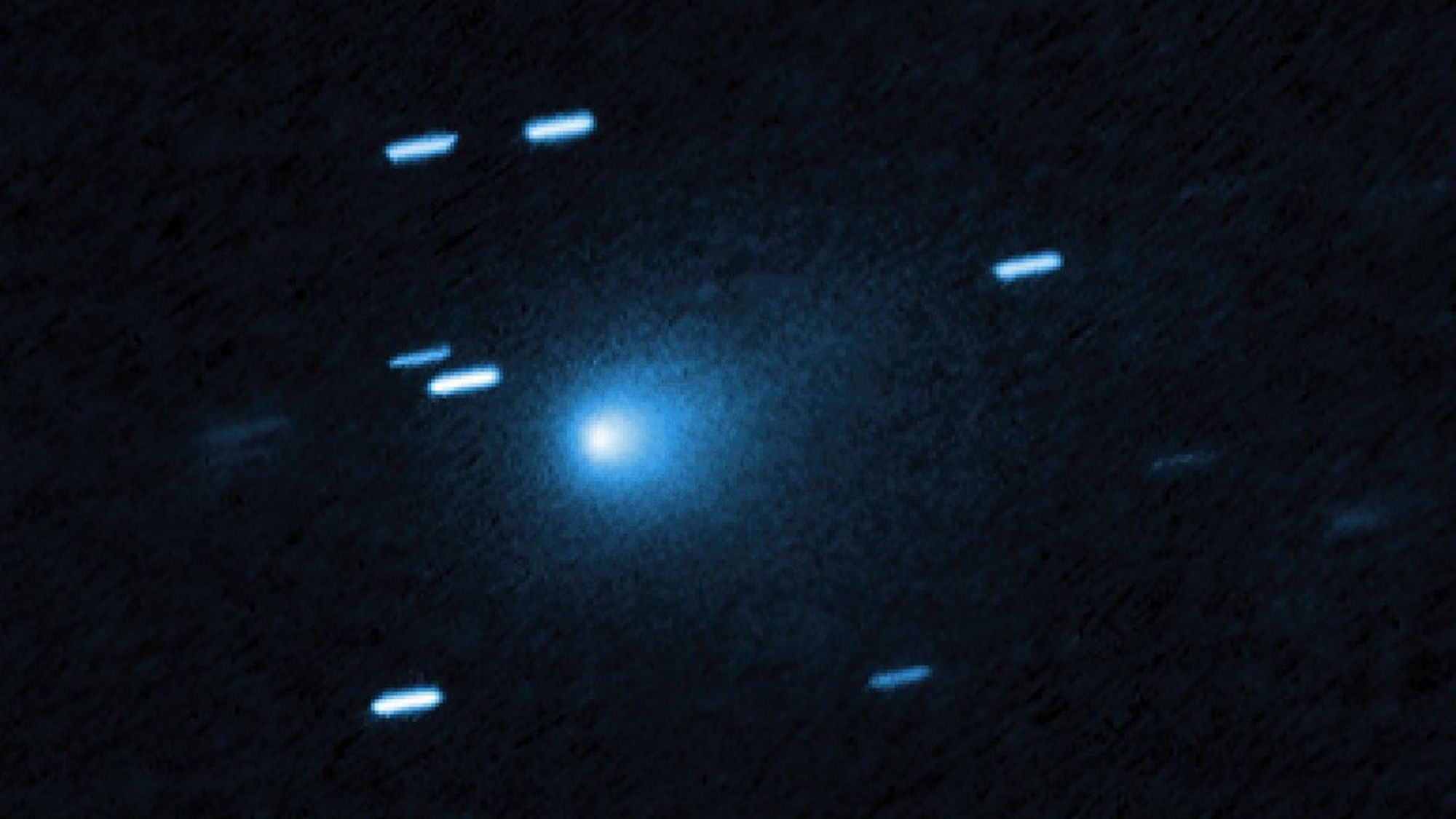
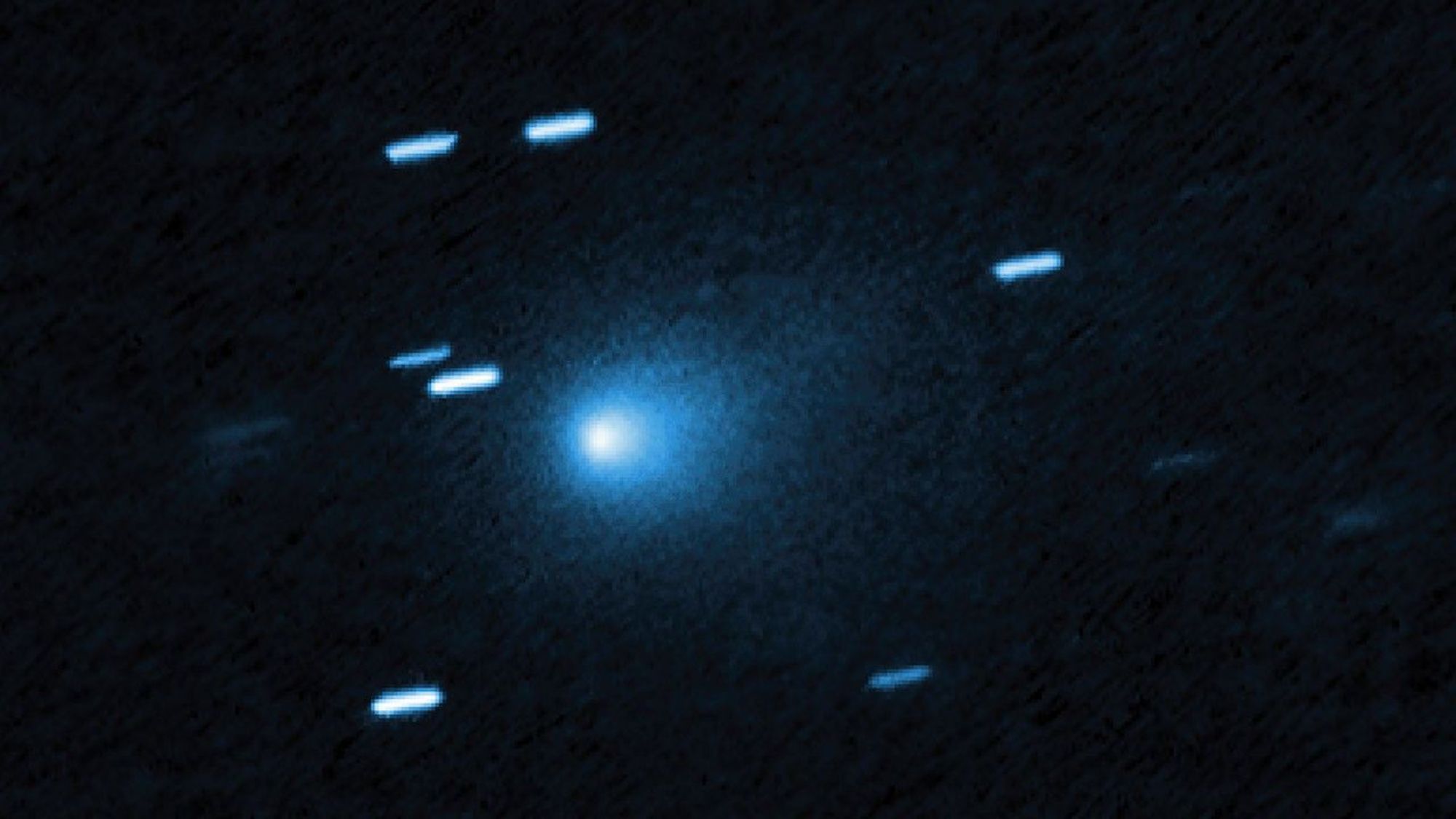
The trajectory of 3I/ATLAS has been a primary focus for planetary scientists since its detection. On July 21, 2025, when the comet was approximately 277 million miles from Earth, the Hubble Space Telescope captured detailed imagery of the object. These images revealed a teardrop-shaped cocoon of dust trailing the comet’s solid, icy nucleus, a visual confirmation of the intense outgassing occurring as the object traveled through our solar system.
The chronology of 3I/ATLAS highlights the rapid pace of modern astronomical response:
- Initial Detection: The object was identified as an interstellar visitor, marking only the third such occurrence in recorded history.
- July 2025: High-resolution imaging by the Hubble Space Telescope allowed for a structural assessment of the nucleus and dust cocoon.
- Late 2025: The research team utilized the WEAVE instrument at the William Herschel Telescope to perform high-precision spectroscopic analysis of the comet’s ion tail.
- September 2026: The formal publication of findings in the Monthly Notices of the Royal Astronomical Society provided the scientific consensus on the comet’s nitrogen-rich composition.
Implications for Planetary Formation
The conclusion that 3I/ATLAS likely formed at temperatures colder than -240°C provides a crucial constraint for models of planet formation. In our own solar system, the distribution of volatile materials like nitrogen and carbon monoxide is used to map the "snow line"—the distance from the sun where these materials can freeze into solid ice. If 3I/ATLAS is representative of its home system, it suggests that the "snow line" in that distant region was significantly different from our own, or that the object formed in the deep, frigid peripheries of its birth system where even the faintest starlight failed to provide significant heat.
"Finding that it’s so rich in nitrogen tells us it likely formed in extremely cold conditions, far from its home star," noted Ferellec in a press statement following the publication. The study serves as a proof-of-concept for how we might one day characterize the environments of exoplanets by studying the "debris" that they eject into interstellar space.
Broader Scientific Context
The study of 3I/ATLAS arrives at a time when the field of interstellar object research is maturing. Astronomers are moving past the "discovery phase" and into a "characterization phase." While the first known interstellar visitor, ‘Oumuamua, was a source of intense debate due to its unusual shape and lack of a visible tail, and 2I/Borisov confirmed the existence of icy, comet-like interstellar bodies, 3I/ATLAS is the first to yield such detailed chemical data.
This shift has significant implications for how we view our solar system’s place in the galaxy. If interstellar comets are common, it implies that the exchange of material between star systems is a constant, albeit subtle, phenomenon. The presence of nitrogen-rich building blocks in these objects could, in theory, contribute to the chemical evolution of the systems they pass through.
Furthermore, the successful use of the WEAVE instrument demonstrates the importance of next-generation ground-based telescopes. While space-based assets like Hubble and the James Webb Space Telescope capture the headlines, the versatility of large ground-based spectroscopic arrays remains the primary tool for detailed chemical analysis of transient objects.
Looking Toward the Future
As 3I/ATLAS continues its journey out of our solar system, it is leaving behind a wealth of data that will occupy researchers for years to come. The study, while focused on one specific object, provides a template for future observations. Every interstellar visitor is a messenger, carrying with it the chemical history of a distant, unseen world.
"This object gives us a rare chance to study material that formed somewhere completely different to our own solar system," Ferellec stated. "Every one of these objects we study helps us understand a little more about how planets form around other stars."
For the scientific community, the focus now shifts to preparing for the next visitor. With better, more sensitive telescopes coming online, the threshold for detection is lowering, and the ability to distinguish between interstellar objects and local comets is becoming increasingly refined. Whether 3I/ATLAS is a typical example of an interstellar comet or a statistical outlier remains to be seen, but for now, it stands as the most detailed window we have into the chemistry of the deep, interstellar void. By decoding the light from its tail, humanity has added another chapter to the story of how our own planetary home came to be, framed by the cold, distant realities of the cosmos at large.








Leave a Reply