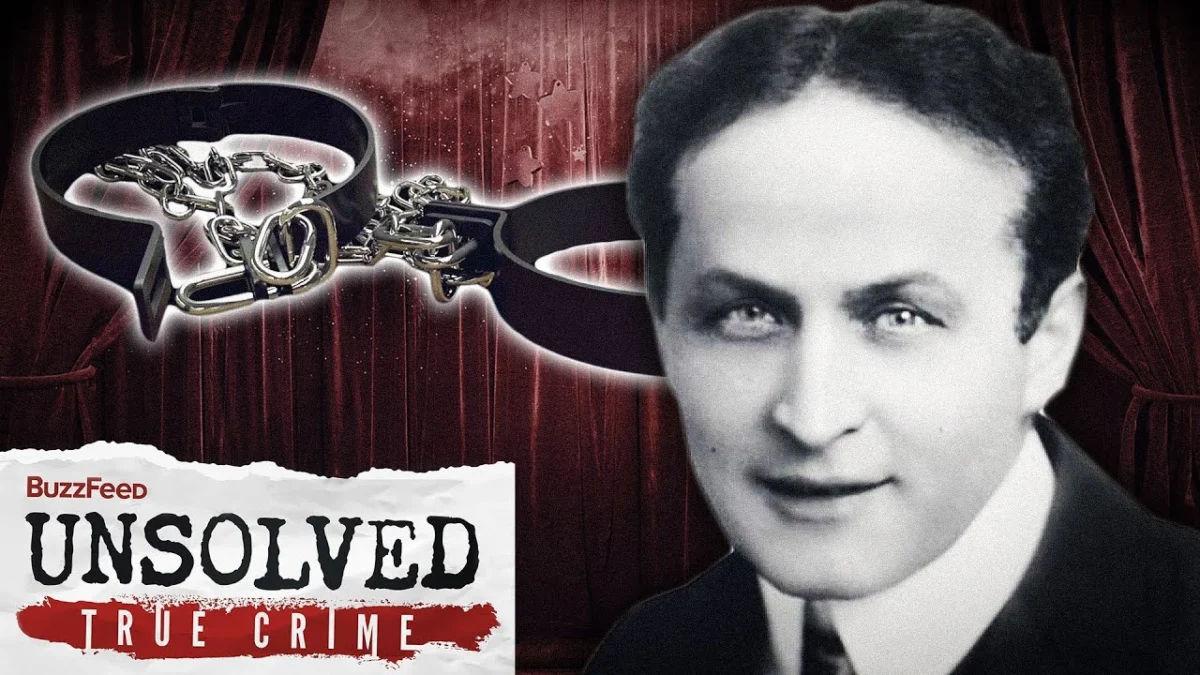
This Halloween marks the solemn centenary of the passing of Erich Weisz, globally renowned as Harry Houdini, the master illusionist and escapologist who captured the imagination of millions during the early twentieth century. For nearly a hundred years, public memory has been dominated by a singular, dramatic narrative regarding his demise: that the legendary performer, famed for his ability to withstand seemingly impossible physical constraints, was felled by an unexpected sucker punch to the abdomen delivered by an amateur collegiate boxer. However, meticulous modern historical and medical investigation has begun to dismantle this enduring myth, suggesting a far more mundane yet medically complex reality behind the death of history’s greatest showman.
The Genesis of a Myth: The Punch Heard Round the World
The traditional account of Houdini’s death places its origin in Montreal, Canada, during the autumn of 1926. According to the widely circulated folklore, Houdini was resting on a couch in his dressing room at the Princess Theatre, recovering from an ankle fracture sustained while performing his signature Chinese Water Torture Cell routine. A young McGill University student and amateur boxer named J. Gordon Whitehead, accompanied by a few acquaintances, visited the famous magician. Knowing Houdini’s public claim that he could withstand powerful blows to the abdomen due to his exceptional core conditioning, Whitehead allegedly asked if the claim was true.
Before Houdini could properly brace himself—supposedly still reclining and unprepared—Whitehead delivered a series of sharp, unexpected punches to the magician’s stomach. Houdini winced in pain, yet proceeded with his rigorous tour schedule over the subsequent days, performing in multiple cities despite escalating abdominal agony and a rapidly worsening fever. By the time he collapsed following a performance in Detroit, Michigan, on October 24, 1926, his condition was critical. He was rushed to Grace Hospital, where physicians diagnosed acute appendicitis complicated by peritonitis. Despite emergency surgical interventions, Houdini succumbed to the infection days later.
This dramatic tale of a physical titan brought down by a moment of hubris and a rogue blow provided a theatrical symmetry that fascinated the public. It reinforced the illusion that Houdini’s body was an instrument of absolute control—until a single, careless intrusion broke the spell.
A Medical Re-Examination and the Archival Paper Trail
Despite its deep entrenchment in popular culture, the traditional diagnosis of a punch-ruptured appendix has long troubled medical professionals, who note that blunt trauma rarely causes appendicitis. The most thorough challenge to this century-old consensus has been spearheaded by Larrian Gillespie, a retired urological surgeon and author of Houdini: The Man Who Died Twice.
Gillespie’s investigation began with a critical examination of primary source documentation, specifically Houdini’s official death certificate and hospital records. What she uncovered was not merely a medical misdiagnosis, but a tangled web of inconsistencies and apparent cover-ups involving more than a dozen individuals close to the magician, including family members and business associates.
According to Gillespie’s forensic historical reconstruction, the physical trauma inflicted by Whitehead played no pathological role in Houdini’s death. Instead, the primary catalyst was an acute bowel obstruction. On October 28, shortly before his collapse, Houdini consumed a meal that included a fibrous mass of chop suey—a popular American-Chinese dish of the era. For a man already suffering from underlying gastrointestinal distress, the dense, fibrous meal triggered a severe intestinal blockage.
Gillespie’s research indicates that the acute obstruction rapidly escalated into ischemia, tissue necrosis, and ultimately septic shock. Hospital records from Grace Hospital outline a harrowing decline: Houdini’s fever spiked to 105 degrees Fahrenheit, and the resulting respiratory distress induced violent muscle spasms and a loss of consciousness. Emergency exploratory surgeries were performed on October 25 and October 27, but the interventions came too late to arrest the systemic infection.
The Manipulation of Time: Fixing the Date for History
One of the most startling revelations uncovered in Gillespie’s archival research pertains to a coordinated effort to alter the official record of Houdini’s death. While medical charts and contemporary accounts point toward an expiration on October 30, 1926, the official death certificate reflects a passing on October 31—Halloween.
Gillespie’s analysis of the paper trail suggests that members of Houdini’s inner circle, including his grieving widow, Bess Houdini, actively participated in a conspiracy to adjust the official date of death. By legally anchoring his demise to Halloween, the date was permanently fused with the theatrical persona of the master illusionist. This temporal shift served multiple purposes: it amplified the mythic resonance of his passing, cemented his legacy within the cultural zeitgeist surrounding the supernatural and the macabre, and—more pragmatically—secured financial interests.
Furthermore, Gillespie points out that the absence of a comprehensive, modern autopsy allowed potential medical malpractice to remain unexamined. In an era before strict malpractice litigation standards, obscuring the precise chain of medical events protected the attending physicians from scrutiny and allowed Bess Houdini to successfully collect a lucrative double-indemnity insurance payout designated for accidental deaths. Had the insurance companies investigated the death as a natural consequence of dietary blockage and subsequent surgical complications, the payout terms might have faced significant legal hurdles.
Broader Implications and Cultural Resonance
The deconstruction of the Houdini death narrative offers a fascinating case study in how biographical myth-making frequently eclipses historical reality. For a century, the legend of the sucker punch served as a convenient metaphor: a man who could effortlessly elude handcuffs, straitjackets, and iron cages was ultimately vulnerable to the unpredictable chaos of human interaction.
The revised medical consensus—pointing toward a lethal combination of a bowel obstruction induced by fibrous food, delayed medical intervention, and subsequent septic shock—strips away the theatrical poetry of the event, replacing it with biological reality. Yet, the irony remains profound. The escapologist who routinely triumphed over mortal peril in Chinese water torture cells and locked underwater crates ultimately met his match not in an engineered marvel of steel and water, but in a plate of early-20th-century American-Chinese cuisine.
As historians, medical professionals, and enthusiasts re-evaluate the legacy of Harry Houdini on this centenary, the true nature of his death underscores the persistent human desire to shape narrative over truth. Even as modern research corrects the medical record, the cultural gravitational pull of Halloween ensures that the myth of Houdini’s final, tragic escape will continue to captivate public imagination for generations to come.