The linguistic landscape of Europe is a complex tapestry of ancient tribal identities, Roman imperial legacies, and the shifting borders of the medieval and modern eras. For the contemporary traveler navigating the continent, the discrepancy between what a nation calls itself—its endonym—and what it is called in English—its exonym—can be a source of profound curiosity. While a tourist may board a train in Austria, the signs at the station will read Österreich; a journey to Switzerland reveals a nation that identifies as Schweiz, Suisse, Svizzera, or Svizra depending on the local canton. The etymological roots of these names are rarely accidental; they are historical artifacts that reveal the migrations, conquests, and cultural evolutions that have shaped the Western world.
The Germanic Conundrum: From Germani to Deutschland
Perhaps no country illustrates the complexity of European toponymy more vividly than Germany. To English speakers, the name "Germany" is derived from the Latin Germania, a term popularized by Julius Caesar and later Tacitus. The Romans used Germani to describe the various tribes living east of the Rhine. Interestingly, the etymology of Germani itself remains a subject of academic debate among linguists. Some scholars suggest it may have been a Celtic term meaning "neighbor" or "noisy," used by Gauls to describe the tribes across the river, which the Romans then adopted as a catch-all designation for a people who did not yet see themselves as a single entity.
In contrast, the German endonym Deutschland stems from the Old High German word diutisc, which translates to "of the people" or "popular." During the early Middle Ages, this term was used to distinguish the vernacular languages of the common people from the Latin used by the clergy and the ruling elite. Over centuries, "the land of the people" became the formal designation for the unified nation.
Furthermore, the French name for Germany, Allemagne, and the Spanish Alemania, derive from a specific tribal confederation known as the Alemanni. This group occupied the territory adjacent to the Roman frontier in what is now southwestern Germany and Switzerland. This linguistic divergence highlights a common pattern in European naming conventions: a nation is often named by its neighbors based on the specific tribe with which they first came into contact.
The British Isles: A Study in Tribal Toponymy
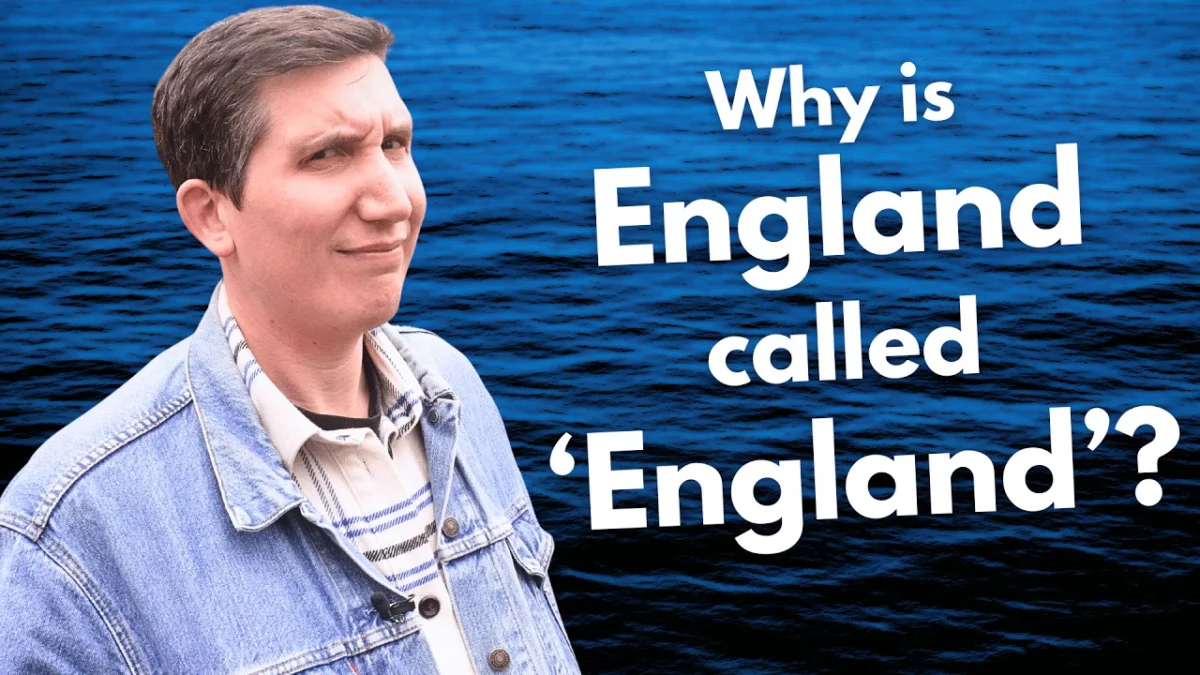
The nomenclature of the United Kingdom and its constituent nations provides a chronological map of the British Isles’ turbulent history. The name "England" finds its origins in the 5th and 6th centuries with the arrival of the Angles, a Germanic tribe from the Jutland peninsula. The region became known in Old English as Englaland, literally "the land of the Angles."
Scotland’s name follows a similar tribal logic but involves a migration from the west. The Scoti were a Gaelic-speaking people from Ireland who established the kingdom of Dál Riata in what is now western Scotland. By the 11th century, the name Scotia had superseded earlier Pictish designations.
The etymology of "Wales" reveals a perspective of "otherness." The word is derived from the Proto-Germanic Walhaz, meaning "foreigner" or "stranger." It was the term used by the invading Anglo-Saxons to describe the Romanized Celtic inhabitants of the island. Paradoxically, the Welsh endonym, Cymru, means "compatriots" or "fellow-countrymen," illustrating a stark divide between internal identity and external labeling.
The term "Britain" itself predates the Germanic invasions. It is derived from the Greek Prettanikē and the Latin Britannia, likely originating from a Celtic word meaning "the painted ones," a reference to the indigenous inhabitants’ practice of using blue woad for body art. The prefix "Great" in Great Britain is not a modern boast of national superiority but a geographical distinction dating back to the 12th century. It was used to differentiate the larger island of Britain from "Little Britain," or Britannia Minor, the region in modern-day France now known as Brittany.
The Low Countries and the Struggle for Sovereignty
The naming of Belgium and the Netherlands offers insight into the geopolitical shifts of the 16th and 19th centuries. The name "Belgium" is a conscious revival of the Latin Belgae, a confederation of tribes described by Caesar as the bravest of the Gauls. When the southern provinces of the Low Countries sought independence from the United Kingdom of the Netherlands in 1830, they looked to this classical past to establish a distinct national identity.
The Netherlands, conversely, is a descriptive name. Meaning "the Low Lands," it refers to the region’s topography, much of which lies at or below sea level. The people of the Netherlands are referred to in English as "Dutch," a term that shares the same etymological root as Deutsch. In the early modern period, "Dutch" was a generic English term for any Germanic speaker from the continent. Over time, as England’s maritime and commercial rivalry with the United Provinces grew, the term became specifically associated with the inhabitants of the Netherlands, while "German" was reserved for those further inland.
Central and Southern Europe: Empire and Geography
The names of Central and Southern European nations often reflect either geographic features or the legacy of the Roman Empire. "Italy" (Italia) is believed to have originated from the Oscan word Víteliú, meaning "land of young cattle." Originally applied only to the southern tip of the peninsula, the name was expanded under Roman rule to encompass the entire geographic region.
"Austria" is a Latinization of the Old High German Ostarrîchi, meaning "the eastern realm." This name appeared in the 10th century to describe the eastern march of the Holy Roman Empire. Similarly, "Czechia" or the "Czech Republic" is derived from the West Slavic tribe of the Češi. The recent diplomatic push to adopt "Czechia" as the official short-form name in English is part of a broader effort to provide a more concise alternative to the political designation "the Czech Republic," mirroring how "France" is used instead of "the French Republic."
Switzerland’s formal Latin name, Confederatio Helvetica, which appears on its coins and stamps, honors the Helvetii, a Celtic tribe that inhabited the Swiss plateau before the Roman conquest. This use of Latin serves a practical purpose in a nation with four official languages, providing a neutral, unifying identity that transcends linguistic divides.
Categorizing National Origins: A Data-Driven Perspective
When analyzing the etymological origins of European country names, several distinct categories emerge:
- Ethnonyms (Tribal Names): This is the most common category, including France (the Franks), Hungary (the Onogurs/Magyars), and Bulgaria (the Bulgars).
- Topographical/Descriptive Names: Iceland (land of ice), Montenegro (black mountain), and the Netherlands (low lands).
- Directional Names: Norway (the way north) and Austria (the eastern realm).
- Foundational/Legendary Names: Rome (and by extension Romania) is traditionally tied to the legend of Romulus, though linguists suggest it may derive from an Etruscan word for "river."
Implications and Modern Geopolitics
The study of toponymy is more than an academic exercise; it has significant implications for modern diplomacy and national pride. The names of countries are often tied to the legitimacy of the state and its historical continuity. When a country changes its name—such as the recent transition from Turkey to Türkiye or the Republic of Macedonia to North Macedonia—it is frequently a move to assert sovereignty, honor indigenous phonetics, or resolve long-standing international disputes.
The persistence of exonyms in the English language highlights the historical dominance of certain cultural perspectives. While the English "Germany" ignores the German "Deutschland," it preserves a Roman perspective that has lasted for two millennia. This linguistic inertia suggests that while borders and governments may change, the names we give to "the other" are deeply embedded in the collective memory of the language.
As Europe continues to integrate through institutions like the European Union while simultaneously experiencing a resurgence in regional identities, the names of its countries serve as a reminder of the continent’s diverse origins. Understanding these names provides a window into a past where tribes migrated across uncharted forests, where Roman legions carved out provinces, and where medieval scholars sought to define the "popular" voice of the people. In every syllable of a nation’s name lies the echo of a thousand years of history.