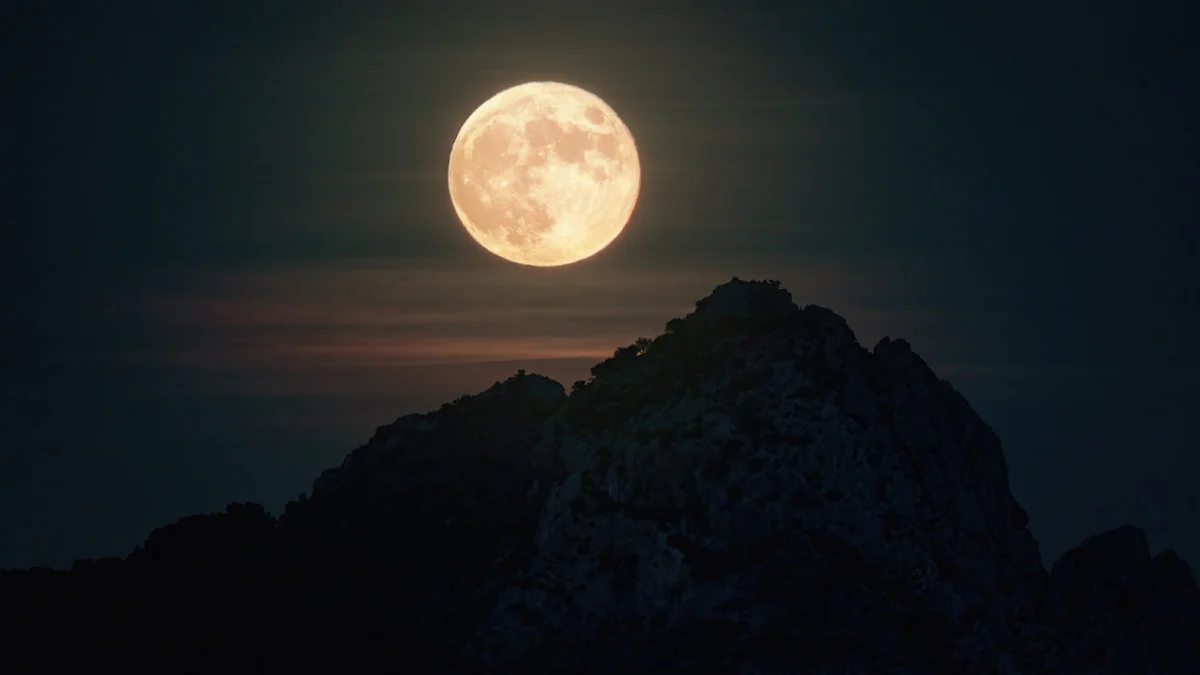
Skywatchers across the globe are preparing their telescopes and cameras for one of the most anticipated lunar events of the autumn season: the arrival of October’s full Hunter’s Moon. Offering an exceptional visual spectacle, the celestial event will peak in illumination early Monday morning, but it will grant observers two distinct, consecutive evenings to witness its brilliant ascent along the eastern horizon just as the sun sets.
According to astronomical calculations, the moon will officially reach its full phase at 12:11 a.m. EDT on Monday, October 26. However, because the human eye cannot easily distinguish a fractional drop in illumination on the evenings immediately preceding and following the absolute peak, the lunar orb will appear full, radiant, and remarkably large to casual observers on both Sunday, October 25, and Monday, October 26. This double-night window provides an ideal opportunity for amateur astronomers, astrophotographers, and casual stargazers alike to take in the breathtaking views without needing to stay up until the exact moment of peak fullness in the dead of night.
Understanding the Hunter’s Moon: Background and Lore
To fully appreciate the significance of the Hunter’s Moon, one must look both to historical traditions and orbital mechanics. Traditionally, the names assigned to full moons originate from a blend of Native American, Colonial American, and European folklore, reflecting the changing behaviors of nature, agriculture, and wildlife throughout the year.
The Hunter’s Moon immediately follows the Harvest Moon, which is defined as the full moon that falls closest to the autumnal equinox, typically occurring in September. While the Harvest Moon aids farmers working late into the night by providing bright moonlight to gather their crops, the Hunter’s Moon marks the next phase of the seasonal transition. Historically, as fields were cleared of crops during the harvest, hunters could easily spot deer, foxes, and other animals that ventured out into the open stubble fields to forage. Consequently, Indigenous tribes and early European settlers relied on the bright, prolonged moonlight of October to hunt and stockpile meat ahead of the harsh winter months.
In addition to its cultural heritage, the Hunter’s Moon holds a unique place in observational astronomy due to the geometry of the Earth-Moon-Sun system during the autumn months.
The Science Behind the Rise: Why Autumn Moons Seem Special
Throughout most of the year, the moon rises an average of roughly 50 minutes later each day as it orbits our planet. However, around the time of the autumnal equinox in the Northern Hemisphere, that daily delay is significantly shortened.
At this time of year, the angle of the moon’s orbit is nearly parallel to the eastern horizon of the Earth. As a result, for several consecutive evenings around the full moon, the moon rises much more quickly than usual—often delaying by only 20 to 30 minutes depending on the observer’s latitude. This phenomenon creates the illusion of consecutive nights featuring early, glowing moonrises, effectively extending the hours of evening twilight and bathing the landscape in amber light.
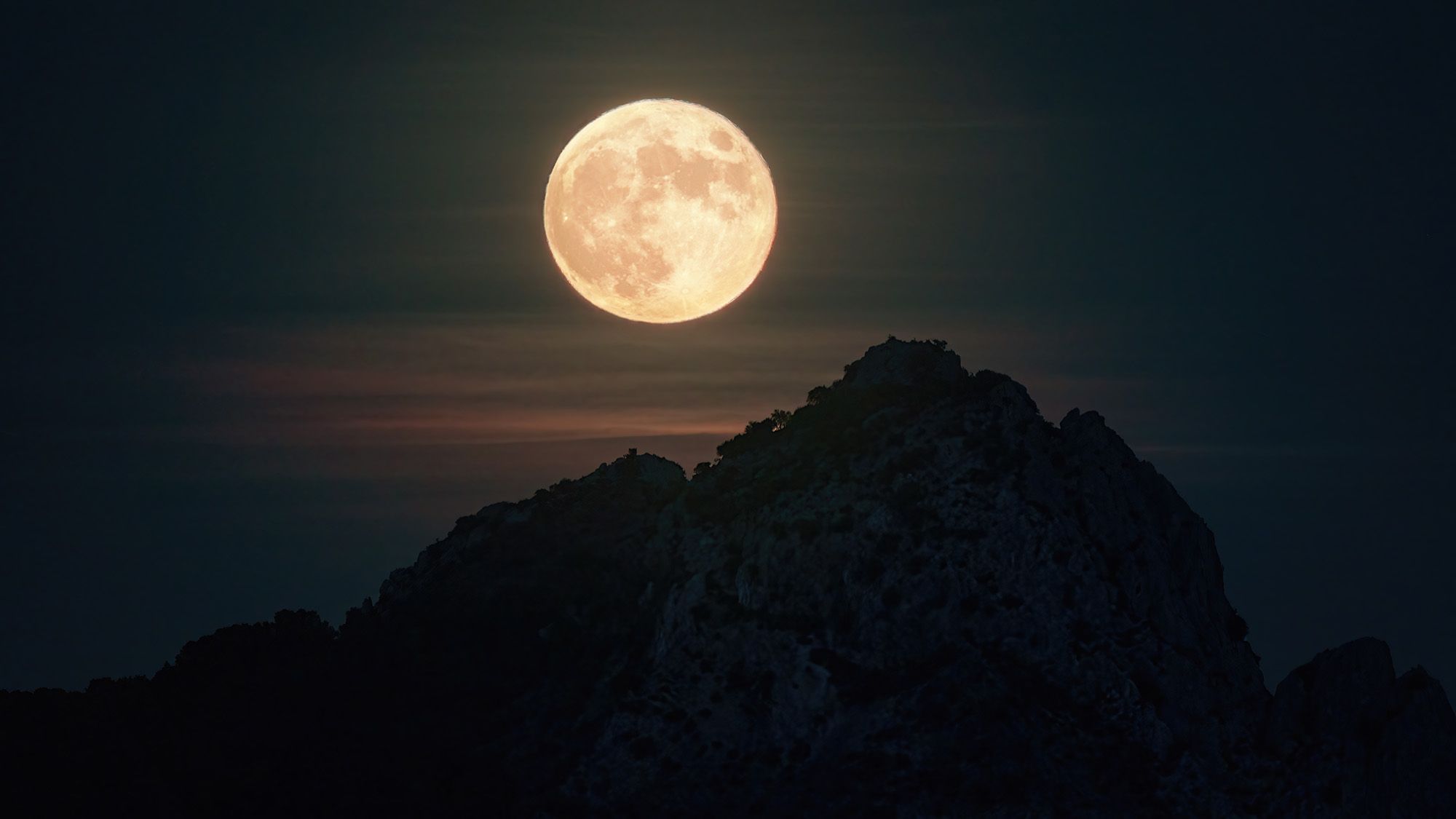
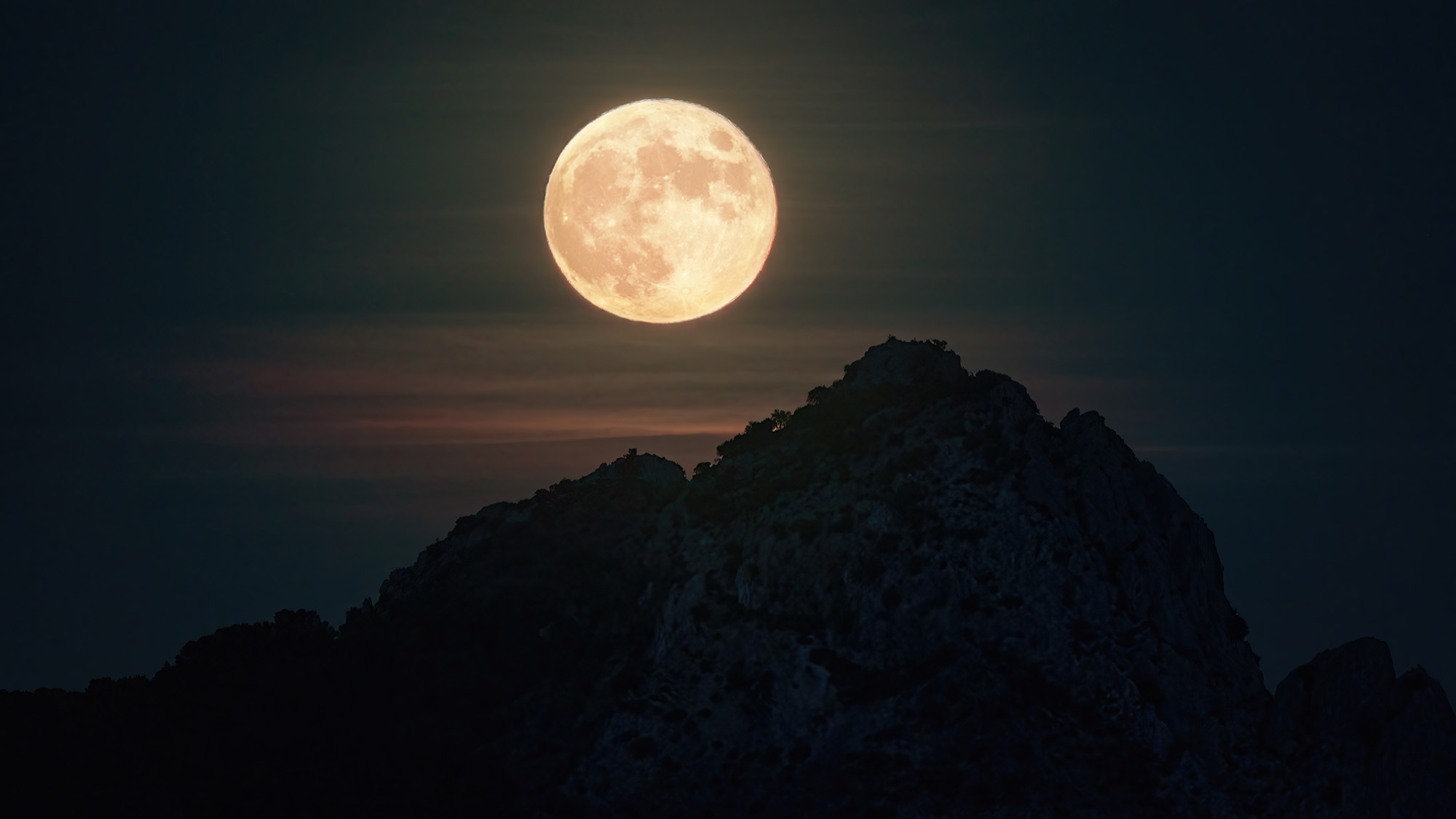
Furthermore, when the Hunter’s Moon first breaches the horizon, it often appears unusually large and takes on a deep golden, orange, or reddish hue. This is entirely an optical illusion known as the "Moon Illusion," combined with atmospheric scattering. When the moon is low in the sky, its light must pass through a much thicker layer of Earth’s atmosphere than when it is directly overhead. The dense atmosphere scatters shorter wavelengths of light, such as blue and violet, while allowing longer red and yellow wavelengths to pass through to the observer’s eyes. Combined with foreground objects like trees, mountains, or buildings for scale, the low-hanging moon frequently delivers a striking aesthetic impact.
Chronology of the Event
For those planning to observe or photograph the October Hunter’s Moon, establishing a clear timeline of the event helps ensure optimal viewing conditions:
- Sunday, October 25 (First Prime Viewing Evening): As the sun begins to set in the west, skywatchers should turn their attention toward the opposite horizon in the east. The moon will rise shortly after sunset, appearing nearly 100% illuminated. This evening offers the best twilight conditions for combining landscape photography with the rising moon.
- Monday, October 26 at 12:11 a.m. EDT (Official Peak): The moon reaches exact 180-degree opposition to the sun from an Earth-centric viewpoint, marking the precise astronomical moment of the full moon. For observers in North America, this occurs during the early morning hours, while those further east across the Atlantic experience the peak later in their respective mornings.
- Monday, October 26 (Second Prime Viewing Evening): As dusk falls on Monday, the moon will rise once again from the eastern horizon. Although technically past its exact peak phase, the average observer will perceive no discernible difference in its roundness or brilliance, offering a second chance for those who missed Sunday’s display due to weather or scheduling conflicts.
Astrophotography and Observation Tips
Capturing the Hunter’s Moon does not necessarily require high-end professional equipment, though preparation enhances the experience significantly. Experts recommend heading outdoors roughly 15 to 30 minutes before local sunset to scout a location with an unobstructed view of the eastern horizon.
For smartphone users, modern devices often feature dedicated night-mode capabilities, but tapping the screen to manually lower the exposure can prevent the bright lunar disk from washing out into a featureless white blur. Those utilizing DSLR or mirrorless cameras should consider using a telephoto lens to compress the foreground and make the moon appear larger relative to distant landmarks, such as city skylines, bridges, or natural mountain peaks.
Binoculars are also an exceptional tool for casual observers. While the naked eye provides a wonderful panoramic view of the moon rising against the deepening twilight colors, a simple pair of 7×50 or 10×50 binoculars will reveal the vast lunar maria (dark volcanic plains), prominent impact craters like Tycho and Copernicus, and the rugged highland terrain along the terminator line.
Broader Impact and Public Engagement
Celestial events of this magnitude consistently drive public engagement with science and astronomy. Planetariums, local astronomy clubs, and online observatories frequently host virtual streams or community stargazing nights to coincide with major full moons like the Hunter’s Moon.
Science educators emphasize that events acting as accessible entry points for the public play a crucial role in fostering broader scientific literacy. Unlike rare total solar eclipses or transient meteor showers, full moons are democratic celestial phenomena that can be enjoyed by anyone simply by stepping outside, regardless of light pollution levels in urban environments or ownership of specialized equipment.
As communities across the Northern Hemisphere look toward the closing months of the year, the 2026 Hunter’s Moon serves as a brilliant reminder of the rhythmic clockwork of our solar system. Whether viewed as a historical marker for changing seasons, an aesthetic marvel of autumn twilight, or an engaging subject for amateur science enthusiasts, this weekend’s double-rise event promises to deliver a memorable spectacle for all who gaze upward.