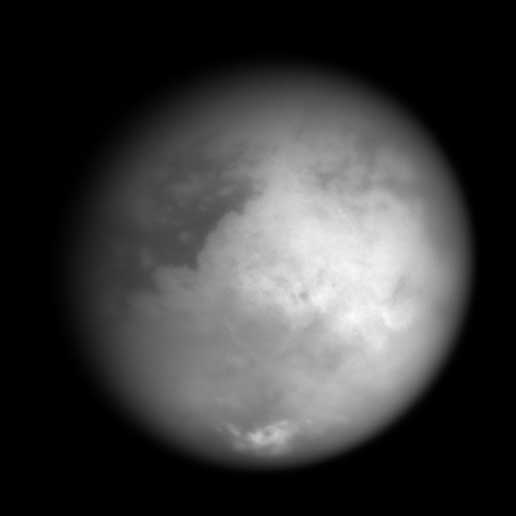
On October 26, 2004, the NASA-led Cassini spacecraft executed a pivotal maneuver in the Saturnian system, descending to a mere 1,200 kilometers (745 miles) above the surface of Titan, Saturn’s largest moon. This event marked the first time humanity had captured high-resolution, close-up imagery of a world long shrouded in mystery by its thick, orange, hydrocarbon-rich atmosphere. The data retrieved during this encounter fundamentally altered our understanding of planetary science, confirming that Titan was not merely a frozen ball of rock, but a complex, geologically active world with potential parallels to a primordial Earth.
A Mission of Unprecedented Scale
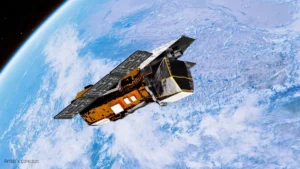
The Cassini-Huygens mission, a collaborative endeavor between NASA, the European Space Agency (ESA), and the Italian Space Agency (ASI), remains one of the most ambitious robotic exploration projects in history. Launched in October 1997, the spacecraft spent seven years traversing the solar system before entering orbit around Saturn in July 2004.
While the mission’s primary objective was the study of Saturn and its rings, Titan—the second-largest moon in the solar system—was the primary target for specialized investigation. Scientists had long been intrigued by Titan due to its unique nitrogen-rich atmosphere, which is denser than Earth’s. However, because of the moon’s perpetual cloud cover, the surface remained entirely invisible to ground-based telescopes and even the earlier Voyager flybys. Cassini was specifically engineered with radar and infrared imaging capabilities to "see through" the smog, turning the October 26 flyby into the first true unveiling of the moon’s surface.
Chronology of the 2004 Encounter
The October 26 event was not the spacecraft’s first brush with Titan, but it was the most significant. Cassini had performed a preliminary, more distant flyby on July 3, 2004, passing within 365,000 kilometers (227,000 miles) of the moon. This earlier pass served as a calibration exercise for the orbiter’s sophisticated suite of instruments.
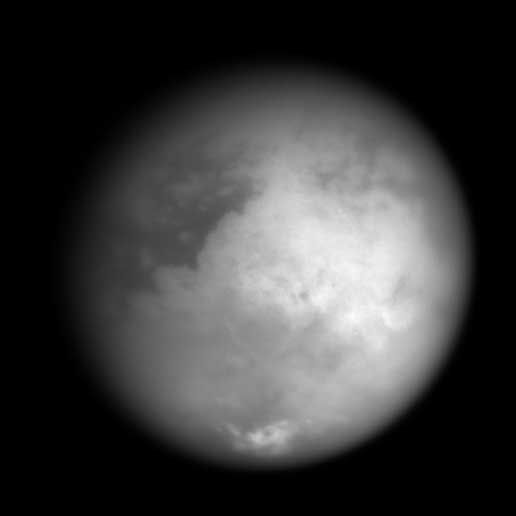
By contrast, the October 26 flyby was 300 times closer, providing the first opportunity for the Imaging Science Subsystem (ISS) and the Visual and Infrared Mapping Spectrometer (VIMS) to capture detailed surface features. During this critical window, the spacecraft functioned as a high-speed camera, snapping hundreds of images in rapid succession. As Cassini barreled through the Saturnian system, it acted as a relay station, capturing the data that would be used to guide the eventual descent of the Huygens probe, which was securely attached to the orbiter’s frame.
Scientific Data and Surface Discoveries
The images returned from the October 26 flyby stunned the planetary science community. Rather than a uniform, featureless landscape, the radar and optical data revealed a world of stark, complex geography. Scientists identified a massive, continent-sized region they dubbed "Xanadu." This feature, bright in radar imagery, appeared to contain complex mountain ranges, potential riverbeds, and vast, smooth plains.
Supporting data collected by the VIMS instrument indicated that these regions were composed of a mixture of water ice and complex organic compounds. The presence of these hydrocarbons, combined with evidence of geologic activity, suggested that Titan possessed a dynamic environment where methane and ethane might cycle through a process similar to the water cycle on Earth. This confirmed long-standing hypotheses that Titan was a laboratory for prebiotic chemistry, providing a window into the conditions that may have existed on our own planet billions of years ago.
The Role of the Huygens Probe
The success of the October 26 flyby was essential for the mission’s next major milestone: the delivery of the European Huygens probe. By analyzing the atmospheric density and wind patterns detected during the flyby, mission planners were able to refine the landing parameters for the probe.
The Huygens probe eventually detached from Cassini on December 25, 2004, and successfully touched down on the surface of Titan on January 14, 2005. The data from the October flyby ensured that the probe could safely navigate the atmospheric haze, ultimately providing the first in-situ images of the moon’s surface, which revealed icy "pebbles" and evidence of past liquid flow. The synergy between the orbiting Cassini and the landed Huygens probe remains a gold standard for international cooperation in space exploration.
Official Responses and Academic Impact
At the time of the data release, officials from NASA’s Jet Propulsion Laboratory (JPL) lauded the mission as a triumph of engineering. Dr. Carolyn Porco, who led the Cassini imaging team, noted that the images were "a revelation," noting that the complexity of the landscape exceeded all pre-mission modeling. The scientific community responded with a flurry of peer-reviewed publications, many of which still cite the October 2004 data as the baseline for all subsequent Titan research.
The implications were profound: if Titan possessed a methane-based hydrologic cycle, it meant that the moon was not a static object but a living, changing geological environment. This shifted the focus of astrobiology; Titan was no longer just a moon to be mapped, but a candidate for understanding the chemical foundations of life.
Broader Implications for Planetary Exploration
The 13-year tenure of the Cassini mission, which concluded with a "Grand Finale" plunge into Saturn’s atmosphere in 2017, saw a total of 127 targeted flybys of Titan. Each flyby built upon the foundation laid by that first close encounter in 2004. These missions revealed that Titan hosted seasonal weather, vast lakes of liquid hydrocarbons at its poles, and a subsurface ocean of liquid water, potentially sheltered beneath an icy crust.
The legacy of the October 26, 2004, flyby is found in the current generation of mission planning. NASA’s Dragonfly mission, a rotorcraft lander scheduled to launch later this decade, is the direct intellectual successor to the work started by Cassini. By utilizing the mapping data and atmospheric profiles pioneered by the 2004 encounter, Dragonfly aims to land on Titan and conduct mobile surface exploration, searching for the very chemical precursors that were first identified in the blurry, yet groundbreaking, images captured two decades ago.
Conclusion: A Legacy in Orbit
The October 26, 2004, flyby of Titan stands as a watershed moment in the history of space exploration. It transformed our view of the outer solar system, proving that the moons of gas giants are diverse, geologically complex, and profoundly interesting. As researchers continue to analyze the terabytes of data stored in the Planetary Data System from the Cassini era, the impact of those first few hours of close-up observation remains clear. Cassini did not just take pictures; it opened a door to a new world, setting a precedent for how humanity investigates the far reaches of the solar system. The mission serves as a reminder that with persistent effort and international collaboration, the most obscured corners of our cosmic neighborhood can be brought into sharp, scientific focus.