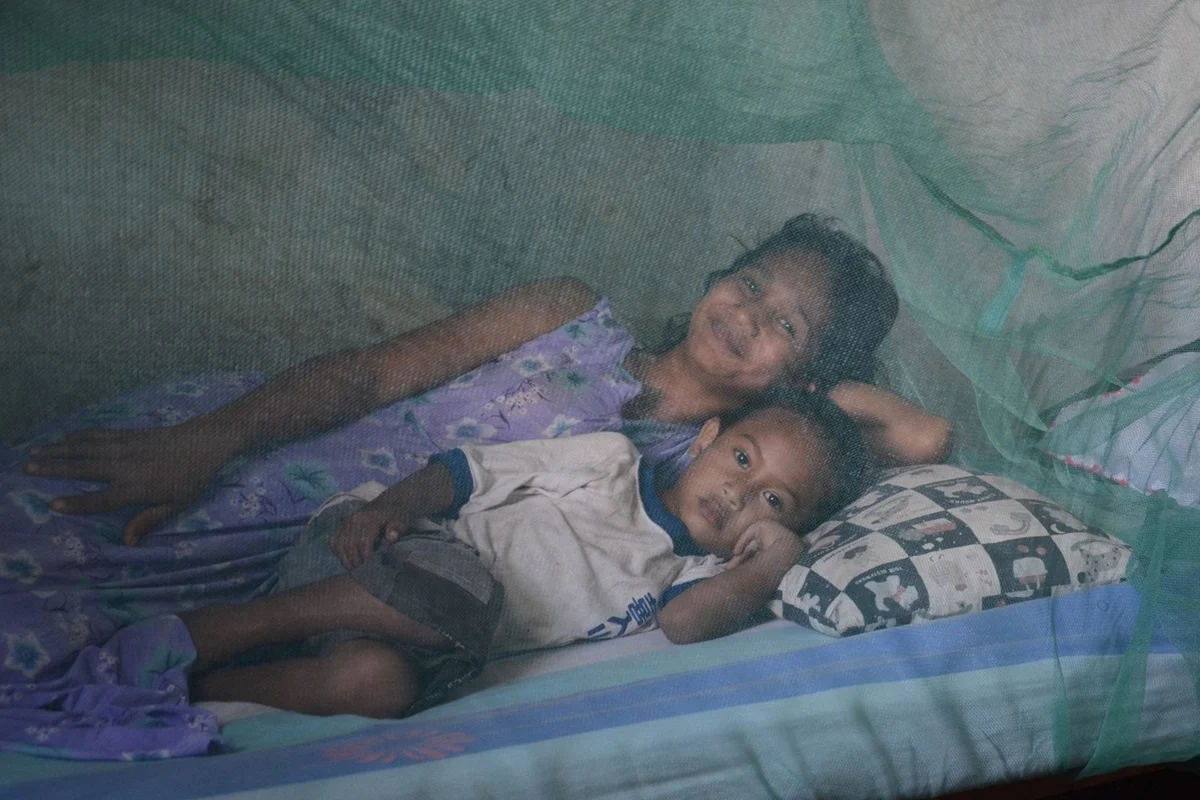
The World Health Organization has officially certified Timor-Leste as a malaria-free nation, marking a monumental public health victory for the young Southeast Asian democracy. This milestone comes after decades of relentless national effort, strategic deployment of healthcare resources, and unwavering political commitment following the country’s independence in 2002. By driving down clinically diagnosed cases from a staggering peak of more than 223,000 in 2006 to zero indigenous cases from 2021 onward, Timor-Leste has demonstrated that even nations facing severe infrastructure and resource constraints can eradicate a persistent vector-borne disease through targeted action.
With this certification, Timor-Leste joins an elite global cohort. A total of 47 countries and 1 territory have now been formally recognized by the WHO as malaria-free. Within the WHO South-East Asia region, Timor-Leste stands as only the third country to achieve this distinction, following the Maldives and Sri Lanka, which earned their malaria-free certifications in 2015 and 2016, respectively. The official validation from Geneva underscores the nation’s capacity to build resilient healthcare systems from the ground up, turning a devastating public health crisis into a blueprint for international disease elimination.
Understanding the Scale of the Achievement
To fully appreciate Timor-Leste’s success, one must examine the baseline challenges the country inherited at the turn of the century. Emerging from decades of conflict and political instability upon gaining formal independence in 2002, the nation faced an extraordinarily high burden of communicable diseases. Malaria, transmitted primarily by female Anopheles mosquitoes, was a pervasive and deadly threat, quietly stalling socioeconomic development and overwhelming nascent medical facilities.
In the early 2000s, hundreds of thousands of citizens suffered from recurring fevers, debilitating illness, and, in far too many cases, preventable death. The healthcare infrastructure was severely depleted, characterized by a critical shortage of trained doctors, nurses, and laboratory technicians, particularly in remote mountainous regions where geographic isolation compounded medical vulnerabilities. The transition from a nation crippled by a high-burden epidemic to one recording zero local transmission is a testament to meticulous planning, strategic international partnerships, and the sheer dedication of frontline health workers who navigated treacherous terrain to reach vulnerable populations.
A Chronological Overview of Timor-Leste’s Malaria Elimination Journey
The path to a malaria-free Timor-Leste did not happen by chance; it was charted through a deliberate, phased chronology of policy formulation, international funding, and community engagement.
2002–2003: Laying the Institutional Foundation
Immediately following independence, the Government of Timor-Leste recognized that controlling and eventually eliminating malaria was paramount to national security and human development. In 2003, the Ministry of Health established the National Malaria Programme (NMP). Operating initially with just two dedicated full-time officers, the NMP assumed responsibility for mapping the disease, formulating strategic interventions, and establishing a unified national protocol. Despite severe logistical hurdles, this small team provided the technical leadership and managerial rigor necessary to anchor subsequent public health campaigns.
2004–2008: Modernizing Diagnostics and Treatment
Recognizing that traditional clinical diagnosis was prone to error and delayed treatment, the Ministry of Health swiftly integrated modern scientific tools into standard clinical practice. Rapid diagnostic tests (RDTs) and artemisinin-based combination therapies (ACTs) were formally adopted into the National Malaria Treatment Guidelines. Concurrently, the government initiated nationwide campaigns to distribute free long-lasting insecticide-treated nets (LLINs) to communities deemed most at risk, drastically reducing nighttime exposure to vector mosquitoes.
2009–2015: Scaling Up Vector Control and Surveillance
A critical turning point arrived in 2009 when Timor-Leste secured vital financial and technical support from the Global Fund to Fight AIDS, Tuberculosis and Malaria. This infusion of external investment allowed the government to scale up nationwide vector control operations. Massive distributions of LLINs were coupled with targeted indoor residual spraying (IRS) in high-risk zones. Furthermore, diagnostic capabilities were decentralized: microscopy and RDTs were expanded to point-of-care facilities across all local health posts, ensuring that patients could be tested and treated rapidly without needing to travel to distant urban centers.
2016–2020: Strengthening the Three-Tier Health System and Mobile Outreach
To combat systemic shortages of medical personnel, Timor-Leste invested heavily in building and refining a comprehensive three-tier health system. This architecture comprises national hospitals, reference hospitals, community health centers (CHCs), and localized health posts. Under the government’s universal healthcare policy, citizens received free health services at the point of care, ensuring that most residents lived within an hour’s walk of a medical facility. To bridge gaps in isolated rural areas, the Ministry of Health deployed monthly mobile clinics and community outreach teams, ensuring continuous health education, surveillance, and screening.
2021–Present: Sustained Zero Transmission and International Certification
From 2021 onward, Timor-Leste maintained a historic milestone: zero indigenous cases of malaria nationwide. Having successfully interrupted the chain of local transmission for three consecutive years—the strict scientific prerequisite set by the WHO—the country invited international evaluators to verify its claims. Following comprehensive reviews by the Technical Advisory Group on Malaria Elimination and Certification and validation from the Malaria Policy Advisory Group, the WHO Director-General granted formal certification.
Data, Metrics, and Strategic Interventions
The quantitative transformation of Timor-Leste’s malaria landscape is starkly illustrated by epidemiological data collected over two decades. From a peak of over 223,000 clinically diagnosed cases in 2006, the infection rate plummeted steadily as interventions took hold. By systematically deploying real-time integrated case-based surveillance systems, the Ministry of Health ensured immediate data collection, rapid outbreak investigation, and targeted local responses.
Vector control remained a cornerstone of this quantitative success. Millions of hours of community-level protection were logged through the distribution of LLINs and the application of IRS. Additionally, health authorities implemented stringent border screening protocols and active surveillance among mobile populations, migrants, and travelers entering the country, preventing imported cases from re-establishing local transmission chains.
Official Statements and International Reactions
The announcement was met with widespread acclaim from global health leaders, national policymakers, and international organizations operating within Southeast Asia.
Dr. Tedros Adhanom Ghebreyesus, Director-General of the World Health Organization, commended the nation’s leadership during the formal announcement. “WHO congratulates the people and government of Timor-Leste on this significant milestone,” Dr. Tedros stated. “Timor-Leste’s success proves that malaria can be stopped in its tracks when strong political will, smart interventions, sustained domestic and external investment, and dedicated health workers unite.”
The sentiment was deeply personal for domestic leaders who witnessed the toll of the disease firsthand. Dr. Élia António de Araújo dos Reis Amaral, Minister of Health for the Government of Timor-Leste, reflected on the emotional and historical weight of the achievement. “We did it. Malaria has been one of our most relentless enemies—silent, persistent, and deadly. We lost too many lives to a disease that should be preventable. But our health workers never gave up, our communities held strong, and our partners, like WHO, walked beside us. From 223,000 cases to zero—this elimination honours every life lost and every life now saved. We must safeguard this victory with continued vigilance and community action to prevent malaria’s re-entry.”
Echoing these remarks, Dr. Arvind Mathur, WHO Representative to Timor-Leste, emphasized the grit required to achieve and maintain such a status. “Timor-Leste’s malaria-free certification is a defining national triumph—driven by bold leadership, tireless efforts of health workers, and the resolve of its people. As a young nation, Timor-Leste stayed focused—testing, treating, and investigating swiftly. Ending transmission and maintaining zero deaths takes more than science; it takes grit. This victory protects generations, present and future, and shows what a determined country can achieve.”
Broader Impact and Implications for Global Health
Timor-Leste’s certification carries profound implications for global health security, particularly within the WHO South-East Asia region. It serves as empirical proof that nations emerging from conflict with limited initial economic and medical resources can systematically dismantle a major infectious disease burden through strategic prioritization, cross-sectoral collaboration, and unwavering community participation.
Economically, the elimination of malaria relieves a massive financial burden from Timor-Leste’s healthcare system and workforce. Households that previously spent significant portions of their income on diagnostics, treatments, and lost wages due to illness can now redirect those resources toward education, enterprise, and family well-being. Furthermore, the removal of the disease enhances the nation’s attractiveness for international tourism and foreign investment, contributing to long-term macroeconomic stability.
However, public health experts emphasize that certification is not an end point, but rather the beginning of a critical maintenance phase. Because anopheles mosquitoes remain present in the environment and regional travel continues to pose risks, Timor-Leste faces the ongoing challenge of maintaining high-level surveillance. The Ministry of Health has underscored its commitment to sustaining vector control measures, border screening, and community-based alertness to ensure that imported cases never spark a resurgence.
Ultimately, Timor-Leste’s journey from a high-burden malaria crisis to an internationally recognized malaria-free sanctuary stands as a beacon of hope. It illustrates that through steadfast political resolve, intelligent resource allocation, and the courageous daily labor of local health workers, even the most formidable global health challenges can be systematically overcome.