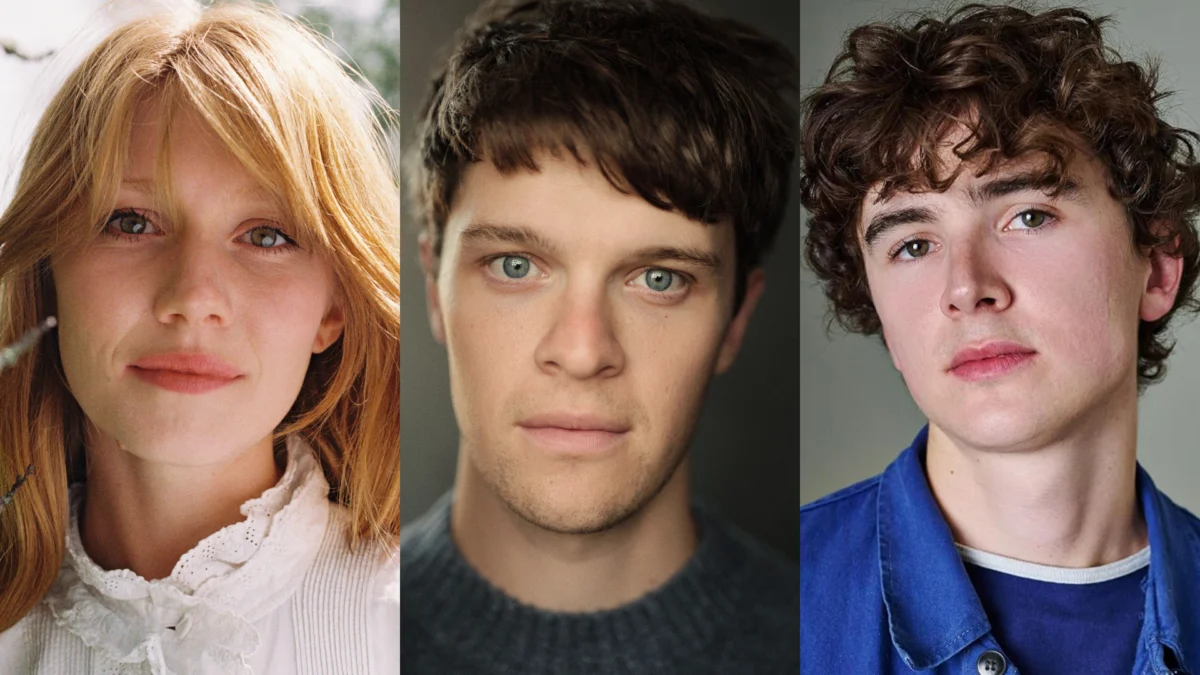
The eagerly awaited television adaptation of J.K. Rowling’s globally celebrated Harry Potter book series has rounded out crucial elements of its ensemble cast, bringing on board new actors to fill iconic roles ahead of its scheduled Christmas debut. Industry announcements confirmed that Jasper Talbot and Hannah Chinn have been cast as James and Lily Potter, the doomed parents of the titular young wizard whose tragic sacrifice sets the overarching narrative of the fantasy franchise into motion. In addition to the casting of Harry’s parents, the production has revealed further additions for both its maiden season and the previously confirmed second season, signaling a massive and meticulously planned rollout for Warner Bros. Discovery and HBO.
Alongside the casting of the Potter patriarch and matriarch, the production has officially enlisted Harry Gilby—known for his work in Tolkien and The Last Kingdom—to portray Charlie Weasley. The character is the second-eldest son in the sprawling Weasley family, joining previously announced parents Arthur and Molly Weasley, played by Rafe Spall and Katherine Parkinson, respectively. These casting updates offer a clearer picture of the expansive universe HBO is constructing under the creative guidance of writer and executive producer Francesca Gardiner and director Mark Mylod.
A Star-Studded Ensemble for the Wizarding World
The scale of HBO’s Harry Potter adaptation has consistently drawn immense industry and fan attention since its initial greenlight. Set to premiere on December 25, the debut season covering Harry Potter and the Philosopher’s Stone boasts an impressive roster of celebrated stage and screen talent anchoring the magical world.
Dominic McLaughlin will step into the iconic spectacles as Harry Potter, starring alongside Arabella Stanton as Hermione Granger and Alastair Stout as Ron Weasley. The foundational pillars of Hogwarts School of Witchcraft and Wizardry are similarly anchored by heavyweight performers: John Lithgow will don the half-moon spectacles as Albus Dumbledore, Janet McTeer assumes the mantle of the stern Deputy Headmistress Minerva McGonagall, Paapa Essiedu brings depth to the complex potions master Severus Snape, and comedic actor Nick Frost steps into the giant boots of gamekeeper Rubeus Hagrid.
The supporting players for the introductory term include Rory Wilmot as the perpetually anxious Neville Longbottom, Lox Pratt as the sneering antagonist Draco Malfoy, Daniel Rigby and Bel Powley as the Muggle tormentors Vernon and Petunia Dursley, Luke Thallon as the stuttering Defense Against the Dark Arts teacher Quirinus Quirrell, Warwick Davis returning to the franchise as Filius Flitwick, and Bertie Carvel as Minister for Magic Cornelius Fudge.
Looking Ahead: Season Two Cast Additions
While production and marketing efforts heavily focus on the impending holiday launch of the first season, HBO has concurrently cast key roles for the already greenlit second season, which will adapt Harry Potter and the Chamber of Secrets.
Among the high-profile additions for the sophomore season is Game of Thrones alumnus Kit Harington, who has been tapped to play the gloriously vain and incompetent fraud Gilderoy Lockhart. The second season will also introduce Bonnie Hill as Ginny Weasley, Lenny Rush as the house-elf Dobby, Billy Barratt as the teenage memory of Tom Riddle, Molly Hewitt-Richards as the perpetually weeping Moaning Myrtle, and Jasper Ambrose as the eager-beaver, camera-toting first-year Colin Creevey.
The inclusion of actors such as Harington and Rush indicates that Warner Bros. and HBO are sparing no expense in populating the subsequent years of the multi-season commitment with recognizable talent and seasoned specialists in physical and digital performance.
Background and Context of the HBO Adaptation
The announcement of a faithful, long-form television adaptation of the seven Harry Potter novels was first officially confirmed in April 2023 during a Warner Bros. Discovery presentation. Designed to air on the Max streaming service—formerly HBO Max—and broadcast via HBO, the project was pitched as a "decade-long series" that would dive significantly deeper into the source material than the immensely successful eight-film franchise produced by Warner Bros. Pictures between 2001 and 2011.
Each season of the television project is intended to be authentic to the original books, allowing showrunners and directors the necessary runtime to explore plot threads, background lore, and characters that were necessarily compressed, altered, or omitted entirely in the feature films. The studio has emphasized that while the films remain cultural touchstones, the television format provides a unique medium to experience Rowling’s literary universe anew for a fresh generation of viewers.
The creative leadership behind the series brings significant prestige to the venture. Francesca Gardiner, whose previous writing and producing credits include critically acclaimed dramas such as Succession, His Dark Materials, and Killing Eve, serves as the primary writer and executive producer. Mark Mylod, celebrated for his Emmy-winning direction on Succession and Game of Thrones, is attached to executive produce and direct multiple episodes.
Furthermore, the production involves core creative entities closely tied to the intellectual property. J.K. Rowling serves as an executive producer alongside Neil Blair and Ruth Kenley-Letts of Brontë Film and TV, as well as David Heyman, who produced all eight of the original Harry Potter feature films through his banner, Heyday Films. Laura Neal and Jon Brown round out the executive producing team.
Production Timeline and Chronology
The trajectory of the series has moved at a steady and deliberate pace since its initial announcement:
- April 2023: Warner Bros. Discovery officially announces the Harry Potter television series during an upfront presentation, committing to a multi-season adaptation spanning ten years.
- Late 2023 to 2024: Development commences under Francesca Gardiner and Mark Mylod, focusing on translating the massive narrative scope of the novels into television scripts. Casting calls are launched globally to find age-appropriate talent for the central trio alongside seasoned veterans for the adult faculty roles.
- Late 2024: Major casting announcements confirm the core trio of McLaughlin, Stanton, and Stout, alongside high-profile supporting and faculty castings including Lithgow, McTeer, Essiedu, and Frost.
- Mid-to-Late 2025: Production continues across studio spaces in the United Kingdom. Announcements trickle out regarding secondary characters, including the recent additions of Jasper Talbot and Hannah Chinn as James and Lily Potter, and Harry Gilby as Charlie Weasley.
- December 25, 2025: The first season, adapting Harry Potter and the Philosopher’s Stone, is slated to premiere, kicking off the decade-long television commitment.
Official Logline and Narrative Framework
To anchor expectations for the tone of the series, HBO released the official logline for the premiere season:
“There is nothing special about Harry Potter — or so his Aunt Petunia tells him. But when a mysterious letter of admission to Hogwarts School of Witchcraft and Wizardry arrives, it opens the door to a hidden world of magic, friendship and adventure. Yet behind Hogwarts’ enchanted walls lie dark secrets. Harry must find the courage to prove himself against the darkest wizard of all.”
This framing highlights the studio’s intention to honor the coming-of-age mystery elements that defined the early installments of the literary series, balancing the whimsical discovery of the wizarding world with the encroaching menace of Lord Voldemort.
Industry Implications and Financial Stakes
The launch of the Harry Potter television series represents one of the most high-stakes gambles in modern streaming history. For Warner Bros. Discovery, the franchise is a crown-jewel asset that has generated billions of dollars globally through box office receipts, home entertainment sales, publishing, theme parks, and consumer products.
Re-adapting material that remains fresh in the cultural consciousness carries inherent risks, particularly regarding comparisons to the beloved original film adaptations starring Daniel Radcliffe, Emma Watson, and Rupert Grint. However, industry analysts note that the serialized television model mitigates some of these concerns by promising a level of narrative fidelity that films simply cannot achieve due to runtime constraints. By pacing the adaptation across multiple seasons, the creative team can incorporate subplots from the books—such as Hermione’s S.P.E.W. campaign, the backstory of the Marauders, and detailed explorations of magical history—that fans have long lamented missing on the big screen.
The decision to premiere the series on Christmas Day further underscores the platform’s strategic positioning of the property as a premier family-viewing event. As subscription-based streaming platforms increasingly battle for consumer retention and cultural dominance, the return to Hogwarts via HBO stands as a primary pillar of Warner Bros. Discovery’s long-term content strategy, with casting milestones continuing to drive global anticipation as the premiere date draws closer.