The landscape of small business financial management has evolved significantly, placing a heightened emphasis on liquidity, capital conservation, and rewards optimization. Among the myriad financial products tailored for modern enterprises, the Chase Ink Business Unlimited Credit Card has emerged as a cornerstone instrument for business owners seeking streamlined rewards without the burden of recurring overhead costs. As financial institutions fiercely compete for the patronage of small-and-medium-sized enterprises (SMEs), evaluating the fundamental mechanics, rewards structures, and structural implications of these financial products remains vital for corporate fiscal health.
Main Facts and Core Product Architecture
At its core, the Chase Ink Business Unlimited Credit Card is structured as a flat-rate rewards card operating under the Chase Ultimate Rewards ecosystem. The product levies no annual fee for the primary cardholder or for any authorized employee users, removing a major friction point traditionally associated with corporate lines of credit.

The current promotional offering provides a welcome bonus of 75,000 bonus points after a cardmember expends $6,000 in qualifying purchases within the first three months of account activation. While initially categorized as a cash-back product—wherein 75,000 points equate to $750 in direct cash back—the true financial utility of the card is unlocked when paired with premium Chase credit cards, such as the Chase Sapphire Reserve, Chase Sapphire Preferred, or Ink Business Preferred. Through this integration, the cash-back balance can be converted into transferable Ultimate Rewards points, expanding redemption capabilities toward numerous airline and hotel loyalty programs.
In terms of daily accumulation, the card yields an unlimited 1.5% cash back (or 1.5x points per dollar) on all business-related expenditures, devoid of spending caps or complex category tracking. Additionally, through a strategic partnership with rideshare provider Lyft, cardmembers earn 5% total cash back or 5x points on Lyft rides through September 30, 2027.
Eligibility Requirements and Application Protocol
Obtaining corporate and small business credit requires navigating stringent underwriting criteria established by major banking institutions. Chase enforces specific internal guidelines regarding card acquisition, notably the "5/24 rule," which generally dictates that an applicant will be denied if they have opened five or more personal credit cards across any issuer within the preceding 24 months.

Furthermore, the bonus eligibility terms specify that the new cardmember bonus may not be accessible to individuals who currently hold or have previously held the specific card or certain other no-annual-fee Chase business products. Despite these controls, industry analysts note that approval rates for sole proprietorships have remained relatively accessible for applicants demonstrating solid credit histories, typically falling within the good-to-excellent FICO score range (690 and above).
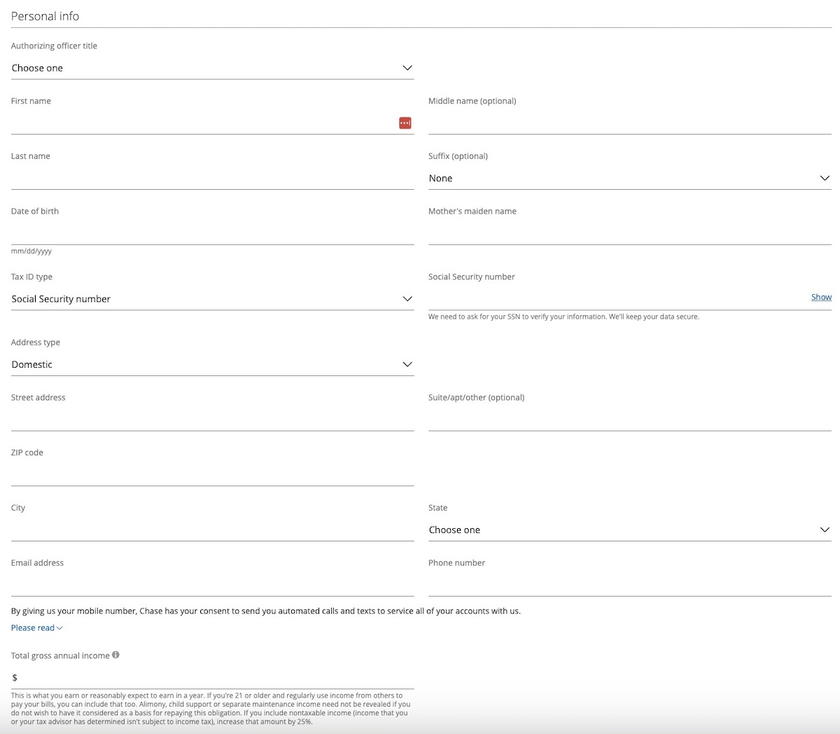
To apply as a sole proprietorship, applicants utilize their personal Social Security Number (SSN), legal name, and designated business category code, illustrating the democratization of commercial credit for freelancers, independent contractors, and gig-economy operators who lack formal corporate incorporation structures like LLCs or S-Corps.
Comparative Analysis Within the Small Business Ecosystem
To fully comprehend the market position of the Ink Business Unlimited, financial analysts frequently benchmark the product against competing instruments in the commercial credit space, such as the Ink Business Cash and American Express alternatives.

The Ink Business Cash card, which also features no annual fee, caters to enterprises with high-volume spending in specific operational categories, yielding 5% cash back on the first $25,000 spent annually in combined purchases at office supply stores and on cellular, landline, internet, and cable television services. Conversely, the Ink Business Unlimited favors enterprises with diversified, non-categorized operational expenditures, rewarding uniform spending at the flat 1.5x rate.
When evaluated against American Express offerings, such as The Blue Business Plus Credit Card, distinct structural differences emerge. The Amex Blue Business Plus provides 2x Membership Rewards points on everyday business purchases, but introduces a restrictive annual spending cap of $50,000, after which earnings drop to 1x. For high-volume enterprises surpassing this $50,000 threshold, the uncapped 1.5x structure of the Chase Ink Business Unlimited often yields a higher aggregate annual return, particularly when leveraged alongside Chase’s extensive transfer partner network.
Associated Travel and Purchase Protections
Beyond point accumulation, corporate credit products are increasingly judged by the defensive financial protections they afford business operations. The Chase Ink Business Unlimited delivers a suite of auxiliary benefits designed to mitigate operational risk:

Primary Rental Car Collision Damage Waiver (CDW): When utilizing the card to rent an eligible vehicle for commercial purposes, cardmembers receive primary coverage against theft and collision damage in most countries. This eliminates the requirement to file claims through primary commercial auto insurance policies, thereby preventing subsequent premium increases.
Extended Warranty Protection: Eligible manufacturer warranties of three years or less associated with U.S. purchases are extended by an additional full year, safeguarding corporate capital invested in equipment, technology, and hardware.
Purchase Protection: New purchases made with the card are shielded against damage or theft for up to 120 days, up to $10,000 per claim and $50,000 per account.
Limitations and Foreign Transaction Fees

Despite its robust domestic utility, the Chase Ink Business Unlimited possesses specific operational limitations that businesses must factor into their global expense strategies. Most notably, the card assesses a 3% foreign transaction fee on all purchases processed outside the United States. Consequently, financial advisors recommend utilizing alternative products—such as the Ink Business Preferred—for international travel, overseas inventory acquisition, or foreign digital service subscriptions.
Additionally, the card lacks premium travel enhancements frequently sought by frequent corporate flyers, such as complimentary airport lounge access or automatic elite status tiers, reinforcing its positioning as a pure rewards-accumulation and cash-flow management vehicle rather than a lifestyle travel card.
Broader Economic Implications and Strategic Outlook
The proliferation of no-annual-fee business credit cards reflects broader shifts in commercial banking strategies. Issuers increasingly view small business accounts as critical acquisition funnels for long-term customer loyalty. By lowering the entry barrier through zero-fee structures and robust welcome incentives, institutions capture emerging enterprises during their foundational stages, scaling banking relationships as corporate revenues expand.
For small business owners, deploying a multi-card strategy—often referred to within personal and corporate finance circles as the "Chase Trifecta"—allows organizations to maximize capital efficiency. By funneling targeted expenses through cards like the Ink Business Cash and routing all remaining non-categorized overhead through the Ink Business Unlimited, enterprises can optimize their point generation without inflating overhead expenditure.
Ultimately, the Chase Ink Business Unlimited Credit Card remains a formidable instrument within the commercial credit landscape. By balancing a lucrative initial acquisition bonus, uncapped flat-rate rewards, comprehensive consumer protections, and zero annual overhead costs, the product offers a compelling value proposition for enterprises navigating the complexities of modern fiscal management.