The global aviation, tourism, and credit card rewards sectors are experiencing a period of intense transformation, driven by shifting carrier networks, newly introduced credit card promotions, evolving geopolitical warnings, and quirky passenger anecdotes that highlight the unpredictable nature of modern travel. From major domestic airlines testing the limits of narrowbody aircraft capabilities to credit card issuers rolling out enhanced statement credits and point bonuses, travelers are navigating a rapidly changing ecosystem. This comprehensive review examines the most significant recent developments across the commercial aviation industry, loyalty programs, and international tourism markets.

Alaska Airlines Pioneers Long-Haul Narrowbody Operations with Anchorage-to-Tokyo Route
In a surprising and ambitious network expansion, Alaska Airlines has quietly introduced a brand-new, nonstop route connecting Anchorage, Alaska (ANC), to Tokyo Narita International Airport (NRT). What makes this route particularly noteworthy is the equipment chosen to operate it: a narrowbody Boeing 737 MAX 8.

This new service represents the second-longest route by distance ever operated by Alaska Airlines utilizing its Boeing 737 fleet, and it stands as the longest narrowbody operation on record for this specific aircraft configuration across major North American carriers. Aviation analysts have pointed out that while widebody aircraft like the Boeing 777 or Airbus A350 have traditionally dominated transpacific routes due to passenger capacity and ultra-long-range comfort requirements, advancements in fuel efficiency and aerodynamic performance on newer narrowbody variants are enabling carriers to rethink traditional hub-and-spoke and long-haul economics.
The route targets both leisure travelers seeking seamless connections between Alaska and Asia and cargo transport operations, which often rely on the belly space of passenger jets on remote northern routes. Industry observers are closely watching the performance of this flight to see whether other domestic carriers will leverage the 737 MAX or Airbus A321neo families to open up secondary international markets previously deemed economically unviable for smaller aircraft.

Coined Cabin Controversies: The Reality of Turnaround Times and Passenger Choices
While airlines push the boundaries of aircraft range, day-to-day operations continue to face traditional logistical bottlenecks that occasionally boil over into bizarre passenger encounters. A recent viral incident shared on social media underscored the immense pressure placed on ground crews and flight operations teams regarding tight aircraft turnaround times.

According to video footage shared by a passenger, an airline captain offered travelers waiting at the gate a stark and unorthodox choice: either wait an extended period for the aircraft cabin to be professionally cleaned after a domestic animal—specifically, a dog—urinated on the preceding flight, or board immediately to ensure an on-time departure, accepting that the cabin would retain a residual odor.
The incident has reignited broader industry conversations regarding airline punctuality metrics, turnaround efficiency, and passenger rights. Major carriers are evaluated heavily on their "on-time performance" (OTP) ratings, which directly impact airline rankings, financial incentives for management, and passenger satisfaction scores. Consequently, ground operations staff frequently face immense pressure to turn aircraft around in under 45 minutes. Critics argue that such aggressive scheduling leaves inadequate time for deep cleaning and sanitization when unexpected biohazards occur, forcing flight crews and passengers into uncomfortable compromises. Consumer advocacy groups have called for clearer guidelines and mandatory professional cleaning standards when cabins are compromised by spills, pet accidents, or other sanitary issues, regardless of potential flight delays.

Financial Shifts in Airline Loyalty Programs and Credit Card Perks
As operational challenges persist in the air, the financial battleground on the ground is heating up through lucrative co-branded credit card offers and transfer partnership adjustments. Travel rewards enthusiasts have seen a flurry of activity from major financial institutions seeking to capture consumer spending as holiday and winter travel booking windows open.

American Express and Delta Air Lines have introduced a targeted Amex Offer that provides cardholders with a $250 statement credit upon spending $2,000 or more on eligible purchases. Notably, unlike previous iterations of similar promotions that restricted the discount to flights booked exclusively through Amex Travel, this latest offer applies broadly to bookings made directly through Delta Air Lines. This flexibility has been warmly received by frequent flyers who prefer dealing directly with the carrier for seat selections, upgrades, and schedule change management.
Concurrently, Citi has enhanced its premium travel portfolio by adding up to $200 per year in inKind credits to the Citi / AAdvantage Executive World Elite Mastercard. This move is widely interpreted as an effort by card issuers to justify rising annual fees by bundling lifestyle and dining credits into traditional travel cards—a strategy popularized by cards like the Amex Platinum and Chase Sapphire Reserve.

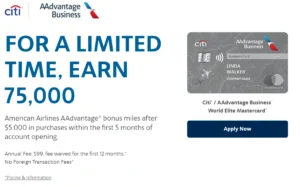
Furthermore, the CitiBusiness AAdvantage Mastercard has increased its welcome offer, allowing business owners to earn 75,000 American Airlines AAdvantage miles after meeting a $5,000 spending requirement within the first five months of account opening, with the annual fee waived for the first year. This represents a 10,000-mile increase over previous public offers, matching historical highs for the product.
In the small-business segment, Chase continues to attract digital nomads and sole proprietors with the Ink Business Unlimited credit card, which features a 75,000-point bonus, no annual fee, and a flat 1.5x points-earning structure on all purchases. For advanced points and miles collectors, these cash-back earnings can be converted into full Chase Ultimate Rewards points if the user also holds an eligible annual-fee card such as the Chase Sapphire Preferred or Ink Business Preferred, unlocking valuable transfer partners across airline and hotel alliances.

Meanwhile, Rakuten has updated its ecosystem regarding Bank of America credit card applications. While users can earn rewards for applying and being approved for select BofA cards through the shopping portal, historical restrictions remain: members whose Rakuten earning preference is set to American Express Membership Rewards cannot earn these specific bank bonuses, which are instead restricted to cash-back configurations. Additionally, GHA Discovery has launched a paid status match promotion offering Titanium or Platinum tier status through 2027, offsetting the enrollment fee with bonus Discovery Dollars to incentivize high-tier hotel loyalty adoption.
Geopolitical Tensions Prompt New Travel Advisories for the Middle East

Beyond domestic rewards and operational updates, international travel planners are facing mounting caution due to geopolitical instability. The British government issued an official travel warning advising tourists against non-essential travel to certain Middle Eastern destinations, specifically highlighting Dubai for winter tourism.
The advisory notes that the regional security climate "remains deeply unpredictable and the risk of sudden escalation is high." The guidance reflects broader international anxieties regarding maritime and aviation corridors in the Middle East, prompting foreign ministries across Europe and North America to continuously update safety assessments. Tourism boards in the region have emphasized that major tourist infrastructure remains operational and heavily secured, yet travel insurance providers are closely monitoring policy wordings regarding government-issued advisories, which can impact coverage for trip cancellations and medical evacuations.

Broader Economic and Industry Implications
The convergence of these diverse events paints a complex picture of the global travel and financial sectors. On one hand, airlines are demonstrating remarkable technological and logistical adaptability, stretching the capabilities of narrowbody fleets to open unprecedented transpacific corridors like Anchorage to Tokyo. On the other hand, the intense financial competition among credit card issuers—evidenced by enhanced Delta statement credits, Citi AAdvantage perks, and lucrative business card bonuses—indicates that consumer acquisition remains a top priority for banks betting on sustained consumer travel demand.

However, systemic vulnerabilities remain visible. Incidents involving compromised cabin cleanliness point to the ongoing friction between corporate punctuality metrics and passenger experience standards. Simultaneously, macroeconomic and geopolitical headwinds, such as fluctuating fuel costs and regional security warnings, remind stakeholders that the travel industry operates in an environment of perpetual volatility.
As airlines finalize their winter schedules and consumers evaluate their credit card portfolios ahead of the peak holiday booking season, industry analysts advise travelers to remain flexible, review travel insurance policies carefully, and closely monitor loyalty program terms to maximize the value of their points, miles, and statement credits.