Philadelphia is currently on track to record its lowest annual number of homicides since 1963, a milestone representing years of targeted intervention and community-led violence prevention. However, this hard-won progress faced a severe atmospheric stress test over the Independence Day weekend. A massive heat dome, stretching from Maine to the Gulf of Mexico, descended upon the eastern half of the United States, subjecting approximately 165 million people to major or extreme heat conditions.
Cities including Boston, Baltimore, and Raleigh shattered historical temperature records. In Philadelphia, mercury readings topped 100 degrees Fahrenheit for three consecutive days. Alongside the sweltering weather, the city experienced a volatile spike in interpersonal conflict. Between July 2 and July 4, the Gun Violence Archive recorded nine distinct shooting incidents within the city limits, resulting in three fatalities and nine injuries.
Public health advocates and community organizers on the ground say the correlation between intense heat and volatile behavior is immediately apparent. Marion Campbell, executive director of Eddie’s House, a Philadelphia-based nonprofit providing violence prevention and social services, notes that individuals most susceptible to committing acts of gun violence often belong to vulnerable populations with limited economic resources to secure adequate air conditioning. When ambient temperatures rise sharply, physiological discomfort and frustration mount, impairing an individual’s coping mechanisms and heightening the risk of explosive confrontations.
While criminologists and emergency room physicians have long observed that summer months yield higher rates of violent crime, a new data-driven analysis sheds light on a previously unquantified variable: the direct attribution of modern gun violence to human-induced climate change.

According to a collaborative investigation shared by the nonprofit research organization Climate Central and The Trace, approximately 2,000 shootings across the 100 U.S. cities with the highest rates of gun violence between 2021 and 2025 are directly attributable to elevated temperatures intensified by climate change. In Philadelphia alone, researchers estimate that climate change contributed an additional 149 shootings over that five-year window.
Quantifying the Atmospheric Impact on Urban Safety
To understand how researchers arrived at these figures, Climate Central scientists utilized a rigorous methodology that combined historical weather data, localized gun violence statistics from the Gun Violence Archive, and global climate models.
The analytical process began by establishing a distinct baseline for each of the 100 studied cities. Because a 95-degree day represents an abnormal heat crisis in the humid Northeast but a standard afternoon in the arid Southwest, researchers constructed individual statistical models for every city. These models mapped historical relationships between daily temperatures and local shooting frequencies, accounting for the reality that different urban populations respond to unique regional climates.
Next, scientists sought to answer a counterfactual question: How many shootings would have occurred if these cities had experienced a world untouched by anthropogenic climate change? To simulate this cooler baseline, researchers synthesized 22 leading global climate models with historical weather records, calculating what daily temperatures should have been absent greenhouse gas emissions.
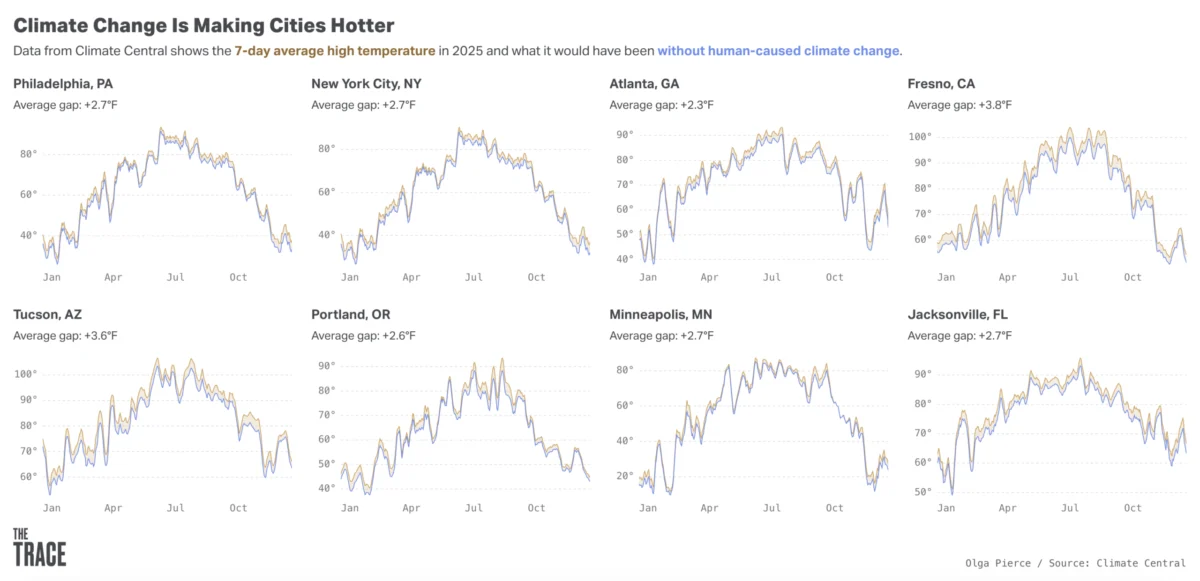
The findings revealed that climate change has warmed the typical day in these 100 metropolitan areas by an average of 2.4 degrees Fahrenheit, with localized temperature bumps ranging from 1.7 degrees in cities like San Francisco and Miami to 3.8 degrees in Fresno, California. For Philadelphia specifically, the temperature gap averaged 2.7 degrees Fahrenheit.
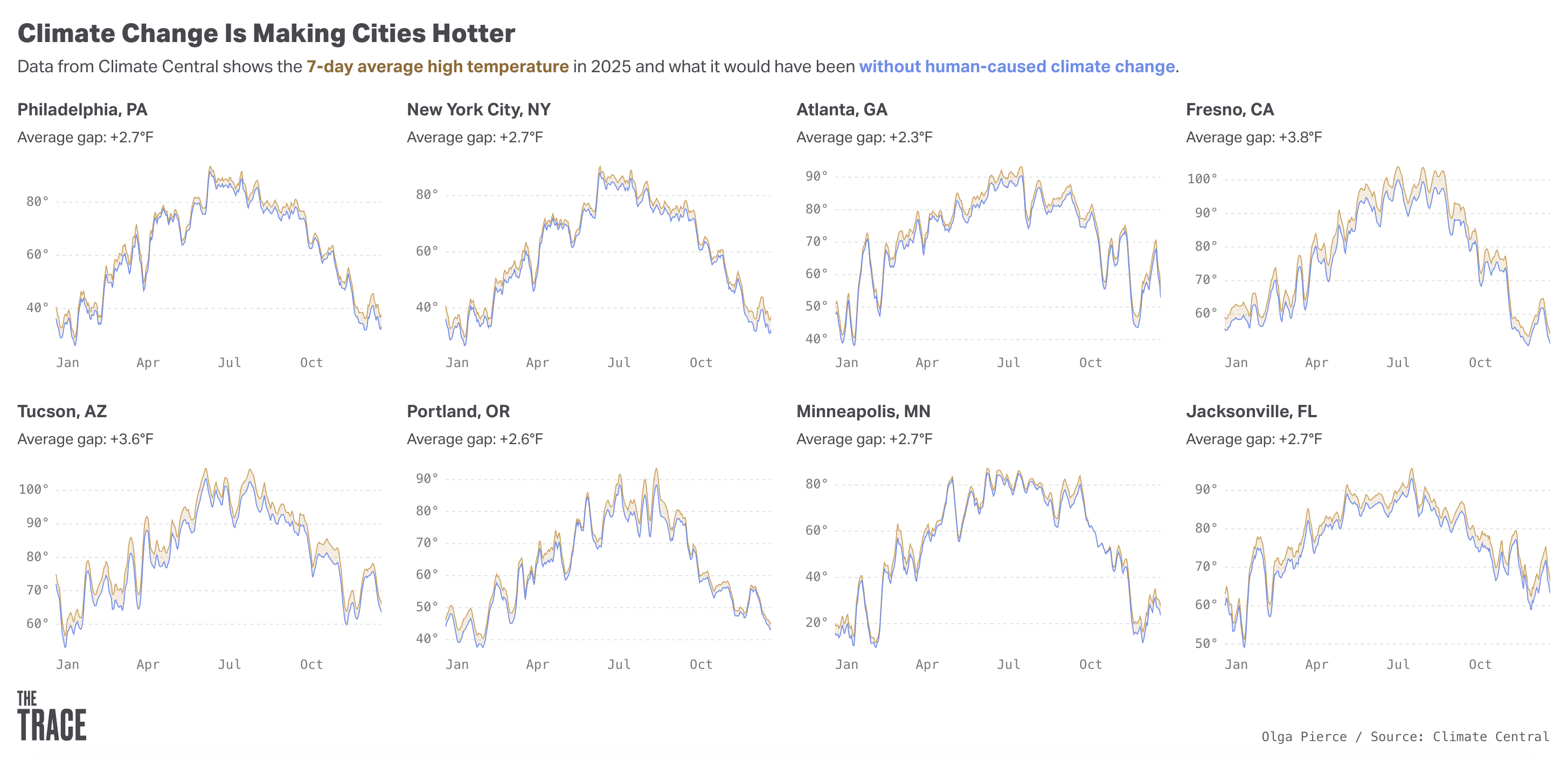
When researchers applied these temperature gaps to the cities’ violence models, the aggregate difference over the five-year study period accounted for roughly 1,950 additional shootings—constituting approximately 1.7 percent of the 116,281 total shootings recorded in those urban areas during the timeframe.
Experts emphasize that these figures represent statistical estimates rather than direct causal declarations for individual crimes. John Roman, a distinguished senior fellow at the University of Chicago’s NORC social research center who reviewed the analysis, points out that while this summer has featured record heat alongside declining homicide totals in many municipalities, climate change is still actively exerting upward pressure on baseline violence. Without the warming trend of the past several decades, urban centers would likely be experiencing even lower rates of violence than they are today.
The Physiology of Heat and Aggression
The scientific inquiry into why heat drives interpersonal violence centers on two primary, non-exclusive frameworks: human physiological stress and routine activities theory.
From a neuroscientific perspective, extreme ambient temperatures disrupt the body’s internal equilibrium. Dr. Kimberly Meidenbauer, an assistant psychology professor at Washington State University who directs an environmental neuroscience laboratory, explains that the hypothalamus detects thermal overload and initiates thermoregulation—sweating and dilating blood vessels near the skin’s surface to vent core heat.
While effective at maintaining core body temperature, this process causes significant physical discomfort. That discomfort rapidly fuels negative emotional states, including irritability, hostility, and frustration, while simultaneously taxing the prefrontal cortex, the region of the brain responsible for impulse control and emotional regulation. Furthermore, psychological studies suggest that individuals experiencing severe heat stress frequently misattribute their internal discomfort to external social triggers, such as perceiving a neutral remark or an accidental bump from a stranger as a direct, hostile threat.

Laboratory experiments conducted at Washington State University have attempted to isolate these behavioral shifts. By placing study participants in infrared saunas and having them participate in competitive gaming tasks, researchers observed that warmer ambient temperatures correlated directly with higher rates of impulsive, aggressive behaviors, such as retaliatory stealing during game play.
Conversely, routine activities theory—a framework established in the 1970s—suggests that elevated temperatures drive up violence simply by altering human traffic patterns. When weather is pleasant or warm, more people congregate outdoors in public spaces, parks, and community gatherings, thereby increasing the statistical probability of encountering potential sources of conflict.
Intriguingly, criminologists note that this relationship follows an inverted U-curve. While violence increases as temperatures rise from moderate to warm levels, extreme, life-threatening heat waves can eventually suppress violence because individuals retreat indoors to escape the oppressive sun. However, climate change threatens to alter this dynamic permanently by expanding the shoulder seasons—spring and autumn—into prolonged periods of warm weather that encourage outdoor congregation for a greater portion of the year.
Environmental Injustice and Urban Heat Islands
The burden of climate-driven heat and its associated behavioral risks is not distributed evenly across metropolitan landscapes. Instead, it concentrates heavily within historically disadvantaged neighborhoods already facing economic hardship, systemic disinvestment, and elevated baseline rates of gun violence.
Urban areas frequently feature "heat islands"—neighborhoods characterized by vast expanses of asphalt, dark roofing materials, and an acute scarcity of trees, parks, and green spaces. Pavement absorbs and retains solar radiation, driving surface temperatures several degrees higher than those in wealthier, greener districts located just a few miles away.
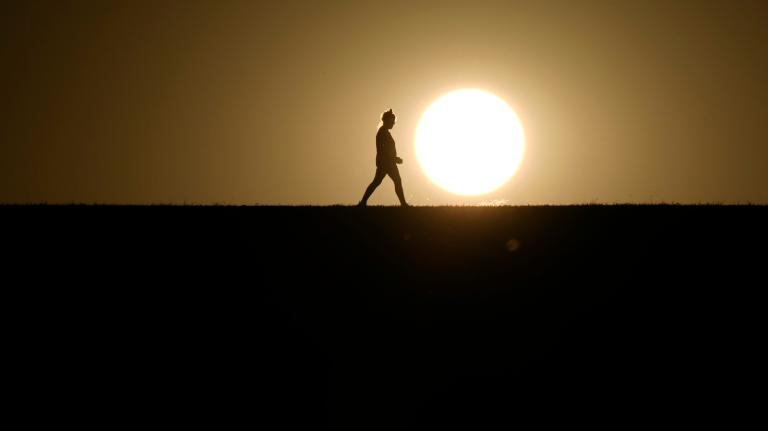
In New York City, for instance, the contrast between the verdant Upper West Side of Manhattan and the South Bronx’s Mott Haven neighborhood illustrates this disparity. Mott Haven features roughly 40 percent less green space and a median household income significantly lower than wealthier counterparts. On an average summer day, pavement traps heat, elevating surface temperatures by up to 5 degrees.
According to local health department data, approximately 16 percent of Mott Haven households lack access to residential air conditioning. For those who do own units, soaring electricity costs—sometimes reaching up to $1,000 a month during peak summer months—render continuous operation financially prohibitive. When residents venture outside, they find minimal shade along major transit corridors, while underground subway stations can trap heat, becoming up to 18 degrees hotter than street level.
These localized vulnerabilities exacerbate chronic stress across communities. Dr. Meidenbauer notes that financial strain, housing insecurity, discrimination, and ambient exposure to violence place the human body in a state of persistent physiological stress known as allostatic load. When an individual’s nervous system is chronically dysregulated, coping with an acute environmental stressor like extreme heat becomes exceedingly difficult.
Sociological Context and Historical Caveats
As researchers and public health officials increasingly connect climate metrics to public safety, community advocates voice valid concerns regarding the potential revival of harmful racial and sociological stereotypes.
Historical frameworks such as "climatic determinism"—the debunked 19th-century theory asserting that tropical or hot climates produce inherently less civilized or hot-tempered populations—were frequently deployed to justify colonialism and slavery. Similarly, mid-20th-century characterizations of urban civil unrest as inevitable products of a "long hot summer" often served to minimize systemic grievances regarding racial discrimination, poverty, and police misconduct.
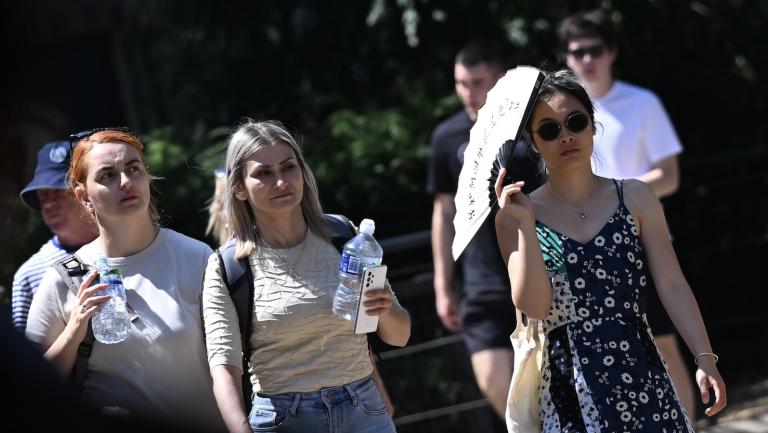
Community leaders in neighborhoods like Mott Haven stress that gathering outdoors during warm weather is a vibrant, peaceful, and culturally rich tradition centered on community cohesion, family gatherings, and recreation. Emphasizing temperature as a catalyst for violence must not obscure the broader socio-economic drivers of crime, nor should it stigmatize communities that simply utilize public spaces to socialize.
As Kristina Dahl of Climate Central observes, temperature is merely one factor within a complex constellation of influences. Mitigating the risks requires comprehensive policy frameworks that address the root causes of urban vulnerability.
Policy Responses and Long-Term Solutions
In response to escalating summer temperatures, municipal governments are expanding emergency intervention programs. Major metropolitan centers like New York City routinely operate hundreds of cooling centers in public libraries, senior centers, and community facilities during heat emergencies. Recent administrative expansions have introduced mobile cooling vans deployed directly to elderly residents’ homes and pop-up hydration stations at outdoor job sites to protect exposed laborers.
However, structural limitations remain prevalent. Free or subsidized air conditioning distribution programs often exhaust their supplies and close applications before the peak of summer arrives, leaving low-income families without assistance for operational electricity costs.
Long-term remediation efforts increasingly focus on structural cooling and neighborhood greening initiatives. In Philadelphia, a city-funded urban forestry initiative known as Tree Plan—administered via the Pennsylvania Horticultural Society—aims to establish a 30 percent tree canopy citywide. This intervention is urgently required; certain low-income neighborhoods currently possess as little as 2 percent tree cover, leaving them up to 22 degrees hotter than leafier sectors of the city.
Previous empirical research in Philadelphia, including a landmark 2018 study, demonstrated that simply cleaning up trash and planting grass on vacant lots in high-poverty neighborhoods was associated with a roughly 29 percent reduction in nearby gun violence. By cooling the physical environment and reducing neighborhood blight, cities can simultaneously address two distinct crises.
As global greenhouse gas emissions continue to drive annual temperature records upward, public safety experts warn that ignoring the environmental dimensions of interpersonal violence is no longer viable. Comprehensive violence prevention strategies must now evolve to account for a warming planet, ensuring that the most vulnerable urban populations receive the infrastructural investments and systemic support necessary to weather an increasingly volatile climate.