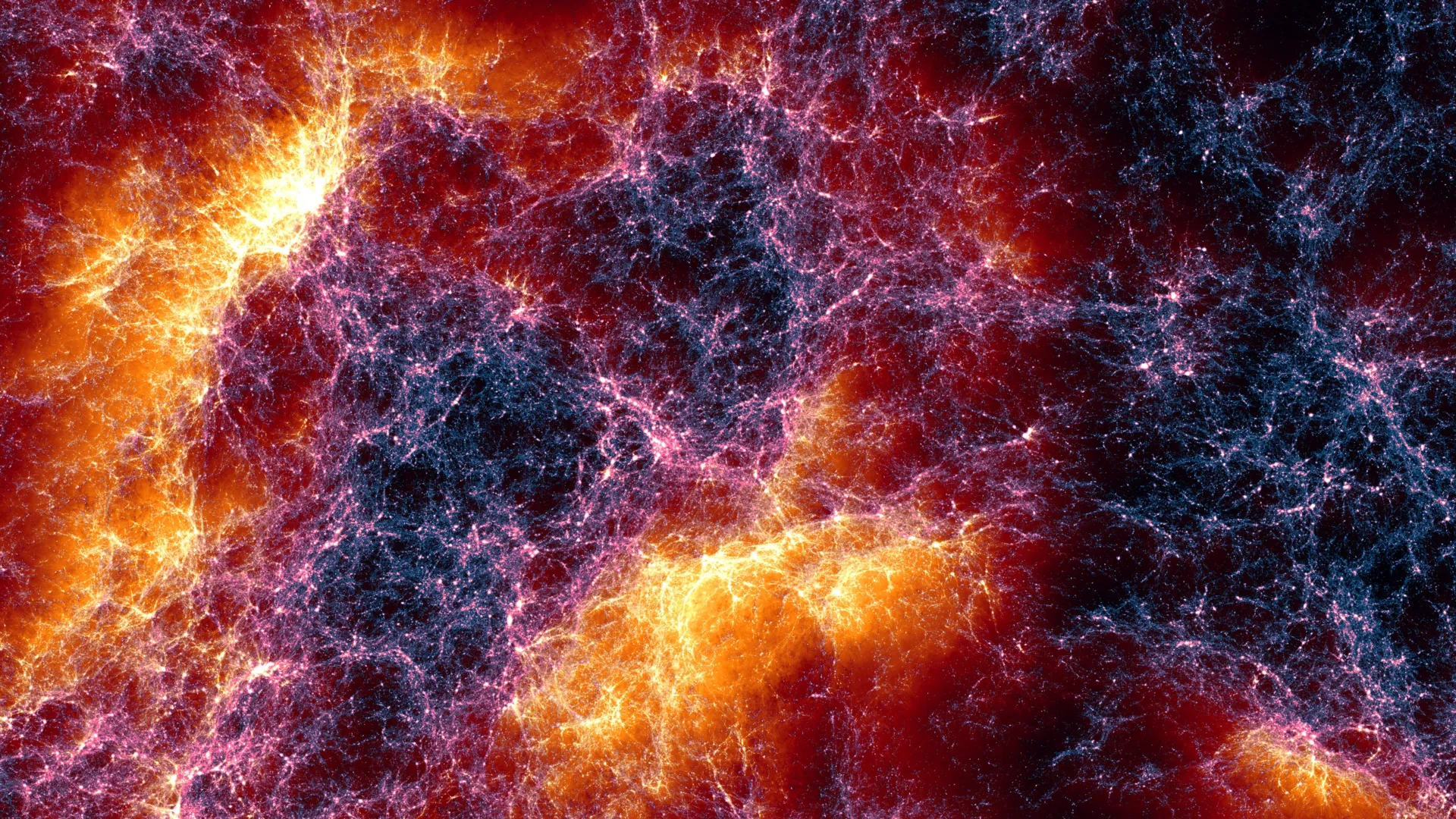
In a milestone achievement for computational astrophysics, researchers at the Center for Astrophysics | Harvard & Smithsonian have unveiled Lumina, one of the most expansive and granular simulations of the early universe ever constructed. This virtual model, which reconstructs the first two billion years of cosmic history, provides a critical bridge between theoretical models and the unprecedented data streams currently flowing from the James Webb Space Telescope (JWST) and the forthcoming Nancy Grace Roman Space Telescope. By modeling the intricate dance between ordinary baryonic matter, dark matter, and high-energy radiation, Lumina serves as a high-fidelity mirror against which astronomers can test the veracity of the Standard Model of Cosmology.
The Dawn of the Universe: A Chronological Context
To appreciate the significance of Lumina, one must understand the "Cosmic Dawn," the epoch spanning from approximately 100 million to one billion years after the Big Bang. During this period, the universe transitioned from a dark, featureless medium into a structured cosmos teeming with the first stars, galaxies, and supermassive black holes.
The timeline of this evolution, which Lumina meticulously replicates, began with the cooling of the post-Big Bang plasma, allowing for the formation of neutral hydrogen. As gravity pulled this matter into dense regions, the first stars ignited, emitting intense ultraviolet radiation. This radiation triggered the "Epoch of Reionization," where hydrogen atoms were stripped of their electrons. Following this, the process of helium reionization occurred, a more complex and energetic transition that had previously been difficult to capture in a single simulation of this scale. By spanning the first two billion years, Lumina captures not only the birth of these structures but the transformative feedback loops that defined the early environment of the universe.
Engineering the Virtual Cosmos: The Frontier Supercomputer
Creating a simulation of this magnitude is a task that pushes the boundaries of modern high-performance computing. The research team, led by ITC Fellow Oliver Zier, utilized the Frontier supercomputer at the Oak Ridge National Laboratory in Tennessee. As the world’s first exascale supercomputer, Frontier represents the pinnacle of current computational capability, operating at speeds exceeding one quintillion floating-point operations per second.
The team leveraged more than 15,000 graphics processing units (GPUs) to run the simulation. This immense processing power was necessary to reconcile two conflicting requirements in computational physics: volume and resolution. Historically, astronomers have been forced to choose between simulating a large, representative patch of the universe with low detail, or a tiny volume with high resolution. Lumina overcomes this limitation by simulating a cube of space approximately 1.5 billion light-years on each side. This volume is more than 100 times larger than previous comparable simulations, yet it retains sufficient resolution to track the formation of individual galaxies and the dynamics of gas accretion onto black holes.
Technical Innovations in Radiation Hydrodynamics
The primary scientific advancement offered by Lumina lies in its sophisticated handling of radiation hydrodynamics. In the vacuum of space, the movement of gas is dictated not only by gravity but by the radiation pressure exerted by stars and quasars. Lumina tracks these radiative processes with unprecedented accuracy.
Specifically, the simulation provides a groundbreaking treatment of helium reionization. While hydrogen reionization is a well-studied phenomenon, helium requires significantly more energy to ionize. The transition of helium from a neutral state to a plasma state alters the thermal structure of the intergalactic medium (IGM), affecting how gas flows into galaxies and sustains star formation. By modeling this transition in tandem with galactic evolution, the researchers have provided the scientific community with a tool that can predict the "observational signatures" of these events—patterns that telescopes like the JWST can now look for in deep-field surveys.
Expert Perspectives on the Cosmic Frontier
The implications of this work have resonated across the astrophysics community. Dr. Oliver Zier, the study’s lead author, highlighted the emotional and intellectual weight of the project: "With JWST, the early universe has become an exciting new frontier in astrophysics. To understand what we are seeing with this telescope, we need to translate our theories into detailed predictions. After several years of work, with plenty of ups and downs, it is incredibly rewarding to see the simulation results and watch our predictions come to life in video."
Dr. Aaron Smith, an assistant professor of physics at the University of Texas at Dallas and a key contributor to the paper published in the Monthly Notices of the Royal Astronomical Society, emphasized the dual-scale success of the project: "For the first time, we can follow along as both hydrogen and helium changed into their modern form across such an enormous volume of the universe, while still resolving the galaxies and other luminous objects driving that transformation."
Implications for Modern Cosmology
The existence of Lumina introduces a rigorous testing ground for the Standard Model, often referred to as Lambda-CDM (Lambda Cold Dark Matter). Current cosmological theories suggest that the universe is dominated by dark energy (Lambda) and cold dark matter. If the data returned by the James Webb Space Telescope deviates significantly from the patterns generated by Lumina, it could signal that our understanding of dark matter or the early laws of physics is incomplete.
For instance, if observations reveal more massive galaxies at very early times than Lumina predicts, this would force a re-evaluation of current star-formation theories. Similarly, discrepancies in the temperature of the intergalactic medium could point toward unknown interactions between radiation and dark matter. By providing a "base-case" expectation, Lumina allows scientists to distinguish between expected cosmic evolution and potential "new physics."
Future Prospects and Scientific Impact
Looking ahead, the research team intends to use Lumina as a platform for multi-messenger cosmology. As data from the Roman Space Telescope begins to arrive, the simulation will be used to generate synthetic observations—essentially, images of what the telescope should see if current theories are correct. This will assist in the calibration of instruments and the development of new algorithms for data processing.
Furthermore, the team plans to investigate the "cosmic web," the vast, filamentary network of dark matter that connects galaxies. By tracing the flow of gas along these filaments, scientists hope to explain why some regions of the early universe became hotbeds of star formation while others remained relatively quiescent.
The publication of this research marks a turning point in how we approach the history of the universe. We have moved beyond merely cataloging stars and galaxies to building fully realized, digital universes that evolve according to the laws of physics. Lumina is not merely a scientific achievement; it is a vital lens, focusing our limited observations through the broad, data-rich context of a simulated cosmos. As we look deeper into the infrared spectrum with our most advanced tools, Lumina will be there to interpret the light, helping humanity piece together the complex, violent, and beautiful story of how we—and everything we see—came to be. The next decade of astronomy will be defined by this interplay between the virtual and the physical, as Lumina helps us navigate the mysteries of our cosmic origins.