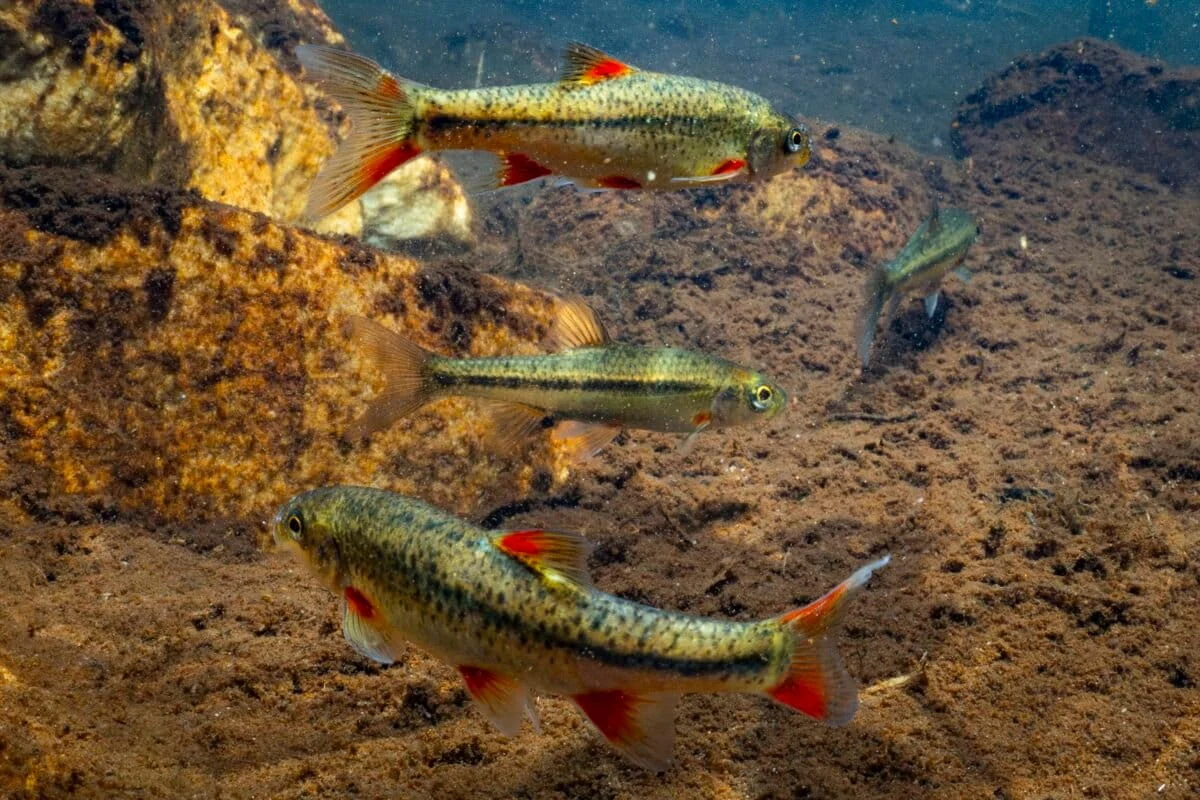
Nestled in the rugged terrain roughly two hours north of Cape Town, South Africa, a quiet yet monumental conservation battle has been unfolding along the winding currents of the Breekkrans River. For decades, a slow-motion ecological crisis had pushed one of the region’s most unique freshwater species to the absolute brink of extinction. Today, however, that trajectory is reversing thanks to an ambitious, targeted eradication initiative. By systematically removing invasive spotted bass from miles of pristine river habitat, conservationists have handed the critically endangered doring fiery redfin (Pseudobarbus doring) a vital lifeline.
The success of the Breekkrans River Restoration Project marks a watershed moment for freshwater ecology in South Africa. It proves that aggressive, mechanical intervention can successfully roll back decades of biological damage caused by non-native species introductions. As biodiversity loss accelerates globally, this localized triumph in the Western Cape offers a blueprint for aquatic conservation far beyond South Africa’s borders.
The Historical Shadow of Invasive Angling Species
To understand the precarious situation facing the doring fiery redfin, conservationists must look back nearly a century. The ecological pressures facing South Africa’s indigenous aquatic life are deeply rooted in historical colonial-era and mid-20th-century fisheries management policies. During the late 1930s, provincial authorities and angling enthusiasts introduced spotted bass (Micropterus punctulatus)—a species native to North America—into various South African river systems.
The rationale behind the introduction was straightforward: create a robust, hard-fighting sport fish for recreational anglers. Yet, the very biological traits that make spotted bass prized by fishermen are precisely what make them devastating invaders. Martine Jordaan, a faunal ecologist at Cape Nature, the provincial conservation authority, explained the core dilemma during a video interview.
"The main reason was to have a species that was good for angling," Jordaan noted. "What makes bass a good angling fish makes it a bad invader. It really goes after the small fish, and most of our native fish are 12 centimeters [4.7 inches] and smaller."
Once established, the spotted bass reproduced rapidly and spread throughout the river networks, unchecked by natural predators. Their expansion was bounded only by insurmountable geographic obstacles. As Jordaan pointed out, the invasive fish colonized every accessible niche, stopping only when they encountered natural barriers such as waterfalls. Consequently, native freshwater fish populations were squeezed out of the main river channels, surviving only in isolated, high-altitude headwater streams where the predatory bass could not climb or swim upstream.
The Last Stronghold of the Doring Fiery Redfin
This bleak scenario applied directly to the doring fiery redfin, a brilliantly colored minnow native to the region’s river systems. Prior to the recent restoration efforts, the vast majority of the species was cornered into a dangerously restricted refuge.
According to Jeremy Shelton, a freshwater conservation ecologist with the Freshwater Research Centre (FRC), the Breekkrans River hosts the single largest remaining population of the species. Even within this stronghold, the numbers were sobering. "The Breekkrans River has the largest remaining population of doring fiery redfin with probably a few hundred adults," Shelton stated via email. "The species also exists in another river, but in very low numbers."
Before conservationists stepped in, this fragile population was confined to a mere 2-kilometer (1.2-mile) stretch of the upper Breekkrans River—the only portion of the waterway that remained entirely free of spotted bass. Living on the edge of extinction, any localized stochastic event, such as a severe drought, chemical spill, or disease outbreak, could have wiped out the entire species in a matter of days. The redfin needed more space, and the only way to provide it was to reclaim the river from its apex predator.
A Collaborative Conservation Blueprint
Recognizing the imminent threat of extinction, a coalition of dedicated conservation organizations launched the Breekkrans River Restoration Project. The initiative is spearheaded by the Freshwater Research Centre in close collaboration with Cape Nature and the Fynbos Fish Trust.
Rather than relying solely on passive monitoring or policy advocacy, the project team adopted an active, hands-on restoration strategy. Beginning in 2023, the coalition targeted the invasive spotted bass population during the Southern Hemisphere summer months, when low water levels and favorable weather conditions facilitate intensive fieldwork.
The tactical approach required a mix of traditional and modern removal techniques. Conservationists deployed nets, spear guns, and electrofishing equipment—a method that uses a safe, controlled electric current to temporarily stun fish so they can be safely removed from the water—to purge the bass from targeted sections of the river.
Crucially, removing the fish was only half the battle; preventing reinvasion was equally critical. To ensure that spotted bass could not migrate back upstream into the cleared zones, the project team engineered and constructed a specialized downstream fish barrier. This physical barrier acts as a permanent gatekeeper, securing the rehabilitated habitat against future colonization.

Measurable Gains and Expanding Horizons
The meticulous work carried out over successive summers has yielded dramatic results. By systematically clearing invasive spotted bass across 8 kilometers (5 miles) of the upper Breekkrans River, the restoration coalition achieved an unprecedented expansion of the doring fiery redfin’s habitat.
"Using nets, spear guns, and electrofishers to eradicate invasive spotted bass from 8 km of the upper Breekkrans River, the project extended the habitat of the Critically Endangered Doring Redfin from 2 km to 10 km," Shelton reported. This fivefold increase in geographical range represents an extraordinary victory for a species that was previously bottlenecked into a tiny fraction of its historical habitat.
The ecological benefits of the project quickly rippled across the broader aquatic community. The removal of the top predator did not just benefit the redfin; it triggered a comprehensive ecosystem-wide rebound.
"All native fish showed recovery," Jordaan emphasized. "All species experience increased range, and this was a direct result of removing that predatory impact of the spotted bass."
By eliminating the constant predation pressure, other endemic aquatic species that share the Breekkrans watershed were given the space and security needed to feed, breed, and reestablish sustainable population densities.
A Paradigm Shift for Freshwater Conservation
The success of the Breekkrans River Restoration Project carries profound implications for conservation science across South Africa and the wider African continent. For decades, the conventional wisdom among many resource managers held that once aquatic invasive species like bass established themselves in complex river systems, they were virtually impossible to eradicate. Management strategies largely defaulted to containment and damage mitigation rather than total removal.
Shelton believes the Breekkrans initiative shatters that pessimistic assumption. The project’s outcome, he argues, "demonstrates that invasive bass can be completely and permanently eradicated from entire stretches of river using mechanical methods, allowing threatened native fish populations to recover and thrive."
This realization opens up exciting new possibilities for biodiversity management. South Africa’s Cape Floristic Region is a global biodiversity hotspot, renowned for its exceptionally high concentration of endemic plant and freshwater fish species. Unfortunately, many of these endemic freshwater fish are severely threatened by introduced predatory sport fish, agricultural water extraction, and habitat fragmentation.
"This is a major breakthrough for freshwater conservation in South Africa, opening the door to restoring other invaded rivers," Shelton added. The methodologies refined on the Breekkrans River—combining seasonal mechanical removal, precise ecological mapping, and permanent physical barriers—can now be adapted and scaled to protect other vulnerable waterways facing similar biological threats.
Challenges Ahead and the Path Forward
Despite the resounding success on the Breekkrans River, conservationists emphasize that the fight to protect South Africa’s endemic freshwater fauna is far from over. Eradication projects are labor-intensive, emotionally and physically demanding, and heavily dependent on sustained funding and inter-agency cooperation.
Maintaining the integrity of the newly established fish barriers requires continuous monitoring and regular maintenance, particularly during the heavy winter rainy season when high river flows and debris can compromise instream structures. Furthermore, public education and engagement remain vital components of long-term success. Recreational angling is a popular pastime in South Africa, and fostering an understanding of why non-native species removal is necessary for ecosystem health helps build vital community support for conservation initiatives.
As climate change intensifies weather patterns and places additional stress on freshwater ecosystems, native species with restricted distributions will face mounting pressures. Projects like the Breekkrans River Restoration Project demonstrate that proactive, science-driven interventions can buy endangered species the time and space they need to survive.
For now, the doring fiery redfin swims in a significantly larger, safer world. What was once a desperate, last-ditch effort to save a vanishing minnow has transformed into a beacon of hope for freshwater conservation—proving that with dedication, scientific rigor, and strategic action, the tide can indeed be turned in favor of native biodiversity.