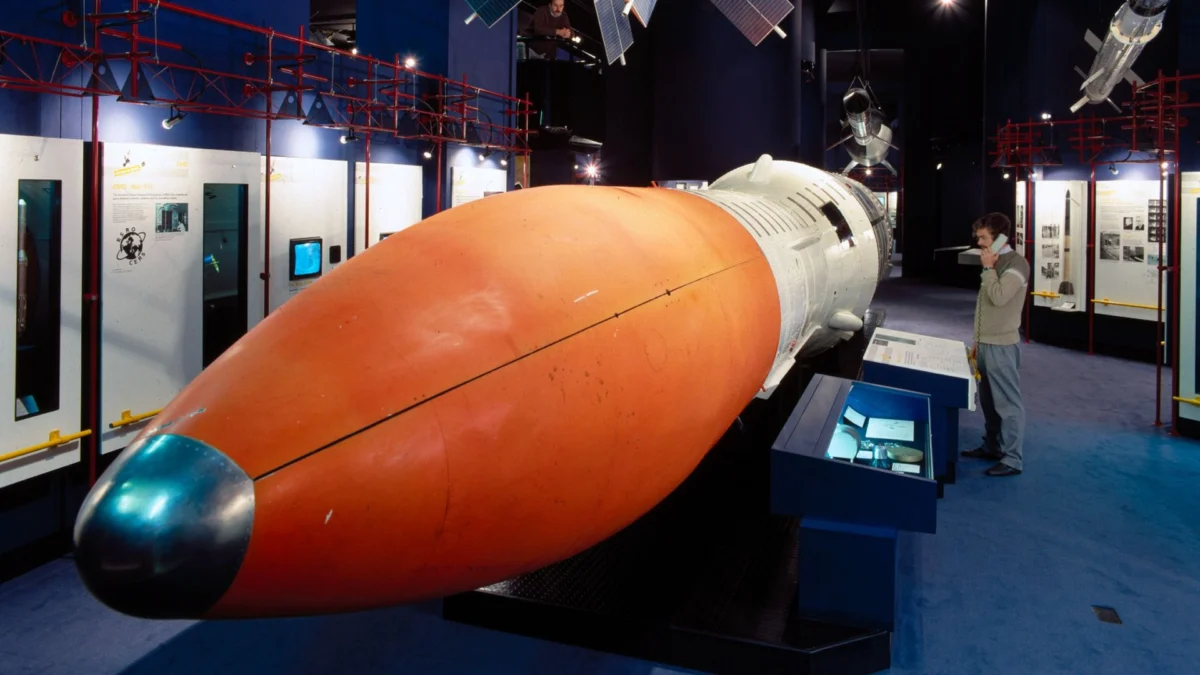
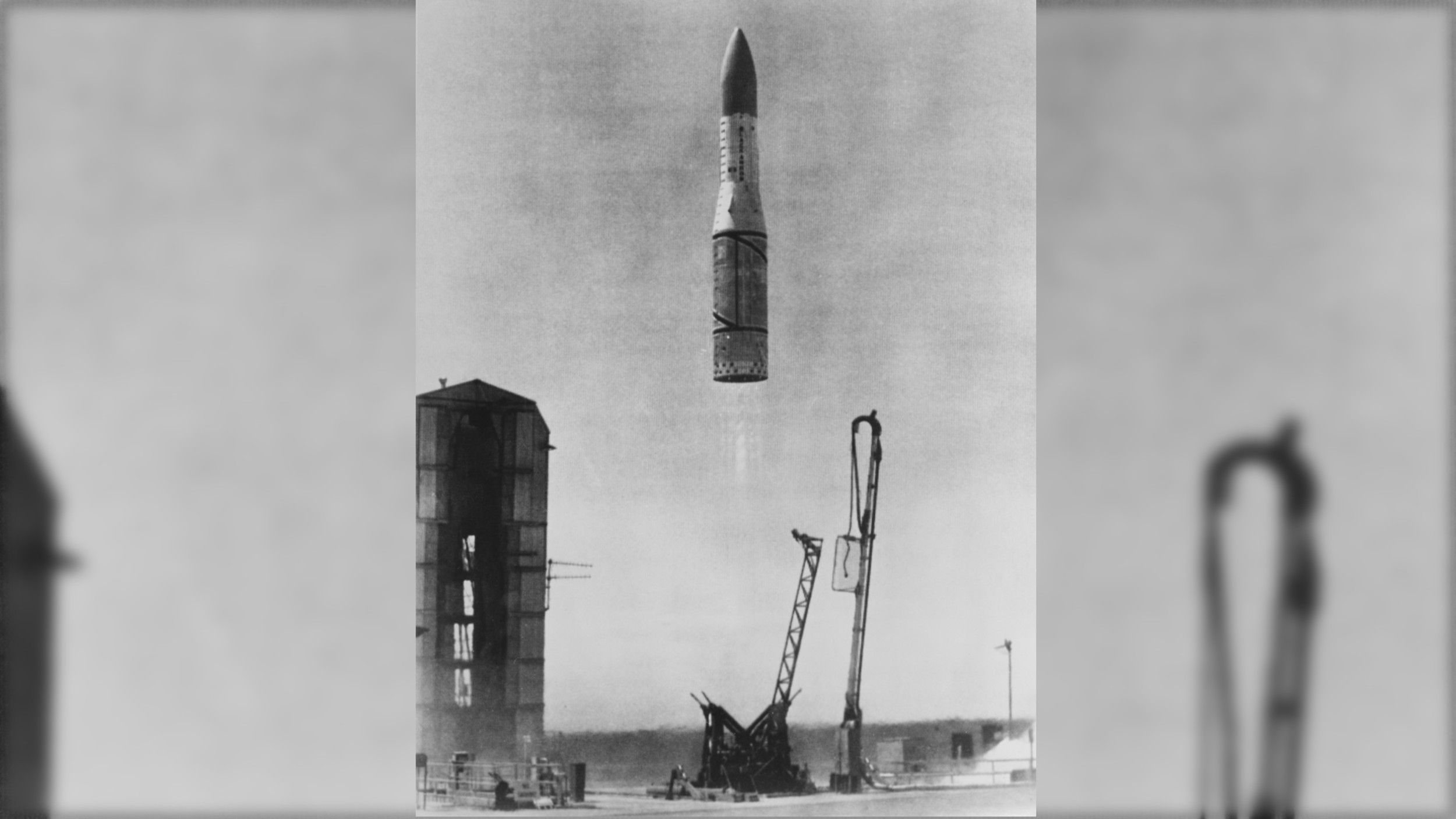
On October 28, 1971, the United Kingdom achieved a singular milestone in its aerospace history when the Prospero satellite, also designated as X-3, was successfully lofted into orbit by the British-built Black Arrow rocket. While the United Kingdom had previously participated in space exploration, this mission represented a unique technological departure: it was the first and only time the British space program utilized a domestic, indigenous rocket to place a satellite into orbit. This event, occurring at the Woomera Range Complex in South Australia, stands as a testament to a fleeting era of British sovereign launch capability, a legacy that continues to spark interest among modern aerospace innovators and historians alike.
The journey to the launch pad was one characterized by intense engineering ambition and eventual geopolitical retrenchment. During the 1960s, the United Kingdom sought to establish itself as a viable spacefaring nation. Prior to the success of Prospero, the British government relied heavily on collaborative efforts, most notably through the utilization of American NASA rockets to launch earlier iterations of British satellite technology. By the time the Black Arrow program reached its climax in 1971, the British government had already made the strategic decision to terminate the project, making Prospero a swan song for the nation’s initial foray into independent orbital delivery.
The Engineering Feat: The Black Arrow Rocket
The Black Arrow R-3, the launch vehicle for the Prospero mission, was a three-stage rocket derived from the Black Knight research vehicle. Standing nearly 13 meters tall, the rocket was a product of a rigorous development program managed by the Royal Aircraft Establishment. Its design was optimized for the launch of small satellites into Low Earth Orbit (LEO).
The launch process on October 28, 1971, proceeded according to the mission parameters until the final stage separation. A critical, albeit minor, complication occurred during the deployment phase: the rocket’s final stage inadvertently collided with the satellite. This impact resulted in the loss of one of the satellite’s four radio antennas. Despite this mechanical failure, the core mission objectives remained largely intact. The onboard systems, including telemetry and the critical micrometeoroid detection apparatus, continued to function. This resiliency proved the robustness of the British engineering team, as the satellite remained operational in its elliptical orbit—ranging from 522 to 1,300 kilometers—for two years, far exceeding the initial expectations for such a mission.
Mission Objectives and Scientific Significance
The Prospero mission was primarily designed as an experimental platform to investigate the harsh environment of space and its long-term effects on satellite components. During the late 1960s and early 1970s, the nascent communications industry was desperate to understand how radiation, temperature fluctuations, and particulate matter—specifically micrometeoroids—would degrade satellite hardware.
The satellite served as a testbed for several key technologies:
- Solar Cell Efficiency: Prospero evaluated the degradation of various solar cell configurations when exposed to constant solar radiation in a vacuum.
- Telemetry and Communication: By monitoring the signal integrity of the satellite, engineers gained valuable data on the reliability of space-to-ground radio transmissions.
- Micrometeoroid Detection: This was arguably the most innovative aspect of the mission. By using specialized sensors, the spacecraft provided empirical data on the density of small particles in LEO, helping to quantify the threats posed by what would later be formally classified as space debris.
The data harvested from these experiments was instrumental in refining the design of subsequent communications satellites, influencing the global aerospace industry’s approach to shielding and power management for years to come.
A Chronology of the British Space Program
To understand the significance of the 1971 launch, one must view it within the wider context of the era:
- 1955-1965: The development of the Black Knight rocket, a testbed that laid the technical foundation for the Black Arrow.
- 1962: The launch of Ariel 1, the first British satellite, which was launched via a U.S. Thor-Delta rocket.
- 1969: The first flight of the Black Arrow (R-0), which failed due to a secondary stage malfunction.
- 1970: The second Black Arrow flight (R-1), which also experienced a catastrophic failure, casting doubt on the program’s future.
- 1971: The successful launch of the Prospero mission (R-3), serving as the final, triumphant flight before the program was officially decommissioned.
- 1973: Regular communication with the Prospero satellite ceased, though sporadic contact was maintained for decades.
- 1996: The final recorded contact with the satellite, marking the end of its functional life in orbit.
The Legacy of the Black Arrow Cancellation
The termination of the Black Arrow program in the early 1970s is often cited by aerospace historians as a moment of "what could have been." The decision was largely financial, as the government opted to prioritize participation in the European Launcher Development Organisation (ELDO) and, later, the European Space Agency (ESA). By divesting from its own independent launch vehicle, the United Kingdom effectively exited the business of orbital delivery for the remainder of the 20th century.
However, the impact of the program was not entirely lost. The skills honed by the engineers and scientists involved in the Black Arrow project dispersed into the broader UK aerospace sector, sustaining a high level of technical expertise that eventually paved the way for the country’s modern, thriving space economy.
Modern Implications: Recovery and Sustainability
In recent years, the conversation surrounding Prospero has shifted from its historical significance to its relevance in the modern debate over orbital sustainability. With the rise of commercial space startups and the increasing density of objects in LEO, the concept of "active debris removal" has gained prominence.
Skyrora, a Scottish-based space startup, famously announced a proposal in 2021 to retrieve the historic Prospero satellite. The plan involves the use of a "space tug" to rendezvous with the defunct spacecraft, capture it, and execute a controlled re-entry, allowing it to burn up in the Earth’s atmosphere. This proposal carries both a symbolic weight and a practical objective: to demonstrate the feasibility of deorbiting historic debris.
Volodymyr Levykin, the founder and CEO of Skyrora, has framed this initiative as a demonstration of the UK’s commitment to "space stewardship." By retrieving the very first satellite the nation launched on its own rocket, the UK could effectively "bookend" its history—closing the chapter on its initial space-age era by taking responsibility for the hardware it left in orbit.
Analysis of Britain’s Return to Space
The legacy of the 1971 launch is currently enjoying a resurgence. The development of the Saxavord Spaceport in the Shetland Islands and the progress made by British companies in vertical launch technology suggest that the UK is attempting to reclaim the sovereign capability it walked away from over fifty years ago.

The primary takeaway from the Prospero experience is the critical importance of long-term strategic investment. While the Black Arrow was a technical success, it failed as a sustainable program because it lacked the commercial and industrial ecosystem necessary to maintain support. Today’s British space sector is attempting to build that ecosystem from the ground up, moving away from the isolated government-led projects of the 1970s toward a more resilient, multi-stakeholder model.
The Prospero satellite, still silently circling the Earth, serves as a persistent reminder of a time when Britain dared to look upward and build its own path to the stars. Whether or not it is eventually recovered by a new generation of British rockets, its place in history is secure as the emblem of the United Kingdom’s entry into the exclusive club of spacefaring nations. As the global space economy expands, the lessons learned from the mission—both the engineering triumphs and the policy challenges—continue to provide a blueprint for what a nation must do to ensure its presence in the cosmos remains both permanent and responsible.